
You can start assigning simple cleaning tasks to kids as early as age 2, using one‑step, visual cues and praise to build routine and independence. Keep expectations tiny—like a single bin or shelf—so they see immediate progress. Celebrate each success, use picture charts, and give short, clear instructions. This early involvement nurtures fine‑motor skills, imitation, and a sense of responsibility. Continue, and you’ll discover how to adapt chores as they grow and stay motivated.
Early Toddler Cleaning Opportunities
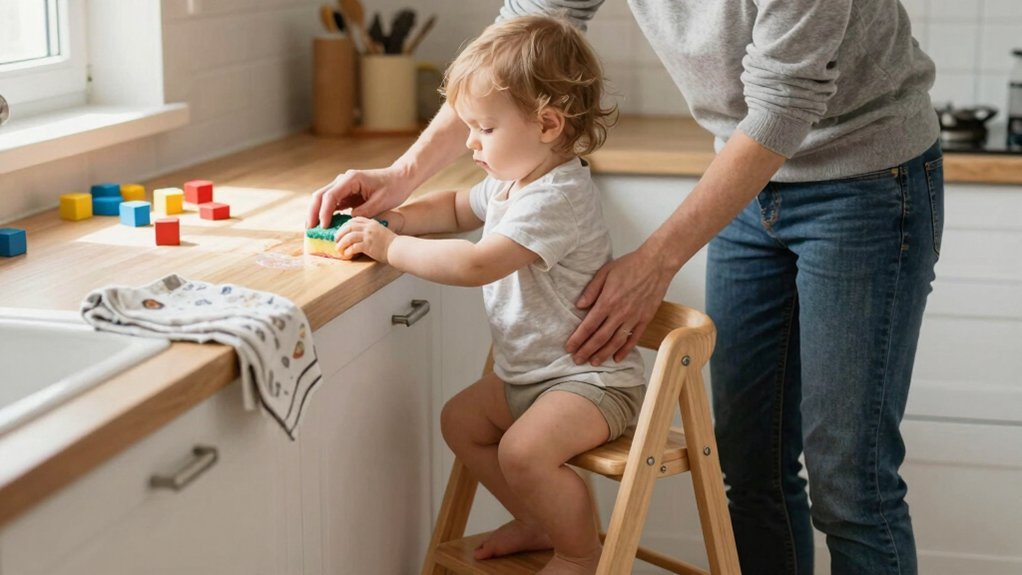
Keep the expectation small—just one bin or shelf—so the child sees immediate visual progress. Celebrate each success, and the toddler will start imitating the routine, learning independence and basic organization. Introducing tasks with age-appropriate wooden stacking toys can further develop fine motor skills while keeping chores engaging.
Developmental Benefits of Age‑Specific Kids Chores
Ever wondering why tailoring chores to a child’s age matters? When you assign age‑appropriate chores, you tap into developmental windows that boost confidence, responsibility, and motor skills. Small tasks at 2‑3 let kids imitate adults, follow directions, and learn routine. By 4‑5 they can help with meals and laundry prep, sharpening coordination and listening. At 6‑8 they manage washing a car, dusting, or taking out the garbage, reinforcing independence and problem‑solving. In the 9‑12 stage, vacuuming, bathroom cleaning, and pet care deepen self‑efficacy and time‑management. Teens (13‑18) take on laundry, window washing, and basic repairs, aligning chores with emerging autonomy and real‑world competence. Each step builds a solid foundation for lifelong responsibility. Introducing children to tasks like dusting with extendable microfiber dusters helps develop reach and coordination skills while teaching effective cleaning habits.
2‑Year‑Old Kids Chores
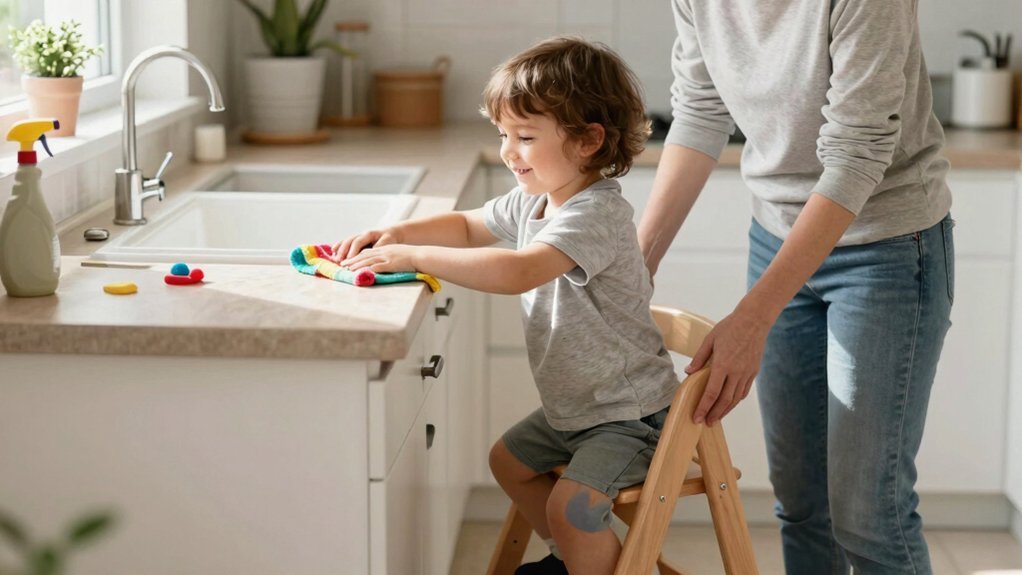
When kids hit the two‑to‑three‑year mark, they’re ready for simple chores that match their growing independence. At this stage, you can ask them to put away toys, place books on shelves, and help sort clean laundry into a hamper. Keep instructions short and demonstrate the task, then let them try with your guidance. Celebrate successes with praise so they associate chores with positive feedback. Use low‑step bins and child‑size containers to make the process easy and safe. By giving them clear, repeatable actions, you build confidence and lay the groundwork for more complex chores later. Consistency matters—repeat the routine daily, and soon the chores become a natural part of their routine. Providing age-appropriate tools, such as cups and bowls with spill prevention technology, can also encourage independence during mealtime cleanup.
3‑Year‑Old Kids Chores
Wonder how much a four‑year‑old can actually handle? You’ll find that at this age kids can tackle simple chores like making their bed, wiping tiny spills, and sorting laundry before the wash. They’re eager to place clean socks in drawers and help put away toys, which builds routine and confidence.
When you give them a low‑stakes task—like clearing plates after dinner—they learn responsibility without feeling overwhelmed. Keep instructions clear, demonstrate the steps, and praise effort.
A four‑year‑old can also start light snack prep, such as spreading butter on toast, which reinforces fine‑motor skills. By framing chores as fun, short activities, you nurture independence while keeping the household running smoothly.
4‑Year‑Old Kids Chores
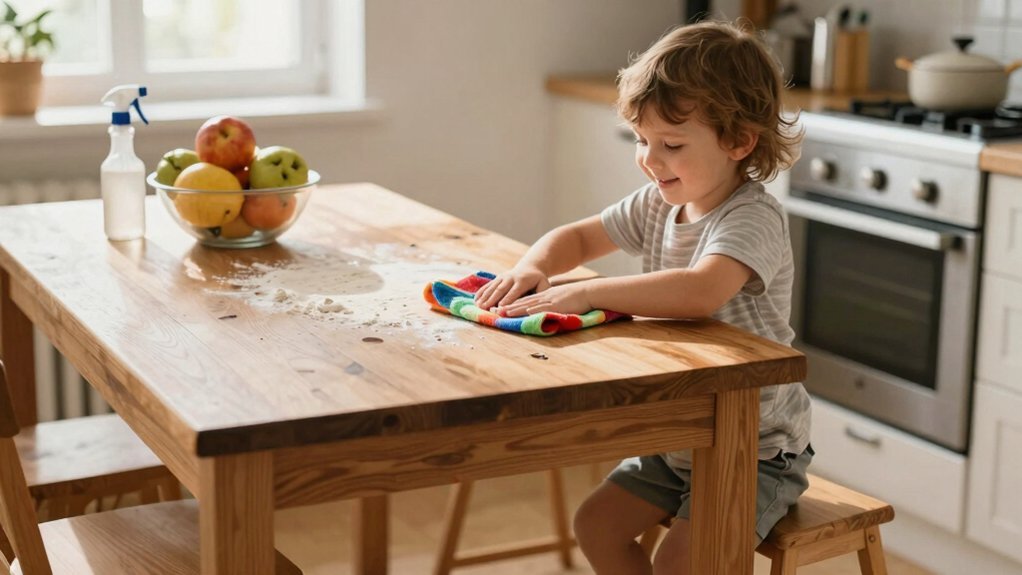
You can start by teaching your child a simple bed‑making routine, showing them how to straighten the sheets and pull up the blanket. Pair that with a quick toy‑pickup habit, where they gather blocks or books and place them in the designated bin. These two tasks build confidence and lay the groundwork for more chores later. Using low shelves that are accessible and child-friendly encourages independence in tidying up and organization.
Simple Bed Making
At ages 2‑3, kids can start helping with simple bed‑making, pulling up blankets and smoothing pillows without worrying about perfection. You’ll notice they enjoy the tactile feel of the sheets and the sense of contribution. Keep expectations low and praise effort; it builds routine and basic organization skills. Use gentle prompts like “please make your bed before lunch” to guide them. The activity should feel cooperative, not a flawless chore.
- Pull up the blanket and straighten it.
- Fluff and arrange two pillows.
- Tuck the sheet at the foot of the bed. Montessori principles emphasize independence early on, so providing tools like a step stool with safety rail can encourage children to manage their own chores safely and confidently.
Toy Pick‑Up Routine
When should you start teaching a 2‑year‑old to tidy up toys? Begin at two with simple, verbal prompts and a clear visual cue, like a labeled bin. Show the child where toys belong, then guide them to place each item in the bin. Use a short, upbeat phrase such as “toy‑pick‑up time!” to signal the transition. Consistency matters: repeat the routine after every play session, and reward success with stickers on a chart.
5‑Year‑Old Kids Chores
You can start with simple tasks that feel easy, like making the bed or putting toys away. These chores let you build responsibility gradually, giving your child a sense of accomplishment.
As the routine becomes familiar, you’ll see confidence grow alongside independence. Incorporating age-appropriate chores supports developmental milestones similar to those targeted by fine motor skills activities used in Montessori learning.
Simple Tasks Made Easy
Ever wondered how a three‑year‑old can actually help around the house? You can turn curiosity into confidence by assigning child chores that match their motor skills and attention span. Keep tasks short, visual, and repeatable so they feel successful and eager to do more.
- Pick up toys – use a bright bin and a simple “in‑out” routine.
- Put dirty clothes in a hamper – a low, open basket makes it easy.
- Wipe a craft table – a damp cloth and a quick “sweep‑and‑wipe” song turn cleaning into play.
Sticker charts reinforce progress, while imitation—like pushing a pretend vacuum—shows them how adults handle messes. By framing each duty as a game, you nurture independence without overwhelming them.
Building Responsibility Gradually
Typically, you’ll notice a child’s willingness to help grow as you match chores to their developmental stage, starting with simple pick‑up tasks at age 2‑3 and gradually adding more independent duties—making the bed at 3‑4, feeding pets and clearing the table at 4‑5, washing dishes and taking out trash at 6‑8, and tackling vacuuming or bathroom cleaning by 9‑12—so responsibility builds steadily without overwhelming them.
| Age | Sample chores |
|---|---|
| 2‑3 | Pick up toys, put dirty clothes in hamper |
| 4‑5 | Feed pets, clear table, sort laundry |
| 6‑12 | Wash dishes, take out trash, vacuum, clean bathroom |
You’ll see responsibility deepen as each task matches the child’s capability, fostering independence, consistency, and confidence. By framing chores as incremental steps, you keep motivation high and avoid overload.
6‑8‑Year‑Old Kids Chores
Where does a two‑year‑old even start? You can begin with tiny, concrete tasks that feel like play. Toddlers love to put away toys, fold a small shirt, or pick up a spill while you guide them. Keep prompts simple—“clean up your puzzle before lunch”—so they follow directions without frustration. Use a sticker chart to celebrate each success, reinforcing a sense of accomplishment. Encourage imitation by letting them push a pretend vacuum; it builds social learning and readies them for real chores later.
- Toy tidy‑up – gather blocks, books, and stuffed animals into bins.
- Clothing sort – match socks or place a shirt in a laundry basket.
- Mess sweep – wipe crumbs with a damp cloth under supervision.
These bite‑size chores develop habits and confidence.
9‑12‑Year‑Old Kids Chores
Although a two‑year‑old’s attention span is short, you can still involve them in simple chores that feel like play. You can ask toddlers to pick up blocks and put them in a bin, or guide them to drop dirty clothes into a hamper. Use clear verbal reminders—“clean up your puzzle before lunch”—and point to the designated spot so they know where things belong. Visual prompts, like a picture chart, reinforce the routine and make the task feel like a game. When they succeed, praise the effort and show how their actions keep the room tidy. Consistent, short‑duration chores build early following‑directions, motor skills, and a foundation for future organization. Engaging children in practical tasks at this stage also supports the development of fine motor skills essential for more complex learning activities.
13‑18‑Year‑Old Kids Chores
By the time kids hit 18, chores shift from playful clean‑ups to full‑house responsibilities. You’ll notice that childhood chores have evolved into tasks that demand independence and time‑management. You’re now expected to keep bathrooms spotless—even toilets and showers—vacuum every room and empty the canister, and handle all laundry, including ironing and minor repairs like sewing buttons. You also tackle advanced duties such as washing windows, cleaning out the refrigerator, and maintaining kitchen appliances. Meal prep and grocery shopping become regular parts of your routine, reinforcing self‑reliance.
Key 18‑year‑old chores
- Deep bathroom cleaning and vacuum maintenance
- Full laundry cycle with ironing and minor clothing repairs
- Kitchen upkeep, window washing, and grocery management
Motivating Teens to Complete Their Chores?
How can you keep teens motivated to actually finish their chores? Set clear expectations and a regular schedule that fits around school and activities, then give them autonomy to pick tasks like meal prep or grocery lists. When they choose, they feel ownership and intrinsic drive. Offer consistent feedback and genuine recognition for a job well done—praise, a quick “thanks,” or a small perk works better than punishment. Pair occasional chores with family members to build teamwork and a stronger work ethic. Keep the system simple: a brief weekly check‑in, a quick visual tracker, and a brief reward when milestones are met. This balance of structure, choice, and positive reinforcement keeps teens engaged and chores get done.
Using Sticker & Chore Charts Effectively
After setting clear expectations for teens, you can apply the same principles to younger kids with sticker and chore charts. Start by choosing a visual system that matches their age: stickers work best for two‑to‑five‑year‑olds, while a structured chart fits six‑to‑nine‑year‑olds. Keep the board simple, update it daily, and celebrate each completed task with a tangible reward. This routine builds confidence, reinforces achievement, and makes chores feel like a game.
- Pick age‑appropriate symbols – use colorful stickers for toddlers and numbered icons for older kids.
- Set clear, incremental goals – break tasks into bite‑size steps and adjust as skills grow.
- Tie consistency to routine – update the chart at the same time each day to cement habit formation.
Starting an Allowance: When & How?
You’ll want to decide the exact age or milestone when you start paying for chores, then match each task’s difficulty to a clear, earned‑compensation plan. By linking payments to skill mastery, you reinforce responsibility without turning chores into a free‑money giveaway. This approach keeps the allowance meaningful and teaches basic financial principles early on.
Determine Allowance Timing
When should you start giving your child an allowance, and how do you decide the right moment? Look for signs of responsibility, consistency, and age‑appropriate tasks. Most families begin around 6‑8 years when kids can follow simple routines. Use these checkpoints to time the allowance:
- Task mastery – they reliably complete chores like making the bed or tidying toys.
- Understanding of value – they grasp that money can be saved, spent, or donated.
- Emotional readiness – they handle praise and correction without frustration.
Around a $20 weekly benchmark aligns with national averages and keeps expectations realistic. Remember, the goal isn’t just payment; it’s teaching budgeting, work ethic, and family generosity while avoiding the debate over “paying for chores.” This timing sets a solid foundation for later financial lessons.
Set Earned Compensation Criteria
Tie the allowance to clear, age‑appropriate chores and you’ll turn a simple payout into a practical lesson in responsibility. Start with tasks like making the bed or sorting laundry, then raise the bar as your child masters each chore.
Use a chore chart or sticker system to record completed duties, assign a dollar value to each, and pay weekly—around $20 on average for most families.
Treat the money as both reward and teaching tool, not a right to demand more work.
Review the list monthly, adjusting amounts when school workload shifts or new responsibilities emerge.
This flexible, measurable approach keeps compensation fair, encourages independence, and embeds financial habits early on.
Frequently Asked Questions
What Age Should a Kid Start Cleaning?
You can start your kid cleaning around age three with simple tasks like picking up toys, then gradually add more responsibilities as they grow, ensuring each chore matches their developmental stage and abilities.
What Is the 7 7 7 Rule in Parenting?
You’ll find the 7‑7‑7 rule means introducing age‑appropriate chores at three seven‑year milestones: basic tasks by age 7, self‑care duties by age 14, and independent problem‑solving by age 21, adjusting as needed.
What Is the 10-10-10 Rule for Kids?
You use the 10‑10‑10 rule by assigning a kid a ten‑minute chore, then ten minutes to tidy up, and finally ten minutes to reflect or practice the skill, keeping tasks short and manageable.
What House Chores Can a 7 Year Old Do?
You can have a 7‑year‑old take out trash, load and unload the dishwasher, clear the table, wipe counters, help load the laundry, and assist with simple meal‑prep tasks under supervision.