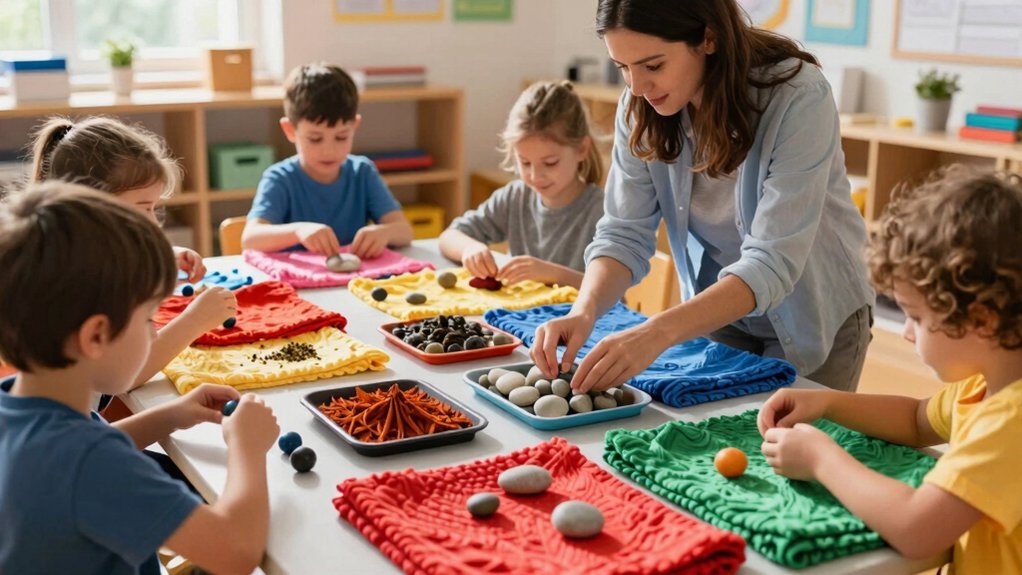
Start by gathering age‑appropriate textures, shapes, and tools, then set up low‑distraction “feely‑bag” or “grocery‑bag” stations with a visual cue or label for each item. Use short, repeatable routines: let kids explore the bag, name the texture, then match it to a picture or a table piece. Add proprioceptive input with heavy work or movement breaks, and gradually increase complexity by adding more items or specific shape requests. Keep sessions brief and consistent, and you’ll discover deeper strategies for sensory integration.
What Are Tactile Discrimination Activities?
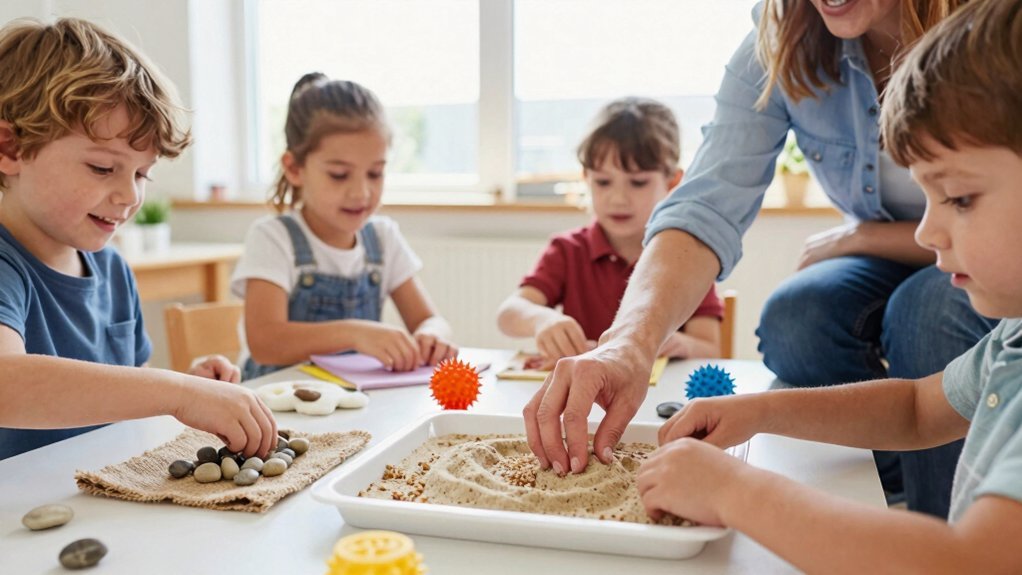
Tactile discrimination activities let kids explore and tell apart textures, shapes, and objects using just their hands. You’ll set up Feely Bags or mystery cloth pouches with two openings, then hide items so children rely on touch for object identification. They’ll compare a smooth spoon to a ridged carrot, match a round ball to a square block, or sort grocery items by feel. You can add language cues—show a picture, then let them point to the matching texture. Montessori‑style tips suggest pairing identical objects, using blindfolds or covered hands for extra challenge, and repeating the routine to build tactile tolerance and self‑regulation. As you vary the items, you increase complexity, keeping the activity fresh and engaging. Incorporating Montessori Brown Stair prisms can further enhance tactile discrimination by encouraging children to explore variations in size and thickness through hands-on manipulation.
Why Tactile Discrimination Matters for Early Development
You’ll notice that strong tactile development sharpens your child’s ability to process touch information, which is a cornerstone of sensory integration. When they can differentiate textures and shapes by feel, they’re building the neural pathways that later support fine motor, language, and problem‑solving skills. In short, tactile discrimination lays the groundwork for the broader learning abilities they’ll need throughout school and life. Using tools with soft bristles designed to prevent surface scratches can help children safely explore different textures during tactile activities.
Tactile Development
Touch is a powerful gateway to learning, and mastering tactile discrimination lays the foundation for a child’s sensory integration, fine‑motor skills, and language development. You’ll notice that when you give a child rich tactile input—like mystery bags filled with dried beans, rice, or macaroni—their brain learns to differentiate textures and shapes without visual cues. Simple sensory activities such as blindfolded shape sorting or animal‑figure exploration sharpen that ability.
Montessori‑inspired stereognostic sorting pushes the skill further: children feel objects, then match them to identical items on a table, reinforcing fine‑motor coordination and vocabulary. Pair each exploration with picture cards for naming, and you’ll support non‑verbal learners while deepening their tactile discrimination competence.
Incorporating well-crafted wooden spinning tops into sensory play can further enhance fine motor development and hand-eye coordination through tactile manipulation and cause-and-effect learning.
Sensory Integration Benefits
Why does mastering discrimination through touch matter so much for early development? You’ll see that tactile discrimination fuels sensory integration, letting your child weave touch, sight, and movement into a unified experience. When you set up textured exploration—rough sand, smooth beads, soft fabric—your child learns to differentiate sensations, which sharpens fine motor skills and builds neural pathways for later learning.
Structured play like Feely bags or Montessori matching tasks encourages both‑hand comparison, reinforcing perceptual accuracy before naming objects. Adding themes (kitchen, toys) and progressive challenges scales difficulty, while blindfolds or cloth‑covered hands tailor the load to each child’s sensory needs. This focused practice supports self‑regulation and prepares the brain for more complex academic and social tasks. Using supportive tools such as the Montessori step stool with safety rail can enhance independence and safe exploration during tactile activities.
Foundation for Learning Skills
Ever wonder how a simple texture can shape a child’s whole learning foundation? You’ll see that sensory discrimination fuels early cognition by sharpening tactile exploration. When kids feel a fuzzy ball, a smooth stone, or a ridged block, they practice fine motor skills while learning to label and compare. Start with familiar items in mystery bags or texture scavenger hunts, then raise the challenge with theme‑based groupings. Pair each touch with a word or picture, and children with limited language still engage. Montessori‑inspired activities, like identical‑object matching and stereognostic sorting, give structured, repeatable practice without blindfolds. This layered approach builds neural pathways for reading, math, and problem‑solving, turning everyday touch into a powerful learning engine. Using tools like Montessori multiplication boards can further enhance tactile and visual learning in early math development.
Feely‑Bag Games: Simple Set‑Up and Play Ideas
Curious about turning everyday items into a tactile treasure hunt? You can craft feely bags with cloth fabric, sealing one side and leaving a safe opening. Slip in household objects, grocery items, or animal toys, then let kids feel, guess, and verify. Use simple objects for beginners, then add themes or more items to raise difficulty. Pair each bag with picture cards or spoken labels for language support, ensuring names are familiar or providing matching items. This routine boosts sensory discrimination and tactile exploration while encouraging vocabulary growth. Incorporating natural wood frames and tactile counting tools helps enhance sensory experiences through durable, child-safe materials.
| Bag Type | Example Items |
|---|---|
| Simple | Sponges, wooden blocks |
| Themed | Fruit slices, animal plushies |
| Advanced | Small beads, textured fabric squares |
Grocery‑Bag Activities: Textures, Shapes, and Scavenger Hunts
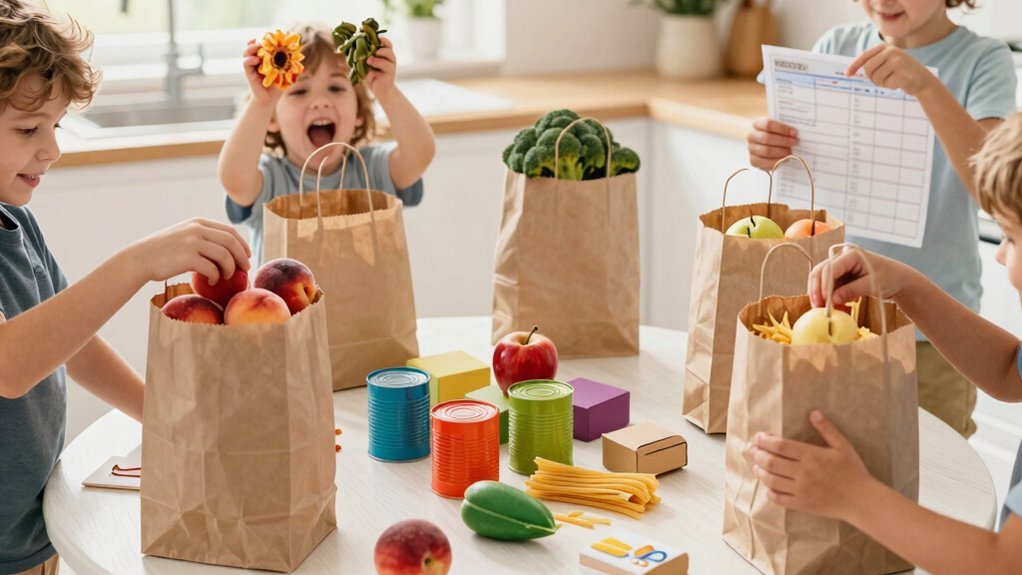
A grocery‑bag activity turns everyday pantry items into a hands‑on mystery, letting kids feel dried beans, rice, popcorn, macaroni, pasta shells, jelly sweets, and raisins inside a sealed bag before they check their guesses. You start with a brief pre‑touch session: let them explore the bag’s exterior textures, naming each material. Inside, the mix of smooth, crunchy, and bumpy textures fuels sensory discrimination and tactile exploration. Challenge them by asking for a specific grocery item or by increasing the number of items, then reveal the answers together, reinforcing vocabulary. Group items by theme—snacks, pantry staples—to add context and keep the hunt engaging. Incorporating a range of textures similar to those found in Montessori sensory fabric sets can deepen tactile awareness in children.
- Identify three textures blindfolded.
- Guess the shape of each item.
- Match the item to a pre‑shown picture.
Shape‑Matching Tactile Games for Hand‑Eye Coordination
You’ll set up a shape‑bag with identical pieces hidden inside and a matching set laid out on the table, then invite children to feel a shape and locate its twin.
By encouraging them to point or name the correct shape right after tactile exploration, you sharpen hand‑eye coordination and speed up matching.
Adding more pieces or a specific‑shape request ramps up the challenge while keeping the activity focused and engaging.
Shape‑Bag Setup
Ever wondered how a simple bag of shapes can sharpen a child’s hand‑eye coordination? You’ll set up two identical shape sets—one inside a soft bag and one spread on the table. First, let the child explore the bag’s contents, feeling each form to develop sensory discrimination and proprioceptive awareness. Then, guide them to locate the matching piece on the table, using both hands for tactile exploration and shape‑matching. The activity naturally boosts hand‑eye coordination while keeping play engaging. You can scale difficulty by adding more shapes or inserting a specific target shape, and even incorporate Pattern Blocks for an extra layered challenge.
- Prepare two shape sets, one in a bag, one on the table.
- Encourage tactile exploration and proprioception before matching.
- Increase complexity with extra pieces or a target‑shape cue.
Matching Shapes Quickly
Shape‑matching tactile games turn a simple bag of shapes into a fast‑paced hand‑eye coordination drill, letting you feel each piece before racing to locate its twin on the table. You begin by letting the child explore the bag’s contents, using both hands for tactile exploration and sensory discrimination. Once they recognize a shape, they quickly scan the table, matching shapes to their counterparts. To keep the pace lively, set a timer or count how many matches they can make in a minute. Increase difficulty by adding more pieces or asking for a specific shape. You can also weave in pattern blocks for extra variety, reinforcing hand‑eye coordination while sharpening their ability to differentiate forms through touch.
Hand‑Eye Coordination Boost
After feeling each piece in the bag, you move straight to the table, where the shapes sit waiting to be paired. You grasp a shape, compare its edges to the visual target, and place it on the matching slot. This tactile discrimination task forces you to link touch with sight, sharpening hand‑eye coordination. Using both hands to retrieve and align pieces builds bilateral coordination and cross‑modal coordination, while the quick‑match rhythm boosts focus.
- Start with four basic shapes, then add two more to increase difficulty.
- Introduce a “find the red triangle” cue to require visual‑motor integration.
- Swap the bag for a blindfolded round to deepen tactile reliance.
Animal‑Matching Sensory Play for Vocabulary Building
A handful of animal toys can turn a simple bag‑and‑table setup into a powerful vocabulary builder. You place one set of plush animals in a mystery bag and spread the matching set on a table. During sensory play, the child reaches in, feels a creature, and, through tactile exploration, points to the identical animal on the table. This animal matching exercise strengthens vocabulary building by linking the felt shape to the visual image and, when you prompt, to the spoken name. You can increase difficulty by adding more animals, setting a target animal, or pairing blocks with pattern cards for integrated learning. The mystery bag keeps engagement high, turning a brief activity into a memorable, multi‑sensory lesson.
Proprioceptive Activities to Build Body Awareness
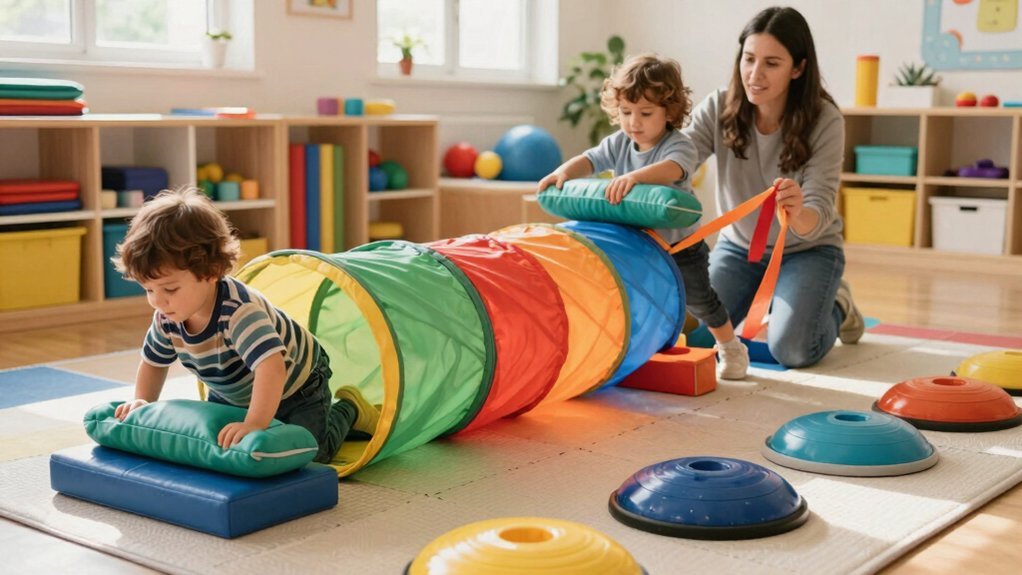
Ever wonder how a simple push‑up or a weighted backpack can sharpen a child’s sense of where their body is in space? Proprioceptive input fuels body awareness and sensory integration, helping kids stay calm, focused, and ready for learning. Heavy work—like lifting, pushing, or pulling—delivers the deep pressure the nervous system craves, reducing irritability and boosting energy for daily routines. Embedding short, purposeful breaks of resisted movement before seated tasks can smooth transitions and improve postural control.
- Weighted Backpack Walks – have the child walk a short distance with a light backpack, encouraging steady gait and joint feedback.
- Wall Push‑Ups – use a wall for support, letting the child push against it to engage muscles and reinforce proprioceptive signals.
- Carry‑and‑Climb Stations – set up low obstacles and a sturdy box to lift, pull, and climb, combining heavy work with fun, functional movement.
Increasing Tactile Tolerance Through Structured Play
You’ll start by introducing a few familiar textures and then gently add new ones, letting the child explore through structured sensory games like texture scavenger hunts.
Keep the activities consistent, so the child learns to expect and tolerate the tactile challenges.
Reinforce each successful touch with simple praise or a matching cue, building confidence and a steady tolerance over time.
Gradual Texture Exposure
How can you gently expand a child’s tactile tolerance while keeping play fun and low‑stress? Start with texture exposure that feels safe—soft, familiar fabrics or sponges—and pair each touch with a word or picture. This scaffolding with language boosts tactile discrimination and confidence. As the child masters each level, introduce progressive textured materials that vary in firmness, pattern, and temperature, always watching for signs of overload.
- Feely Bag – Fill a bag with three soft items, then add a slightly rough object; name each one as the child explores.
- Scavenger Hunt – Hide objects of increasing complexity around the room, giving verbal clues for each texture.
- Sorting Game – Group items by smooth, bumpy, or fuzzy, encouraging the child to label the categories aloud.
Structured Sensory Games
Structured sensory games turn tactile exploration into a purposeful, low‑stress challenge. You’ll start with Feely Bags filled with familiar items, then gradually add harder textures or themed groups. Pair each bag with a picture so the child can match the visual cue before reaching in, reinforcing exploration and identification. Use identical shape sets—one inside the bag, one on the table—to let the child feel‑and‑match, sharpening tactile discrimination. As confidence builds, increase the number of objects, vary textures, or introduce pattern blocks for cross‑context learning. The structured format keeps the activity predictable while still stretching sensory limits.
| Phase | Goal | Example |
|---|---|---|
| 1 | Familiar tactile | Soft sponge in Feely Bag |
| 2 | Themed grouping | Kitchen items (spoon, cup) |
| 3 | Visual‑tactile match | Picture of ball + ball in bag |
| 4 | Increased quantity | Six varied textures |
| 5 | Cross‑modal | Pattern blocks + texture bag |
Consistent Reinforcement Schedule
Set a predictable rhythm for tactile play, and the child will start to anticipate each texture encounter, easing anxiety and boosting tolerance. When you pair consistent reinforcement with short, regular sessions, the child learns that texture variety is safe and rewarding. This steady schedule fuels gradual desensitization, making each new tactile discrimination task feel familiar rather than threatening. Keep check‑ins brief, note successes, and tweak intensity only when the child shows readiness. Embedding texture challenges in everyday games—like a Feely Bag hunt—reinforces skills across contexts and sustains engagement.
- Choose a fixed time and length for each play session.
- Introduce one new texture per week, building on prior successes.
- Use immediate, positive reinforcement after each successful tactile discrimination.
Montessori‑Style Tactile Games You Can Try Today
A simple mystery bag can turn everyday objects into a tactile adventure, letting kids feel, compare, and match shapes or animals without looking. You’ll set up two identical shape sets—one inside the bag, one on the table—then ask the child to explore with both hands, name the texture, and match it. Start with easy pasta shapes or wooden blocks, then graduate to seeds or fabric swatches for richer sensory discrimination. Keep themes aligned with the child’s interests—kitchen tools, favorite animals, or toy vehicles—to sustain focus while they practice Montessori‑inspired tactile exploration.
| Theme | Bag Items | Table Items |
|---|---|---|
| Kitchen | Mini spatulas, silicone whisk | Plastic plates, wooden spoons |
| Animals | Felt lion, plush rabbit | Plastic zoo figures |
| Nature | Dried pine cones, smooth stones | Leaf cutouts, bark pieces |
| Art | Textured fabric squares, yarn | Crayons, foam shapes |
Adapting Activities for Left‑Handed Children
When you hand a left‑handed child a mystery bag, make sure the bag and its contents sit on the side that lets them reach comfortably with their dominant hand—usually the right side of the table. You can boost sensory discrimination by arranging materials so the child can explore without crossing their body, which reduces strain and improves focus. Use adaptive techniques like ambidextrous tools and adjustable trays, and embed left‑handed accommodations into every step. Inclusive design means you regularly check that prompts flow naturally for a left‑handed grip, and you tweak layouts to avoid right‑hand bias.
- Position trays on the right side of the workspace.
- Offer ambidextrous or left‑hand‑friendly tools.
- Adjust activity prompts for left‑handed directionality.
Pencil‑Free Spelling Practice Using Tactile Tools
Ever wondered how you can boost spelling skills without ever picking up a pencil? You can turn sensory input into a powerful spelling practice by using tactile tools that let kids feel letters, sounds, and word patterns. A sandensory approach replaces ink with textured tiles, magnetic letters, or sand‑filled trays, letting the child map sounds to shapes through touch. This method respects comfort, avoids grip correction, and supports inclusive learning.
| Tool | Sensory Input | Benefit |
|---|---|---|
| Magnetic letters | Tactile + visual | Reinforces letter‑sound links |
| Sand trays | Kinesthetic | Builds muscle memory |
| Textured tiles | Tactile | Enhances word recall |
| Foam letters | Soft touch | Reduces writing fatigue |
| Velcro blocks | Tactile + auditory | Encourages multisensory spelling practice |
Fine‑Motor Skill Boosters for Older Kids
Many everyday tasks can double as fine‑motor boosters for older kids, letting them build hand strength and finger control without feeling like they’re doing “kid‑stuff.” By incorporating activities such as twisting jar lids, threading beads onto shoelaces, or using a handheld stress ball during homework breaks, you keep the exercises practical, age‑appropriate, and easy to embed in daily routines. These actions also sharpen sensory discrimination, support occupational therapy goals, and improve motor planning as they require controlled manipulation and precision grips.
- Jar‑lid twists – use a rubber‑grip opener, hold the lid with a pinch grip, and rotate slowly for 10‑15 seconds per hand.
- Bead‑on‑shoelace threading – select small beads, thread them using a pincer grasp, and aim for 20‑30 beads per session.
- Stress‑ball squeezes – hold a medium‑resistance ball, squeeze for 5 seconds, release, and repeat 15 times per side.
Putting It All Together: Daily Routine for Consistent Practice
Integrating the fine‑motor boosters you’ve already introduced into a structured daily routine turns isolated practice into a habit that reinforces sensory discrimination throughout the day. You’ll schedule short, 5‑minute sessions at breakfast, after play, and before bedtime, alternating bag‑exploration and table‑matching tasks. Keep the sequence predictable: first tactile, then visual, then proprioceptive, so the child knows what to expect and can self‑regulate. Use everyday objects—spoon, toy car, grocery item—to maintain relevance and challenge. Rotate themes weekly, but keep the timing constant to build practice consistency. Observe the child’s engagement; if they become overstimulated, shorten the activity or insert a calming break. This regulation balance ensures the routine stays enjoyable and effective.
Frequently Asked Questions
How to Involve Siblings in Sensory Discrimination Activities?
Invite siblings to partner up, assign each a different texture or scent, and let them compare notes. Rotate roles, set timed challenges, and praise teamwork so they stay engaged and learn together.
Can Sensory Discrimination Be Taught Through Virtual Reality?
Yes, you can teach sensory discrimination in VR by creating immersive, interactive environments that let kids explore textures, sounds, and visuals, reinforcing identification and comparison skills through guided, gamified tasks.
What Are Safe Ways to Use Edible Materials for Tactile Play?
You can use edible play dough, gelatin cubes, or softened fruit slices; keep ingredients non‑allergic, supervise closely, wash hands before and after, and store leftovers refrigerated to prevent spoilage.
How to Adapt Activities for Children With Visual Impairments?
You’ll modify textures, use high‑contrast tactile cues, incorporate scented or auditory markers, and describe each step verbally, ensuring materials are safe, sturdy, and easily manipulable for visually impaired children.
What Signs Indicate a Child Is Becoming Overstimulated?
You’ll notice them fidgeting, covering ears, squinting, or withdrawing; their breathing may quicken, they might stare blankly, or they could become irritable, cranky, and unable to focus on tasks.