
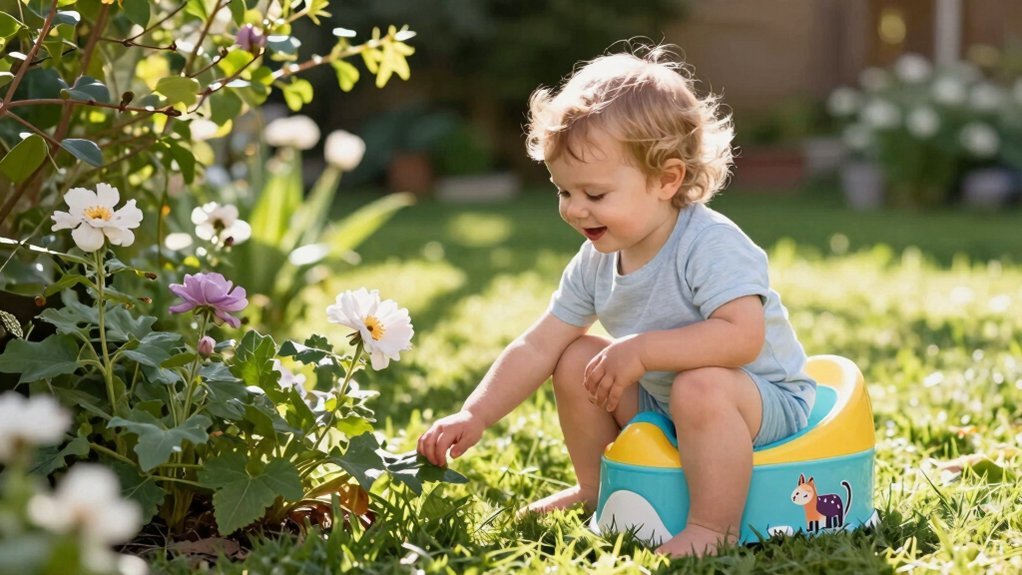
Natural potty training works better because you’re aligning with your child’s developmental readiness rather than fighting against it. When you reduce pressure and let readiness signals—dry periods, interest, and communication—guide the process, your child experiences less stress and greater success. Research shows early intensive training before 27 months yields limited long-term benefits, while patient, child-led pacing often produces faster compliance. You’ll discover how Montessori principles and bathroom independence further accelerate this natural progression.
Respect Your Child’s Readiness Signals
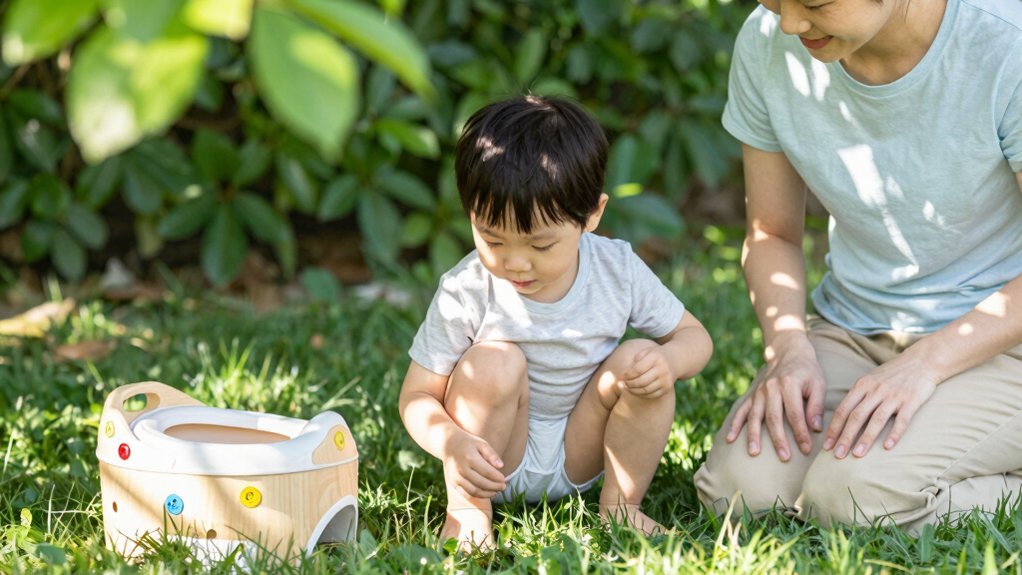
How do you know when your child’s ready for potty training? Watch for physiological signals first. By 18 months, your child’s bladder shows predictable patterns, and you’ll notice warning signs before bowel movements occur. Your child can maintain supervised dryness and communicate elimination needs through sounds, gestures, or words.
Beyond physical readiness, observe behavioral interest. Does your child show curiosity about the potty process? Can they manipulate clothing and follow simple routines? These capabilities indicate developmental readiness for self-directed training. Research shows that about 20% of children achieve complete bladder and bowel control by age 2, so full control is not expected during early training phases.
Equally important is emotional readiness—both yours and your child’s. A child-oriented approach means waiting for displayed readiness signs rather than imposing a timeline. When you respect these signals, you’ll find potty training progresses naturally without resistance or complications.
How Montessori Teachers Approach Toilet Training
Montessori educators put your child’s readiness signals into practice through a carefully designed environment that supports self-directed learning. They observe your child’s natural interest in toileting and respond with child-sized fixtures that feel accessible rather than intimidating. Teachers offer the potty at consistent times—upon waking, before naps, after meals—allowing your child’s body rhythms to guide the process. They step back from directing, instead letting natural consequences like cleaning up accidents motivate your child intrinsically. Your child manages pulling down pants, using toilet paper, and handwashing independently, building genuine confidence. Montessori teachers avoid rewards or punishments, recognizing that self-directed mastery creates lasting success. This approach respects your child’s unique timeline while fostering autonomy and dignity throughout toilet learning. Preparation begins early through calm discussions about bodily functions, even during nappy changes, so children build familiarity with natural developmental stages before formal toilet use.
Why Backing Off Gets Better Results

You’ll find that reducing pressure around toilet training actually increases your child’s success rate, since stress and coercion often backfire into resistance and regression. When you watch for your child’s readiness signals—like staying dry longer, showing interest in the bathroom, or communicating their needs—you’re working with their natural development rather than against it. Patience and allowing your child to lead the process typically yields faster compliance than forced training, because you’re honoring their autonomy and building their confidence in the skill. Research shows that early intensive training before 27 months demonstrates limited long-term benefits and may actually be less effective than waiting for genuine developmental readiness.
Reducing Pressure Increases Success
While intensive training methods can achieve rapid results, the counterintuitive truth is that backing off actually produces better long-term outcomes. When you reduce pressure, you’re actively lowering your child’s stress and resistance. Research shows that child-led pacing correlates with fewer relapses in wetting, while pressure-based approaches often trigger toileting resistance and stool refusal requiring medical intervention. Cultural variation in approaches, such as Elimination Communication in interdependent contexts versus Western child-initiated models, demonstrates that success depends on alignment between method and family values rather than universal intensity.
You’ll notice that children trained with minimal intervention develop genuine initiative. Supervisory prompting drops accidents to half a day by day three and maintains that progress for ten weeks. Meanwhile, book-reading-only groups rebound to seven accidents weekly after initial improvement.
Child-Led Readiness Signals Matter
How do you know when your child’s actually ready? You’ll notice clear signals across multiple developmental areas. Research shows over 90% of children demonstrate readiness between 18-30 months, with interest peaking at 18-24 months.
| Readiness Category | Key Signals |
|---|---|
| Psychological | Likes potty chair, follows instructions, uses potty words |
| Motor Skills | Walks independently, sits stable, gets on/off independently |
| Cognitive | Understands toilet purpose, expresses evacuation needs |
| Bladder Control | Stays dry 2+ hours, recognizes full bladder |
| Communication | Indicates wet pants, participates in process |
When you observe these signs emerging naturally, you’ve found your window. Your child’s readiness indicators predict success far better than arbitrary timelines. The Go Potty method treats potty training as a skill-learning process comparable to walking or spoon use, emphasizing preparatory development through scaffolding of physical and cognitive skills. Backing off when signals aren’t present aligns with natural development, ultimately accelerating progress. Trust what your child shows you.
Patience Over Forced Compliance
Once you stop pushing, your child naturally cooperates more readily than when you demand performance. When you back off pressure, your child complies in the majority of cases without struggle. Accidents happen—respond neutrally without scolding. This prevents escalation and keeps your child open to learning.
After accidents, calmly practice the steps together without shame. This transforms tough moments into teaching opportunities rather than battles. During regression, revert to denser scheduling calmly instead of intensifying pressure. Patience prevents long-term setbacks. Tracking patterns to identify triggers such as dietary changes or routine disruptions helps you anticipate and manage setbacks before escalation occurs.
Your calm approach teaches your child that toileting isn’t a control battle but a natural skill to master. By releasing the demand for immediate performance, you allow biological maturation and your child’s genuine desire for independence to drive success.
When Your Child Is Ready for Natural Potty Training
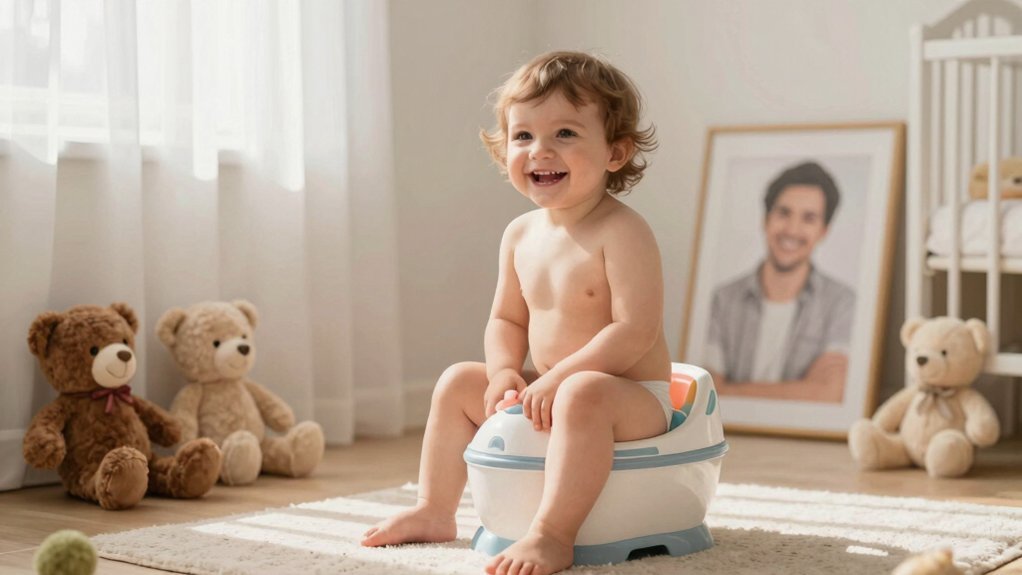
Wondering if your child’s truly ready to ditch diapers? Look for physical signs like staying dry for two hours, waking from naps with a dry diaper, and hiding before bowel movements. Your child should follow simple instructions, mimic your bathroom actions, and communicate their needs with words or gestures.
Independence matters too. You’ll notice your child pulling pants up and down, disliking wet diapers, and showing genuine curiosity about toilet use. Most children display readiness around age two, though girls sometimes show signs earlier than boys. Remember that readiness is not tied to a certain age, so avoid rigid timelines that pressure your child to fit a specific developmental schedule.
Don’t rush the process. Not every sign needs to be present—watch for the overall trend. Before starting, ensure any constipation is resolved for at least thirty days. A child-led approach with your relaxed attitude creates the smoothest transition.
Set Up Your Bathroom for Independence
You’ll want to equip your bathroom with child-sized fixtures and tools that let your little one reach the toilet independently without your physical help.
Organize your storage so your child can easily access what they need, from step stools to soap, making the routine feel manageable and within their control.
These setup choices remove barriers and encourage your child to take ownership of their potty training journey. Creating an environment with easy-to-remove clothing and clear visual signals helps your child recognize and respond to their bodily cues more effectively.
Child-Sized Fixtures and Tools
Why do most parents struggle with standard adult bathrooms during potty training? Standard fixtures create unnecessary obstacles for young learners. You’ll find that child-sized toilets and sinks make independence possible without relying on risky step stools.
Choose toilets with appropriate bowl lengths: 37.5 cm for children under three, and 43 cm for ages three to six. Pair standard-height adult toilets with seat reducers rather than investing in child-specific models that you’ll outgrow quickly.
For sinks, aim for heights between 50-65 cm depending on your child’s age. Install single-lever faucets that safely mix hot and cold water. Wall-mounted vanities at 34-36 inches with 14-inch clearance underneath accommodate step stools when needed. Electronic touchless fixtures minimize contact and germ spread while supporting hygiene habits during the potty training phase.
These purposeful adjustments eliminate fall risks, encourage regular bathroom use, and promote the confidence your child needs for successful potty training.
Accessible Storage and Organization
How does a disorganized bathroom undermine potty training progress? When supplies aren’t readily accessible, you’ll waste precious moments searching for clean clothes or supplies during accidents, breaking your child’s momentum and increasing frustration.
| Storage Solution | Benefit | Location |
|---|---|---|
| Multiple underwear/pants pairs | Quick changes without delays | Low drawer or shelf |
| Cleaning supplies | Immediate accident response | Child-accessible height |
| Tracking chart | Data collection for patterns | Visible wall space |
You’ll create independence by placing items at your child’s level. Low-mounted shelves and organized drawers enable them to retrieve what they need without constant parental assistance. This setup normalizes the bathroom as their self-care space while reducing decision-making barriers. Since most toddlers urinate 4 to 8 times daily, having multiple pairs of underwear and pants readily available ensures quick changes without delays that interrupt the learning process. Clear organization supports autonomy and accelerates training success through accessibility.
Mistakes Parents Make With Rigid Schedules
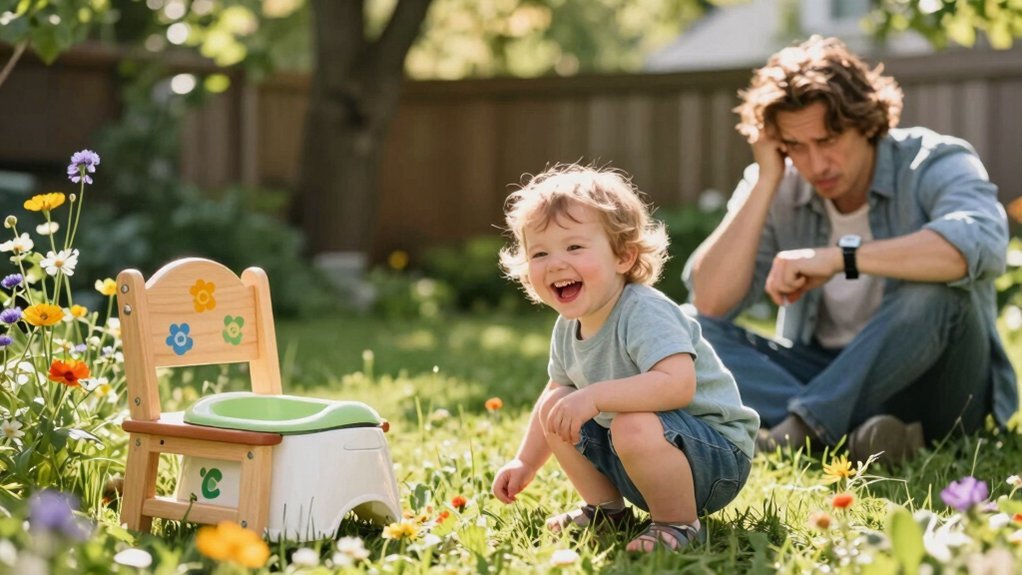
When parents impose rigid schedules on potty training, they’re often setting their children up for stress and failure. You might expect your child to master this skill in three days, but that timeline ignores their developmental readiness and natural rhythms. Hourly potty sits create power struggles when your child resists, turning the process into a battle rather than a milestone.
Boot camp methods demand you clear your schedule entirely, adding parental pressure that affects your whole family. You’ll find that rigid approaches fail without flexibility—what works Monday mightn’t work Wednesday. Research shows that starting later, when your child’s ready, actually shortens training duration overall. Children thrive when you adapt to their cues, not when you force them into inflexible routines. Natural pacing reduces stress for everyone involved. Accidents are a normal part of learning, and maintaining a calm, encouraging approach during these moments supports your child’s confidence and continued progress.
Build Confidence Through Observation
Rather than imposing arbitrary timelines, you can build your child’s confidence by observing their natural readiness signs. When you recognize signals like interest in the bathroom, extended dry periods, or awareness during bowel movements, you’re validating their individual development pace.
Acknowledge your child’s efforts consistently. Praise them when they stay dry and celebrate successful toilet use with genuine enthusiasm. These positive interactions reinforce self-awareness and encourage independence without pressure. When accidents occur, respond with empathy and calm rather than frustration, which reinforces that learning is a natural part of the process.
Establish routines around natural times—after waking, meals, and before bed—so your child recognizes their own patterns. This repeated experience helps them anticipate their bodily functions and take ownership of the process.
Frequently Asked Questions
What Age Should I Start Natural Potty Training With My Child?
You’ll find success starting between 18 months and 3 years old, with the ideal window being 2.5 to 3.5 years. You should watch for your child’s readiness signs rather than focusing solely on age.
How Do I Handle Accidents Without Shaming or Punishing My Child?
You’ll handle accidents matter-of-factly, cleaning them up without comment or emotional reaction. Stay calm, avoid shame, and praise efforts instead. You’re helping your child learn naturally by maintaining confidence and preventing stress-induced regressions.
Can Natural Potty Training Work if My Child Attends Daycare?
Yes, natural potty training works well in daycare settings. You’ll find success when your daycare provider observes your child’s elimination cues, integrates potty visits into daily routines, and maintains consistency with your home approach.
What if My Child Resists Using the Toilet for Months?
If your child resists for months, you should pause training and resume later. You’ll likely see faster progress when you restart, especially if you’re gentle and avoid coercive methods.
Should I Use Pull-Ups or Regular Underwear During Training?
You’ll find regular underwear or potty training pants work better than pull-ups because they let your child feel wetness, motivating bathroom use. They’re more uncomfortable when wet, encouraging quicker potty transitions and genuine independence.
In Summary
You’ll find that natural potty training works because you’re honoring your child’s unique developmental timeline. When you step back from rigid schedules and let your child lead, you reduce power struggles and build genuine confidence. By setting up an independent bathroom environment and observing their readiness cues, you’re creating the conditions for success. You’re not forcing the process—you’re supporting it, which means your child internalizes toileting as their own accomplishment, not something you’ve imposed.


Leave a Reply