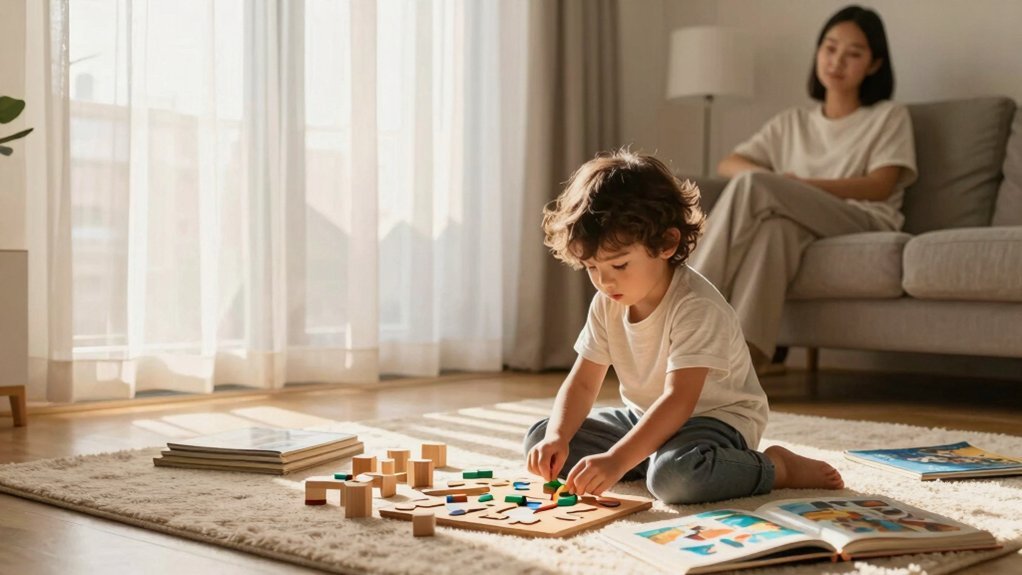
You can boost your child’s growth by tuning into their natural learning tempo instead of forcing a rigid schedule. Watch for quiet concentration, lingering on tasks, and eyes lighting up when they’re in the flow. Offer natural‑material toys, low shelves, and practical‑life tools like child‑size tongs so they can choose activities that match their rhythm. Keep home routines predictable yet flexible, and let rhythmic songs or movement breaks support their pace. Continue, and you’ll discover more ways to nurture this harmonious learning style.
Understanding Your Child’s Unique Learning Rhythm

How does your child’s natural pace shape their learning? In early childhood you’ll notice a distinct learning rhythm that reflects an individual pace, not a classroom clock. Montessori principles teach you to watch, not push, letting observation‑based growth guide choices. When you see your child engrossed in polishing a wooden block or matching colors, those meaningful activities become milestones of coordination, independence, and decision‑making. You’ll notice the quiet concentration at the beach, the way they linger on a task without redirection. Trusting that rhythm reduces pressure, nurtures curiosity, and builds practical life skills at a speed that feels right for them. By aligning your environment with their innate tempo, you support lasting, joyful development. Selecting toys made from natural materials like wood and wool felt can further enhance this learning experience by engaging their senses safely and sustainably.
How to Respect Your Child’s Rhythm at Home and in Montessori
Where does rhythm become a bridge between home and Montessori? You can start by mirroring the child’s natural tempo in daily routines—wake‑up, meals, and bedtime follow the same gentle cadence, creating a predictable, nurturing environment.
Mirror the child’s natural tempo in daily routines to create a predictable, nurturing rhythm that bridges home and Montessori.
In the early years, let your child choose sand‑work or practical‑life tasks like spooning and pouring; observe without redirecting, and you’ll see self‑regulation blossom.
At home, set up low shelves and accessible materials so independent learning feels effortless, just as Montessori classrooms honor each pace.
Keep routines simple, use rhythmic songs or movement breaks, and trust that the child’s focus will deepen when the pace feels right. This alignment reinforces confidence, independence, and a love for learning.
Including child-size tongs in practical-life activities encourages fine motor skills development and complements this natural rhythm.
How to Spot the Benefits of Honoring Your Child’s Rhythm

Do you notice your child’s eyes light up when they’re moving at their own pace? When rhythmic movements flow freely, you’ll see deeper concentration, brighter smiles, and a surge in curiosity.
In a Montessori‑inspired setting, self‑directed sand play or pouring water becomes a laboratory for exploration. You’ll spot smoother motor development as they polish a table, match colors, or spoon beans, each action building coordination and independence.
Emotional well‑being blossoms when you trust their pace, eliminating speed‑driven pressure. Their focus lengthens, language rhythms sharpen, and executive function steadies.
These signs—steady engagement, purposeful play, and calm confidence—are the tangible benefits of honoring your child’s innate learning rhythm. Using Montessori-friendly step stools designed for independence can further support this natural development by encouraging safe self-reliance in everyday tasks.
Frequently Asked Questions
How Do I Measure My Child’s Rhythm Without Intrusive Testing?
You’ll spot patterns by observing play, noting when they’re focused, and tracking how often they request new challenges; use simple logs or apps to record these moments without formal testing.
Can I Honor My Child’s Rhythm While Still Meeting School Deadlines?
Yes, you can honor your child’s rhythm while meeting school deadlines by building a flexible schedule, prioritizing tasks, using short focused study blocks, and communicating needs with teachers early.
What if My Child’s Rhythm Clashes With a Partner’s Daily Routine?
You’ll need to negotiate a shared schedule, carving out dedicated times for the child’s rhythm while aligning the partner’s routine around those blocks, and using flexible tools like calendars or reminders to keep everything coordinated.
Are There Specific Toys That Support Rhythm‑Based Learning?
Yes, you can choose rhythm‑based toys like musical drums, patterned clappers, and interactive metronome games. They encourage timing, beat perception, and coordination, letting your child explore learning through sound and movement.
How Does Honoring Rhythm Affect My Child’s Social Friendships?
When you honor rhythm, your child feels confident, syncs easier with peers, and joins group activities naturally, which strengthens friendships, encourages cooperation, and builds a supportive social circle.




Leave a Reply