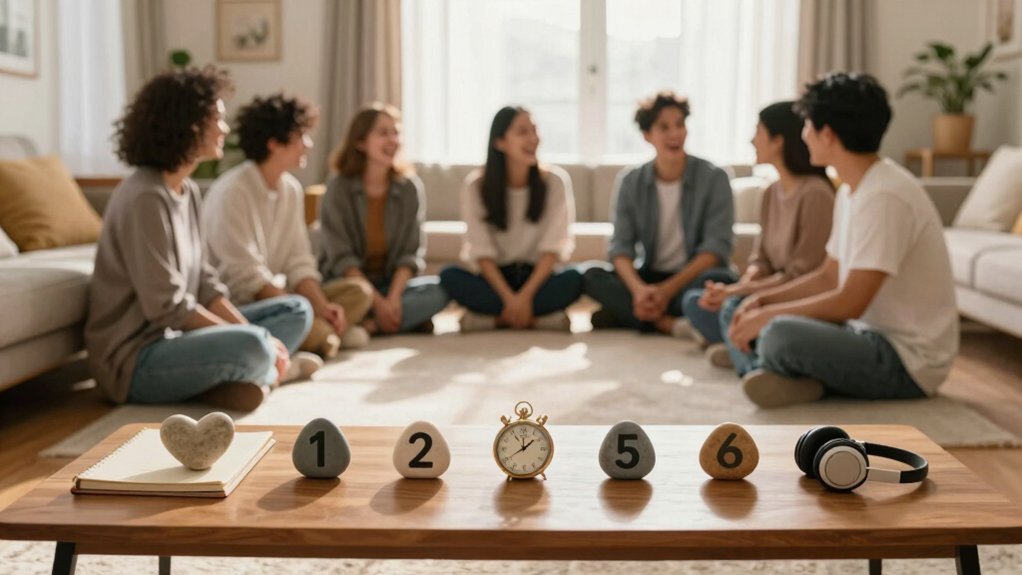
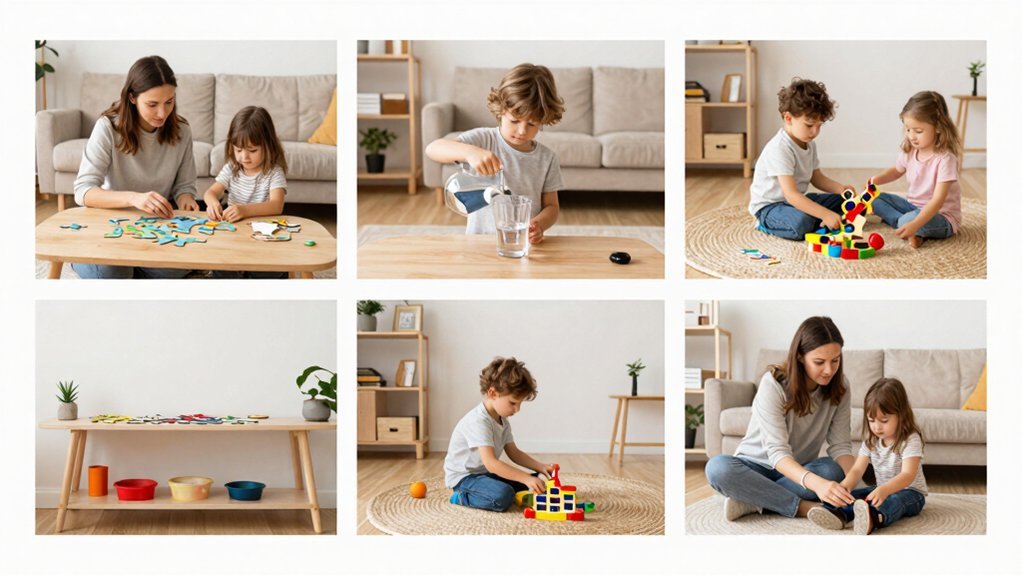
Create a prepared space with low shelves and labeled trays so your child can access materials independently and you rotate items to match their interests. Offer two or three meaningful choices—like which activity to clean up or which outdoor game to play—to foster autonomy without overwhelming them. Give specific, process‑focused feedback such as “You placed each toy in its bin, so cleanup is faster for everyone.” Use natural consequences, letting spills lead to cleanup, to teach responsibility. Encourage peer collaboration through shared projects and grace‑and‑courtesy lessons, and you’ll discover even more strategies.
Design a Self‑Motivating Montessori Environment
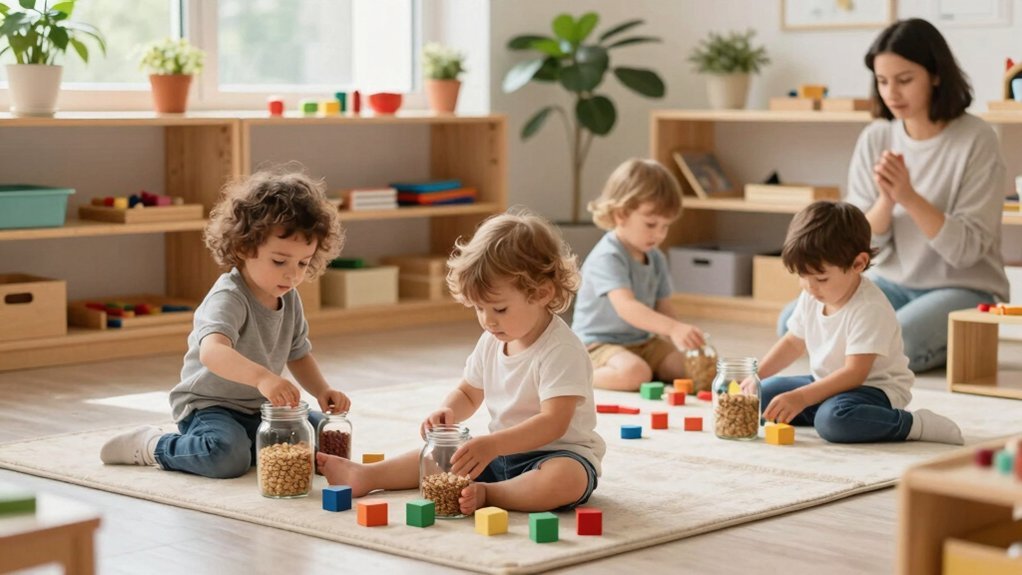
How can you turn a room into a place where a child’s curiosity drives the work?
Start by building a prepared environment: low shelves, clearly labeled trays, and materials that rotate with the child’s interests. When everything is within reach, the child chooses purposeful work without prompting, sparking intrinsic motivation.
Arrange multi-age groupings and predictable routines so they can self-regulate and stay focused for longer periods.
Offer specific, action-focused feedback that praises effort and impact rather than vague compliments.
Apply natural consequences—if a spill occurs, the child cleans it up—linking behavior to outcome.
Sprinkle in grace-and-courtesy lessons and practical life tasks like pouring or food prep to nurture independence and everyday problem-solving.
Incorporating Montessori tools such as step stools with safety features helps children safely engage with kitchen tasks and build confidence in practical life skills.
Offer Controlled Choices to Build Autonomy
A few well‑chosen options can give a child real agency while keeping the activity within your guidance. Offer controlled choices—two or three meaningful alternatives—so the child decides on details like cleanup method or which outdoor game to play.
By limiting options to an age‑appropriate set, you prevent decision fatigue and nurture intrinsic motivation. Frame each choice as a collaborative decision, reinforcing Montessori principles of independence within structure.
Explain the consequences clearly; for example, a slower cleanup means less time for a preferred activity, teaching responsibility without shame. This approach builds autonomy, cultivates independence, and keeps the child engaged, confident, and eager to act on their own. Incorporating Montessori materials like wooden stacking and nesting toys can further support hands-on learning and decision-making skills.
Give Specific, Process‑Focused Feedback
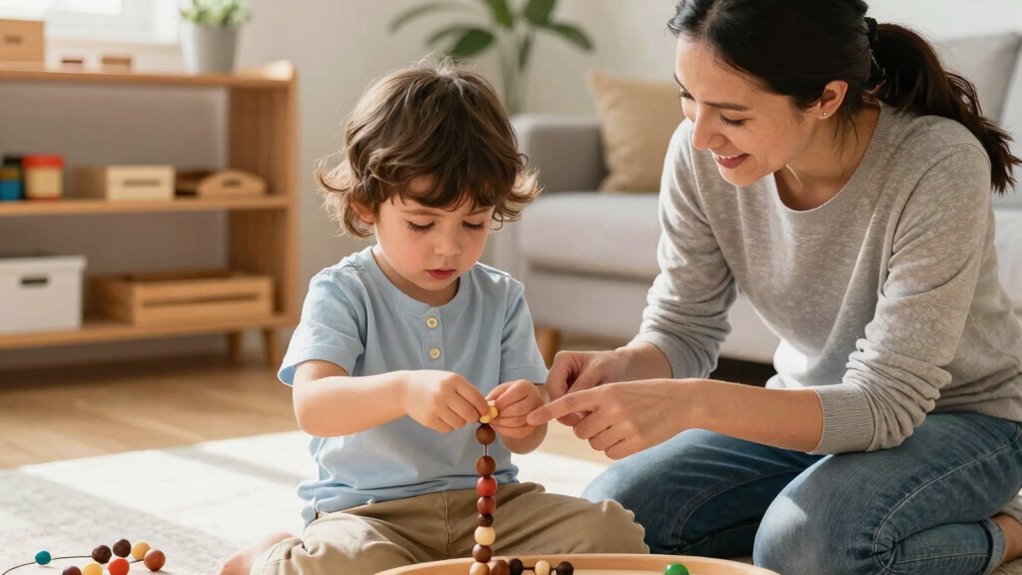
Ever wondered why “good job” feels hollow? In a Montessori environment you replace generic praise with process‑focused feedback that names the exact behavior and its impact. Say, “You placed each toy in its bin so cleanup is faster for everyone,” instead of a vague “good job.” Tie the comment to effort: “I noticed you paused to think before cutting—well done for staying careful.” This calm language nurtures internal motivation and reinforces independence without external rewards. Connect actions to broader goals like cooperation or safety, and add a brief reflection prompt: “What worked well, and could you improve the next time?” Such specific, positive reinforcement builds confidence and self‑regulation. Using tools and materials with appropriate safety features also supports children’s autonomy and confidence in their activities.
Apply Natural Consequences for Responsibility
Naturally linking a child’s actions to their outcomes teaches responsibility without scolding. When a kid spills a drink, you let the slip happen and then guide them to clean it up. This natural consequence shows cause and effect, reinforcing accountability while preserving trust. You’ll notice the child starts predicting outcomes, developing self‑regulation and intrinsic motivation. Consistency is key: repeat the process, reflect together, and celebrate the learning moment. Over time, the child internalizes responsibility, acting thoughtfully because they understand the link between choices and results. Incorporating Montessori principles such as classification skills development can further enhance a child’s ability to understand and organize their experiences.
| Situation | Natural Consequence |
|---|---|
| Forgot to put toys away | Must tidy the space before play resumes |
| Left a snack out | Snack gets stale, so they learn to store food |
| Ignored bedtime routine | Feels tired next day, prompting earlier bedtime |
| Refused to share a game | Misses turn, encouraging cooperative play |
Foster Peer Collaboration for Intrinsic Growth
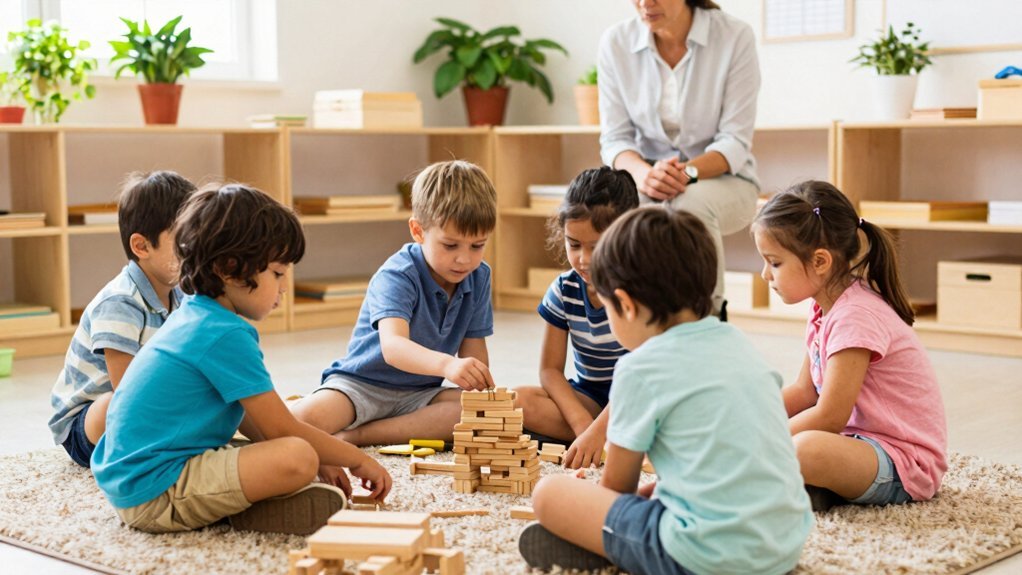
When a child sees the direct result of their actions, they’re ready to experience how learning together amplifies that responsibility. You can nurture peer collaboration by arranging a prepared classroom where each child has a clear role in group tasks. In a Montessori environment, older kids model leadership while younger ones observe, sparking intrinsic motivation without external rewards.
Encourage grace-and-courtesy lessons that teach respectful communication and conflict resolution. Set up cooperative projects that require shared problem‑solving, then guide the class to give peer feedback focused on effort, process, and outcomes. This steady cycle of collaboration and constructive comments reinforces independence, builds social responsibility, and deepens each child’s internal drive to learn. Incorporating multi-sensory elements in classroom materials can enhance engagement and support diverse learning styles.
Frequently Asked Questions
What Is the 7 7 7 Rule for Parenting?
You follow the 7‑7‑7 rule by setting age‑appropriate goals: by age seven, nurture moral/social skills, cognitive milestones, and physical abilities, using consistent routines and gentle boundaries.
Why Doesn’t Montessori Use Rewards?
You don’t use rewards because Montessori believes intrinsic motivation drives deeper learning; you foster curiosity, autonomy, and self‑efficacy, letting children feel satisfaction from mastery rather than external praise or prizes.
What Is the Biggest Criticism of Montessori?
You’ll find the biggest criticism is that Montessori’s free‑form, self‑directed environment is hard to replicate consistently at home, demanding extensive preparation, child‑sized materials, and skilled adult observation.
Did Mark Zuckerberg Attend Montessori?
You’ll find no reliable evidence that Mark Zuckerberg ever attended a Montessori school; his early education was in private New York institutions and later Phillips Exeter, not a Montessori program.