
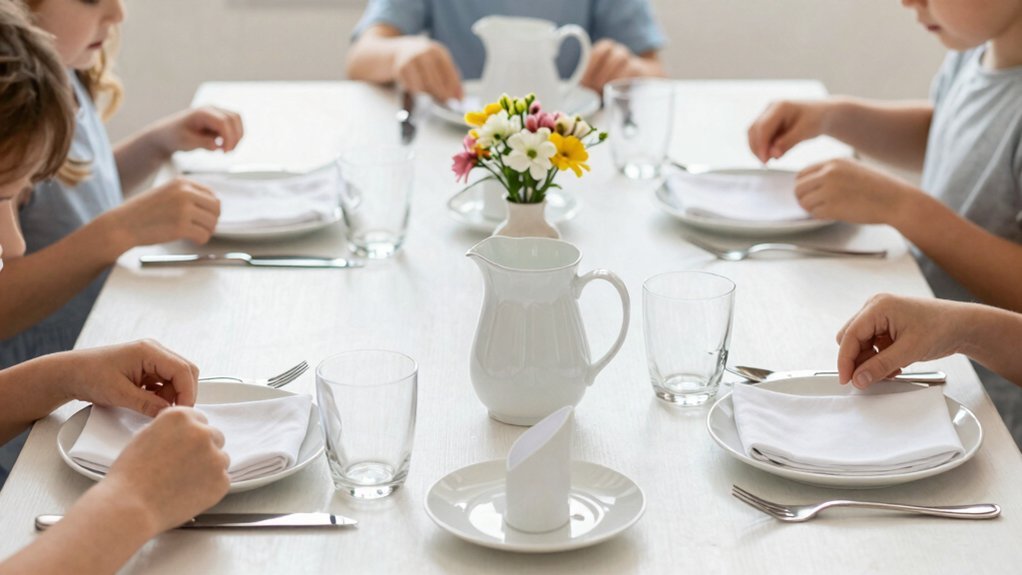
You’ll start by placing a plastic plate in the tray’s center, then outline a fork on the left, a spoon on the right, a knife above the plate, and a cup above the spoon to create a graceful template. Demonstrate each step calmly, guiding the child’s eyes to the marks and narrating the moves. Let them repeat the routine, using the outlines as a visual guide, and add polite phrases like “Please pass the napkin.” Gradually introduce napkins or a glass, and finish with a brief courtesy reflection that leads to even more ideas.
Prepare the Visual Tray Guide for a Montessori Table Setting
How can you turn a simple dinner tray into a clear, repeatable guide for a child’s table‑setting practice?
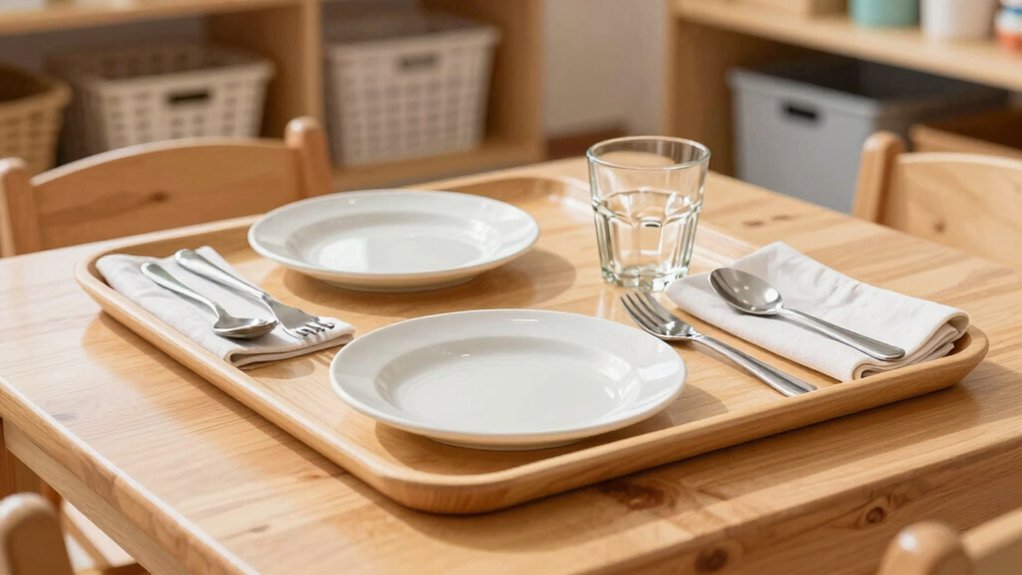
You start by laying the child’s plastic plate in the center of a regular‑sized tray.
Next, arrange the fork, spoon, plastic knife, and cup around the plate in the order you’ll later teach—fork on the left, spoon on the right, knife above the plate, cup above the spoon.
With a marker, trace each item’s outline, creating a visual guide that embodies Grace and courtesy within a Montessori practical life activity.
The traced shapes become a consistent template for utensils placement, reinforcing child independence and courtesy and manners.
After each demonstration, return the items to the tray so the child can repeatedly reproduce the guide, cementing accurate, graceful table setting.
Incorporating low step-in storage solutions can further support a child’s independence by providing accessible and organized areas for their tableware and utensils.
Demonstrate the Montessori Table Setting Step‑by‑Step
You’ve already created the visual template on the tray, so now you can show the child how to set the table step by step. Begin with a calm demonstration: point to the plate outline, place the plate, then guide the child’s eyes to the cutlery marks, placing the fork and knife in the correct positions, and finally set the cup. Use clear visual cues and narrate each move, linking the actions to grace and courtesy. After the first run, remove all items and ask the child to replicate the arrangement from memory.
Encourage repetition: set, remove, reset, and repeat as needed. This kinesthetic practice reinforces social etiquette and embeds the Montessori table setting into everyday grace and courtesy routines. Using open access shelves for organizing table setting materials can further support child independence and easy retrieval during activities.
Guide the Child to Repeat the Montessori Table Setting Independently
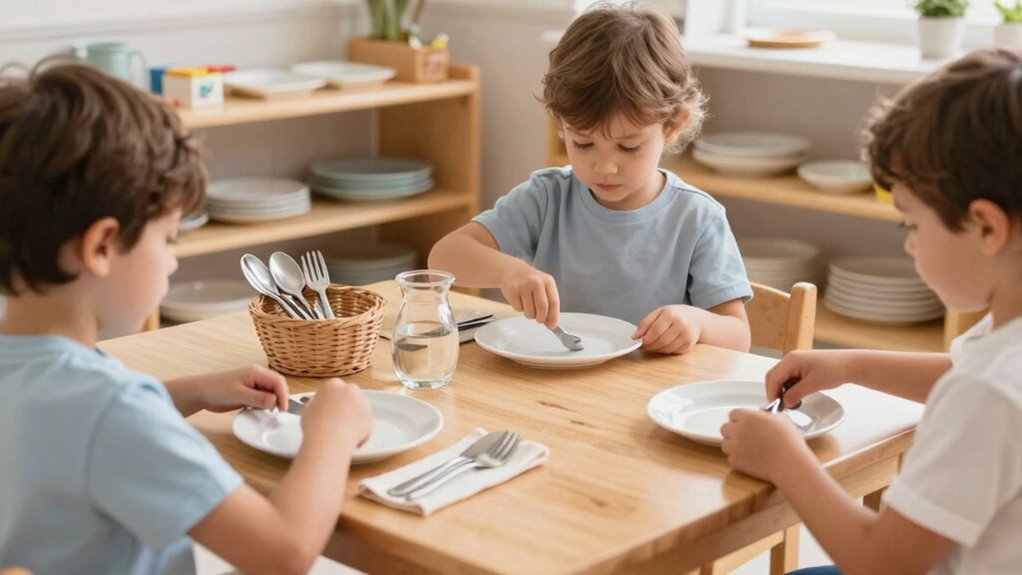
Where does the child’s confidence grow most? You start by showing the tray setup, then let the child watch each item’s place before you cue independent repetition. Use the marked‑outline template—plates, utensils, cup outlined—to give a clear visual guide for table setting.
When the child places a fork or cup, gently remove it and replace it correctly, reinforcing the right position through repetition. This cycle builds fine motor control and social etiquette, while the Montessori approach nurtures independence and grace.
Offer the activity whenever the child wants to practice, gradually adding details like napkins or a water glass. Consistent, self‑directed attempts turn courteous table setting into a lasting habit. Using toys made from natural wood with non-toxic paints can further support fine motor skills during such activities.
Apply Montessori Sequencing to Reinforce Fine‑Motor Independence
Ever wondered how a simple tray can become a powerful tool for fine‑motor independence? You’ll see that a regular‑sized dinner tray, a plastic plate, and cutlery become a miniature classroom. By outlining each item with a marker, you create a visual template that guides the child through Montessori sequencing. The routine moves from observation to replication, then to repetitive practice where items return to the tray after each round. This structured flow builds self‑sufficiency and links table setting to broader practical life goals, sharpening hand‑eye coordination and supporting child development.
- Show the tray layout, then let the child copy it.
- Remove items, ask the child to place them back in order.
- Increase complexity by adding napkins or a glass.
- Repeat daily, reinforcing fine‑motor independence and grace and courtesy.
Using tools designed for fine-motor skill development such as Montessori step stools can further enhance a child’s confidence and independence during these activities.
Add Courtesy Dialogue and Reflection to the Table‑Setting Routine
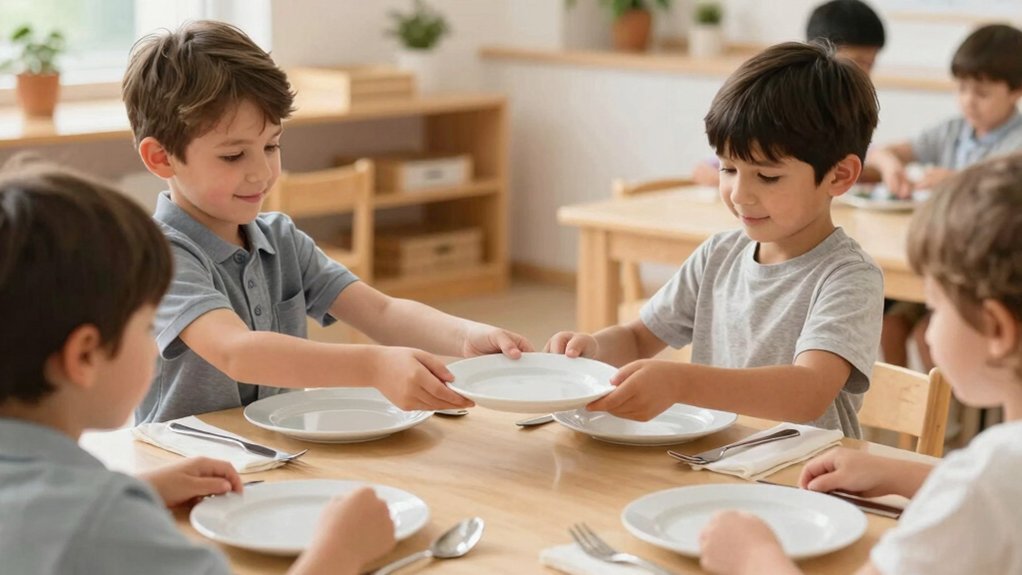
How can a simple table‑setting routine become a lesson in courtesy? You invite the child to say “Please pass the napkin” while arranging plates, forks, and glasses, turning each movement into a practice of manners. Prompt cards cue social exchanges—greeting guests, offering food first, pushing in chairs—so the table setting feels like a live rehearsal of grace and courtesy. After the snack, guide a brief reflection: ask what they did well, such as waiting for everyone, and where they can improve. Then conduct a self‑assessment, rating a Courtesy Score on a 1‑5 scale. This Montessori at home loop links physical placement with verbal politeness, reinforcing respectful social habits. Incorporating dress-up clothes like the LOYO Kids Role Play Costume Set during these activities can further enhance imaginative and cooperative play while practicing manners.
Frequently Asked Questions
How to Teach Grace and Courtesy?
You model grace and courtesy by modeling polite language, thanking helpers, and encouraging “please” and “thank you.” Reinforce with role‑plays, consistent praise, and gentle reminders during everyday interactions.
What Are the 3 D’s of Montessori?
You’ll find the 3 D’s are Digest, Demonstrate, and Discuss. First, you let kids explore materials and absorb ideas. Then you model the steps clearly. Finally, you prompt reflective conversation to deepen understanding.
What Are the 10 Table Manners for Kids?
You should wash your hands, wait for everyone to sit, chew with your mouth closed, finish all food, use a napkin, place utensils correctly, ask to be excused, avoid speaking while eating, take small bites, and offer to share or serve others first.
What Is the Learning Outcome of Table Setting in Montessori?
You’ll gain independence, fine‑motor control, and hand‑eye coordination, while learning proper utensil use, posture, patience, and respect for shared space—skills that build confidence, responsibility, and social grace.