You’ll boost confidence and empathy by teaching five practical grace lessons: greet and say goodbye with a warm smile, steady eye contact, and a confident handshake; model introductions and joining groups through role‑play; practice a three‑step “excuse me” routine for polite interruptions; pair “thank you” with genuine gestures like notes or cards; and use active‑listening techniques—pause, reflect, and respond with empathy—to resolve conflicts. Keep exploring to discover deeper strategies.
Teach Children Graceful Greetings and Goodbyes
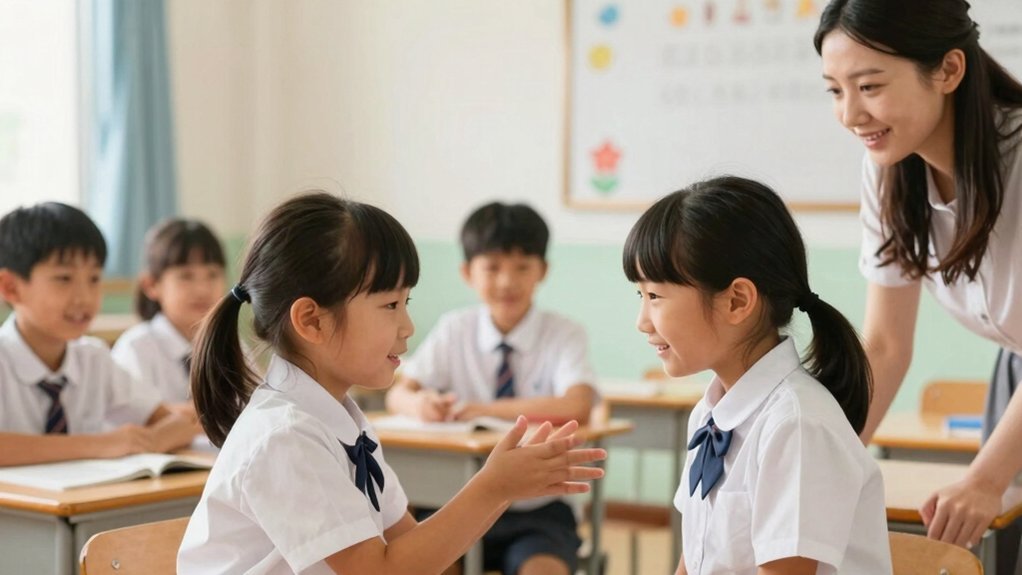
Ever wondered how a simple smile and eye contact can set the tone for a whole interaction? You’ll see children master graceful greetings and goodbyes when you model a warm smile, steady eye contact, and a confident handshake during introductions. In a Montessori setting, you guide them through step‑by‑step role‑playing scripts: they greet a visitor, exchange names, and offer a polite handshake. Repeating these routines builds social skills, confidence, and ease. Teachers demonstrate each move publicly, so students imitate the behavior in real‑life scenarios. By practicing with peers, kids learn to read cues, adjust their tone, and close conversations politely. The consistent practice turns fleeting moments into predictable, respectful habits that linger beyond the classroom. Integrating practical tools like a Montessori-friendly step stool can further foster independence and confidence during social interactions.
Model and Role‑Play: Introducing Yourself & Asking to Join
How can you turn a nervous “hello” into a confident introduction that invites others in? Start with a clear introduction: stand tall, make eye contact, smile, and offer a firm handshake if appropriate. In a Montessori‑style classroom, you’ll model behavior by greeting peers and teachers, showing kids exactly how it looks.
Use role‑play to rehearse joining groups: assign a scenario, let the child practice the greeting, then switch roles so they experience both sides. This structured roadmap builds social skills, reinforces strengths, and reduces anxiety.
As children observe you modeling behavior, they internalize the routine, making real‑world introductions smoother and more natural.
Show Kids How to Say “Excuse Me” and Interrupt Politely
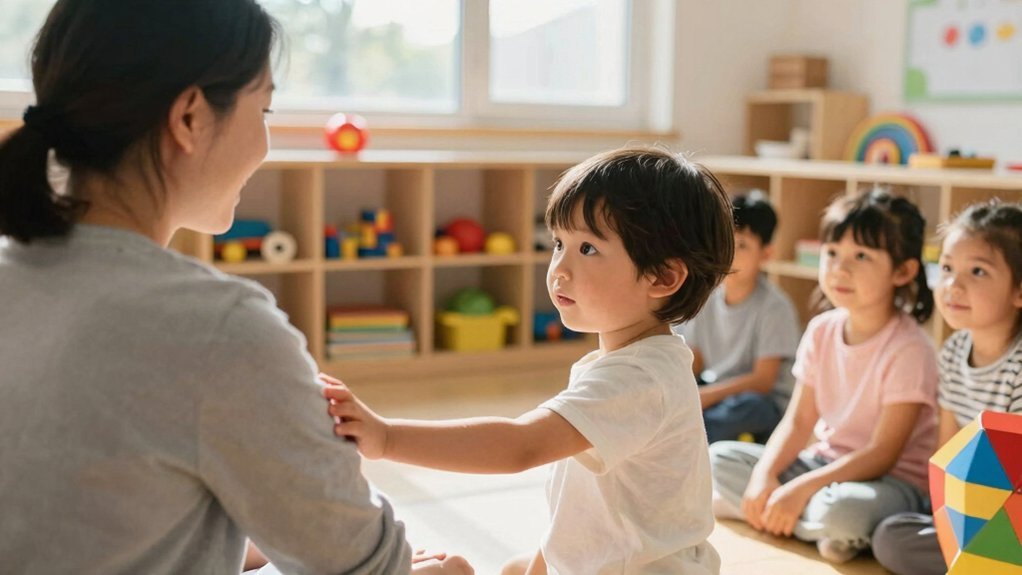
When a child needs to get attention, teaching a three‑step “Excuse me” routine—smile and make eye contact, say the phrase, then state the request—gives them a clear, polite formula to follow.
You can embed this in Montessori‑style grace lessons, using role‑playing drills that simulate a blocked path, a burp, or a conversation cut‑in. Each mini‑lesson focuses on timing, tone, and body language, letting kids practice in a safe space before real‑life interaction.
Offer scripts, then praise the effort with positive reinforcement, so peers see respectful interruption as a social‑skills win.
- Practice eye contact first, then say “excuse me.”
- Model calm tone and polite body language.
- Role‑play varied scenarios (classroom, playground).
- Give immediate positive reinforcement after each successful interruption.
Teach Gratitude Through Polite Thank‑You Gestures
Why should you teach kids to pair a simple “thank you” with a genuine gesture? You embed gratitude into daily life, turning a thank‑you into a polite gesture that builds social skills. In Montessori‑style grace lessons, children write short notes, say “Your help was wonderful,” or hand a card that reads, “Your card is so sweet and will be loved.” These actions reinforce appreciation and classroom etiquette, showing how small acts nurture positive relationships.
Prompt acknowledgment of kindness teaches them to notice others’ efforts, strengthening self‑esteem and empathy. By modeling gratitude, you create a respectful environment where polite gestures become routine, and every thank‑you contributes to lasting social connections. Introducing age-appropriate design features in daily routines can further support children’s development of social and practical skills.
Teach Graceful Conflict Resolution With Active Listening
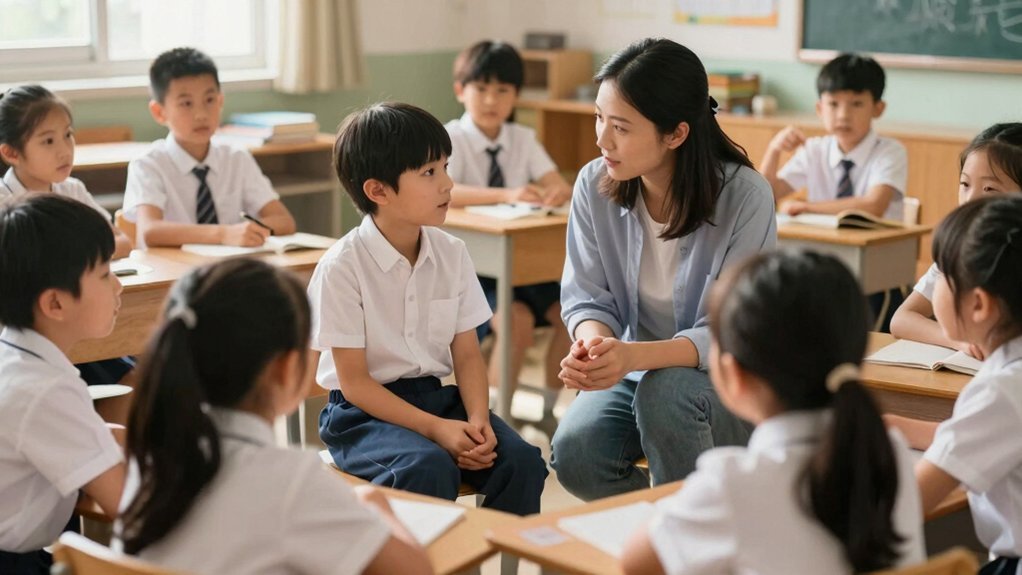
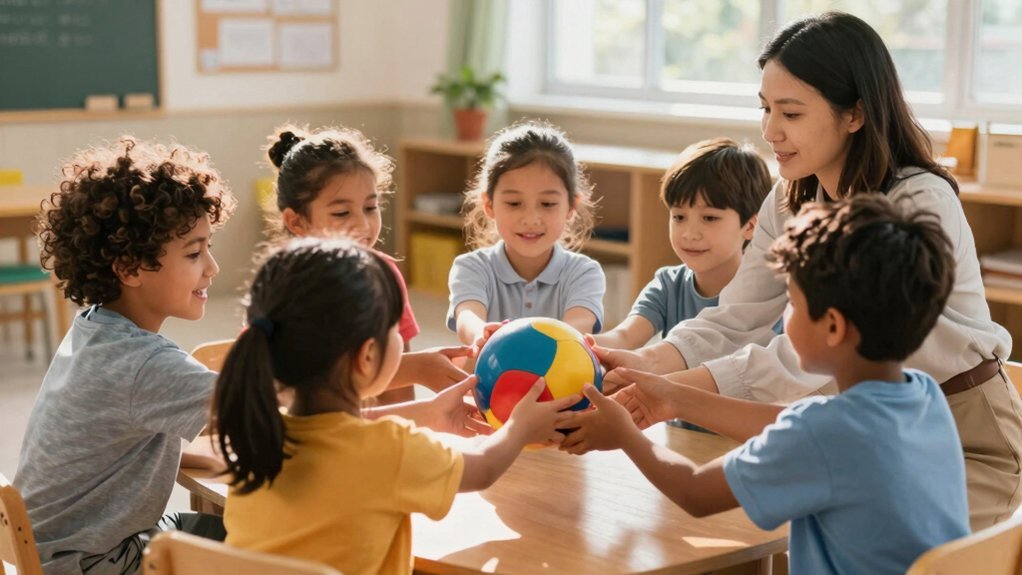
If you model active listening during a disagreement, children learn to pause, reflect, and respond with empathy rather than react impulsively. In a Montessori classroom you’ll see graceful conflict resolution emerge when teachers demonstrate self‑control and respectful communication. You can guide learners to acknowledge perspectives, restate points for clarity, and invite collaboration instead of defensive rebuttals. Role‑playing mini‑scenarios reinforces social skills, while mixed‑age observation showcases effective conflict management. Consistent feedback on eye contact, tone, and polite phrases cements these habits, turning everyday disputes into opportunities for growth.
Model active listening, guide paraphrasing, and foster collaborative conflict resolution through role‑playing and respectful communication.
- Encourage eye contact and paraphrasing to confirm understanding.
- Use role‑playing to practice respectful communication.
- Highlight collaboration over competition in solutions.
- Celebrate moments where children demonstrate self‑control.
Integrating Montessori materials such as the Brown Stair series can further enhance children’s understanding of gradual progression and patience during conflict resolution.
Frequently Asked Questions
What Are Some Examples of Social Graces?
You greet people with a smile, make eye contact, say “please” and “thank you,” hold doors, listen without interrupting, introduce yourself clearly, use polite language, and respect personal space.
What Are the 15 Social Graces?
You practice eye contact, greet warmly, introduce yourself, say please, thank you, excuse yourself, listen attentively, avoid interrupting, hold doors, give genuine compliments, respect personal space, share, wait patiently, apologize sincerely, and smile often.
How to Develop Social Grace?
You develop social grace by observing respectful peers, practicing polite language, listening actively, offering genuine compliments, handling disagreements calmly, and consistently reflecting on your tone and body language.
What Activities Improve Social Skills?
You’ll boost social skills by role‑playing greetings, practicing active listening in group games, joining collaborative projects, volunteering together, and reflecting on feedback after each interaction, all while staying mindful and respectful.