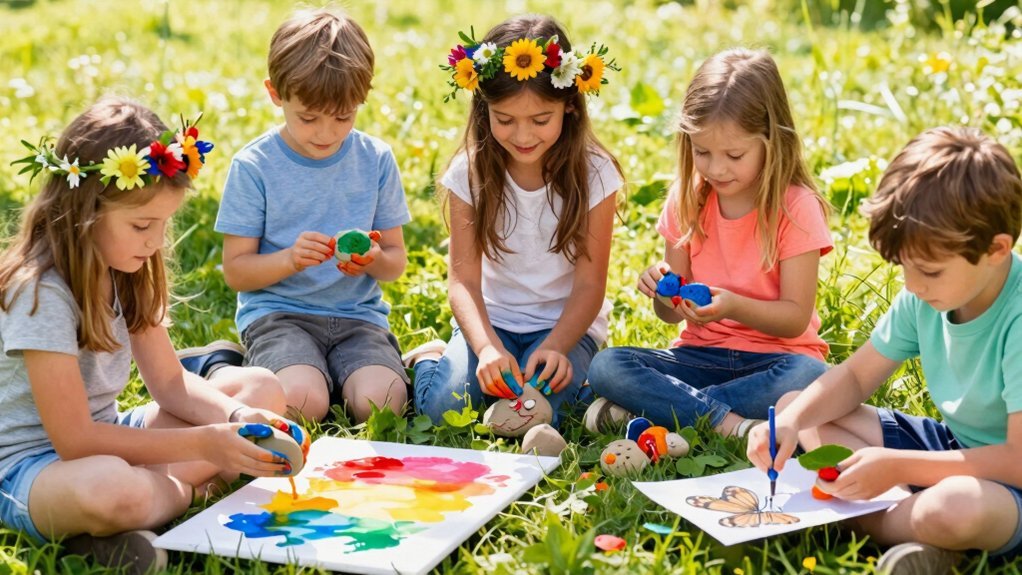
When you step back and let natural materials guide discovery, you’ll unlock authentic artistic growth. Sensory play activates multiple brain regions simultaneously, strengthening neural pathways through texture, color, and sound exploration. Open-ended supplies spark flexible thinking without prescribed outcomes, while unstructured outdoor time ignites imagination naturally. You’ll notice kids build genuine confidence through trial-and-error problem-solving rather than perfecting predetermined products. Natural materials like leaves and stones deepen emotional connections to their work. There’s much more to uncover about how this process transforms children’s creative voice.
How Sensory Play Naturally Ignites Neural Growth
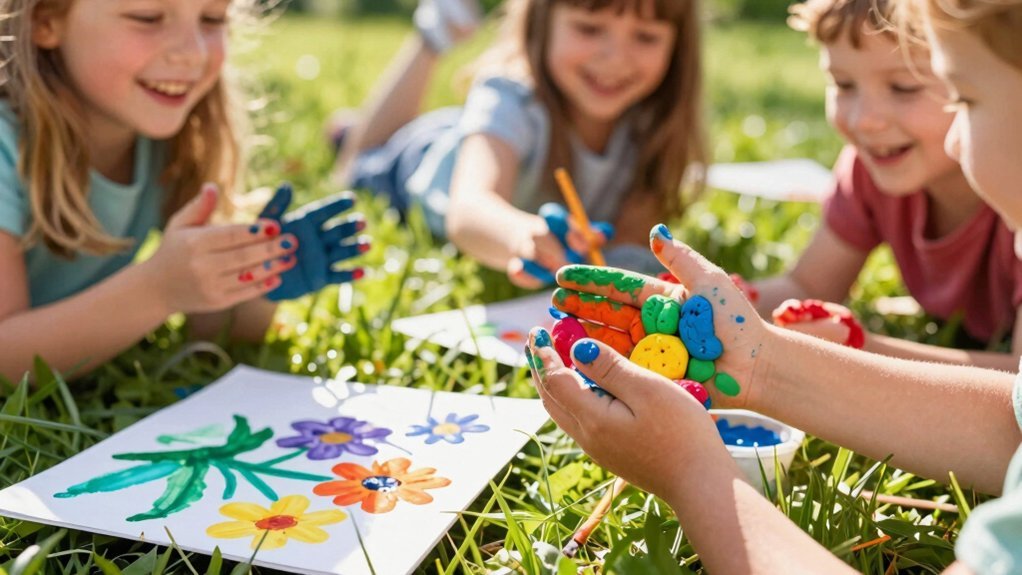
Why does your child’s brain light up when they’re squishing playdough or splashing in water? Because sensory experiences directly activate multiple brain regions simultaneously, triggering neural growth that supports thinking, memory, and language skills.
When your child engages their senses—touching textures, hearing sounds, seeing colors—they’re building dendritic complexity in brain cells responsible for processing information efficiently. Multisensory stimulation strengthens nerve connections across critical pathways, particularly in the prefrontal cortex.
This neural development happens through exploration and experimentation. Your child discovers cause-and-effect relationships, patterns, and object properties by playing freely with sensory materials. Each repeated experience reinforces these connections, creating a stronger foundation for problem-solving and curiosity. Sensory play supports emotional regulation alongside cognitive development, helping your child manage feelings through tactile and exploratory activities. The result? A brain wired for learning, equipped to tackle complex tasks later.
Why Open-Ended Supplies Keep Kids Thinking in Many Directions
You’ll discover that open-ended supplies naturally encourage multiple solutions to every creative challenge, allowing your child to approach problems from countless angles rather than following a single correct path.
When you remove prescribed outcomes, you’re actually removing the fear of failure—kids risk bolder ideas, unexpected color combinations, and unconventional constructions because there’s no “wrong” way to use a cereal box or fabric scrap.
This freedom transforms imagination from something constrained by instructions into something boundless, where your child’s unique vision becomes the only guide that matters. As children engage with diverse materials like paint, clay, and found objects, they develop fine motor skills while exploring textures and forms in ways that feel natural and playful rather than forced.
Multiple Solutions Foster Creativity
When children work with open-ended materials—collage scraps, markers, found objects, and playdough—they’re not following a predetermined path; they’re charting their own creative course. You’ll notice that the same materials spark entirely different creations for each child. One might transform bottle caps into a mosaic while another builds a sculptural tower. This freedom to repurpose and reimagine materials encourages flexible thinking.
When you remove step-by-step instructions, children discover multiple solutions to the same creative challenge. They experiment with color combinations, test how shapes fit together, and modify their approach based on what works. This trial-and-error process builds genuine problem-solving skills and teaches them that creativity isn’t about reaching one “correct” answer—it’s about exploring infinite possibilities. As they engage with these materials, children also develop fine motor skills through cutting, shaping, and manipulating objects, which supports their growing confidence and independence as young creators.
Risk-Taking Without Limits
How do children build confidence in their own creative decisions? When you provide open-ended materials like clay, paint, and found objects, kids risk-take freely without fear of failure. They’ll experiment boldly with colors and forms, discovering unexpected combinations that prescribed projects won’t allow.
You’re creating space where everyday rules suspend, enabling playful exploration. Children test limits naturally—mixing materials, repurposing scraps, pushing boundaries. Each trial-and-error attempt builds resilience and independence. Ownership of their creative process empowers kids to assert their individuality and bring their unique visions to life.
This boundless approach cultivates emotional security too. When there’s no “right” answer, kids express authentically and develop genuine confidence in their creative instincts. They’ll tackle increasingly complex problems because they’ve learned that risks lead to growth, not judgment. That’s how natural creativity truly flourishes.
Imagination Over Prescribed Outcomes
Why do children thrive when art supplies come without instructions? You’ll find that open-ended materials spark boundless imagination because they aren’t confined to predetermined outcomes. When you remove step-by-step directions, kids naturally explore multiple creative directions simultaneously.
| Supply | Traditional Use | Child’s Invention |
|---|---|---|
| Paint | Painting pictures | Texture mixing experiments |
| Cardboard | Boxes | Architectural structures |
| Fabric scraps | Decoration | Character costumes |
| Wooden blocks | Building | Abstract storytelling props |
You’re enabling cognitive flexibility when children repurpose materials into entirely new forms. They construct narratives independently, transforming a simple tube into a telescope, megaphone, or telescope within minutes. This freedom encourages trial-and-error thinking, where obstacles become adventures rather than failures. Through this process of autonomous discovery, children develop problem-solving abilities that extend far beyond the art experience itself. Your role involves providing diverse supplies and trusting kids’ instincts to guide their artistic journey in unexpected directions.
Letting Kids Discover Problems and Solutions Builds Real Confidence
There’s something powerful that happens when you step back and let your child wrestle with a challenge instead of immediately offering the answer. When you allow kids to discover problems and solutions independently, you’re building genuine confidence that’ll stick with them into adulthood.
Your child learns to view artistic challenges as opportunities for growth rather than roadblocks. Through open-ended questioning, you guide their thinking without handing them solutions. They develop critical thinking skills and learn to trust their own judgment. When children engage in deeper understanding of cause and effect, they become more reflective thinkers who can analyze their creative processes more effectively.
This approach strengthens resilience too. When your child solves problems alone or collaboratively, they become more adaptable and resourceful. They take calculated risks in safe environments, knowing they can handle difficulties. The confidence gained through discovery transforms them into capable, independent thinkers who embrace creative challenges confidently.
Outdoor Time Without a Plan Sparks Imagination and Curiosity
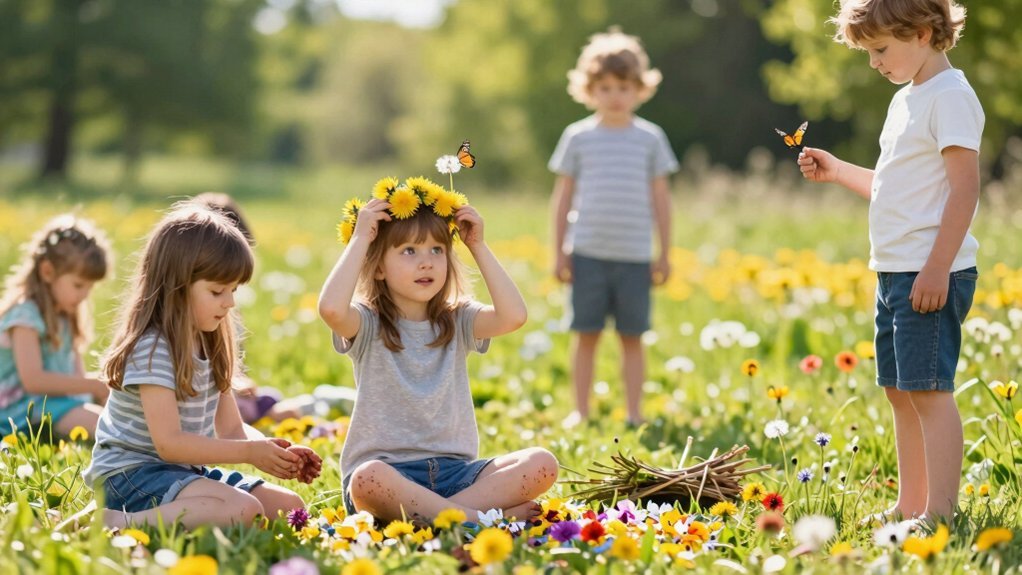
When you let your child roam outdoors without a structured plan, you’re unleashing a creativity machine. Unstructured outdoor time encourages your child to invent games, explore spaces independently, and transform natural elements into tools for adventure. A stick becomes a sword or magic wand; leaves transform into fort walls. This freedom sparks imagination without limits.
Your child’s curiosity deepens through sensory engagement—sights, sounds, and smells focus attention and improve concentration. Wonder-driven activities like bug hunting or tree climbing develop critical thinking and problem-solving skills. Without guidance, your child navigates environments, makes decisions, and adapts on the fly. These natural experiences also build essential skills for independent thinking that children carry into all areas of life.
Research from the American Academy of Pediatrics confirms that unstructured outdoor play improves attention spans and cognitive function, leading to better classroom success and complex problem-solving abilities.
Celebrating the Art-Making Process: Not Just the Final Product
When you shift focus from the finished artwork to the creative journey itself, you free your child from perfectionism’s constraints and open space for authentic self-expression. You’ll notice their confidence grows as they experiment with materials, take risks, and learn that mistakes fuel discovery rather than diminish value. Problem-solving skills develop naturally as children adapt their approaches and work through creative challenges during exploration.
Through this process-centered approach, you’re nurturing emotional resilience and helping them understand that creation itself—not the final product—holds the greatest worth.
Freedom Over Perfection
Why do we so often judge children’s artwork by its final product rather than the journey that created it?
When you prioritize freedom over perfection, you’re shifting focus from rigid outcomes to genuine discovery. You’ll notice children relax when they’re not chasing a predetermined result. They experiment boldly, mix colors without fear, and problem-solve creatively. This mindset removes the pressure of “right” and “wrong” ways. Clear visual direction through the creative process helps children understand that artwork evolves through iteration and refinement rather than appearing fully formed.
| Product-Focused | Process-Focused |
|---|---|
| Frustration & inadequacy | Relaxation & success |
| Adult-controlled outcomes | Child-directed exploration |
| Similar finished pieces | Unique original creations |
| Skills feel limiting | Skills emerge naturally |
You’re fostering confidence by celebrating their choices and efforts, not comparing their work to a model. When children create freely, they develop genuine artistic voice and lasting joy in making art.
Building Confidence Through Exploration
Every choice your child makes during art-making—from selecting materials to deciding when a piece is complete—builds genuine confidence in their abilities.
When you encourage them to explore freely, you’re not just allowing creative expression; you’re strengthening their sense of capability.
As your child experiments with different techniques and materials, they develop critical thinking skills through problem-solving. They discover what works, what doesn’t, and why. This iterative process teaches resilience—essential for building lasting confidence. Research shows that independent choices in art activities exercise autonomy and reinforce personal abilities in meaningful ways.
The beauty of focusing on process over product is that every attempt becomes valuable. Your child learns that mistakes aren’t failures; they’re discoveries. By celebrating their exploration rather than judging outcomes, you help them develop emotional resilience and deeper self-assurance in their creative abilities.
Emotional Growth in Creation
Art-making offers your child a powerful outlet for emotions that they can’t always express with words. Through creative work, you’ll notice how your child processes complex feelings safely and builds emotional awareness.
When your child engages in art-making, they develop essential emotional regulation skills:
- Forceful scribbling releases anger constructively
- Gentle brushstrokes calm anxiety and tension
- Abstract shapes transform overwhelming emotions into visual forms
- Color choices reveal inner emotional states
- Tactile clay molding channels pent-up energy productively
You’ll witness your child gaining confidence as they realize emotions have value and deserve expression. This non-verbal communication strengthens their self-concept and sensitivity to their inner world. By celebrating each stroke and creative decision—regardless of the final result—you foster resilience and help your child understand that emotional exploration matters more than perfection. As your child continues to engage in art-making over time, they build perseverance and determination by learning to embrace mistakes as natural steps in the creative journey rather than failures to avoid.
Using Natural Materials Helps Kids Find Their Own Artistic Voice
When children gather leaves, stones, and twigs, they’re not just collecting materials—they’re claiming the tools to express themselves authentically. You’ll notice how natural elements encourage genuine self-expression without the constraints of commercial art supplies.
| Material | Benefit | Expression |
|---|---|---|
| Leaves | Varied textures | Organic patterns |
| Stones | Weight & shape | Sculptural forms |
| Twigs | Natural lines | Structural designs |
| Shells | Unique colors | Textured compositions |
When you work with raw materials, you’re free to explore your own creative voice. Unlike predetermined kits, natural resources invite experimentation and individual interpretation. You develop confidence through trial and error, discovering what resonates personally. This freedom transforms art-making into a deeply personal journey where your unique perspective shines through each creation, strengthening your artistic identity. Natural sensory experiences during these creative sessions also deepen your emotional connection to the artwork you’re making.
When Kids Lead, Art Becomes a Bridge to Understanding the World
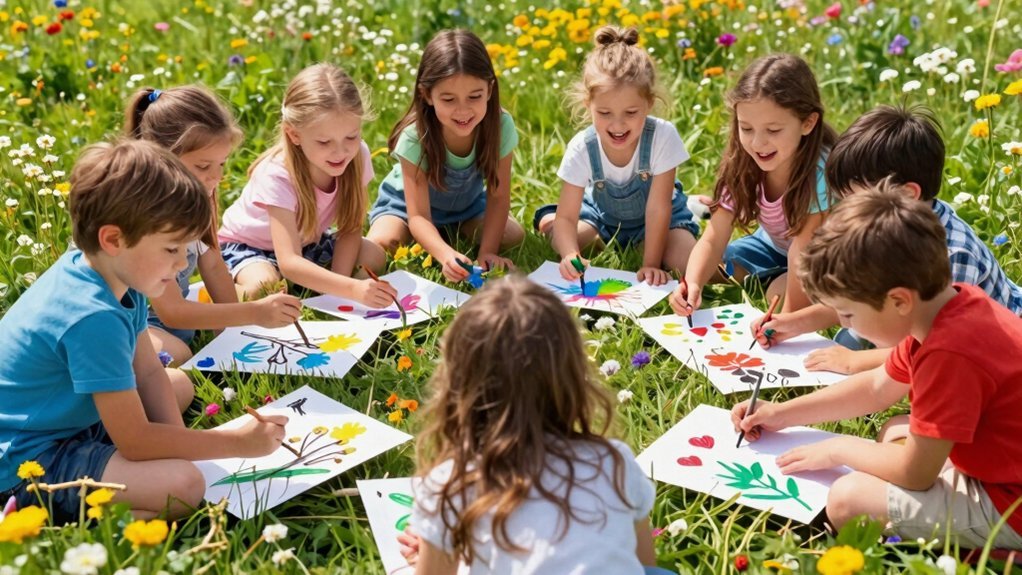
How does a child transform a handful of twigs and stones into a window onto their inner world? When you step back and let kids lead their artistic exploration, you’re offering them something profound—a bridge to understanding themselves and their world.
Child-led art becomes a safe outlet where you watch your child process complex emotions and social experiences visually. Through this creative freedom, you’re fostering:
- Deeper comprehension of abstract concepts
- Emotional regulation and self-awareness
- Stronger parent-child connections
- Enhanced social competence
- Greater school engagement and future success
Art distinguishes itself from play by delivering measurable developmental gains. As your child directs their creative journey, they’re not just making art—they’re building the cognitive and emotional foundations that support lifelong learning and resilience. Exposure to the arts is linked to improved academic performance across ages, reinforcing the lasting impact of these creative experiences on your child’s educational trajectory.
Frequently Asked Questions
How Does Nature-Based Art Specifically Support Children’s Mental Health and Emotional Well-Being?
You’ll find that nature-based art therapy helps you process emotions through creative expression while engaging with natural elements. You’ll experience reduced anxiety, improved emotional regulation, and calmer states as you combine artistic activity with nature immersion.
At What Age Do Children’s Divergent Thinking Abilities Begin to Decline Significantly?
You’ll notice your child’s divergent thinking peaks around age five, then you’ll see it decline noticeably by age ten, dropping to just twelve percent by fifteen. You’re losing creative capacity as you mature.
What Are the Key Differences Between Process Art and Product-Focused Art for Child Development?
You’ll find that process art emphasizes your child’s creative journey and self-expression, while product art focuses on achieving a specific end result. Process fosters innovation; product builds skill mastery through guided instruction and technique refinement.
How Can Parents Encourage Independent Play With Natural Materials at Home Effectively?
You’ll foster independence by creating predictable spaces, providing ample unstructured time, and offering open-ended natural materials like mud, sand, and leaves. Observe without directing, allowing your child to explore at their own pace.
Which Specific Motor Skills Develop Most Through Hands-On Art Activities Like Painting and Clay?
You’ll develop fine motor strength, hand-eye coordination, and bilateral dexterity through painting and clay work. These activities build grasp control, finger precision, and the hand muscles you’ll need for writing and advanced manipulation tasks.
In Summary
You’ve discovered that natural creativity flourishes when you give your kids space to explore. By embracing sensory play, open-ended materials, and outdoor adventures, you’re nurturing their artistic development without rigid instruction. You’re building their confidence as they solve problems and lead their own discoveries. When you celebrate their process rather than just the finished piece, you’re helping them develop a unique artistic voice that’ll serve them throughout their lives.