
You’ll boost practical life skills with kid‑friendly tools that are safe and easy to use. Mini knives with finger guards or mezzalunas keep hands away from blades, while insulated oven mitts protect tiny palms from heat up to 500°F. Non‑slip mixing bowls, silicone‑handled whisks, and sturdy step stools give steady grip and safe counter access. Measuring cups, spoons, and digital scales teach precision, and aprons keep clothes clean. Keep exploring for more ideas on organizing and budgeting these tools.
Essential Kid‑Friendly Kitchen Tools
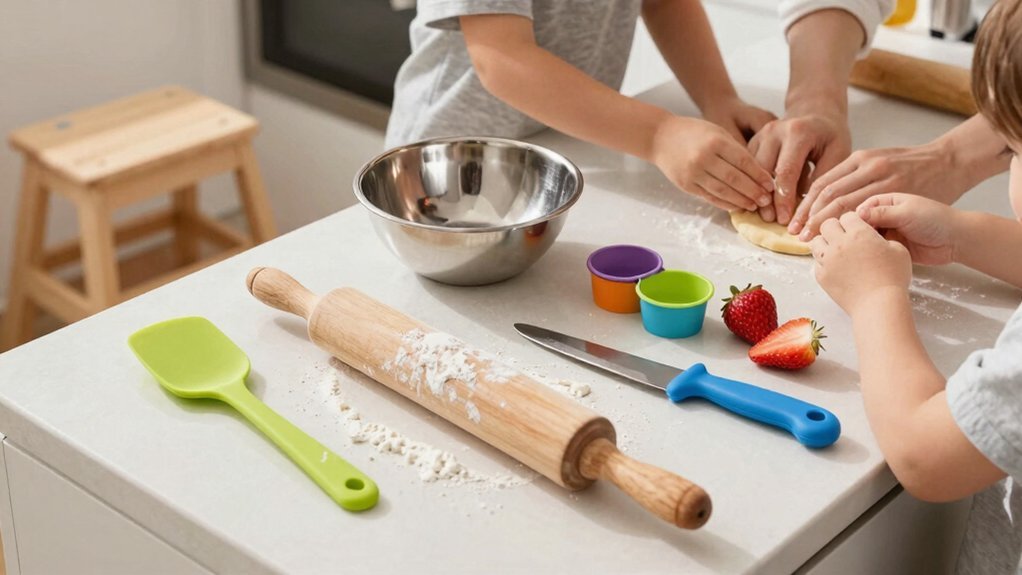
Ever wondered how a simple set of kid‑friendly tools can turn cooking into a safe, confidence‑building adventure? You’ll start with non‑slip bowls that grip the countertop, so vigorous mixing never tips over. Slip on child‑sized oven mitts and grab a kid‑friendly knife with a finger guard or a mezzaluna that keeps blades away from little hands. Measure ingredients with mini cups, spoons, and a rolling pin that teach fractions while staying easy to handle. A sturdy apron protects clothes and gives a sense of ownership, making the kitchen feel like a real workspace. All these safety‑tools have ergonomic handles and built‑in features, letting kids practice independently and keep using them for years. Including tools that encourage practical life skills can further enhance children’s confidence and independence in the kitchen.
Kid‑Friendly Step Stools for Safe Access
You’ll notice that a step stool gives you just the right height to reach the counter without stretching.
The enclosed edge design keeps you safe from accidental falls while you’re pouring or mixing.
With a stable, non‑slip base, you can work independently yet stay securely supported.
Many Montessori-friendly stools also feature safety rails and anti-slip pads to minimize fall risk and enhance stability.
Height Advantage for Kids
How can a simple step stool turn your kitchen into a safe learning zone for kids? A sturdy step stool gives your child a kid‑friendly height that brings the counter within reach, letting them measure, pour, and stir without straining. You’ll notice them gaining confidence as they independently tackle simple recipes while you keep a watchful eye. The elevated platform reduces the need for you to lift them onto chairs, decreasing the risk of falls. Because the stool is designed for toddlers, it offers solid support and a low center of gravity, making transitions between floor and counter smooth. By providing this height advantage, you encourage longer, hands‑on participation in everyday cooking tasks, turning routine meals into practical life lessons. Choosing tools with adjustability ensures that the step stool grows with your child and remains safe and comfortable over time.
Safety Edge Enclosed Design
Why settle for a plain stool when you can give your child a built‑in safety barrier? A Safety edge enclosed design wraps the platform in a low‑profile wall, preventing falls while they reach for a bowl or a spice jar. The enclosure gives toddlers the confidence to stand tall, and the edge protection stops accidental bumps. You’ll notice they stay steadier, and you’ll enjoy watching them help without constant worry.
| Feature | Benefit | Example |
|---|---|---|
| Safety edge | Reduces edge injuries | Rounded lip around the platform |
| Enclosed design | Stops falls off the side | Low side walls |
| Sturdy base | Maintains stability | Wide footprint |
| Height‑appropriate | Enables counter access | 12‑inch platform |
With this design, you turn a simple stool into a secure learning tower that encourages independence and safety in the kitchen. Many modern kitchen tools also prioritize child-safety, such as juicers designed with safety locks and BPA-free materials.
Kid‑Friendly Non‑Slip Mixing Bowls
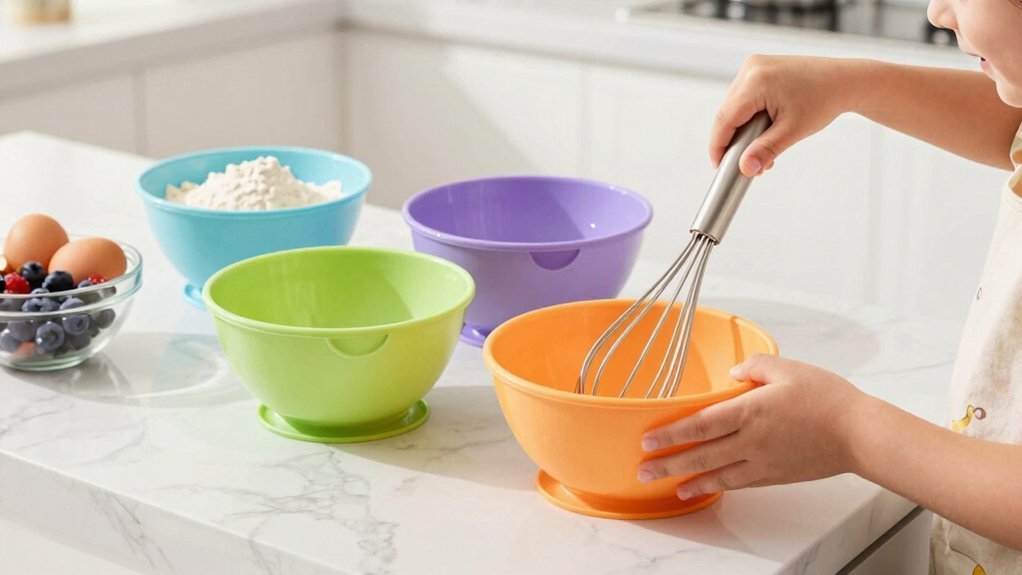
Ever tried stirring a batter with a bowl that slides across the counter? You’ll love non‑slip bowls that lock onto the surface, letting kids mash, whisk, and pour without tipping. The rubber base steadies the mixing bowls, so even enthusiastic hands keep the container in place.
Stainless steel finishes add durability and a smooth, easy‑to‑clean surface, making cleanup a breeze for busy families. With the bowl anchored, children focus on measurement, pouring control, and purposeful movements instead of chasing spills.
The sturdy material also endures frequent drops and vigorous stirring, encouraging confident, hands‑on participation. By choosing these kid‑friendly non‑slip mixing bowls, you turn chaotic kitchen moments into structured learning experiences that build practical life skills. Using supportive tools like Montessori-friendly timers can further enhance children’s independence and time management during these activities.
Kid‑Friendly Aprons That Keep Clothes Clean
You’ll want an apron made of adjust‑resistant fabric so spills won’t ruin the material.
Choose one with adjustable neck straps to keep it snug as your child moves around the kitchen.
This combo gives you durability and a comfortable fit that stays in place.
Additionally, selecting tools and materials that are non-toxic and BPA-free ensures a safer cooking environment for kids.
Adjust‑Resistant Fabric
How can a kid‑friendly apron keep your little chef’s clothes spotless while they explore the kitchen? The secret lies in adjustable fabric that resists stains and stretches with movement. You’ll notice the apron stays snug, so spills slide off the surface instead of soaking into fibers. This durability lets kids experiment with whisking, pouring, and sprinkling without worrying about ruined shirts. The fabric’s resistance also means fewer washes, preserving color and shape for future cooking sessions. Choosing kitchen tools with kid-friendly safety features, like mercury-free thermometers, can further enhance a child’s cooking experience.
| Feature | Benefit |
|---|---|
| Adjustable fabric | Fits growing kids, stays in place |
| Stain‑resistant weave | Keeps clothing clean longer |
| Breathable material | Comfort during active tasks |
| Easy‑care finish | Reduces laundry frequency |
| Kid‑approved colors | Encourages ownership and pride |
Adjustable Neck Straps
A well‑designed kid‑friendly apron hinges on its adjustable neck strap, which lets you quickly fine‑tune the fit as your child grows or moves around the kitchen. When you choose adjustable neck straps, you avoid the slip‑and‑slide of a loose apron and keep the fabric where it belongs—covering clothes and preventing spills from reaching skin. Brands like Hedley & Bennett Kids Apron offer a one‑size solution that slides, snaps, and locks, while Tilit Ombre Kids’ Aprons provide two sizes with pockets for tools. Skipping adult‑sized aprons eliminates excess bulk and improves safety. Adding a monogram or stamp turns the apron into a personal badge, boosting pride and encouraging independence as your child masters practical life skills.
Kid‑Friendly Oven Mitts for Heat Protection
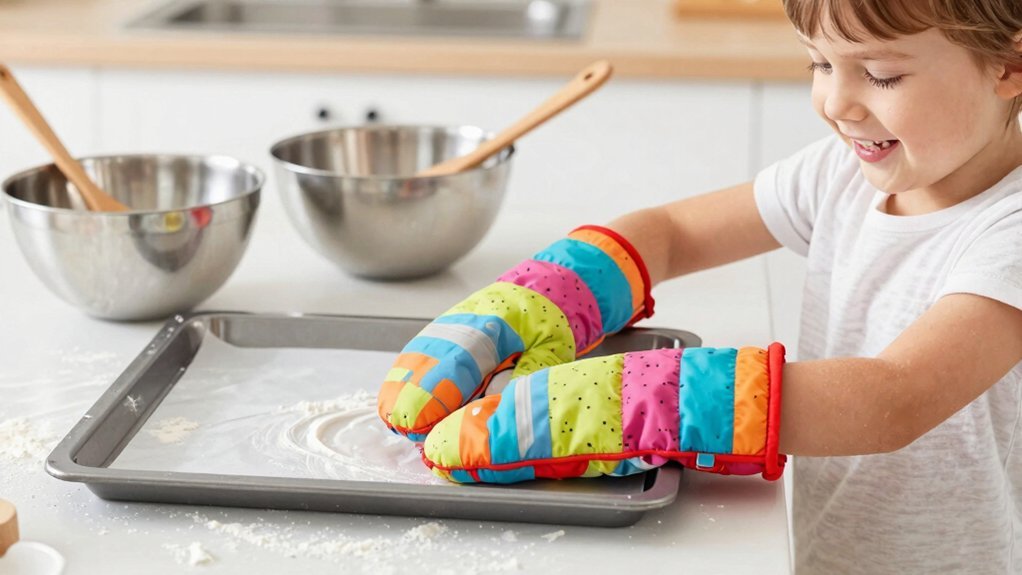
Kid‑friendly oven mitts are a must‑have safety tool that lets little hands handle hot dishes without fear. You’ll notice they’re sized just right for small palms, so grip stays firm and slipping drops dramatically. Pair the mitts with clear guidance on how to lift and move hot pans, and you’ll boost confidence while keeping burns at bay. Proper heat protection lets kids join cooking tasks and develop independence without compromising safety.
Kid‑friendly mitts give small hands safe, firm grip on hot dishes, fostering confidence and independence.
- Child‑specific sizing – ensures the mitt covers the wrist and palm snugly, improving control.
- Insulated materials – silicone‑lined or quilted fabric provides reliable heat protection for up to 500 °F.
- Non‑slip surfaces – textured palms and fingers keep dishes steady, reinforcing practical life skills.
Kid‑Friendly Finger‑Guard Knives & Mezzaluna
You’ll notice the finger‑guard on the kid‑friendly knife keeps your hands clear of the cutting edge while still letting you guide the blade.
The mezzaluna’s overhead handle forces a safe hand position, so you chop without risking a slip.
Together they let you practice real cooking tasks with confidence and minimal injury risk.
Finger‑Guard Safety
Ever wondered how a simple finger‑guard can turn a kitchen chore into a safe learning experience? When you hand a child a knife with built‑in finger guards, you instantly lower the risk of nicks while teaching proper grip. The guard forces the fingers to stay tucked, so the blade only contacts the food. Pair that with a safety knife designed for small hands, and you create a controlled environment where kids can practice chopping without fear. Supervision remains essential, but the tools do most of the heavy lifting.
- Choose knives that have a recessed guard and a blunt tip.
- Ensure the guard’s opening matches the child’s finger width.
- Reinforce the rule: never cut toward the body, always curl fingers away.
Mezzaluna Hand Positioning
How can you keep a child’s fingers far from a blade while still letting them chop? Use a mezzaluna with an overhead handle. The curved blade rests on the cutting board while the child holds the handle above the blade, so their fingers never touch the edge. This grip guides a natural rocking motion, letting them crush herbs or slice carrots safely.
Pair the mezzaluna with a finger‑guard knife for straight cuts, reinforcing a habit of keeping hands away from sharp metal. The overhead handle creates a clear separation between hand and blade, reducing accidental slips. By teaching kids to position their hand on the handle instead of the blade, you boost safety and confidence in basic prep tasks.
Mini Whisks & Silicone‑Handled Tools for Fine‑Motor Skills
A mini whisk with a silicone‑handled grip makes whisking easier for kids, letting them practice fine‑motor skills while staying safe in the kitchen. The ergonomic silicone handle reduces slipping, so children can stir batter or sauce with confidence. You’ll notice the GIR Mini Stainless Steel Whisk, an 8‑inch model that fits small hands and bowls perfectly, and it’s priced around $18 on Amazon or $11 at Walmart—budget‑friendly for families. Using a mini whisk encourages independence, builds hand‑eye coordination, and teaches rhythm in mixing tasks.
- Choose a mini whisk with a soft silicone handle for maximum grip.
- Opt for an 8‑inch stainless steel shaft to match child‑size cookware.
- Compare prices ($11‑$18) to find the best value without compromising quality.
Child‑Sized Rolling Pins & Mortar‑and‑Pestle Sets
After mastering fine‑motor whisking, kids benefit from tools that let them shape and crush ingredients at a comfortable scale. A child‑sized rolling pin fits tiny hands, letting them flatten dough without overreaching, which builds independence and refines motor control. Choose a pin with a short, sturdy handle and a smooth surface so they can roll evenly and feel progress.
Pair it with a mortar and pestle set designed for small chefs. Silicone non‑slip bases keep the bowl steady, while a silicone exterior protects counters and offers a firm grip for little fingers. Grinding herbs, crushing spices, or mashing beans becomes a safe, tactile lesson in measuring, texture, and patience—essential practical life skills.
Kid‑Friendly Measuring Cups, Spoons & Scales
Ever wondered why kid‑friendly measuring cups, spoons, and scales make cooking feel like a math lesson? You’ll see how clear markings, bite‑size handles, and tare functions turn recipes into hands‑on fractions and unit conversions. When your child pours from a brightly colored measuring cup, they practice counting milliliters and estimating half‑cups, reinforcing arithmetic without a worksheet. A digital scale with a simple zero button lets them weigh flour or fruit, visualizing weight versus volume and sharpening estimation skills. These tools also reduce spills, so mess‑cleaning stays manageable while confidence builds.
Kid‑friendly measuring tools turn cooking into hands‑on math, teaching fractions, conversions, and estimation through playful, spill‑free practice.
- Pyrex liquid measuring cups with bold, legible gradations.
- Escali Primo digital scales featuring tare and unit switch.
- Half‑size scoops and a GIR Mini whisk for comfortable grip.
Popsicle Molds & Fun Accessories That Motivate Cooking
Why not turn a simple kitchen task into a cool, rewarding treat? Popsicle molds give kids a tangible payoff for measuring, mixing, and timing, so you see instant motivation. They turn flavor experiments into bite‑size science lessons, teaching portioning and freezing concepts while keeping the process playful. Pair the molds with colorful sticks, silicone lids, and themed cutters to personalize each creation, encouraging ownership of the routine.
| Feature | Benefit | Example |
|---|---|---|
| Shape‑varied molds | Sparks imagination | Star, heart, dinosaur |
| Adjustable sticks | Improves grip | Easy‑hold, reusable |
| Silicone lids | Prevents spills | Stackable, colorful |
Use these accessories regularly, and kids will eagerly join cooking sessions, mastering practical life skills through fun, frozen results.
Organizing Kid‑Friendly Tools in Your Kitchen
Where should you store the tools that let kids cook confidently? You’ll want a floor‑level cupboard just for them, stocked with kid‑friendly tools that they can claim. Pair it with a low bench or step stool so they work at counter height without stretching or risking balance. Keep the most‑used items—measuring cups, spoons, small knives with guards—within arm’s reach to reinforce routine practice and independence.
Place kid‑friendly tools in a low, dedicated cupboard and pair it with a step‑stool for safe, accessible cooking.
- Dedicated low cupboard – houses all kid‑specific supplies, making ownership visible.
- Step‑stool work surface – provides a safe, child‑height counter for easy access.
- Safety‑feature‑rich tools – non‑slip grips, ergonomic handles, and finger guards ensure each step feels secure.
Low‑Cost Ways to Get Kid‑Friendly Kitchen Tools
How can you equip your kitchen for kids without breaking the bank? Start with a personal essentials list and scout gift wish lists, thrift stores, and budget retailers for kid-friendly tools that already include safety features like non‑slip grips and ergonomic handles. Prioritize immediate purchases—kid‑safe knives, measuring cups, and child‑sized utensils—while flagging future upgrades such as a small rolling pin. Tap community resources, garage sales, and seasonal discounts to snag core items at reduced prices. Upcycle kitchen gadgets: repurpose mini whisks, small scoopers, or silicone molds as multi‑use tools that teach measuring, stirring, and pouring. By mixing second‑hand finds, sales, and creative repurposing, you build a functional, safe kitchen kit that nurtures practical life skills without overspending.
Frequently Asked Questions
What Appliances Make Life Easier?
You’ll find dishwashers, microwaves, coffee makers, and robot vacuums cut chores dramatically, while smart fridges, instant pots, and voice‑controlled assistants streamline cooking, budgeting, and daily organization.
What Are Some Practical Life Skills?
You build practical life skills by measuring ingredients, pouring safely, chopping with kid‑friendly knives, cleaning dishes, organizing tools, following simple recipes, and timing tasks, which develop independence, coordination, and responsibility.
What Are the 5 Categories of Kitchen Tools?
You’ll find five categories: cutting tools, measuring devices, cooking vessels, mixing accessories, and storage solutions. Each group equips you to prep, cook, combine, and preserve food efficiently.
What Life Skills Does Cooking Teach?
You learn measuring, fractions, sequencing, reading, fine‑motor control, hand‑eye coordination, independence, responsibility, safety awareness, and problem‑solving—all through chopping, pouring, stirring, and cleaning up in the kitchen.