

Grab a pair of tongs and sort paper cups, pinch beads onto pipe cleaners, and toss tiny erasers through a lid‑cutout hole to boost pincer grasp and hand‑eye coordination. Set up a play‑dough station with rolling pins, cookie cutters, and a tray of letters for tracing, rotating tools weekly for fresh challenges. Use a reusable snack bag’s zipper for pinch‑and‑release practice, and turn kitchen items like rubber‑banded cans and spray bottles into squeezing and sequencing games. Integrate these quick tasks into meals, clean‑ups, and playtime, and you’ll discover even more ways to strengthen fine‑motor skills.
Try 5 Simple Homemade Fine‑Motor Activities
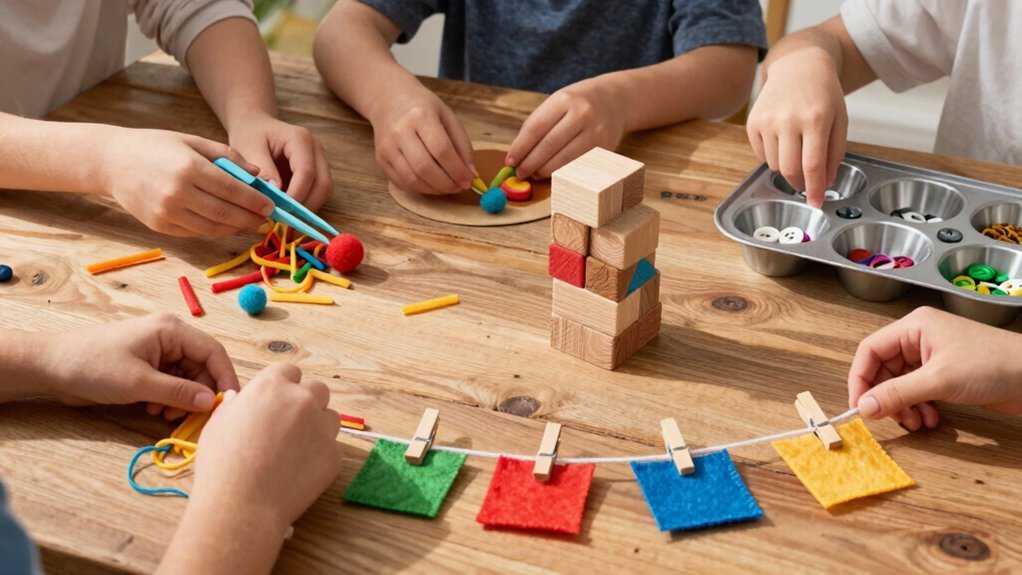
Enjoying a quick DIY session at home can boost your child’s fine‑motor skills in minutes. Grab a few household materials—tongs, paper cups, rubber bands, and a spoon—to practice sorting small objects. Have them pinch beads with a pincer grasp and thread them onto pipe cleaners, then switch to threading pasta onto the same cleaners for hand‑strength work. Use a lid with a cut‑out hole as a target, letting your child toss beads or tiny erasers through it to sharpen hand‑eye coordination. Set up a simple bead‑threading station with a string and a mix of beads, encouraging bilateral coordination. Finally, let them squeeze a spray bottle or stretch a rubber band, building grip stability while having fun. Consider introducing age-appropriate kitchen tools like child-safe peelers to foster practical fine motor skills and safety awareness.
How to Set Up a Play‑Dough Fine‑Motor Station
After sorting beads and squeezing rubber bands, you can keep the momentum going by setting up a play‑dough fine‑motor station. Choose a sturdy table, lay a washable mat, and stock a play-dough station with varied tools—rolling pins, forks, plastic knives, and cookie cutters—to practice rolling, flattening, and shaping. Offer textured play‑dough (standard, scented, glitter) for hand strengthening, and add a labeled tray of letters and numbers for tracing. Rotate tools and shapes weekly to keep pinching release challenges fresh and to develop fine motor and finger control. End each session with a quick cleanup routine so kids practice planning and sequencing. To support independence during these activities, providing a Montessori-friendly step stool at a child-accessible height helps children engage more confidently and safely.
Reusable Snack Bag Pinch‑and‑Release Fine‑Motor Practice
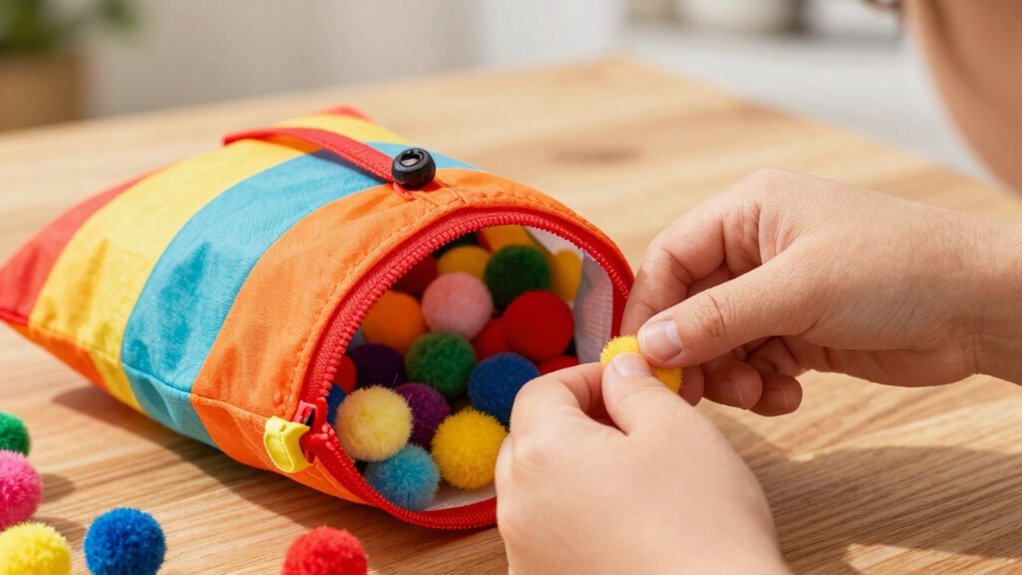
Ever wondered how a simple reusable snack bag can become a powerful fine‑motor tool? You’ll pinch and release the zipper with thumb and index finger, boosting fine motor control and hand strength. Start with large, easy zippers, then shift to smaller, stiffer ones for progressive resistance. Pair each zip action with sorting or matching items to sharpen motor planning and visual discrimination. Count how many consecutive zip‑ups your child completes without help, then reward them with the snack inside. Repetitive practice turns everyday preschool activities into targeted skill builders, and tracking progress keeps motivation high.
| Skill | Task | Goal |
|---|---|---|
| Pinch & Release | Zip/unzip bag | Strengthen thumb‑index grip |
| Visual Discrimination | Match colors before zip | Enhance perception |
| Motor Planning | Sequence zip with sorting | Improve coordination |
| Repetitive Practice | Count zip cycles | Build endurance |
Turn Kitchen Items Into Fine‑Motor Skill Builders
Transform everyday kitchen items into powerful fine‑motor tools by repurposing rubber bands, tongs, and spray bottles for pinch‑and‑release, grip, and squeeze exercises. You’ll discover that simple household tools can become engaging DIY activities that boost dexterity and hand‑eye coordination while keeping sensory play fun.
Start with a few cans, stretch rubber bands over them, and let your child pinch and release the bands, strengthening the pincer grasp.
Swap in turkey basters, sponges, or spatulas for varied pressure tasks, then move to sorting beans, beads, or buttons with tongs.
These practice activities turn ordinary kitchen items into purposeful fine‑motor builders.
- Rubber‑band cans for pinch and release
- Tongs or tweezers for pincer grasp sorting
- Spray bottles for squeeze control and dexterity
- Pasta or cereal sequencing for hand‑eye coordination
Using child-safe kitchen tools with serrated edges designed to protect little hands can further enhance these fine‑motor skill activities.
Integrate Fine‑Motor Activities Into Your Child’s Daily Routine
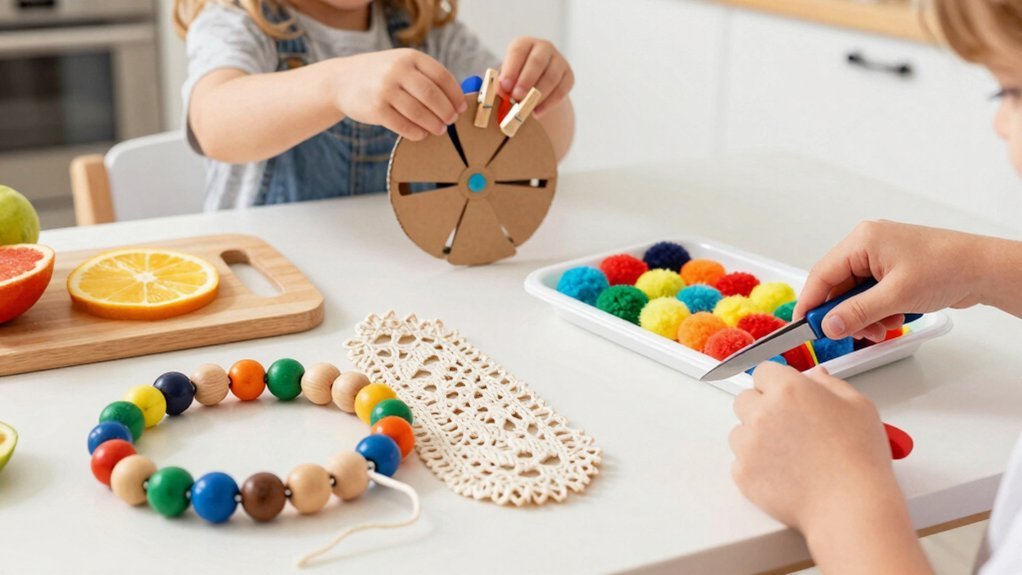
A handful of minutes each day can turn ordinary chores into powerful fine‑motor practice, so you’ll find yourself weaving pinch‑and‑release, sorting, and squeezing tasks into meals, clean‑ups, and playtime without adding extra workload. Use everyday items like tongs, spray bottles, paper cups, rubber bands, and pencil erasers to give your child quick hand‑strength challenges while you cook or set the table. During clean‑up, have them pick up small objects, beads, or buttons with tweezers and place them into containers—this Beads/buttons sorting becomes a natural kids activity. Schedule short practice sessions of five to ten minutes, mixing molding putty, tracing, and sticker placement. Gradually increase difficulty, moving from larger to smaller beads, to keep hand strength and fine motor skills progressing. Selecting tools made from BPA-free materials can ensure safety during these activities.
Frequently Asked Questions
How to Build Fine Motor Skills at Home?
You can boost fine motor skills at home by grabbing tongs, tweezers, or rubber bands to pick up beads, squeeze sponges, thread straws, and sort objects, gradually shrinking sizes for increasing challenge.
What Are Some Fun Fine Motor Activities?
You can pinch tongs to transfer beads, squeeze play‑doh, thread pipe cleaners, stick stickers onto cards, spray bottle paint, and use tweezers to sort small objects—each builds grip, coordination, and control.
Does Neuropathy Affect Fine Motor Skills?
Yes, neuropathy can impair your fine motor skills by weakening grip, slowing finger movements, and reducing sensory feedback, making tasks like threading beads or tying knots harder and requiring slower, adapted practice.
What Are Fine Motor Skills in Crafts?
You develop fine motor skills in crafts by performing precise hand actions—pinching, threading, cutting, and placing tiny pieces—so your fingers gain control, coordination, and strength for detailed work.