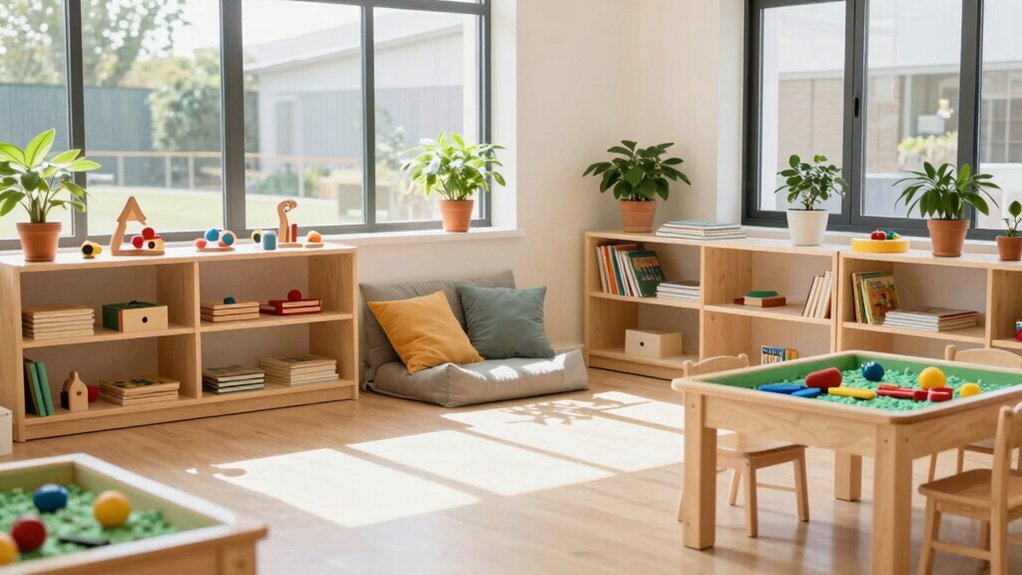
You’ll create an effective Montessori space by matching your environment to your child’s developmental stage—whether they’re exploring sensory experiences or developing abstract reasoning. Design low, accessible shelves they can master independently, then organize materials by subject in dedicated zones. Rotate activities based on their interests, not rigid schedules, and establish quiet spaces for focused work. These intentional design choices transform how your child engages with learning, and there’s much more to discover about optimizing each principle.
Know Your Child’s Stage Before You Start
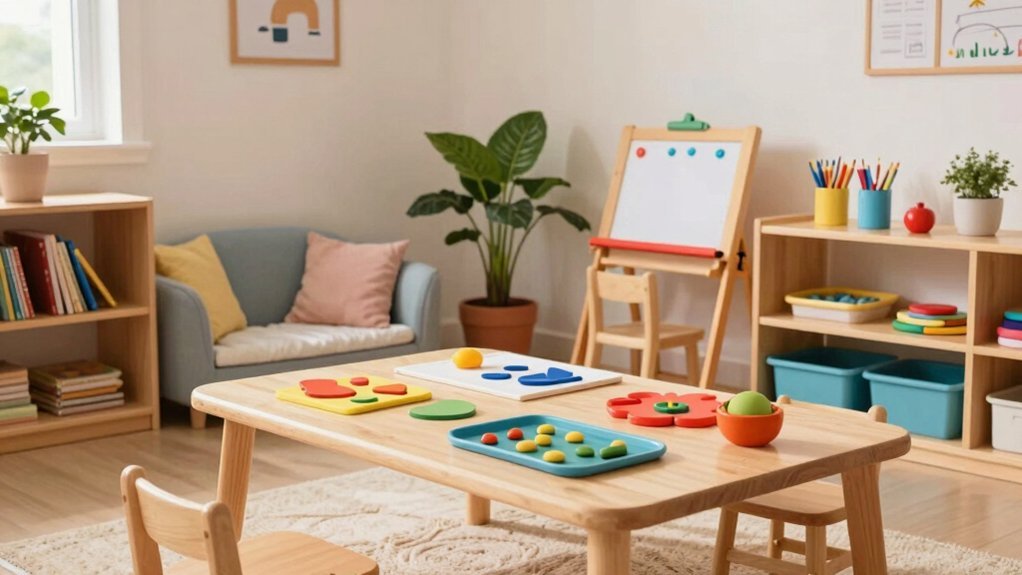
Why does a three-year-old’s learning look so different from a nine-year-old’s? You’re witnessing two distinct developmental planes at work. In Plane 1 (birth to six), your child absorbs information unconsciously through sensory exploration and movement. They’re mastering fine motor skills, language, and independence—constantly moving, touching, tasting.
By Plane 2 (six to twelve), your child shifts to conscious imagination and reasoning. They crave intellectual independence, moral understanding, and abstract thinking. During this stage, children also develop a sense of conscience and begin distinguishing between right and wrong, which shapes how they approach learning tasks.
Before setting up your Montessori environment, identify which plane your child occupies. This determines everything: materials you provide, independence levels you encourage, and challenges you present. A three-year-old needs sensorial activities and practical life tasks.
A nine-year-old needs problem-solving opportunities and social connection. Matching your setup to your child’s developmental stage ensures they’re appropriately challenged, not frustrated or bored.
Design Low, Accessible Shelves Your Child Can Master
How do you create an environment where your child can independently reach, select, and return materials? The answer lies in designing low, accessible shelves that match your child’s physical capabilities.
You’ll want to prioritize height and accessibility through these key considerations:
- Match shelf height to developmental stage — Infant shelves at 12-16 inches, toddler shelves up to 24 inches, and bookshelves at 24-36 inches ensure your child can reach without assistance.
- Use front-facing, open shelving — This design promotes visibility and independent choice, allowing your child to survey options easily.
- Incorporate safety features — Soft-rounded corners, low designs that prevent tipping, and soft-close technology protect your child while building confidence.
These proportions support motor skill development and foster orderliness as your child masters their environment. Stable, sturdy shelves designed to support a child’s weight create the secure foundation necessary for your child to confidently explore and learn independently.
Organize Montessori Materials by Subject, Not by Quantity
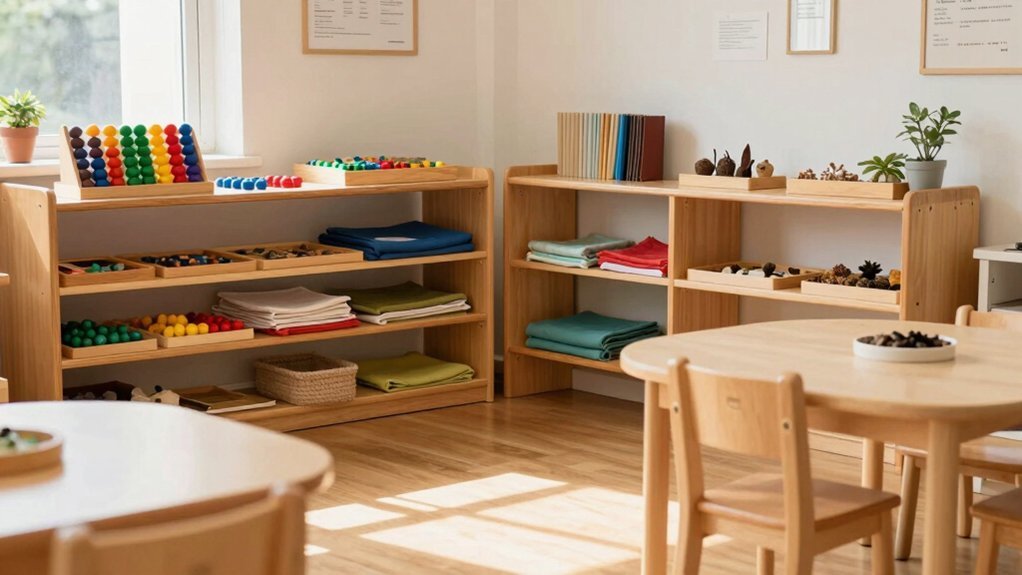
Designate specific zones for each subject area: Practical Life, Sensorial, Language, Mathematics, and Culture & Sciences. Within each zone, organize materials by topic and progression. Group language objects by category—backyard birds, rainforest animals, arctic animals—rather than scattering them randomly. Sort science materials by lifecycle: butterfly, bee, frog. Arrange math manipulatives sequentially, like Number Rods progressing from 1-10.
This subject-based organization fosters independence, enabling your child to find materials intuitively. It also reveals conceptual connections, supporting holistic learning and building a calm, purposeful environment. Label each area with clear labels using both pictures and words to guide children in locating and returning materials independently.
Rotate Activities to Match Your Child’s Evolving Interests
When your child masters a skill or loses interest in a toy, it’s time to rotate. This practice keeps your Montessori environment fresh and aligned with your child’s developmental stage.
Observe your child’s engagement closely. You’ll notice when they’re ready for new challenges or when boredom sets in. Rather than following rigid schedules, let their interests guide you. Research shows that fewer toys lead to longer, more exploratory play, allowing your child to engage more deeply with each activity.
Watch your child closely—let their natural interests and readiness guide toy rotation rather than rigid schedules.
Implement rotation strategically by:
- Categorizing toys by developmental stage—crawlers need textured items, toddlers benefit from shape sorters
- Limiting active toys to 4-6 pieces for deeper, more focused play
- Storing rotated items away and reintroducing them gradually when your child’s absent
This approach reduces overwhelm, promotes problem-solving, and fosters independence. You’re creating an environment that grows with your child’s evolving needs and capabilities.
Protect Quiet Spaces for Deep, Uninterrupted Work
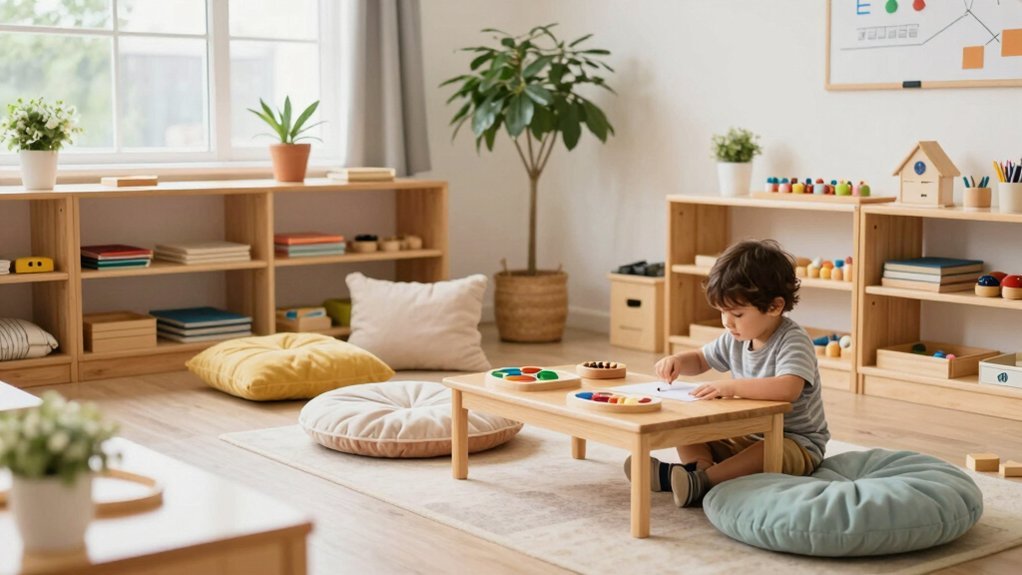
While rotating activities keeps your child engaged, they also need a dedicated space where they can sink into focused work without interruption. You’ll want to establish a quiet zone that’s physically separated from busier areas, minimizing noise and visual distractions that fragment concentration.
Define personal workspaces with floor mats or rugs, creating clear boundaries your child recognizes as their focused work area. Keep this space uncluttered—order naturally invites deep engagement. Include child-sized furniture and shelves that foster independence while supporting extended concentration.
Enhance the atmosphere with calming elements: soft lighting, neutral wall colors, and perhaps a small vase of flowers. Add reflection tools like journals or breathing exercise cards for when your child needs to reset. Consistent access to this protected sanctuary lets your child experience the profound satisfaction of sustained, meaningful work while developing emotional resilience and self-regulation skills.
Frequently Asked Questions
How Do I Balance Beauty and Functionality When Setting up a Montessori Classroom Environment?
You’ll balance beauty and functionality by using neutral colors, natural materials, and child-scaled storage that doubles as display. Organize materials purposefully in designated zones, letting your room’s simplicity highlight children’s work while keeping everything accessible and intentional.
What Role Should Adults Play When Children Struggle With Self-Correction in Prepared Environments?
You’ll observe without intervening, allowing children to discover their own mistakes through the materials’ built-in feedback. You step back, trusting their problem-solving abilities while remaining nearby for genuine support when truly needed.
How Often Should I Rotate Materials, and What Criteria Guide Rotation Decisions?
You’ll rotate materials every two weeks as a baseline, adjusting based on your child’s engagement levels. Watch for toy-hopping, behavioral shifts, or sustained disinterest—these signals guide your rotation timing better than rigid schedules.
How Can Multi-Age Grouping Benefit Children’s Social Development and Peer Learning?
You’ll foster natural role modeling as older children guide younger peers, building their leadership while younger ones learn through observation. You’ll strengthen emotional bonds, reduce competition, and enhance social understanding across developmental stages.
What Safety Precautions Are Essential When Preparing Environments for Infants and Toddlers?
You’ll secure furniture to walls, cover electrical outlets, remove choking hazards, install corner guards, use safety latches on drawers, hide cords, and regularly check your space from floor level to identify dangers.
In Summary
You’ll create a thriving Montessori environment when you understand your child’s developmental stage and design spaces they can navigate independently. By arranging materials thoughtfully, rotating activities strategically, and maintaining calm work areas, you’re supporting their natural curiosity and concentration. You’re not just organizing a room—you’re building the foundation for self-directed learning and genuine confidence. Your intentional setup empowers your child to explore, discover, and grow at their own pace.



Leave a Reply