
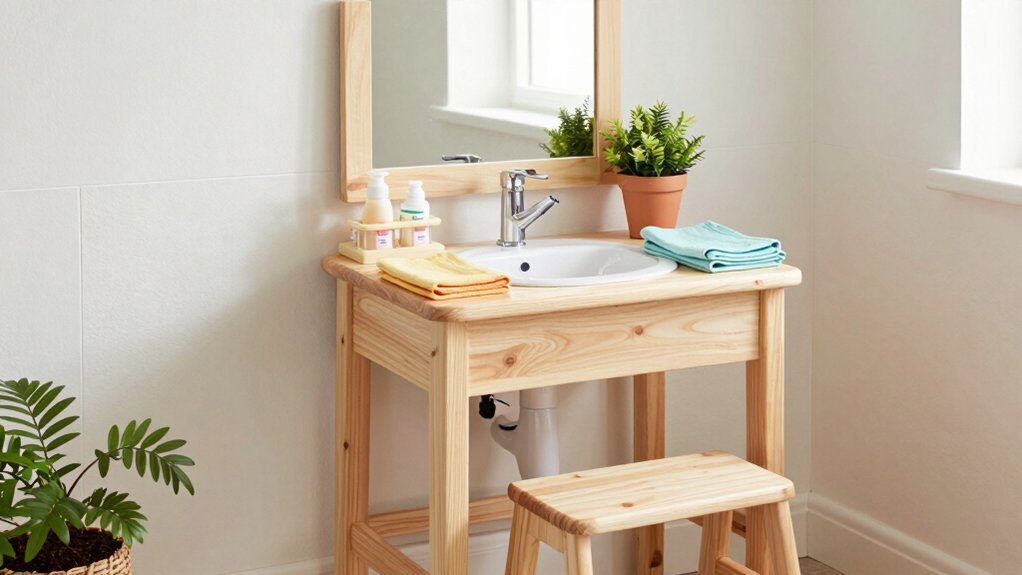
You can transform your bathroom into an independence hub by installing step stools, faucet extenders, and light switch extenders at your child’s height. Organize supplies—soap, toothbrush, underwear—on low shelves and counters so your child reaches them without help. Add a child-sized toilet seat, low mirror, and routine cards to guide each step. Establish predictable toileting times and practice consistently. These foundational changes create the framework you’ll want to explore further to support your child’s self-care mastery.
Essential Furniture and Accessibility Tools for Small Hands
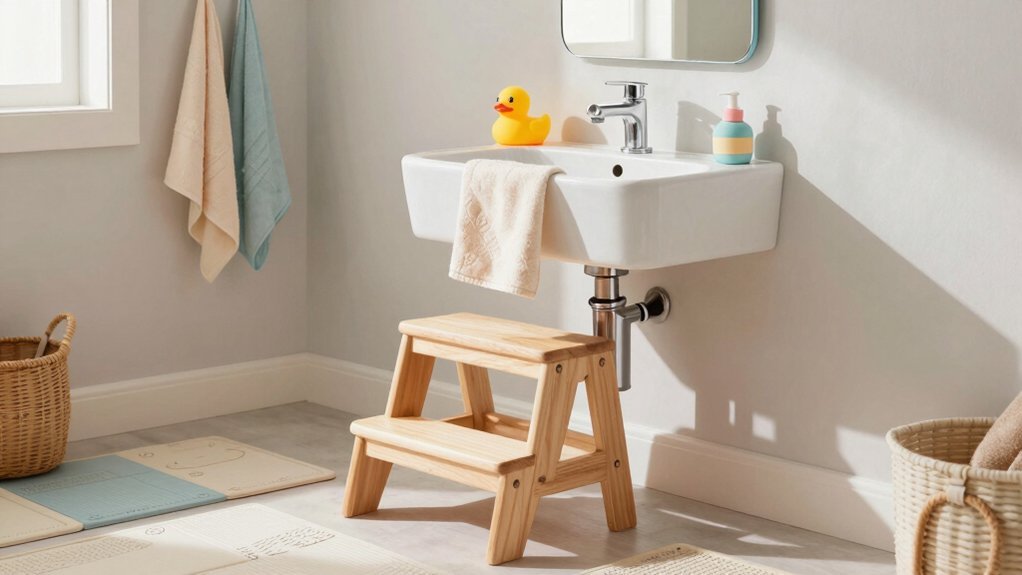
How can you create a bathroom where your child reaches the sink without climbing precariously or asking for help? Two-tier step stools provide the height adjustment your toddler needs. Their sturdy construction builds confidence as children climb independently and navigate the space safely.
You’ll also want to install faucet extenders to reduce the distance water travels, preventing excessive leaning and improving accessibility for small hands. Light switch extenders grant your child independent control over bathroom lighting without adult assistance. Routine cards help initiate tasks like brushing teeth and using the bathroom, supporting your child’s developing sense of responsibility.
Consider adding low hooks at child height for towel hanging, reinforcing self-care responsibility. Vertical shelving maximizes your small bathroom space while keeping essential items within independent reach. These accessibility tools transform your bathroom into a space where your child operates confidently and autonomously.
Assess Your Bathroom for Independence Barriers
Before you invest in new tools and fixtures, take time to evaluate what’s actually preventing your child from functioning independently in your bathroom. Walk through your space and identify specific obstacles: Can your child reach the sink without assistance? Do they struggle pulling pants down? Is soap positioned too high? Are towels at eye level?
Examine your bathroom layout systematically. Note which fixtures require adult help and which your child can access alone. Check whether clothing storage is within reach and if your child can locate supplies independently. An orderly, tidy setup supports toddler independence by reducing confusion and helping children find what they need without asking for help.
This honest assessment reveals exactly where your child encounters barriers. You’ll discover whether the problem stems from physical height, storage placement, or routine confusion. Once you’ve identified these obstacles, you can make targeted changes that genuinely support independence rather than investing in unnecessary additions.
Organize Supplies Within Child’s Reach
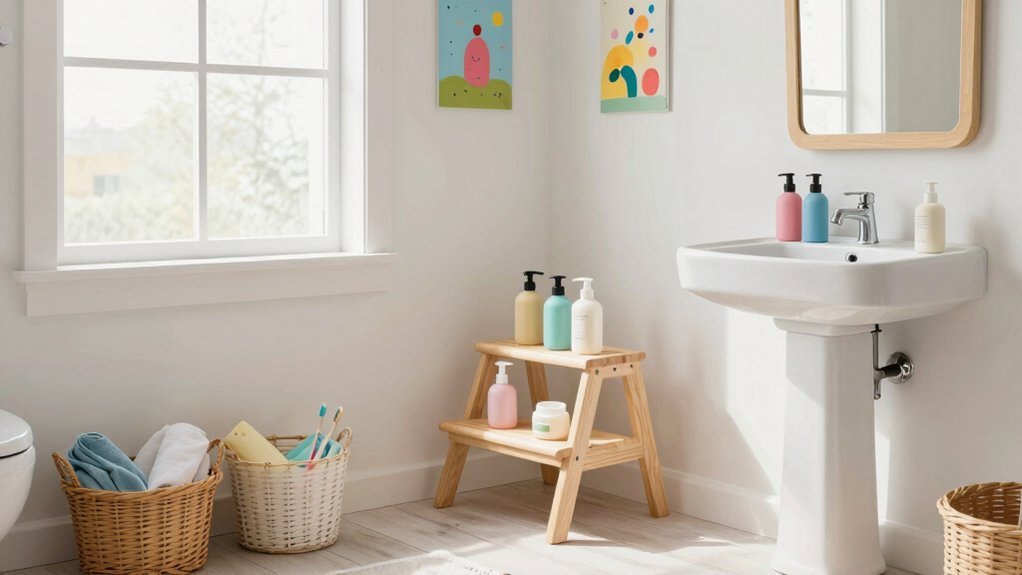
Once you’ve identified what prevents your child’s independence, the next step is arranging your bathroom so they can actually reach and use what they need.
| Supply Category | Placement | Container Type |
|---|---|---|
| Soap & washcloths | Counter level | Pump bottle or tray |
| Toothbrush & paste | Low shelf | Child-sized holder |
| Toilet paper | Low holder | Wall-mounted dispenser |
| Wipes & underwear | Near toilet | Accessible basket |
| Personal items | Separate storage | Wooden organizer |
| Hand towel | Low hook | Child height |
You’ll want to keep child supplies distinctly separate from adult items. Use child-sized containers and travel bottles that small hands can manage. Position everything at your child’s eye level and within arm’s reach. A low mirror, accessible basket near the potty, and routine cards complete the setup, empowering your child to navigate bathroom tasks independently. Consider installing a pull-down light switch cord if your child cannot reach the standard switch to turn on the bathroom light independently.
Design Toileting Spaces for Confident Exploration
What transforms a standard bathroom into a space where your child confidently explores toileting independently? Child-sized equipment and strategic placement. Introduce a small toilet seat or potty that provides comfort and security, making your child feel capable rather than intimidated by adult-sized fixtures. Position a floor potty in a designated spot to reinforce the bathroom as the toileting location. Create ownership by keeping child-sized accessories separate from adult items. Place a basket nearby containing underwear and books to support the toilet-learning process. Install a low, child-safe acrylic mirror at eye level so your child observes their own body awareness and hygiene routines. This visibility builds confidence during self-care tasks. Research demonstrates that independence in self-care correlates with improved hygiene habits and enhanced self-esteem in children. Arrange diapers, wipes, and underwear accessibly to encourage toileting interest and independence.
Build Independence Through Practice and Routine
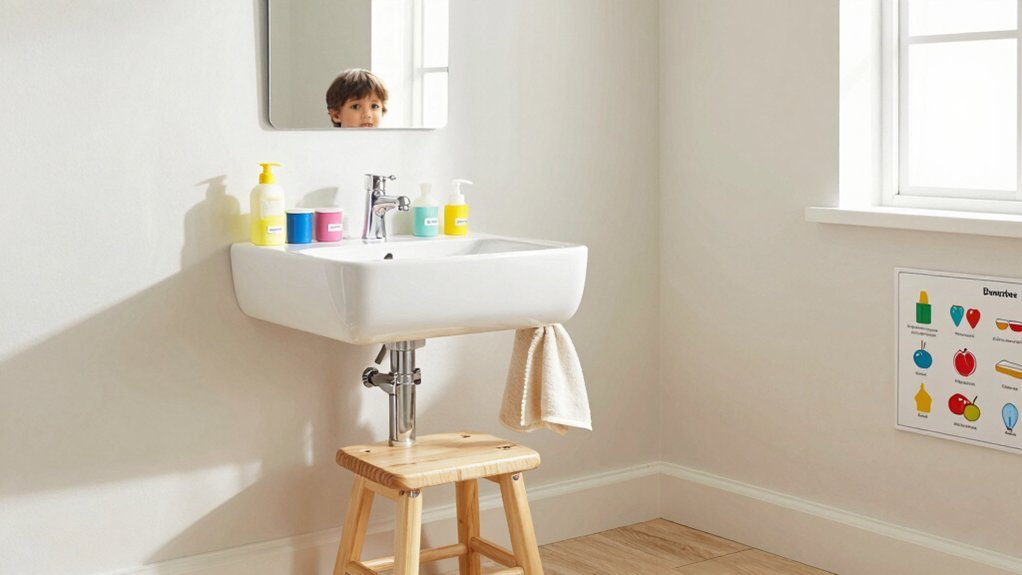
How does your child transform toileting from an adult-directed task into a self-managed skill? Through deliberate practice and consistent routines embedded in daily life.
You’ll establish predictable toileting times—upon waking, before outings, and before bed—so your child develops reliable patterns. Routine cards guide each step: pants down, sit, wipe, flush, wash. This sequencing reinforces habits naturally.
Model slow hand movements for dispensing toilet paper and handwashing with pump soap. Let your child practice pulling pants up and down, flushing, and managing the transition from potty to toilet seat insert with a step stool.
Involve them in selecting underwear and emptying diapers, fostering ownership. Recognition through potty charts motivates frequency without pressure. Your child progresses from observer to capable participant, building genuine competence and confidence. When accidents occur, stay calm and reassuring, as avoiding shame and pressure helps your child recover naturally and resume at their own speed.
Frequently Asked Questions
At What Age Should I Introduce Montessori Bathroom Independence Practices to My Child?
You should introduce Montessori bathroom independence practices around 12 months when your child shows interest in toilets. You’ll find the sensitive period peaks between 12-18 months, making this the ideal window for establishing foundational skills and independence.
How Do I Handle Accidents During Toilet Learning Without Discouraging My Child’s Progress?
You’ll handle accidents by staying calm and matter-of-fact. Use neutral language like “Your pants are wet. Let’s change them.” Involve your child in cleanup, remind them to use the toilet next time, and move forward without dwelling on it.
What Specific Safety Considerations Exist for Unsupervised Bathroom Access in Montessori Environments?
You’ll need secure storage for hazardous products, slip-resistant surfaces throughout, accessible supplies at child height, and emergency protocols. Ensure you’ve installed safety gates, tested water temperature controls, and removed choking hazards before allowing independent access.
How Should I Adapt Bathroom Setups for Children With Physical Disabilities or Developmental Delays?
You’ll customize height-adjustable fixtures, add grab bars, use adaptive toilet seats, install ramps, position supplies within reach, and provide sensory-friendly lighting. You should incorporate wider spaces for mobility aids and simplify tasks with visual supports.
Which Montessori Bathroom Products Offer the Best Value Without Requiring Major Renovations?
You’ll maximize value with step stools, faucet extenders, and removable adhesive solutions. IKEA containers, storage boards with suction cups, and self-standing mirrors require zero installation while building independence affordably.
In Summary
You’ve now got everything you need to transform your bathroom into an independence zone. By lowering fixtures, organizing supplies accessibly, and establishing consistent routines, you’re empowering your child to handle self-care tasks confidently. You’ll notice they’ll gradually take on more responsibility, building essential life skills. Remember, you’re creating an environment where your child can succeed—and that’s the true foundation of Montessori learning.