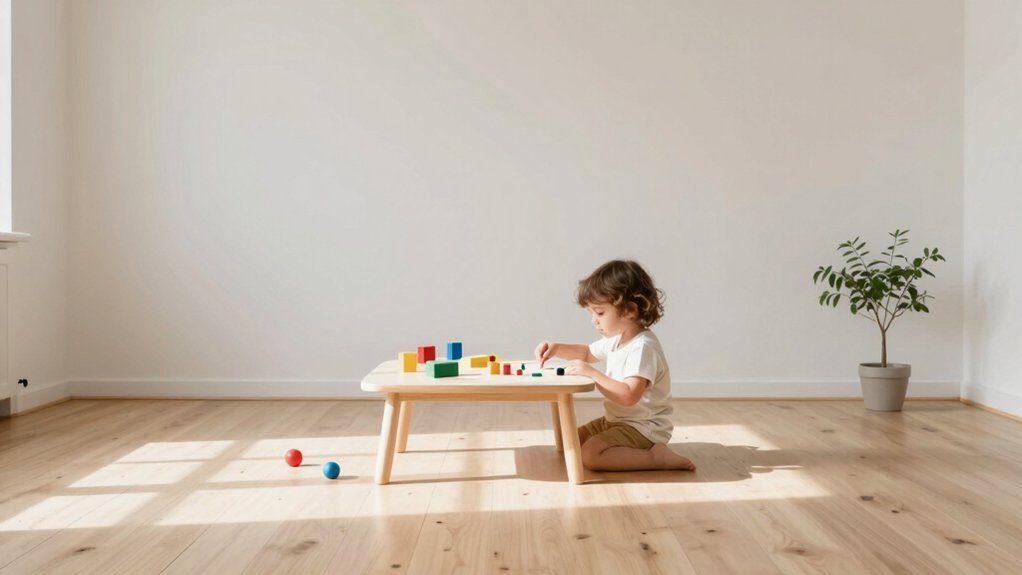
When you limit toys to four instead of sixteen, your child’s brain settles into sustained focus. Open spaces reduce distractions, letting them explore independently without constant supervision. Child-height storage builds agency—they choose what to play with and clean up afterward. Ordered environments lower stress hormones, shifting their energy toward creativity and discovery. You’ll notice calmer behavior, fewer meltdowns, and genuine curiosity flourishing. The deeper benefits of this approach reveal themselves when you explore how minimalism aligns with how children naturally learn.
Why Fewer Toys Build Deeper Focus and Sustained Attention
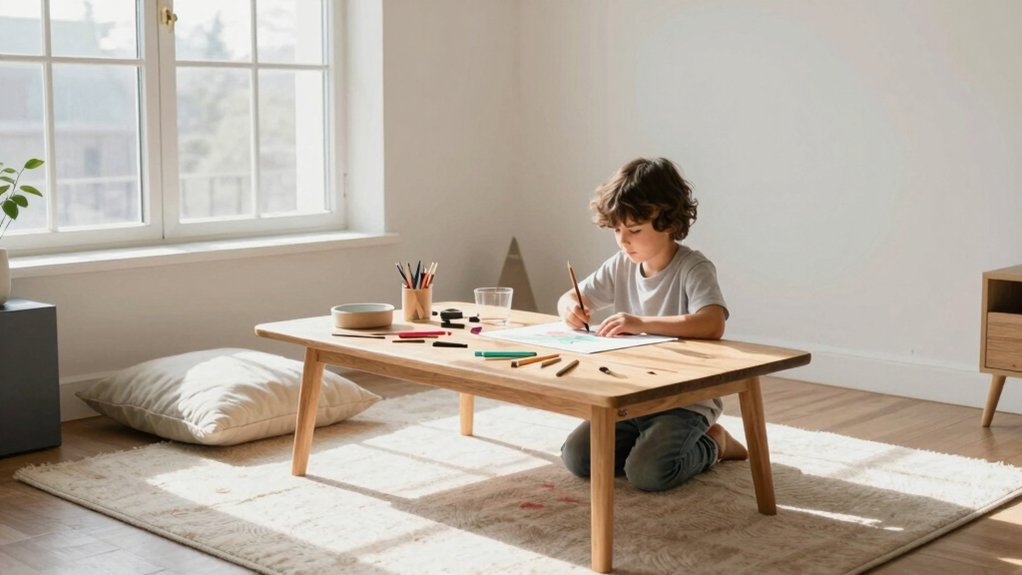
Ever wondered why a room overflowing with toys doesn’t translate to deeper learning? When you limit your child’s environment to just four toys instead of sixteen, you’ll witness a dramatic shift in their focus. Your toddler naturally gravitates toward sustained engagement, spending twice as long with each toy and exploring fewer options overall.
This concentrated attention isn’t accidental—it’s how children develop their focus like exercising a muscle. With fewer distractions, your child thoroughly explores each toy before moving on, rather than constantly switching between options. The reduced overstimulation allows their brain to settle, fostering intrinsic attention capabilities that extend beyond playtime. Research shows that fewer toys eliminate disruptions that would otherwise fragment your child’s developing attention span.
Your child playing with 75% of available toys rather than just 50% demonstrates this deeper focus. This prolonged engagement builds the neurological foundation for improved problem-solving, sequencing, and communication skills.
Open Space Beats Clutter for Independent Play
While minimizing toys strengthens your child’s focus indoors, the same principle applies to physical environments—but with a crucial difference. Uncluttered outdoor spaces dramatically shift how your child plays. Open areas without visual chaos naturally encourage independent exploration and decision-making.
Your child invents games, tests boundaries, and builds confidence without constant supervision interrupting their flow. Spacious parks and yards provide unobstructed running room that energizes play and reduces sedentary time. When you remove obstacles and excess equipment, your child engages in sustained, moderate-to-vigorous activity. Clean, minimal designs with simple features like trees and basic structures actually sustain play occupations longer than cluttered alternatives. Tree canopy coverage in outdoor spaces has been shown to increase both the time children spend playing outside and their overall activity levels.
Open environments reduce competition for attention, easing peer interactions and social skill development—all essential components of independent exploration.
Storage Strategies That Let Kids Choose and Clean Up
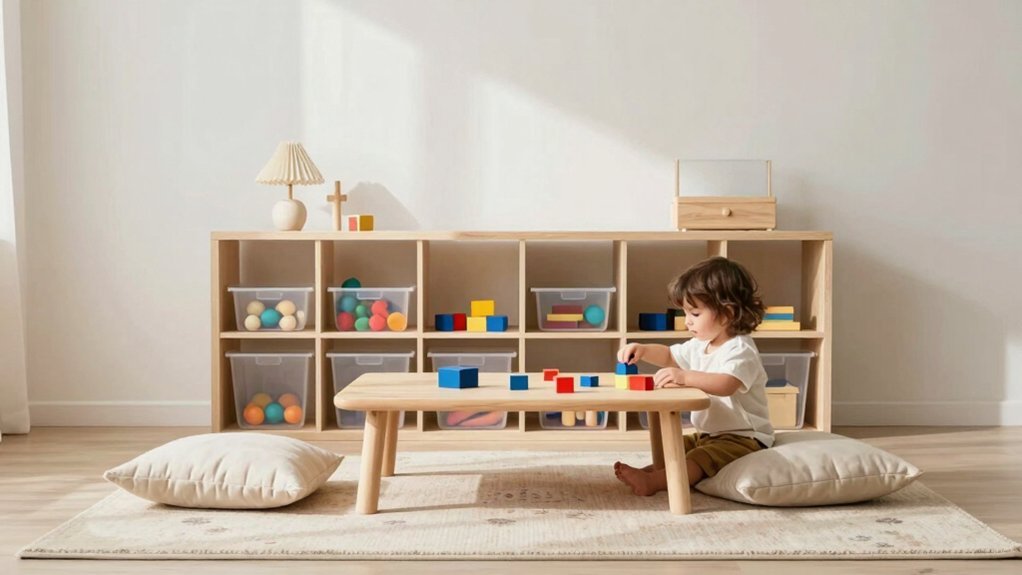
The right storage system transforms cleanup from a chore into an opportunity for independence. When you place bins, baskets, and shelves at child height, you’re giving your kids agency over their environment. They can grab what they want and return it without asking for help.
Open, labeled storage lets children see what’s available and make intentional choices. This visual clarity reduces decision fatigue and makes tidying intuitive. You’ll find that fewer items in each station actually speed up cleanup—kids aren’t overwhelmed by endless options.
Organize by activity type: blocks here, natural objects there, art supplies in another spot. This structure lets children independently start projects, explore materials, and restore everything to its place. Organization becomes the foundation for self-directed play and responsibility. When children can negotiate agency within adult-designed systems, they develop greater confidence in their ability to manage both their physical environment and their emerging sense of self.
The Calm Effect: How Order Reduces Stress and Emotional Chaos
Beyond the practical benefits of independent cleanup, you’ll notice something equally powerful emerging in your home: a profound calm that settles over your child when they move through an ordered space. When clutter surrounds your child, elevated cortisol levels trigger stress and overwhelm.
Conversely, organized environments signal safety to their developing brain, activating relaxation responses. Visual chaos overwhelms their sensory system, making focus impossible. Minimalist spaces reduce this cognitive load dramatically.
Your child’s mind stops processing environmental noise and instead channels energy toward exploration and creativity. They experience measurable decreases in anxiety and emotional reactivity. This calm foundation doesn’t just feel pleasant—it creates the emotional stability children need to venture confidently into independent discovery and learning. As their surroundings become simpler, children gain a sense of control over their environment, which enhances their confidence in tackling new challenges.
Simple Rooms and Montessori Learning: Space for Real Exploration
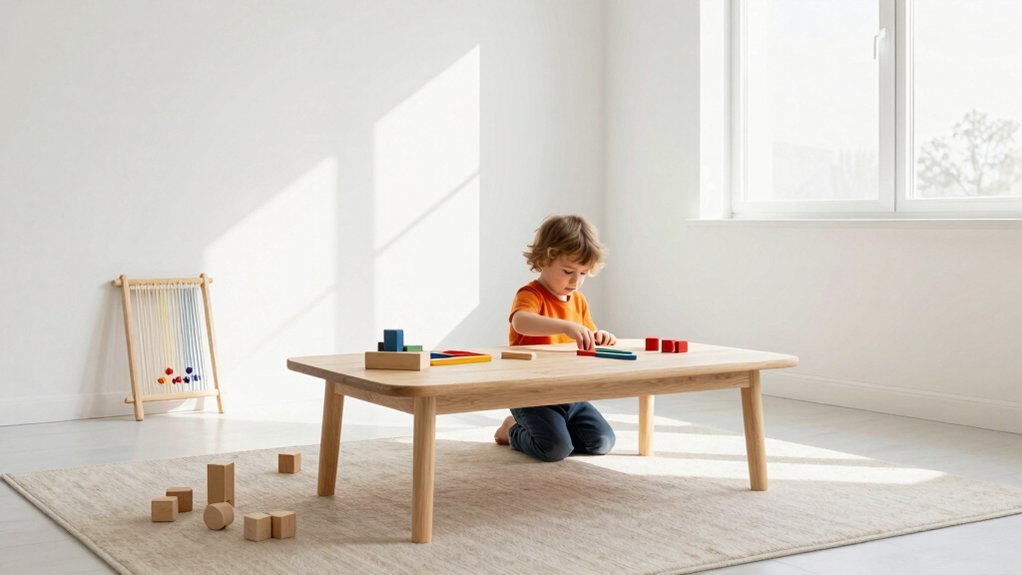
How does your child’s learning shift when they’re no longer paralyzed by choice? Montessori environments deliberately strip away excess, creating spaces where genuine exploration flourishes. You’ll notice your child moves purposefully between activities rather than wandering aimlessly through cluttered options. With fewer materials displayed on accessible shelves, they make meaningful decisions and commit to deeper engagement. Child-sized furniture and organized baskets remove barriers to independent learning. Your child develops self-direction naturally—not because you’ve forced it, but because the environment itself invites focused work. This intentional simplicity aligns with Montessori philosophy: children ignite their own learning desire when given freedom within clear structure. When surfaces remain clear and daily cleaning becomes routine, your child sustains concentration without the distraction of accumulated clutter demanding attention. Your minimalist room becomes a catalyst for real discovery, where your child explores with confidence and sustained concentration.
Frequently Asked Questions
At What Age Should Parents Start Transitioning Children to Minimalist Bedroom Environments?
You’ll benefit most by starting minimalist transitions around age two, when your child’s independence emerges. You can gradually introduce organized, clutter-free spaces throughout early childhood, adapting complexity as they develop.
How Do Minimalist Spaces Affect Sibling Dynamics and Shared Room Arrangements?
You’ll find that minimalist shared rooms reduce territorial disputes and clutter-related conflicts between siblings. You’re creating space where they’ll naturally negotiate boundaries, establish rules together, and develop stronger emotional regulation skills through focused interaction.
Can Minimalism Negatively Impact Social Skills or Peer Interactions During Playdates?
You won’t find minimalism negatively impacting your child’s social skills. Instead, you’ll observe improved peer interactions, enhanced cooperation, and stronger friendships developing through shared play with fewer distractions.
What’s the Ideal Number of Toys for Different Developmental Stages?
You’ll find that four toys work best for toddlers, while infants thrive with fewer exploratory items. Preschoolers benefit from limited options, and school-age children sustain attention with reduced quantities, avoiding the average 139 toys in typical homes.
How Do Minimalist Principles Apply to Digital Spaces and Screen Time Management?
You’ll reduce your child’s cognitive load by limiting screen elements, removing distracting notifications, and controlling color palettes. You’re creating focused digital environments that encourage intentional use rather than mindless scrolling through overwhelming interfaces.
In Summary
You’ll find that minimalist spaces genuinely transform how your child explores and learns. By reducing toys and clutter, you’re actually giving them room to concentrate deeply and make independent choices. You’re creating an environment where they can navigate their own play, organize their belongings, and feel calm rather than overwhelmed. You’re not limiting them—you’re empowering them to discover, focus, and grow at their own pace.



Leave a Reply