
You’ll cut household expenses in half while reducing your environmental footprint through strategic prepared environment changes. Swap single-use plastics for reusable bags and beeswax wraps. Build a natural cleaning station under £20 using vinegar and baking soda. Install smart thermostats and solar heating systems for 10-80% energy savings. Grow salad indoors to eliminate packaging waste. Transform kitchen scraps into weekly broths. Shop second-hand furniture first. Cook from scratch to slash food costs dramatically. Each change compounds your savings and sustainability impact.
Understand the Waste Crisis: Why Eco-Friendly Swaps Save Money
Why does the world generate over two billion tonnes of municipal waste annually—a figure that’s projected to nearly double by 2050? The answer lies in unsustainable consumption patterns and inadequate management systems, particularly in low-income countries where 60% of waste remains uncollected.
Unsustainable consumption and inadequate management systems drive two billion tonnes of annual waste, with 60% uncollected in low-income countries.
You’ll find that eco-friendly swaps directly combat this crisis while reducing your expenses. When you embrace recycling, food donation, and waste segregation, you’re tapping into proven cost-saving strategies. Vermont’s food donation laws increased donations by 40%, while advanced sorting systems cut scrap rates from 24% to 1.8%. The World Bank Group’s official development financing of $5.1 billion for solid waste management from 2003 to 2021 demonstrates the scale of global investment needed to address this challenge.
China’s Ningbo project exceeded recycling targets by 130% through improved segregation.
These aren’t just environmental wins—they’re financial ones. By choosing sustainable alternatives, you participate in solutions that strengthen climate mitigation while protecting your wallet and our planet’s future.
Start Your Kitchen Swap: Reusable Bags, Wraps, and Bamboo Basics
Your kitchen is where sustainable living becomes tangible and affordable. You can start by swapping plastic bags for reusable cloth or mesh alternatives that keep produce fresh longer while reducing waste. Beeswax wraps offer a washable, compostable solution for covering bowls and wrapping sandwiches—they’re naturally antibacterial and last up to a year. Bamboo utensils and cutting boards replace plastic counterparts with durable, heat-resistant options that require no pesticides. Silicone storage bags and baking mats eliminate single-use plastics for leftovers and cooking. Consider replacing paper towels with washable cloth rags that can be repurposed from old clothes, which conserves resources significantly over time. While initial costs seem higher, these items break even quickly through durability and eliminate constant replacement expenses. You’ll dramatically reduce your household waste while saving money long-term.
Build a Natural Cleaning Station Under £20
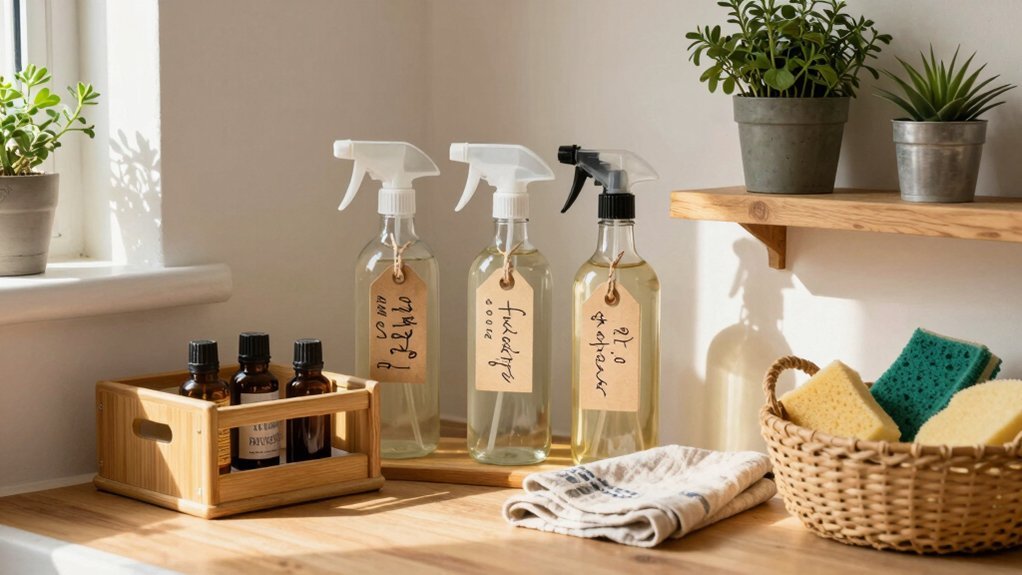
Creating an effective natural cleaning station doesn’t require expensive commercial products or elaborate setups. You’ll build a sustainable system that’s both wallet-friendly and environmentally responsible.
- Refillable bottles ($4-$15) minimize plastic waste while handling everyday cleaning tasks
- Natural Scrub Brush ($6) tackles dishes and tough stains without harsh chemicals
- Dishwasher Tablets ($15) provide plastic-free, biodegradable cleaning power
Start with an All-Purpose Bottle and Foaming Wash Bottle as your foundation. Add the beechwood Natural Scrub Brush for versatile scrubbing. Stock biodegradable Dishwasher Tablets for machine cleaning. You’ll spend under £20 while creating an efficient, eco-conscious space. This setup eliminates single-use plastics and reduces your environmental footprint without compromising cleaning effectiveness. One concentrated bottle can replace a multitude of cleaners, allowing you to streamline your cleaning supplies and maximize your budget even further.
Make Three DIY Cleaners From Baking Soda and Vinegar
You’ll create an all-purpose surface spray by combining vinegar, water, and essential oils for everyday cleaning without harsh chemicals. You can make a mold-killing bathroom scrub using baking soda, dish soap, water, and vinegar to tackle stubborn soap scum and grime on tubs and sinks. You’ll also mix baking soda and vinegar to form a deodorizing drain cleaner that breaks down clogs while neutralizing odors through a simple chemical reaction. Always label homemade cleaners to avoid confusion and ensure safe storage in cool, dark places to maintain effectiveness.
All-Purpose Surface Spray
Why spend money on commercial cleaners when two pantry staples can tackle nearly every surface in your home? You’ll create an effective all-purpose spray using just vinegar, baking soda, and water.
Here’s what you need:
- 1 cup distilled white vinegar
- 1 tbsp baking soda
- 1 cup water
Combine the vinegar and baking soda slowly in a bowl—expect fizzing as they react. Add water and mix thoroughly. For enhanced disinfecting power, include 10-15 drops of essential oil like lemon, lavender, or tea tree. Transfer your mixture to a glass spray bottle and shake before each use. This budget-friendly solution cuts through grease, dissolves grime, and kills bacteria on most household surfaces. Unlike store-bought cleaners with synthetic fragrance and undisclosed chemicals, this DIY formula gives you complete control over every ingredient in your home. Avoid using it on granite, marble, or stone countertops, as vinegar can etch these materials.
Mold-Killing Bathroom Scrub
You’ll kill 99% of mold spores using this powerful combination. Mix one cup of white vinegar with water in a spray bottle, then coat affected areas. Sprinkle baking soda liberally over damp spots and spray additional vinegar to activate the fizzing reaction. Let it sit 15-30 minutes while the acid-base mixture penetrates deep into grout lines and tile corners. The effervescent action dislodges embedded mold particles without toxic fumes. Scrub with a brush and rinse thoroughly. This natural formula cuts through soap scum and conditioner buildup where mold thrives, restoring surfaces to sparkling white. Porous grout is particularly vulnerable to mold in warm, moist bathroom environments, making prevention and treatment essential. Repeat for heavy infestations. Unlike bleach, it won’t stain dark fabrics nearby.
Deodorizing Drain Cleaner
The same baking soda and vinegar duo that conquers bathroom mold also works wonders on stubborn drain odors and minor clogs. You’ll harness the fizzing chemical reaction to dislodge debris and neutralize odors naturally.
Three effective approaches:
- Boiling water method: Pour hot water down your drain, add 1 cup baking soda, then 1 cup vinegar mixed with water. Cover and wait 5-10 minutes before flushing with more boiling water.
- Packed soda technique: Stuff your drain with baking soda and pour vinegar directly over it. Let the reaction loosen buildup, then flush with hot water.
- Preventative maintenance: Use this method weekly to keep drains fresh and avoid expensive clogs. Unlike harsh chemical drain cleaners that can corrode pipes over time, this natural solution is safe for all plumbing materials.
This budget-friendly solution costs pennies while remaining safe for all pipe types.
Cut Energy Costs With Smart Thermostats and Solar Heat
You’ll slash your heating and cooling expenses by 10%-23% annually with smart thermostats that learn your schedule and adjust temperatures automatically when you’re away or sleeping. Pairing these devices with solar thermal systems amplifies your savings by reducing your HVAC’s workload, especially during peak sunlight hours. Occupancy-based controls like geofencing ensure you’re never heating or cooling an empty home, maximizing every dollar you invest in climate control. With 19.6 million smart thermostats already installed across U.S. homes, these devices have demonstrated their ability to meaningfully reduce energy consumption while helping households manage their utility budgets more effectively.
Smart Thermostat Savings Potential
What’s keeping most homeowners from cutting their energy bills? You might think you’re already doing everything possible, but smart thermostats offer significant untapped savings potential.
Here’s what you can realistically expect:
- 10-15% reduction on heating and cooling costs annually
- $131-$200 yearly savings depending on your system and habits
- Up to 26% HVAC savings with advanced models like Ecobee
Your actual savings depend on several factors. Extreme climates yield greater reductions than temperate zones. Homes with variable capacity systems and good insulation perform best. If you’re always home, expect lower percentages than families with predictable schedules. Insulation quality significantly influences the level of energy reductions you’ll achieve with your smart thermostat installation.
The key? Smart thermostats learn your patterns, use geofencing to detect occupancy, and provide energy reports showing peak usage times. You’re controlling costs automatically.
Solar Thermal System Benefits
While smart thermostats handle your heating and cooling automatically, solar thermal systems tackle another major energy drain: water heating.
You’ll reduce your utility bills by 50% to 80% since water heating typically accounts for 18% of home energy costs. Modern systems meet 50% to 80% of your hot water needs year-round, reaching 90-100% capacity during summer months.
Your investment pays for itself within 5-7 years, after which you’re essentially getting free hot water. These systems last 20 to 30 years with minimal maintenance—just periodic inspections and cleaning. Government tax incentives may be available depending on your location to help offset initial installation costs.
Beyond savings, you’re significantly cutting carbon emissions by replacing fossil fuels with renewable solar energy. Plus, homes with solar thermal systems command higher resale values, potentially increasing property worth by up to $15,000.
Occupancy-Based Temperature Adjustment
How much energy’s wasted heating and cooling empty rooms? Occupancy-based temperature adjustment tackles this inefficiency head-on by automatically adjusting your thermostats based on real-time occupancy detection.
Advanced occupancy sensors cut site energy use by 17.8% on average, with some systems delivering up to 22% savings in meeting rooms. Here’s what you gain:
- Temperature setpoints shift from 18°C to 22°C (64°F to 72°F) based on occupancy
- Rooms maintain a resting state 76% of business hours with minimal HVAC operation
- Payback periods reach two years or less with advanced sensors
You’ll maintain indoor comfort and air quality while slashing operational costs. These smart systems work across 16 U.S. climate zones, proving that intelligent temperature management doesn’t sacrifice occupant well-being. Indoor air quality metrics including CO2 levels, humidity, and VOCs remain within healthy ranges even with occupancy-based controls fully implemented.
Organize Recyclables Without Extra Bins or Cost
You don’t need to buy expensive recycling bins to organize materials effectively at home. Repurpose existing containers like wet bags or old trash cans to sort recyclables by type. Hang recycling bags inside cabinets to keep items hidden yet accessible. Use stackable bins under sinks to maximize vertical space without consuming floor room.
Label everything clearly with bold, waterproof markers so household members understand proper sorting. Color-code containers if possible—blue for paper, black for metal and plastic—to create instant recognition.
Position recycling stations in high-traffic areas like kitchens and bathrooms to encourage participation. Flatten cardboard boxes to save storage space. Rinsing and drying materials thoroughly prevents contamination and rejection at recycling facilities, so maintain a system that makes recycling convenient by consolidating sorted items into dedicated bins before transport. Rinse containers thoroughly and ensure materials are completely dry before sorting to prevent contamination and rejection at recycling facilities.
Grow Salad Indoors: Perfect for Apartments and Small Spaces
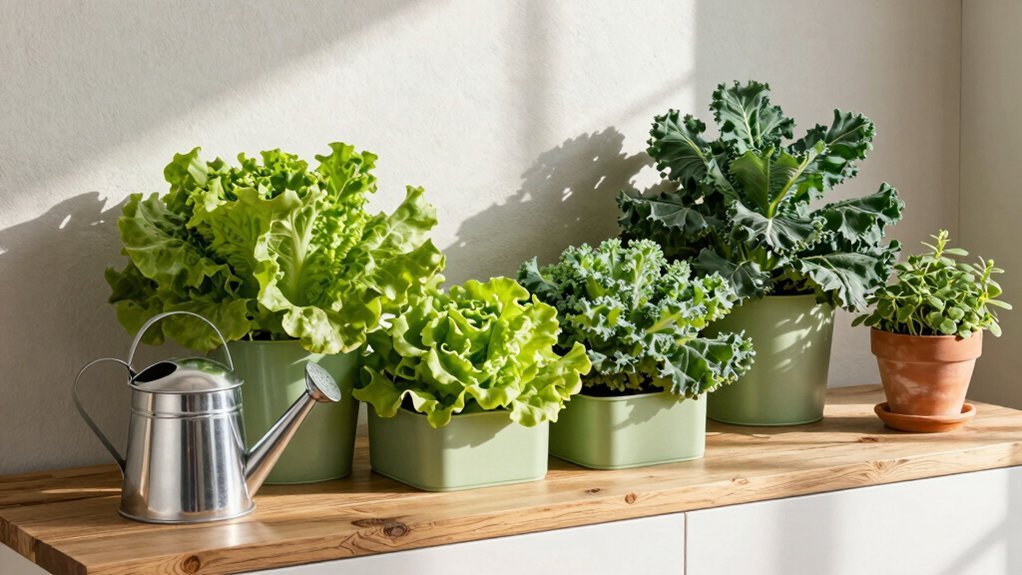
You can transform your windowsill into a productive salad garden by using compact containers like tin cans or upcycled bottles that fit any apartment layout.
Growing lettuce from seed to harvest in just 7-10 days lets you eliminate bagged salad waste while producing fresh greens on your own schedule. Organic potting soil enriched with compost provides essential nutrients for healthy seedling development in these confined spaces.
With minimal space and budget-friendly setups, you’ll discover how simple indoor gardening replaces store-bought produce with homegrown nutrition.
Window Ledge Salad Solutions
Why settle for store-bought greens when you can grow fresh salads right on your windowsill?
You’ll transform any apartment into a productive garden with minimal investment. Start by positioning your containers on south or west-facing windows where you’ll maximize sunlight exposure. Rotate your trays daily for even growth, and rotate your harvests by cutting one half while the other regenerates.
Your setup requires just:
- Long narrow planters (15-20 cm deep) with drainage holes
- Simple potting soil and quality seeds
- Wet newspaper to maintain moisture during germination
Choose resilient varieties like Truchas Mini-Romaine or Buttercrunch Butterhead Lettuce. Harvest at 2.5-4 inches tall using the cut-and-come-again method. You’ll enjoy continuous fresh greens for weeks, spending virtually nothing after your initial setup. For northern windows or spaces with limited natural light, grow lights can compensate and support healthier, more productive greens indoors.
Living Kits For Compact Spaces
Indoor salad-growing kits transform apartments and small spaces into productive gardens without requiring extensive knowledge or setup. You’ll find options tailored to your lifestyle and budget constraints.
| Kit Type | Plant Capacity | Key Feature |
|---|---|---|
| Farmstand Nook | 20 plants | Compact indoor space |
| Counterstand Set | 3 plants | Countertop friendly |
| Gardyn Home 4.0 | 30 plants | App-controlled |
Pre-sprouted seedlings guarantee success while doubling growth speed. The Indoor Salad Garden Kit includes eight black pots and biodegradable soil disks—everything you need to start immediately. You can cultivate Butter Lettuce, Bok Choy, and Mini Cucumber without soil using hydroponic systems. Many growing kits come with seed sets tailored to different preferences, allowing you to choose varieties suited to your tastes and growing conditions. These kits eliminate guesswork, deliver consistent harvests, and occupy minimal floor space, making them ideal for apartment dwellers seeking fresh greens year-round.
Reducing Bagged Salad Waste
How much plastic packaging ends up in your trash weekly from pre-packaged salads? Growing lettuce indoors eliminates this waste entirely while saving money.
You’ll harvest garden-fresh greens in just 7-10 days using budget containers like repurposed plastic bottles or 5-gallon storage totes. The cut-and-come-again method extends yields from single plantings, maximizing productivity without constant replanting. Lettuce requires around 6-8 hours of full sunlight daily, which most sunny windowsills can provide naturally.
Start seeds in dark conditions for four days, then move seedlings to sunny windowsills or inexpensive LED grow lights. With successive plantings staggered two weeks apart, you’ll enjoy continuous harvests year-round.
Key advantages:
- Eliminates plastic packaging waste
- Produces fresh greens for pennies per serving
- Requires minimal space and maintenance
Your apartment becomes a sustainable salad factory, delivering crisp lettuce on demand while dramatically reducing environmental impact and grocery expenses.
Turn Kitchen Scraps Into Weekly Soups
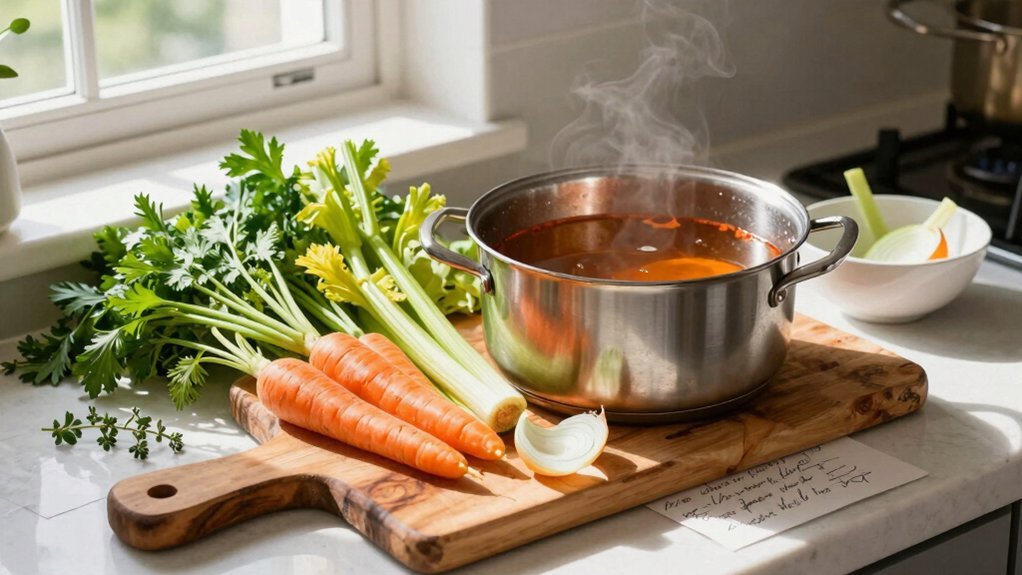
Since the average American wastes 20 pounds of food monthly, transforming kitchen scraps into homemade soup offers a practical way to reclaim that waste while building budget-friendly meals.
You’ll freeze vegetable ends, peels, and past-prime produce over one to two weeks, then combine 8 to 16 cups of scraps with water and simmer for 30 to 40 minutes to create a nutrient-rich broth base.
This single batch yields 6 to 12 cups, eliminating prepared broth expenses.
You can then use this foundation for creamy soups by sautéing chopped vegetables, adding cooked proteins, and incorporating leftover pasta or beans. For best results, wash fresh vegetables under running water before adding them to your broth pot to ensure a clean, quality base.
Shop Second-Hand First for Furniture and Supplies
Furnishing a prepared environment doesn’t require spending thousands on brand-new pieces—you’ll find that second-hand furniture offers substantial savings while dramatically reducing your environmental footprint.
- Save up to 80% on costs: Antique furniture runs 80% less than new items, while traditional retail markups exceed 200%
- Cut emissions dramatically: Reusing furniture avoids 85-97% of manufacturing emissions compared to new production
- Divert waste from landfills: You’ll help redirect millions of discarded pieces annually—75% of furniture sent to landfill remains reusable
Shopping secondhand aligns perfectly with budget-conscious parenting. You’ll furnish your Montessori space thoughtfully while preserving resources. Since 79-96% of furniture’s climate impact stems from material extraction and production, purchasing used pieces prevents that environmental cost entirely. Your wallet and the planet both benefit. Platforms like Reperch offer curated quality preowned pieces across the San Francisco Bay Area, making it easy to find inspected furniture that meets your standards.
Cook From Scratch and Save 60% on Prepared Foods
Why do you spend $320 monthly on dining out while groceries cost only $200? That’s $120 wasted—$1,440 annually. Home-cooked meals cost significantly less than restaurant alternatives.
When you prepare lunch ingredients for $60 monthly, you save $100-$140 compared to shop meals.
Cooking at home three times weekly boosts your Healthy Eating Index to 67; six times reaches 74. You’ll consume fewer calories, sugar, and fat without spending extra. Remember to account for sales tax, delivery charges, and tips when calculating your true dining-out expenses.
Start tracking your dining expenses versus grocery costs for one month to identify your savings potential.
Compare ingredient prices for your favorite meals against their prepared versions.
Batch-cook weekends and freeze portions for busy schedules. Meal planning reduces waste while cutting eating-out expenses and promoting healthier choices.
Frequently Asked Questions
How Do I Transition My Family to Eco-Friendly Habits Without Overwhelming Them?
You’ll succeed by starting with low-effort habits like turning off lights, then gradually introducing moderate changes. Model eco-friendly behaviors rather than lecturing, involve your family in decisions, and celebrate small wins together.
What’s the Best Starter Investment for Beginners on Tight Budgets?
You’ll start best with micro-investing apps like Acorns or index funds through Fidelity. They’ve got zero minimums, invest your spare change automatically, and offer diversification. You’re building wealth without overwhelming your budget.
How Long Does It Take to See Financial Savings From Sustainable Swaps?
You’ll see immediate cost reduction when you refinance expensive debt with cheaper guaranteed debt. Long-term conservation funding unfolds over extended horizons—typically 15-20 years—maximizing your financial and environmental returns.
Where Can I Find Affordable Bamboo and Reusable Products Locally?
You’ll find affordable bamboo and reusable products locally at Whole Foods Markets for Caboo paper towels, Target for furniture starting at $44.99, and Walmart for serving trays available for pickup.
How Do I Maintain Motivation When Sustainable Living Feels Inconvenient Initially?
You’ll maintain motivation by starting small, celebrating early wins, and connecting actions to your values. Join community groups, track progress visibly, and remind yourself that inconvenience decreases as sustainable habits become routine.
In Summary
You’ve got all the tools to transform your home into an eco-friendly, budget-conscious space. By swapping single-use items, making your own cleaners, and growing fresh produce, you’re cutting costs while reducing waste. You’ll notice your grocery bills shrink, your energy expenses drop, and your environmental impact diminish. It’s not about perfection—start with one change and build from there. You’re already making a difference.




Leave a Reply