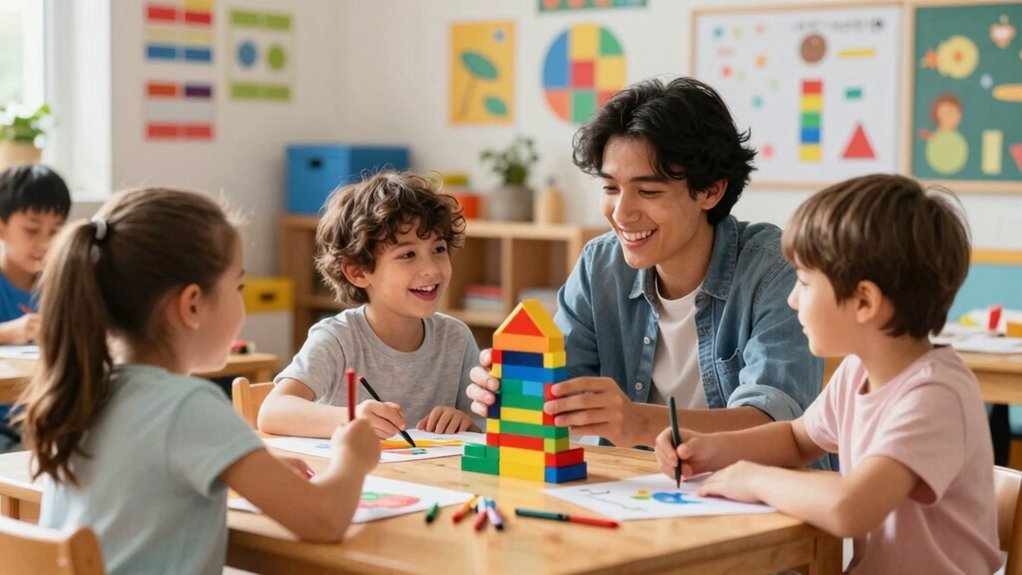
You’ll deepen your expertise when teaching forces you to master content and articulate concepts clearly. You’ll build stronger social skills as you interact with peers across age gaps, developing empathy and communication abilities. You’ll accelerate academic growth through observational learning of advanced vocabulary and exposure to diverse problem-solving strategies. These benefits create a dynamic cycle that mirrors natural community learning—and there’s more to discover about maximizing this approach.
How Teaching Deepens Older Students’ Learning
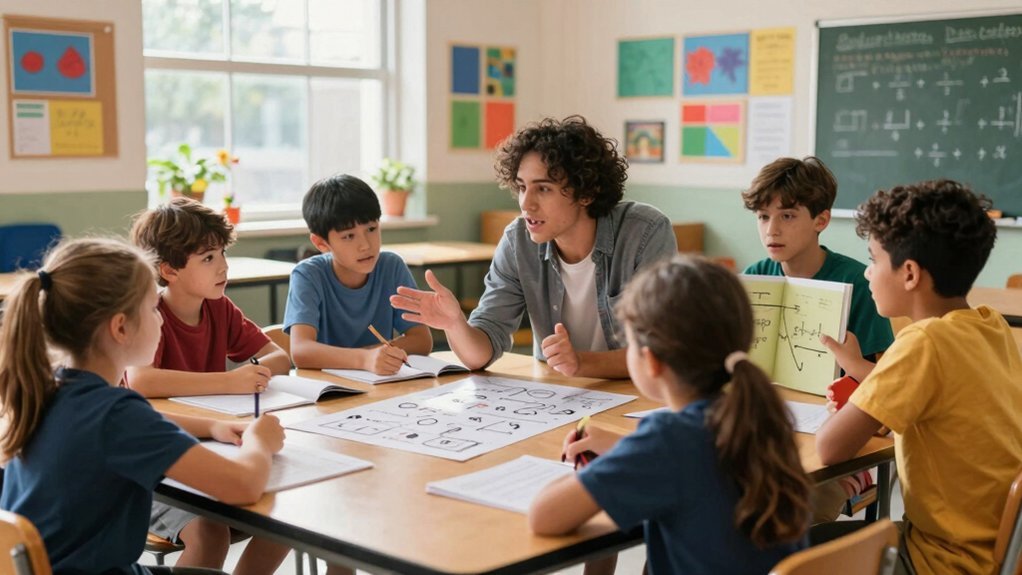
Why do older students often demonstrate stronger command of material after explaining it to younger peers? When you teach, you can’t fake understanding—you’ll expose gaps immediately. This necessity forces you to master content deeply, articulating concepts clearly enough for less experienced minds to grasp.
The act of explaining strengthens your own comprehension through active articulation. You’re not passively reviewing material; you’re constructing knowledge in real time. This cognitive engagement creates neural pathways that rote memorization never achieves.
Mentoring younger students also triggers disequilibrium—their questions challenge your assumptions and push your thinking forward. You refine strategies, discover alternative approaches, and build mental flexibility. The interaction stimulates growth you wouldn’t experience alone, transforming you into a genuine subject-matter expert rather than someone merely reciting facts. As older students practice empathy and communication by helping younger peers, they deepen their own emotional and intellectual development alongside their academic mastery.
Do Mixed-Age Groups Build Stronger Social Skills?
When you place children of different ages together in a classroom, something remarkable happens—aggressive behaviors decline, friendships flourish across age gaps, and social isolation diminishes.
When children of different ages learn together, aggressive behaviors decline while friendships and confidence flourish across age gaps.
You’ll notice younger children develop stronger language and self-regulation skills through observing older peers, while their communication sharpens through meaningful interactions.
Mixed-age settings reduce bullying by building relationships among children who wouldn’t naturally socialize, creating a foundation of security and confidence. Research shows that social competence in early years predicts later academic and social success, making these formative interactions particularly valuable.
Simultaneously, older students develop empathy and leadership as peer teachers. They cultivate problem-solving abilities while mentoring younger classmates. The structured environment with responsive relationships decreases stress and increases learning capacity.
You create a setting where all children benefit—younger students gain from the “push” interactions with advanced peers, while older children strengthen their social-emotional capabilities through nurturing roles.
How Mixed-Age Learning Strengthens Academic Skills
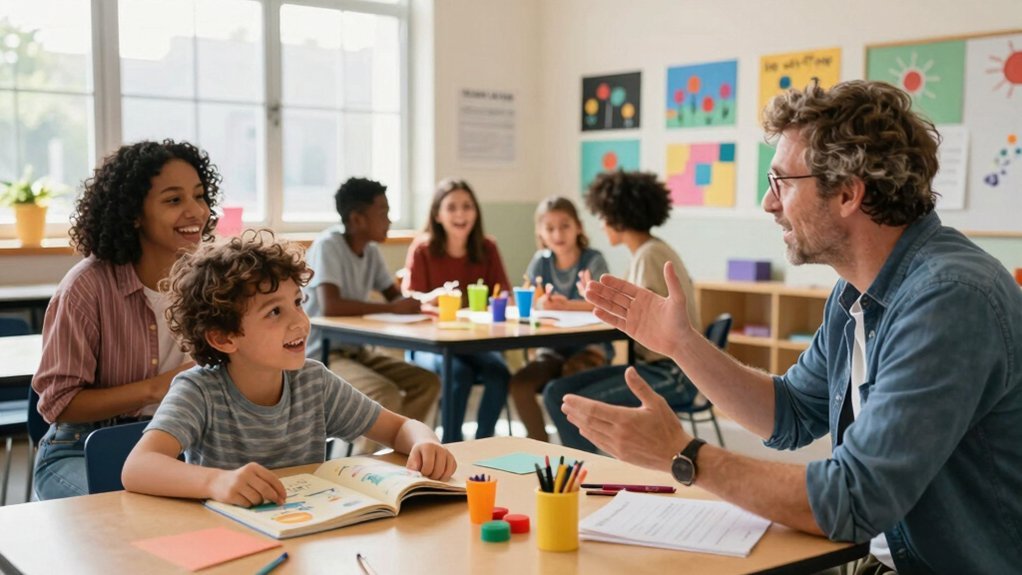
How do younger students suddenly grasp advanced vocabulary that typically wouldn’t appear in their grade level? They’re observing older peers daily, absorbing concepts naturally through osmosis. You’ll notice children progress at individualized rates rather than lockstep timelines, allowing gifted students to advance in math or reading immediately instead of waiting for grade promotions. This dynamic learning cycle mirrors how children naturally learn within families and communities, where mixed ages interact and share knowledge organically.
| Benefit | How It Works | Your Child Gains |
|---|---|---|
| Observational Learning | Younger kids watch older peers tackle complex problems | Advanced vocabulary and critical thinking |
| Peer Teaching | Older students reinforce understanding by explaining concepts | Deeper comprehension and confidence |
| Flexible Progression | Students move ahead without grade-level constraints | Academic growth at their own pace |
| Integrated Projects | Mixed ages collaborate on open-ended challenges | Problem-solving skills beyond rote memorization |
You’re creating an environment where academic development flourishes naturally through genuine peer interaction.
Frequently Asked Questions
How Do Mixed-Age Classrooms Reduce Bullying and Create Safer Learning Environments?
You’ll find mixed-age classrooms reduce bullying by fostering cooperative learning experiences that enhance affective empathy among adolescents. You’ll also benefit from increased peer mentoring and social connections across age groups, creating stronger classroom communities resistant to bullying behaviors.
What Role Does Multi-Year Teacher Continuity Play in Understanding Student Learning Styles?
You’ll identify your students’ unique learning styles more accurately over multiple years. You’ll observe how they progress, recognize their strengths and weaknesses, and adapt instruction to their evolving academic and emotional needs effectively.
How Do Younger Students Experience Less Transition Anxiety in Mixed-Age Settings?
You experience less transition anxiety in mixed-age settings because you’re observing older peers handle routines beforehand, receiving mentorship that clarifies uncertainties, and progressing gradually through familiar materials within a supportive community.
What Leadership Opportunities Emerge for Older Students in Mixed-Age Classroom Communities?
You’ll mentor younger peers academically, model positive behavior, lead small group activities, and develop communication skills. You’ll build confidence transitioning from youngest to oldest while cultivating empathy through meaningful interactions and shared responsibilities.
How Does Individualized Pacing Reduce Stigma Compared to Traditional Grade-Level Constraints?
You progress at your own pace without grade-level labels tracking you. You’re not “behind” or “advanced”—you’re simply learning. This individualized approach lets you build confidence through personal growth, not peer comparison.
In Summary
You’ll find that mixed-age classrooms create powerful learning opportunities for every student. When you teach younger peers, you’re reinforcing your own understanding while developing leadership skills. You’re also building genuine friendships across age groups, which strengthens your social confidence. By working alongside students at different academic levels, you’re developing resilience and discovering new problem-solving approaches. You’re not just learning content—you’re cultivating skills that’ll serve you throughout your life.




Leave a Reply