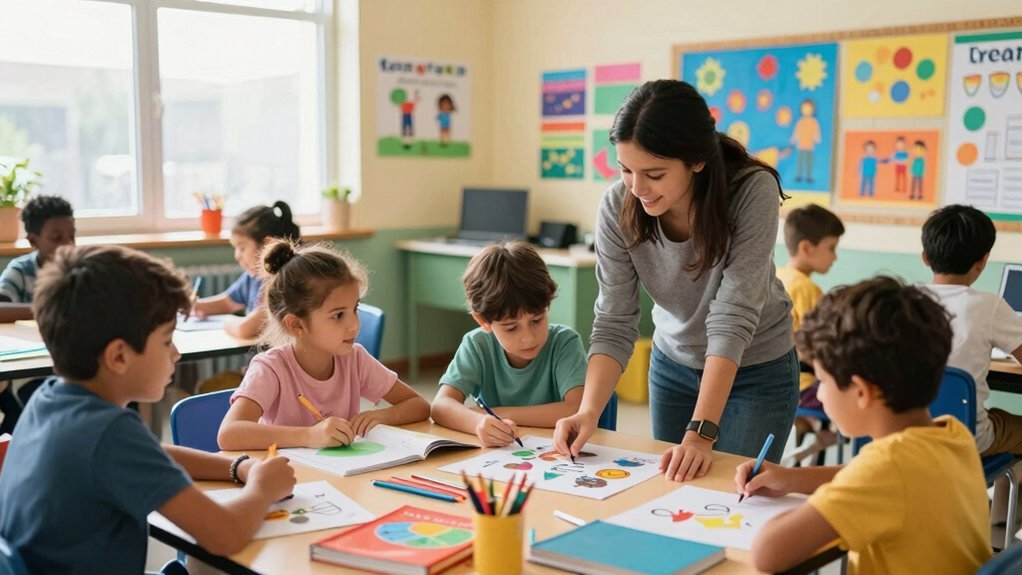
You’ll discover that multi-age classrooms match or exceed single-grade performance while letting each child progress at their own pace. Mixed-age interaction accelerates reading and language skills through peer modeling. You’ll see social-emotional confidence flourish as students build diverse relationships and support networks. Struggling learners thrive without stigma through flexible grouping. Older students strengthen leadership by mentoring younger peers. Multi-year teacher relationships deepen understanding through sustained observation. These seven benefits transform how your child learns and grows.
Academic Achievement Equals or Exceeds Single-Grade Classrooms

When you examine the research on multiage classrooms, you’ll find that students’ academic performance rivals or surpasses that of their single-grade peers. Studies consistently show that multiage students perform equally well or better on standardized tests, with some demonstrating significant advantages in reading and mathematics mastery. Across 30 comprehensive studies, multiage grouping shows no negative effects on academic achievement. The data reveals a balanced picture: nine studies favor conventional classrooms, six favor multiage, and thirteen remain inconclusive. However, the absence of negative findings is telling—multiage education represents a viable, equally effective organizational alternative. When you consider that academically gifted children especially benefit from multiage instruction, you recognize that this approach doesn’t just match traditional classrooms; it often exceeds them. Older students demonstrate improved academic performance when given the responsibility of assisting younger peers, reinforcing their own mastery of foundational concepts.
How Flexible Pacing Lets Each Child Learn at Their Own Speed
You’ll find that flexible pacing in multi-age classrooms removes the artificial timelines that force students into one-size-fits-all learning schedules. Your child can master skills at their own rhythm—whether that means advancing quickly through multiplication or spending extra time solidifying place value concepts—without the stigma of feeling behind. This personalized growth timeline means you’re focusing on genuine mastery rather than racing to keep pace with grade-level expectations. Research supports that ability-based grouping leads to stronger progress compared to rigid grade-level structures.
Individual Growth Timelines
How do children truly thrive academically? When you allow each student to progress at their own pace rather than a predetermined schedule, unravel their potential. In multi-age classrooms, you’ll notice children revisiting concepts without shame or advancing without unnecessary delays. This flexibility accommodates growth plateaus and regressions naturally. Research shows that three years in the same multi-age environment linked to higher reading exam scores than entering in the third year, demonstrating the cognitive benefits of sustained, flexible pacing within a consistent classroom structure.
| Timeline | Traditional Classrooms | Multi-Age Classrooms |
|---|---|---|
| Mastery Period | Fixed by grade level | 2-3 years flexible |
| Pacing | One-size-fits-all | Individualized |
| Regression Response | Remediation or retention | Supported within cohort |
| Advanced Learners | Held back by peers | Progress without barriers |
Your teachers differentiate instruction in real time, meeting your child’s current abilities. This approach guarantees mastery happens when ready, not when the calendar dictates.
Mastering Skills Without Pressure
What if your child could learn without the constant weight of comparison? In multi-age classrooms, they can. Your child masters skills at their own pace rather than racing against age-based timelines. Advanced learners don’t wait for classmates; they progress when ready. Those needing extra time continue without shame or stigma.
The three-year cycle proves crucial here. Instead of resetting annually, your child consolidates and practices concepts thoroughly. They revisit material whenever necessary, building genuine mastery. Montessori materials facilitate this independence—your child accesses the full curriculum whenever developmentally prepared. Research shows that individualized progress monitoring allows teachers to track each student’s advancement through continuous observation and assessment rather than relying on grade-level benchmarks alone.
This approach transforms learning. Your child develops intrinsic motivation because education becomes about genuine understanding, not performance metrics. They build confidence through authentic achievement, not artificial grade-level benchmarks. Pressure dissolves when pace aligns with capability.
Why Mixed-Age Interaction Accelerates Reading and Language Skills
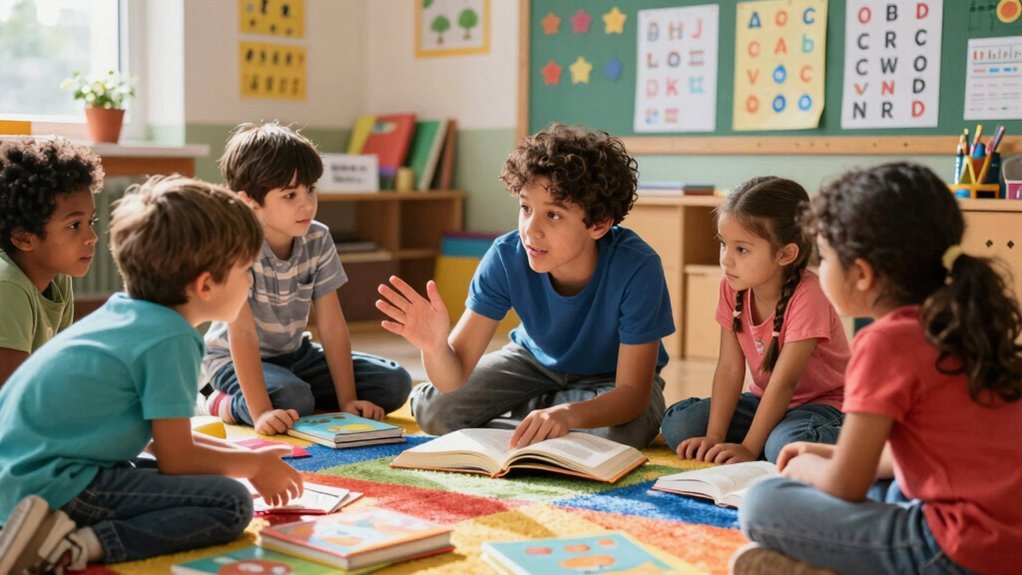
You’ll find that older children naturally model sophisticated language patterns, giving younger peers direct exposure to advanced vocabulary and expression they’re developmentally ready to absorb. When you mix ages intentionally, you’re creating an environment where children encounter richer, more varied curriculum content—younger students access materials and discussions typically reserved for older grades, while older students deepen their understanding through teaching. This dynamic interplay between modeling and exposure creates multiple pathways for language growth that same-age classrooms simply can’t replicate. Research shows that quantity and quality of language exposure directly influences language learning outcomes, making multi-age settings particularly effective for maximizing the linguistic interactions children receive throughout the school day.
Peer Language Modeling Effects
Why do younger students in mixed-age classrooms develop stronger reading and language skills? You’ll find the answer in peer language modeling effects. Older students naturally become language exemplars, demonstrating vocabulary usage, pronunciation, and communication patterns that younger peers absorb through observation and imitation.
| Modeling Mechanism | Student Benefit | Outcome |
|---|---|---|
| Older students present lessons | Increased language exposure | Enhanced vocabulary retention |
| Younger children observe peers | Imitative learning occurs | Accelerated literacy development |
| Cross-age dialogue | Active peer interaction | Stronger communication skills |
You witness cognitively complex language emerge when younger children model their older classmates’ sophisticated speech patterns. This sustained peer exposure strengthens both vocabulary acquisition and inhibitory control. The authentic, natural interactions you observe create optimal conditions for language learning that same-age settings simply can’t replicate. Research demonstrates that social interaction influences cognitive development, positioning mixed-age environments as contexts where language learning becomes deeply embedded in the social fabric of the classroom.
Enriched Curriculum Exposure Benefits
How do mixed-age classrooms accelerate reading and language skills beyond peer modeling alone? You’ll discover that enriched curriculum exposure creates powerful learning advantages when you combine diverse age groups with intentional instruction.
When you structure multi-age classrooms strategically, you unlock:
- Differentiated curriculum access—younger students encounter advanced content through older peers’ activities, expanding their literacy exposure
- Extended learning contexts—you create multiple entry points for reading and writing practice across developmental levels
- Collaborative discovery opportunities—cross-age interactions during shared activities deepen language comprehension and application
- Accelerated skill progression—younger children engage with cognitively complex materials they’d rarely encounter in single-grade settings
You’ll find that this environmental richness, combined with high-quality teaching and targeted professional development, substantially boosts vocabulary gains and reading achievement. The curriculum becomes truly dynamic when you leverage mixed ages effectively. However, classrooms with higher proportions of younger children require intentional design of the physical literacy environment to ensure all ages access sufficient books, writing materials, and print displays that support emergent literacy development.
The Social and Emotional Confidence Boost From Peer Diversity
When children learn alongside peers of different ages, they’re exposed to a richer social ecosystem that naturally builds emotional resilience and confidence. You’ll notice that multi-age settings expand the emotional support networks available to each child, offering multiple role models and guides beyond the classroom teacher.
This diversity accelerates perspective-taking abilities, helping you understand different viewpoints earlier than you’d in same-age environments. The extended peer interactions reduce bullying and loneliness while fostering genuine relationships across developmental stages. You develop flexibility and resilience by adapting to peers’ varying competencies and learning needs. Through prolonged engagement with diverse ages, talents, and personalities, you cultivate empathy and patience. These extended relationships with classmates and teachers across multiple years strengthen your social understanding, creating a foundation of confidence that extends far beyond academics. Research from schools in Norway and Germany demonstrates that time in large mixed groups builds security by increasing the breadth of social connections available to each student.
Supporting Students With Learning Differences Without Stigma

- Flexible grouping by skill level allows teachers to adjust your instruction without formal remedial labels that single you out
- Peer tutoring across ages provides academic support from older classmates who naturally reinforce their own understanding while helping you
- Normalized academic diversity means struggling learners connect with classmates at similar levels regardless of grade assignment
- Individual learning timelines accommodate your unique pace without disrupting peer relationships or classroom cohesion
You’re simply another learner developing at your own rate. Research from multigrade classrooms shows that younger children benefit from interactions with older, more mature peers who model advanced vocabulary and sophisticated thinking.
How Mentoring Younger Students Strengthens Older Kids’ Leadership
What happens when you’re given responsibility for someone else’s learning? You develop genuine leadership skills. When you mentor younger students, you’re not just helping them—you’re transforming yourself.
| Leadership Outcome | How It Develops | Real-World Application |
|---|---|---|
| Self-Confidence | Recognizing your expertise | Navigating professional hierarchies |
| Empathy | Consistent caregiving roles | Building stronger relationships |
| Communication | Explaining complex concepts | Articulating ideas effectively |
| Responsibility | Guiding less-experienced peers | Taking charge in diverse settings |
As you guide younger classmates, you solidify your own knowledge by breaking down ideas into accessible language. You observe their enthusiasm and wonder, which reminds you why learning matters. Your expanded competencies become visible through their progress. You’re not losing academic ground—research shows you maintain rigorous performance while gaining irreplaceable interpersonal skills that extend far beyond your classroom. In multiage settings, these mentoring relationships become particularly meaningful because you work with the same younger students over multiple years, creating bonds that shape both academic and personal growth.
Why Multi-Year Teacher Relationships Deepen Learning Understanding
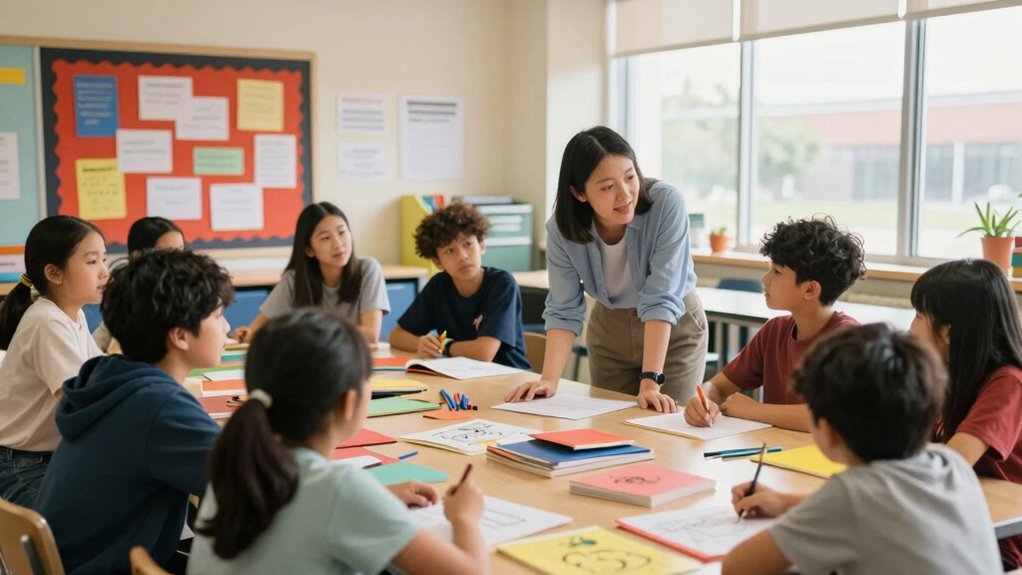
Continuity transforms how teachers understand you. When your teacher stays with you across multiple years, they build comprehensive knowledge of your strengths, challenges, and learning style. This deep familiarity allows them to tailor instruction precisely to your needs rather than following rigid grade-level pacing.
Multi-year relationships deepen your learning through:
- Observing your growth patterns over extended periods, enabling teachers to anticipate your needs
- Maintaining consistent expectations and behaviors that reinforce academic progress
- Aligning instruction with your actual mastery rather than arbitrary timelines
- Understanding your family dynamics and preferences to support holistic development
You’ll experience more flexible grouping based on readiness, reinforced understanding through sustained relationships, and personalized learning paths. This continuity eliminates the restart cycle, allowing you to build momentum academically while developing stronger emotional security in your learning environment. Returning students further strengthen this culture by mentoring younger peers and establishing classroom norms that persist year to year.
Frequently Asked Questions
How Do Multi-Age Classrooms Handle Behavioral Management Compared to Traditional Single-Grade Settings?
You’ll experience fewer discipline issues in multiage classrooms because you benefit from long-term teacher-student relationships, peer role modeling, and shared responsibility. You’ll also receive individualized behavioral strategies tailored to your specific needs.
What Age Range Combinations Work Best for Effective Multi-Age Classroom Groupings?
You’ll find that K-2 or 1-3 combinations work best for primary grades, while 4-6 groupings suit upper elementary. For middle school, you’ll benefit from Years 6-9 structures using parallel curricula matching diverse developmental levels.
How Do Standardized Testing Results Compare Across Multi-Age and Single-Grade Classroom Models?
You’ll find standardized test scores essentially equivalent between multi-age and single-grade classrooms. Meta-analyses show median effect sizes near zero across reading, mathematics, and composite assessments, though you may see occasional disparities by demographic groups.
What Teacher Training or Preparation Is Required to Effectively Teach Multi-Age Classrooms?
You’ll need training in differentiation skills, child development knowledge, and flexible grouping strategies. You must master facilitator roles, conduct regular assessments every 12 weeks, and plan developmentally appropriate activities for varying ability levels.
How Do Parents Perceive Multi-Age Classrooms, and What Are Common Concerns They Raise?
You’ll find that most parents perceive multiage classrooms positively, with over 80% feeling informed and satisfied. However, you should address concerns about mandatory implementation, older students’ regression, and insufficient teacher training to build stronger support.
In Summary
You’ll find that multi-age classrooms transform how you learn and grow. You’re not confined to a single pace—you advance when you’re ready. You’ll strengthen your reading skills through peer interaction, build confidence with diverse relationships, and receive support tailored to your needs without judgment. Whether you’re mentoring younger students or learning from older ones, you’re developing leadership and deepening your understanding through sustained teacher relationships that span multiple years.