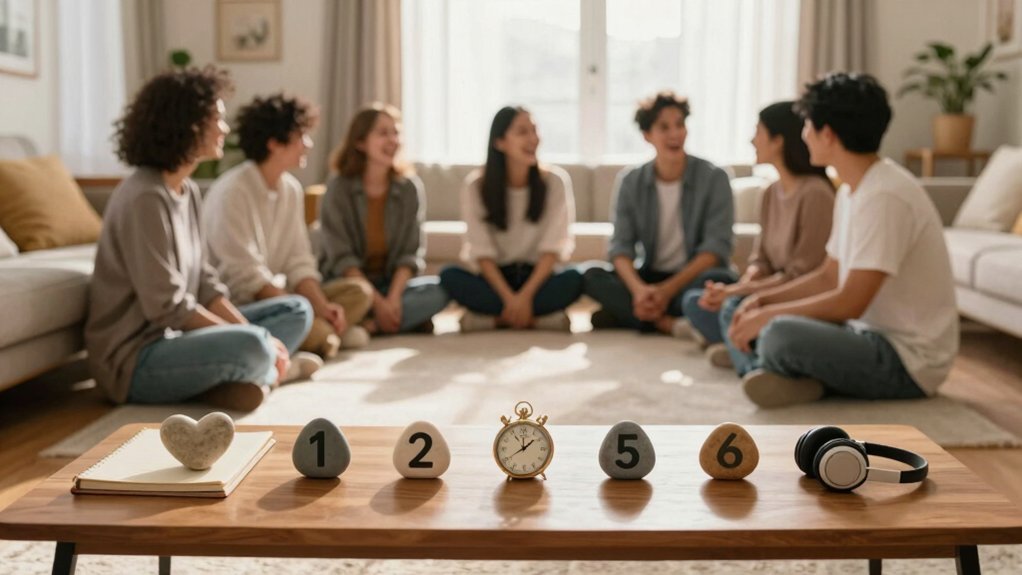
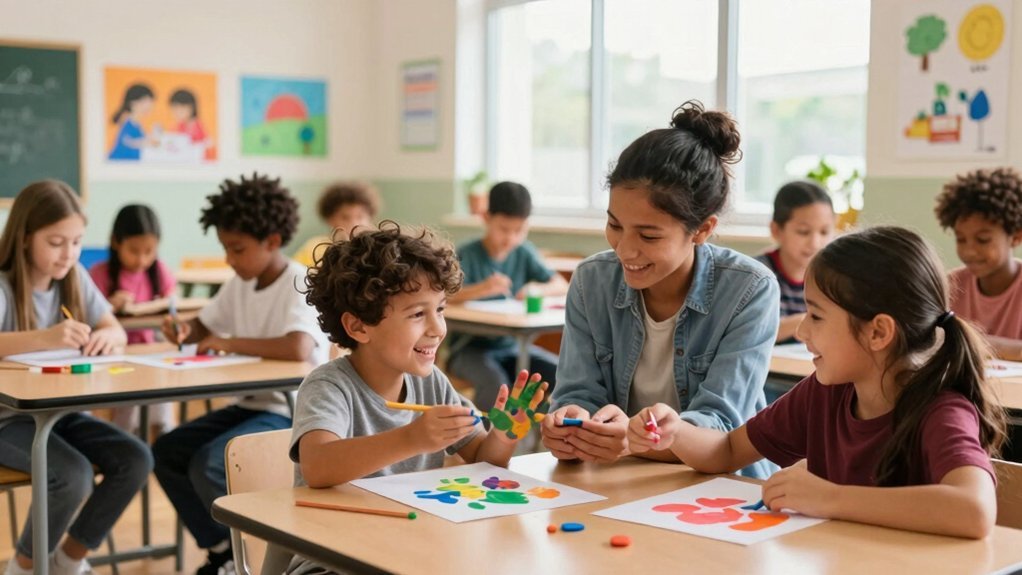
You’ll build stronger empathy in your classroom by mixing ages together. Older students naturally mentor younger peers while gaining confidence and interpersonal skills. Younger students develop perspective-taking by observing different developmental stages. Through cross-age play, you’ll dismantle snap judgments and reframe differences as strengths, not deficits. Emotional modeling helps younger students shift from reactive responses to thoughtful ones. When you explore these dynamics further, you’ll discover how collaborative problem-solving deepens empathetic thinking across all ages.
How Older Students Build Empathy by Mentoring Younger Peers

Mentorship isn’t just about helping someone else—it’s a powerful engine for developing empathy in the mentor themselves. When you mentor younger peers, you’re forced to see the world through their eyes, understanding their struggles and perspectives in ways that reshape your own thinking. This bridges the gap between your experiences and theirs, fostering genuine care and connection. As you guide them, you’ll develop stronger interpersonal skills and increased confidence in your abilities. You’ll notice yourself becoming more attuned to others’ needs and emotions. The consistency you bring to the relationship—your affirming presence—builds trust and deepens your capacity for empathy. This mutual growth transforms mentorship from a one-directional help into a transformative experience for everyone involved. Research shows that cross-age peer mentoring increases social connectedness and self-esteem in both mentors and mentees, creating lasting positive effects on school engagement and relationships.
Why Cross-Age Groups Teach Perspective-Taking Better Than Same-Age Classrooms?
Why do children thrive socially in mixed-age classrooms while aggression flourishes in same-age settings? Cross-age groups naturally foster perspective-taking through inherent developmental differences. When you’re younger, you instinctively seek guidance from older peers rather than same-age classmates, creating authentic mentoring opportunities.
Older students observe how younger children process emotions and challenges, deepening their understanding of different developmental stages. This dynamic builds genuine empathy—not merely reflexive mirroring, but true insight into others’ experiences.
You’ll notice that mixed-age interactions provide real-world strategies for managing stress and understanding diverse viewpoints. Younger children model behavior after older classmates, while older students practice explaining concepts simply, strengthening their own perspective-taking abilities. Through conflict resolution and collaborative problem-solving, these natural cross-age exchanges cultivate emotional intelligence that same-age classrooms simply can’t replicate, creating lasting social competence.
Emotional Modeling in Cross-Age Friendships

When older students model emotional resilience and vulnerability with younger peers, something profound shifts in how both groups process feelings. You’ll witness younger students gradually replacing reactive anger with thoughtful responses as they absorb older mentors’ emotional softening. This isn’t passive observation—you’re actively rewiring how emotions get expressed and managed.
Older students benefit equally, deepening their own emotional capacity through teaching. The mutual vulnerability you create in these friendships builds genuine connection that transcends age differences. Research confirms that this emotional modeling reduces distress while strengthening regulation skills across both generations. As they interact across age divides, students learn to distinguish approval from love, a nuance that strengthens their ability to value themselves independent of external validation.
You’re essentially creating an emotional grammar shared between ages—one where empathy and self-awareness become the primary language. That’s how cross-age friendships cultivate lasting emotional discipline that transfers into students’ future relationships.
How Multi-Age Play Reduces Judgment and Builds Acceptance
How do you build genuine acceptance among students of vastly different ages and abilities? Through multi-age play that naturally dismantles judgment. When you observe older peers mastering complex tasks, you adjust your expectations and abandon snap judgments about capability. Mixed-age dynamics shift focus from competition to collaboration, replacing comparison with appreciation for individual differences.
You’ll notice that uninterrupted play replicates neighborhood settings, where developmental variances become normalized rather than stigmatized. Younger children emulate older models, learning acceptance through observed success. Older students practice responsibility and nurturing behaviors instead of competitive critique. This structure reduces social isolation and builds friendships based on genuine connection rather than ability matching. Research shows that perspective-taking accelerates when younger children participate in mixed-age groups, deepening their understanding of how others think and feel.
Skill-based interaction prioritizes cooperation over rivalry, fostering deeper empathy and perspective-taking across age groups.
How Collaborative Problem-Solving in Multi-Age Groups Deepens Empathetic Thinking
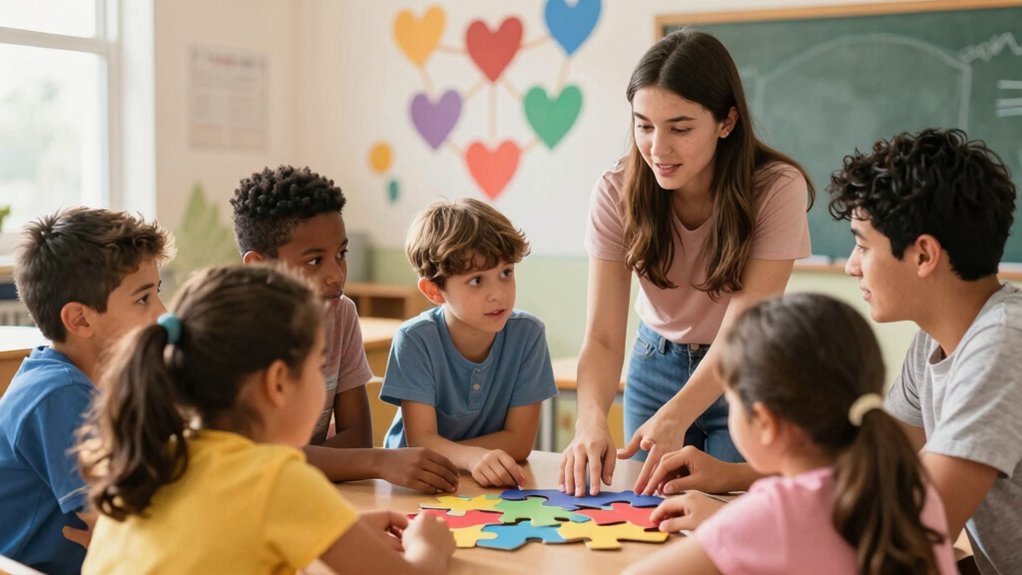
What happens when you place students of different ages around a shared challenge? You create conditions where empathy naturally develops. When you tackle unsolved problems together, you’re forced to consider perspectives beyond your own. Older students scaffold concepts for younger peers, while younger students stimulate cognitive growth in their mentors. You’ll notice multiage groups reach consensus through more leadership behaviors and organizing statements than same-age teams.
This collaborative dynamic shifts your thinking. You accept ability differences as strengths rather than deficits. Through dialogic talk and shared goals, you build on each other’s ideas. Screen interfaces and hands-on workshops help you categorize thinking together. You’re not just solving problems—you’re developing genuine understanding of how others think and learn differently than you do. Multiage settings foster acceptance of differences in abilities and social behaviors, creating psychological safety for authentic collaboration.
Frequently Asked Questions
What Age Gaps Work Best for Creating Meaningful Mentorship Relationships in Multi-Age Classrooms?
You’ll find that a three-year age span creates the ideal mentorship dynamic. This gap’s large enough that you’ll observe meaningful skill transfer between “novices” and “experts,” yet small enough that you won’t experience isolation or disconnection among learners.
How Do Teachers Manage Different Academic Levels While Maintaining Empathy-Building Activities?
You’ll manage academic levels by grouping students flexibly by ability while designing low floor/high ceiling activities. You’re integrating peer mentoring naturally—older students guide younger ones, building empathy through authentic collaboration rather than sacrificing academic rigor.
Can Multi-Age Classrooms Accommodate Children With Significant Developmental Delays or Disabilities?
You’ll find that multi-age classrooms can accommodate children with significant developmental delays or disabilities better than age-segregated settings. They’re less challenging for non-normative development and offer inclusive, supportive environments.
What’s the Ideal Class Size Ratio Between Older and Younger Students?
You’ll find the ideal ratio includes approximately 7 younger children and 9 older students per classroom. This composition gives you balanced developmental diversity while you maintain manageable staff-to-child ratios for individualized attention.
How Do Parents Support Empathy Development Happening in Multi-Age Classroom Settings?
You’ll model empathy at home by discussing classroom examples, encouraging older siblings to mentor younger ones, reinforcing cooperation and perspective-taking, and promoting play with diverse age groups regularly.
In Summary
You’ll find that multi-age classrooms create powerful opportunities for developing empathy in ways same-age settings simply can’t match. When you mentor younger students, take different perspectives, and model emotions authentically, you’re building genuine compassion. You’re learning to accept differences through shared play and solving problems together. These experiences don’t just make you a kinder person—they’re reshaping how you connect with others throughout your life.