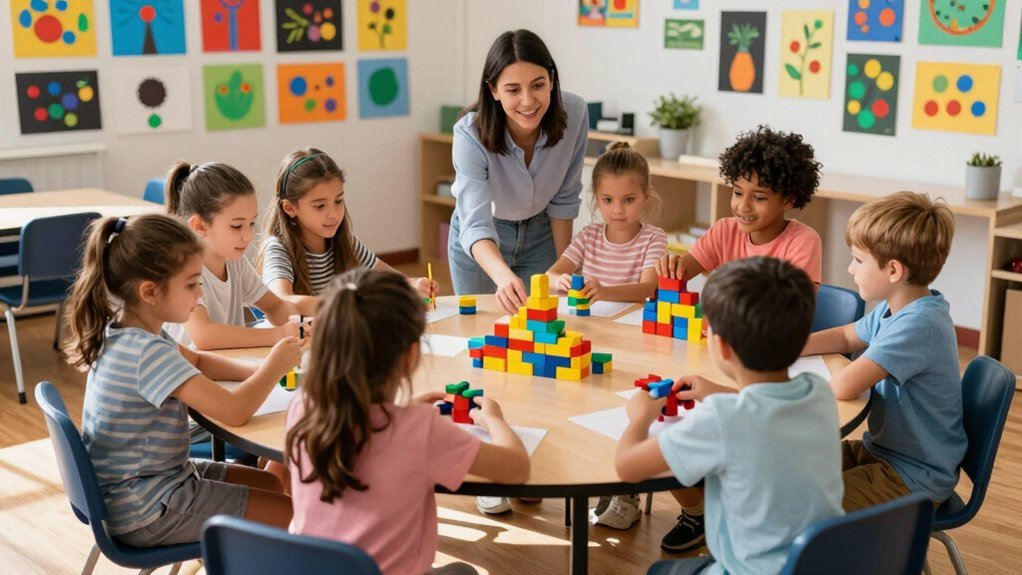
You create mixed-age individualized learning by combining children across different developmental levels in one classroom. Older students naturally mentor younger peers, reinforcing their own learning while building leadership skills. Open-ended materials adapt to each child’s readiness level, allowing simultaneous engagement. Teachers observe systematically to personalize each learner’s next steps, adjusting instruction in real-time. When you loop with students over multiple years, you unlock deeper understanding of their growth patterns and can truly honor individual learning paths. Discover how these elements work together to create classrooms where no child gets left behind or held back.
What Are Mixed-Age Classrooms and Why Do They Work?
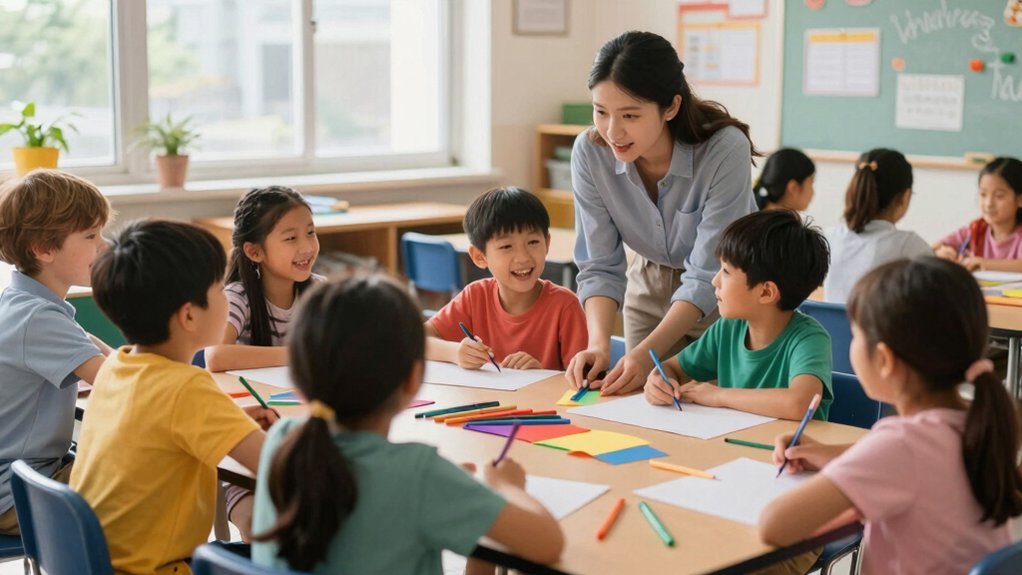
How can a single classroom serve students across different grade levels without sacrificing individualized attention? Mixed-age classrooms combine students from different years, creating natural heterogeneity in experience and abilities. Lower staff-to-child ratios enable teachers to tailor instruction for each learner rather than setting a uniform pace.
This structure eliminates the frustration of being rushed or held back. You progress when ready without boredom, while others receive the support they need without pressure. Family-like dynamics emerge as children experience being both younger and older members within the same community. Older students often act as mentors to younger students, reinforcing their own learning while developing responsibility and leadership skills.
You’ll notice reduced competitive pressure—children cooperate rather than compete. Teachers aren’t overwhelmed meeting identical needs across all students. This distribution of developmental demands allows for genuinely personalized learning, where you take pride in your own abilities rather than comparing yourself to grade-level labels.
How Older Children Naturally Mentor Younger Peers
Why do older students often become powerful role models in mixed-age settings? You’ll find that age differences naturally position older peers as stronger and more knowledgeable, creating an ideal dynamic for mentoring. Unlike same-age relationships, this gap enables effective guidance and support that mimics adult mentoring while remaining uniquely impactful.
You’ll witness older students building empathy and trust through structured programs, modeling prosocial behaviors that younger peers actively absorb. They’re rewarding positive attitudes and fostering competency in ways that resonate deeply with their mentees. The result? Younger students gain school connectedness, improved peer relationships, and enhanced self-esteem.
But the benefits flow both directions. You’ll see mentors developing leadership and communication skills, strengthening their own school relationships and confidence. This reciprocal growth makes peer mentoring a powerful engine for positive youth development. Research demonstrates that programs requiring structured meetings produce measurable outcomes for both mentors and mentees across diverse settings.
Why Younger Kids Thrive With Mixed-Age Grouping

You’ll find that younger children thrive in mixed-age classrooms because they’re naturally absorbing language patterns from older peers, strengthening their vocabulary and communication skills through daily interaction.
As you observe their behavior, you’ll notice they’re developing self-regulation by watching how older classmates manage their impulses and follow classroom expectations.
These younger students also experience fewer behavioral challenges because they’re modeling pro-social behavior and learning to accept limitations in a supportive environment rather than competing against same-age peers. Through task-centered discussions with older children, younger students contribute to more complex activities than they would accomplish working alone, expanding their intellectual capabilities.
Language Growth Through Modeling
When younger children sit alongside older peers in mixed-age classrooms, they’re exposed to linguistic sophistication they can’t access elsewhere. You’ll notice they naturally observe and emulate the complex language tasks older students perform, accelerating their own acquisition remarkably fast.
This modeling effect isn’t one-directional. Older children strengthen their own skills while simultaneously providing templates for younger ones to follow. Through watching peers navigate sophisticated conversations and descriptions, younger children develop a genuine love for language that emerges organically. Language skills can strengthen through listening to peers during these shared classroom experiences.
The key is imitative learning—younger toddlers strengthen communication and verbal skills by imitating what they see. When you design classrooms where mixed ages interact regularly, you create conditions where peer tutoring becomes the engine driving language growth, supporting both expressive vocabulary and conversational confidence across all developmental levels.
Self-Regulation Skills Development
Beyond language development, mixed-age classrooms cultivate another powerful advantage: self-regulation skills that younger children struggle to master in same-age settings. You’ll notice that younger children naturally observe and model the behavioral control demonstrated by older peers, internalizing mature approaches to problem-solving without constant adult intervention. This peer-dependent learning reduces reliance on teachers for caretaking while fostering independence.
Mixed-age environments also create fewer negative behaviors like whining and physical aggression, since shared responsibility for maintaining order replaces the polarization common in same-age groups. When you combine mixed-age grouping with Montessori principles—carefully prepared environments where children make autonomous choices—you unlock sustained self-regulation development. Children aged 6-10 independently identify mistakes and correct their own behavior, building competencies that extend far beyond the classroom. Research demonstrates that social competence in early years predicts later academic and social success, making these formative mixed-age experiences foundational for long-term development.
Reduced Behavioral Challenges
Mixed-age classrooms dramatically reduce the behavioral challenges that plague same-age environments. You’ll notice fewer aggressive behaviors and less social isolation when children interact across age groups. Here’s why:
- Reduced Competition: Removing same-age comparisons lowers stress and aggression, creating a calmer classroom atmosphere.
- Peer Support Systems: Younger children rely on older peers for guidance, shifting dependency away from adults and building confidence.
- Meaningful Roles: Children experiencing regulation difficulties improve significantly when helping classmates, finding purpose in their contributions.
- Environmental Consistency: Stable relationships and routines minimize disruptions, decreasing stress-related behavioral issues. Research demonstrates that continuity of care with consistent caregivers significantly supports children’s social and emotional development while reducing behavioral problems.
You’ll observe that individualized curriculum adaptations further limit challenging behaviors. Mixed-age structures create communities where children feel valued, directly translating to fewer behavioral problems and more engaged learners.
Open-Ended Materials That Engage Multiple Ages
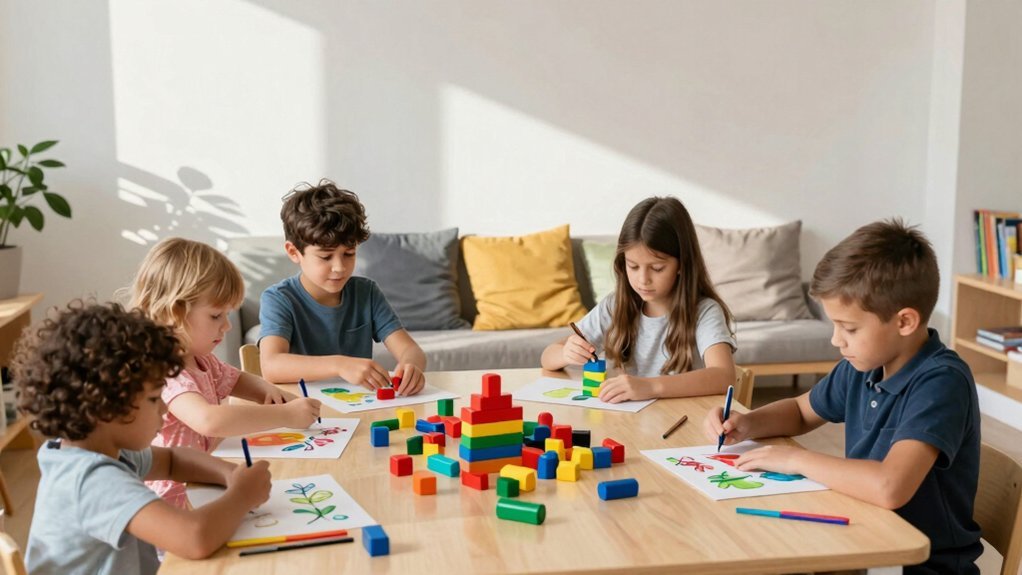
You’ll find that open-ended materials naturally adapt to each child’s developmental level, allowing younger learners to build simple structures while older children engineer complex designs.
These hands-on resources invite all ages to explore simultaneously, creating shared learning moments where children discover solutions at their own pace.
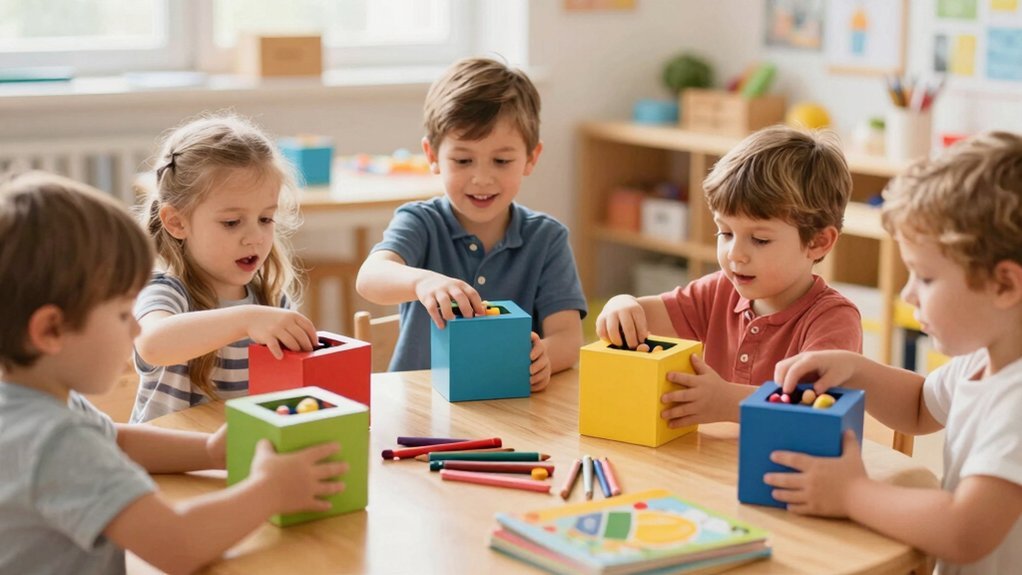
Through self-directed play with loose parts and flexible materials, you’re enabling each learner to pursue meaningful challenges that match their readiness, fostering both independence and confidence across your mixed-age group. When children lead play and take ownership of their learning experiences, they develop creativity and self-expression while practicing problem-solving and flexible thinking skills that support kindergarten readiness.
Materials Adapt To Developmental Levels
When you provide open-ended materials—blocks, playdough, cardboard boxes, fabric scraps—you’re creating tools that naturally engage children across different ages and abilities. These materials don’t dictate how children should play; instead, they adapt to each child’s developmental readiness.
Your youngest learners stack blocks and explore textures, while older children engineer complex structures. Consider how you can leverage this adaptability:
- Revisit materials without stigma as children gain skills
- Challenge gifted learners through creative problem-solving
- Support special needs with flexible pacing and peer collaboration
- Intentionally plan activities spanning multiple ability levels
When materials aren’t prescriptive, each child engages at their own level. A three-year-old and five-year-old both benefit from the same loose parts, discovering new possibilities as they develop. You’re not creating separate activities—you’re designing one rich environment where growth happens naturally. Rotating materials monthly or as interests change keeps the learning environment fresh and responsive to children’s evolving needs and curiosities.
Hands-On Learning Across Ages
A cardboard box doesn’t demand that a toddler stack it while an older child builds a fortress—it simply invites both. You’ll find that loose parts and open-ended materials spark creativity across developmental stages, letting each child engage authentically at their level.
| Material | Toddler Use | Older Child Use |
|---|---|---|
| Wooden blocks | Stacking, knocking down | Architectural design, patterns |
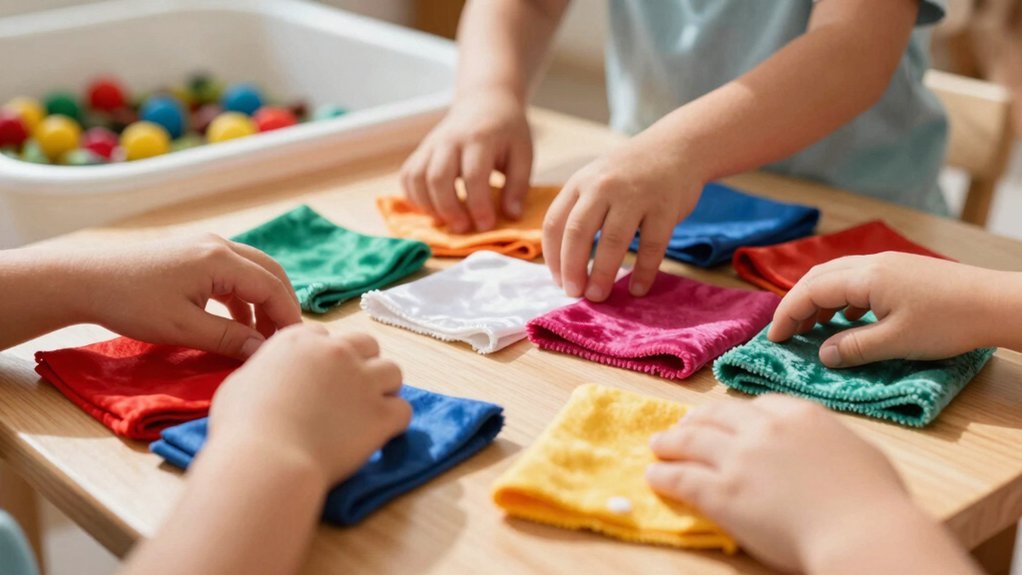
| Fabric scraps | Sensory exploration | Collaborative costume creation |
| Seashells | Sorting by size | Mathematical measurement |
When you rotate materials thoughtfully, you prevent overwhelm while deepening exploration. You’ll notice children return to familiar items with increasing complexity, building confidence and independence. This approach eliminates the need for separate activities—one environment genuinely serves everyone. As older children naturally assume teaching roles by explaining their design choices and mathematical reasoning to younger peers, the protégé effect reinforces learning for both the mentor and the learner.
Self-Directed Exploration And Discovery
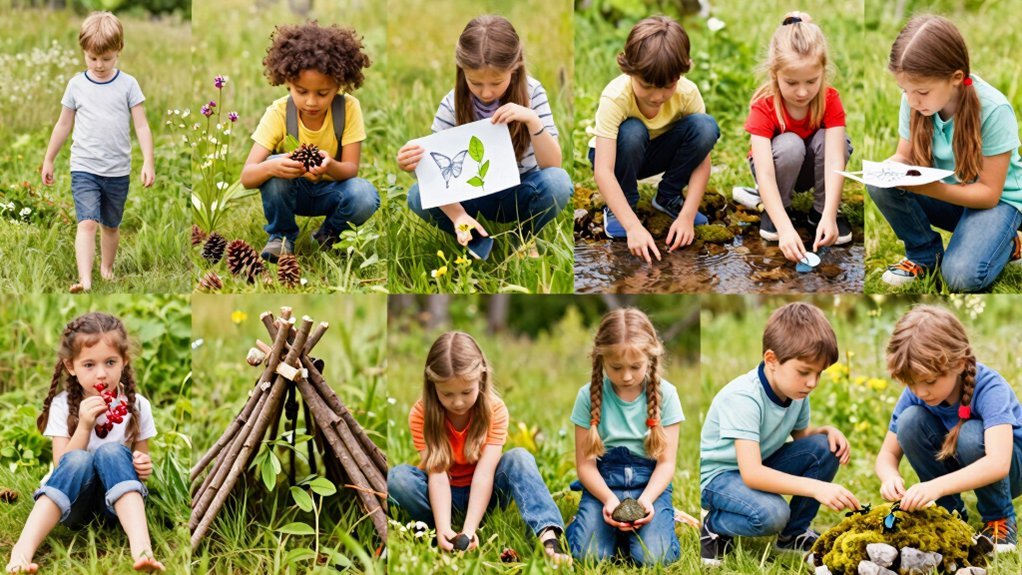
How do children naturally learn from one another? When you provide open-ended materials in mixed-age settings, you create ideal conditions for self-directed exploration. Children pursue their passions freely, with older peers modeling advanced engagement while younger ones observe and participate at their own level.
You’ll notice several key dynamics emerge:
- Younger children acquire skills through observation before joining collaborative play
- Older children deepen subject mastery by simplifying concepts for peers
- Play complexity increases organically without competitive pressure
- All ages develop creativity and leadership through authentic interaction
This natural configuration mirrors how humans evolved to learn—in mixed-age groups where discovery happens through genuine curiosity rather than formal instruction. Age-mixed settings naturally accept a wider range of ability levels, reducing the developmental scrutiny that segregated age groups often create.
When you remove age-based constraints and provide unlimited exploration time, you unlock powerful learning mechanisms that benefit every participant.
How Teachers Observe and Personalize Each Child’s Next Steps
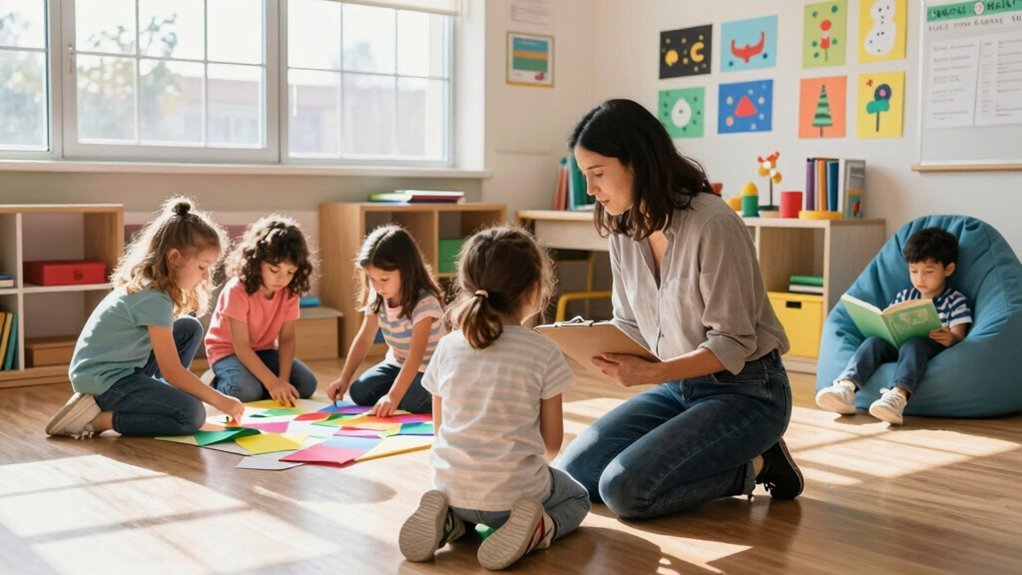
Why do some teachers seem to know exactly what each student needs before they ask for help? The answer lies in systematic observation. You watch students at regular intervals through time sampling, noting engagement patterns and learning preferences. You record anecdotal notes during key moments, documenting how each child tackles different tasks independently and collaboratively. By observing classroom interactions, you identify whether students learn best by watching, doing, or listening. You monitor attention spans, physical coordination, and social connections with peers. This data reveals individual strengths and areas needing support. Rather than relying on standardized tests, you gather authentic evidence of progress. These observations enable you to personalize instruction, adapting your teaching to match each learner’s unique style and readiness level. Running records document how children move through activities and routines, capturing shifts in interests or behaviors as they unfold in real time.
Flexible Small-Group Rotations in Mixed-Age Classrooms
Once you’ve identified each child’s learning patterns and strengths through careful observation, you’re ready to organize instruction in ways that truly serve them. Flexible small-group rotations allow you to customize teaching based on readiness and interests rather than age alone.
As you rotate through groups, you’ll:
- Build lessons around shared strengths while addressing specific skill gaps
- Use data to inform group composition and adjust groupings as students progress
- Create dynamic configurations that shift as learning needs evolve
- Enable most students to engage in peer-managed work while you guide one focused group
This approach transforms your classroom into a responsive learning environment where every child receives targeted instruction aligned with their current developmental stage and emerging capabilities. When you provide real-time scaffolding during small-group instruction, you support each child’s understanding at precisely the moment they need it most, deepening their engagement with the material.
Social Benefits: Reduced Bullying, Stronger Friendships

When you bring together students of different ages in mixed-age classrooms, you’re creating natural opportunities for older students to mentor younger peers, which builds trust across age groups and reduces the social hierarchies that often fuel bullying. You’ll find that this mentorship dynamic naturally teaches conflict resolution skills, as older students model problem-solving approaches and younger students learn healthier ways to handle disagreements.
This intentional pairing transforms potential power imbalances into collaborative relationships where students develop genuine friendships based on mutual respect rather than intimidation. Research demonstrates that multi-level interventions targeting school, classroom, and individual levels produce significant decreases in both bullying perpetration and victimization while improving overall school climate and student willingness to support bullied peers.
Building Trust Across Ages
One of the most transformative aspects of mixed-age classrooms is how they naturally dissolve the social barriers that typically separate children by grade level. You’ll find that trust develops through genuine interaction and shared purpose. Consider these key mechanisms:
- Tutoring relationships create natural mentorship where older students explain concepts, reinforcing their own learning while younger students gain confidence from relatable teachers.
- Collaborative discovery replaces competitive dynamics, fostering cooperation over comparison. When children work together across ages, they develop empathy and caregiving skills that extend beyond academics into their social interactions.
- Looping strengthens bonds as you maintain relationships across multiple years, building continuity and security.
- Real-world reflection mirrors authentic settings, helping children develop tolerance and communication skills they’ll actually use.
These mechanisms work together, transforming the classroom into a genuinely supportive community where cross-age trust flourishes naturally.
Conflict Resolution Through Mentorship
The trust you’ve built across ages now becomes your most powerful tool for addressing conflict before it escalates. Older students step into mentorship roles naturally, using their leadership to guide younger peers away from disputes. You’ll notice they model proper behavior and intervention strategies, demonstrating how to resolve disagreements compassionately rather than defensively.
This peer-to-peer guidance reinforces understanding across the group. When older students take responsibility for younger classmates’ wellbeing, they create accountability that discourages bullying and disruption. You’re essentially building a culture where mentors actively protect and reassure their mentees during tense moments. Learning from an older peer increases the likelihood that younger students will apply these conflict resolution skills with diverse classmates throughout their social interactions.
The result? Reduced competition and stress throughout your classroom. Your mixed-age structure transforms conflicts into teaching opportunities, where experienced students help younger ones navigate social challenges successfully.
Individualization Cuts Off-Task Behavior and Conflict
How do you create classrooms where children stay engaged rather than drift off-task? Individualized curriculum planning makes the difference. When you tailor learning experiences to each child’s developmental level and interests, you naturally reduce disengagement and conflict. Here’s what research shows works:
- Open-ended materials suited to varying abilities eliminate constant adult corrections
- Environmental design that limits access to complex materials by age reduces behavioral friction
- Self-directed play opportunities keep younger students engaged longer than same-age settings
- Routines centered on individual learning rather than large-group activities decrease off-task behavior
Your teaching team’s flexibility matters too. When you adapt environments based on children’s skills and interests, you create conditions where off-task behavior becomes less likely. This proactive approach transforms potential conflict into sustained engagement.
What Research Shows: Academic Performance in Mixed-Age Settings
When you’re considering mixed-age classrooms, the academic outcomes probably matter most. Research reveals a complex picture. You’ll find that Montessori students and nongraded second-graders outperform single-grade peers in language, literacy, and math. Low-achievers particularly benefit from mixed-age settings, showing markedly improved reading scores.
However, you should know that more than half of studies report no achievement differences between mixed-age and single-grade classrooms. Some configurations actually underperform—children in pre-K/kindergarten mixed-age settings show 15-19% smaller math and literacy gains. Girls in mixed-age classes score lower than boys.
Your results depend heavily on implementation. Pro-social behaviors, individualized instruction quality, and classroom processes account for meaningful performance variations. Success isn’t guaranteed by age-mixing alone.
Teaching Across a Three-Year Age Range Without Losing Any Child
You’ll manage a three-year age span successfully by abandoning one-size-fits-all instruction and instead building your teaching around what each child actually knows and needs next. Your classroom won’t lose anyone because you’re intentionally tracking each learner’s progress through continuous observation.
Build teaching around what each child knows and needs next, not their age, ensuring no learner falls behind.
Here’s your framework:
- Observe children during choice time activities to identify current skill levels
- Plan individualized next steps based on real-time assessments, not age
- Deliver scaffolded questions and prompts matching each learner’s zone of proximal development
- Reflect on progress to adjust instruction dynamically
This cycle ensures no child stalls. Specialized teacher training equips you to manage diverse needs simultaneously. Your environment supports multiple entry points through open-ended materials, allowing younger and older students to work alongside each other meaningfully. Assessment-informed instruction scales to all levels, guaranteeing continuous growth.
Choice Time in Mixed-Age Classrooms: Honoring Individual Interests
Why does choice time matter so much in mixed-age settings? When you honor children’s individual interests during choice time, you’re transforming play into intentional teaching moments aligned with curriculum goals. You expand learning through each child’s unique passions rather than relying solely on teacher-directed lessons.
As you observe children’s preferences and developmental readiness in real time, you’ll notice how older peers naturally model advanced uses of open-ended materials, while younger children engage at their own level. This peer support reduces competitive pressure and allows each child to progress individually. Through learning centers with varied activities and materials, children can pursue interests within an organized structure that reinforces and extends their developing skills across multiple domains.
Looping and Continuity: Why Staying Together Matters
As you transition from honoring individual interests through choice time, consider how looping—having the same teacher for multiple consecutive years—creates the relational foundation that makes personalized learning sustainable.
When you stay with the same teacher, you’ll experience profound benefits:
- You’ll build trust and security that enable risk-taking in academics and social interactions
- Your teacher will understand your learning style, strengths, and needs deeply, tailoring instruction accordingly
- You’ll skip repetitive routines, gaining extra instructional time from year one
- You’ll develop stronger emotional resilience, handling challenges with greater confidence
This continuity transforms your classroom into a coherent learning environment where your teacher observes your development holistically. Rather than fragmenting your growth across multiple teachers, looping allows sustained, intentional progress that honors who you’re becoming. Research shows that continuous-progress curriculum implemented through looping arrangements supports deeper individualization than traditional single-year classroom models.
Teacher Skills for Leading Mixed-Age Classrooms
What does it take to lead a classroom where five-year-olds learn alongside eight-year-olds? You’ll need specialized skills that go beyond traditional teaching. You must master real-time differentiation, splitting instruction between age groups while maintaining classroom flow. Strong observation abilities help you capture individual growth and plan next steps across diverse developmental levels.
You’ll facilitate peer interactions strategically, positioning older students as mentors who reinforce their own learning while supporting younger peers. Collaborative planning and team-teaching structures enable you to manage competing needs effectively. These distributed leadership roles distribute instructional responsibilities across educator teams, allowing for more personalized attention to each learner’s progression based on demonstrated skills and work habits rather than fixed yearly cadence.
Ultimately, you’ll cultivate a cohesive culture where intentional individualization scales through robust assessment, coaching, and a deep understanding of how mixed-age dynamics influence early learning outcomes.
Frequently Asked Questions
How Do Parents Prepare Children Emotionally for Mixed-Age Classroom Transitions?
You can prepare your child by exposing them to age-diverse interactions, role-playing classroom scenarios, and emphasizing learning’s joy over comparison. You’ll build their confidence through observational learning and positive peer interactions before transitions occur.
What Specific Training Do Teachers Need to Manage Behavioral Challenges Across Ages?
You’ll need training in developmental knowledge across ages, positive classroom management strategies, behavior modification techniques, and reflective supervision. You’ll also benefit from professional development addressing mixed-age challenges and collaboration with colleagues.
How Can Mixed-Age Classrooms Accommodate Children With Significant Developmental Delays?
You’ll create tiered materials matching developmental levels, form flexible small groups based on individual skills, conduct ongoing assessments to tailor instruction, and use peer modeling where delayed children learn from older classmates’ demonstrations.
What Role Do Mixed-Age Settings Play in Supporting English Language Learners?
You’ll find that mixed-age settings support English language learners by reducing language isolation, providing multilingual peer interaction, and allowing caregiver talk in non-English languages that accelerates English development while promoting long-term bilingual achievement.
How Do Schools Handle Standardized Testing and Grade-Level Accountability Requirements?
You’ll handle standardized testing through personalized playlists, mastery-based learning, and individual progress tracking. You’re demonstrating achievement via portfolios while maintaining grade-level accountability through tailored instruction and low student-teacher ratios.
In Summary
You’ll find that mixed-age learning works because you’re honoring how children naturally develop at different paces. You’re building mentorship, fostering independence, and personalizing each child’s journey. By observing closely, offering meaningful choices, and staying with your group over time, you’re creating an environment where every child thrives. You’re not forcing a one-size-fits-all approach—you’re meeting kids where they’re at and letting them grow together.

Leave a Reply