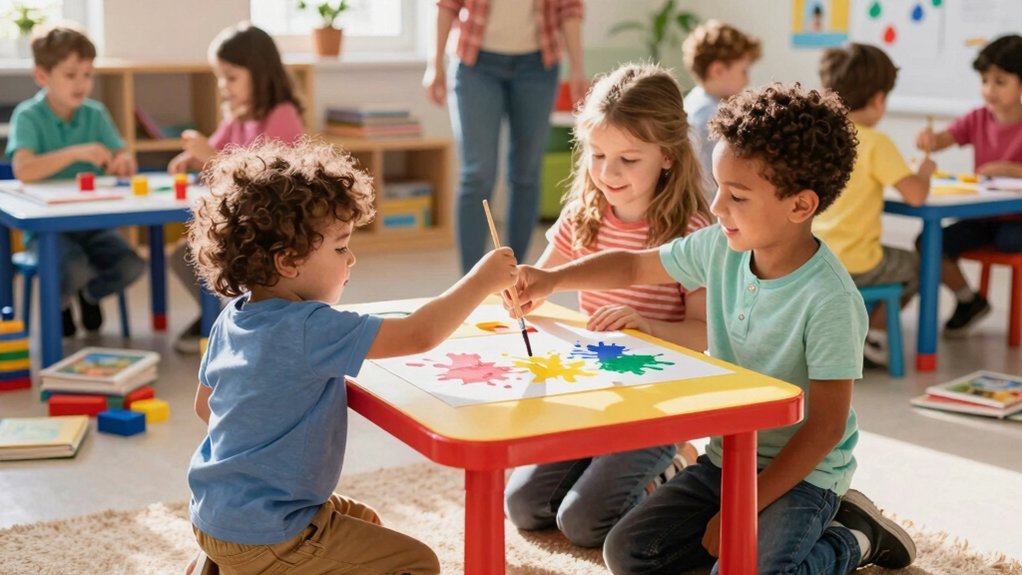
You’ll spark your students’ natural learning drive by grouping them across three-year age spans, where older kids naturally mentor younger ones, autonomy replaces competition, and intrinsic motivation emerges from belonging rather than grades. When children observe peers solving problems, take leadership roles, and experience real consequences instead of performance pressure, they shift from external compliance to genuine curiosity. You’re building a family-like community where learning becomes purposeful—and there’s much more to discover about how this transformation unfolds.
What Mixed-Age Classrooms Are (And Why They Work Differently)
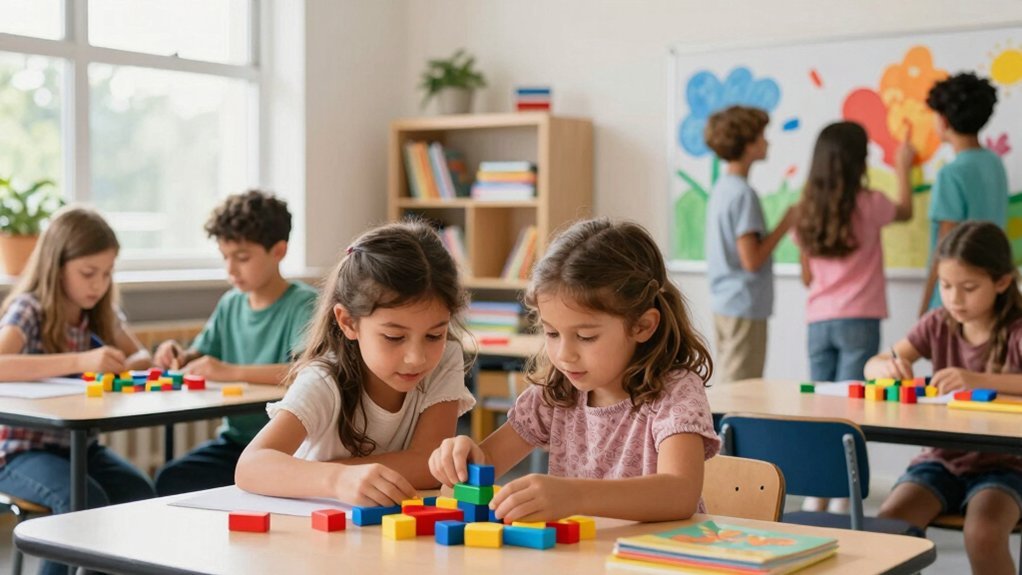
While traditional schools sort children by age into single-grade classrooms, mixed-age classrooms deliberately combine students across a three-year span—say, 3- to 6-year-olds learning together in the same space. You’ll find this approach in Montessori, British Infant, and Progressive schools, where younger, middle, and older children collaborate daily.
What makes them work differently? You progress at your own pace rather than conforming to grade-level expectations. You’re not competing directly with same-age peers, which reduces jealousy and comparison. Instead, you experience a microcosm of real-world diversity. Older children mentor younger ones through natural imitative learning, while younger students see achievable models of growth. You and your classmates remain together for the entire three-year cycle, building genuine relationships that foster mutual care and stability. This continuous presence of peer learning across ages turns the classroom into a living community where teaching and learning are exchanged naturally among children at different developmental stages.
How Mixed-Age Settings Ignite Intrinsic Motivation in Both Ages
The stability and genuine relationships you build in mixed-age classrooms create fertile ground for something deeper than academic compliance—you cultivate intrinsic motivation. When you’re grouped strategically by strengths rather than sorted by age alone, you experience autonomy that traditional settings rarely offer. You make real choices about your learning, collaborate meaningfully with peers at different developmental stages, and engage in self-assessment that builds accountability from within.
This freedom from constant competition shifts your focus inward. You’re driven by curiosity and mastery rather than grades or external rewards. Your peers become learning partners instead of rivals, fulfilling your need for relatedness while strengthening your intrinsic drive. You’re empowered to experiment, take intellectual risks, and pursue genuine interests—the exact conditions where natural learning drive flourishes. Research demonstrates that verbal praise and warmth from instructors reinforce motivation more effectively than tangible rewards in fostering sustained engagement with academic material.
When Older Kids Teach, Younger Kids Learn Advanced Skills Faster
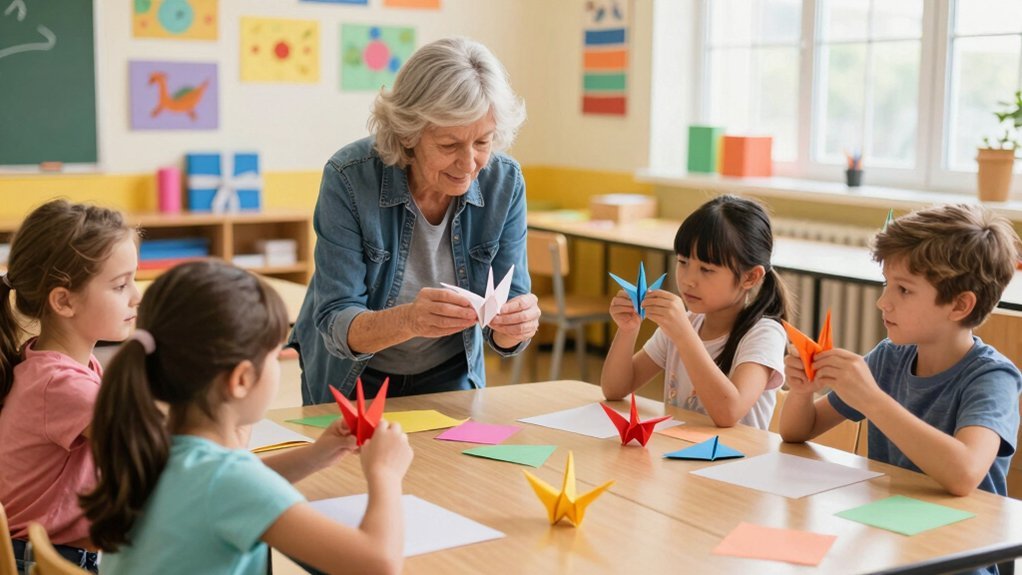
When older students naturally scaffold complex concepts for their younger peers, they’re breaking down intricate ideas into manageable steps that younger learners can actually grasp. You’ll notice language acceleration happens rapidly through this peer modeling—younger students absorb vocabulary, syntax, and communication patterns by observing and participating in conversations with more advanced speakers. This organic teaching dynamic means you’re not waiting for formal instruction; instead, you’re watching advanced skills transfer naturally through daily interaction and guided discovery. Research on intergenerational learning programs shows that these mixed-age interactions also deepen knowledge of culture and history, supporting younger learners’ sense of identity while reinforcing the older students’ own understanding.
Scaffolding Complex Concepts Naturally
One of mixed-age classrooms’ most powerful advantages emerges when older students become teachers themselves. When you scaffold complex concepts naturally, you’re tapping into a dynamic where experienced learners reinforce their own understanding while younger peers gain access to advanced thinking processes.
Here’s how this works:
- Older students model real-time problem-solving, demonstrating cognitive strategies younger learners can observe and absorb
- New concepts connect through scaffolding that links to students’ prior knowledge, creating meaningful personal connections
- Contingent support adapts to each response—downward scaffolds simplify when needed, upward scaffolds challenge when appropriate
- Collaborative discussion allows learners to negotiate meanings, exchange experiences, and offer targeted feedback
- This gradual removal of scaffolding as independence increases ensures that younger students develop self-directed learning capabilities rather than remaining dependent on peer support.
You’ll find that this natural transmission of knowledge across age groups builds confidence while developing independent thinking skills that stick.
Language Acceleration Through Modeling
Your younger students don’t just pick up vocabulary from textbooks—they absorb advanced language skills by watching older peers in action. When older children model sophisticated descriptions and complex language use, younger students naturally emulate these behaviors through observation and interaction. This isn’t passive learning; it’s active scaffolding that pushes younger children beyond their individual capabilities.
The magic happens during naturalistic peer tutoring. As older students teach, they reinforce their own concepts while younger peers accelerate their skill acquisition through imitative learning. You’ll notice collaborative tasks spark richer conversations, with older children positioned as experts and younger ones as eager learners. This dynamic reduces competition and focuses energy on genuine peer language exchange, creating an environment where language development flourishes organically across all ages. Language skills can strengthen through listening to peers during shared activities and routine interactions throughout the day.
Why Younger Children Absorb More Through Observation Than Direct Instruction
How do younger children master complex skills without formal instruction? You’ll find the answer in observation-based learning, which taps into your brain’s natural mirroring capabilities.
When you watch older peers engaged in activities, you absorb knowledge without the anxiety that accompanies direct instruction. This method works because:
- You preview upcoming developmental stages by observing advanced students
- Higher-level thinking develops through watching complex problem-solving in action
- Reduced competitive pressure lets you focus on intrinsic motivation
- You internalize skills through natural imitation rather than comparison
Direct instruction often triggers performance anxiety, which blocks learning. But observation? It invites spontaneous engagement. You’re drawn to interesting activities your older classmates tackle, and your brain naturally replicates what you witness. This low-pressure approach deepens your understanding while building confidence in your abilities. Research on peer observation benefits demonstrates that younger children who learn alongside older peers develop stronger comprehension through relatable modeling rather than adult-led explanations alone.
How Mixed-Age Environments Build Real Autonomy at Every Stage
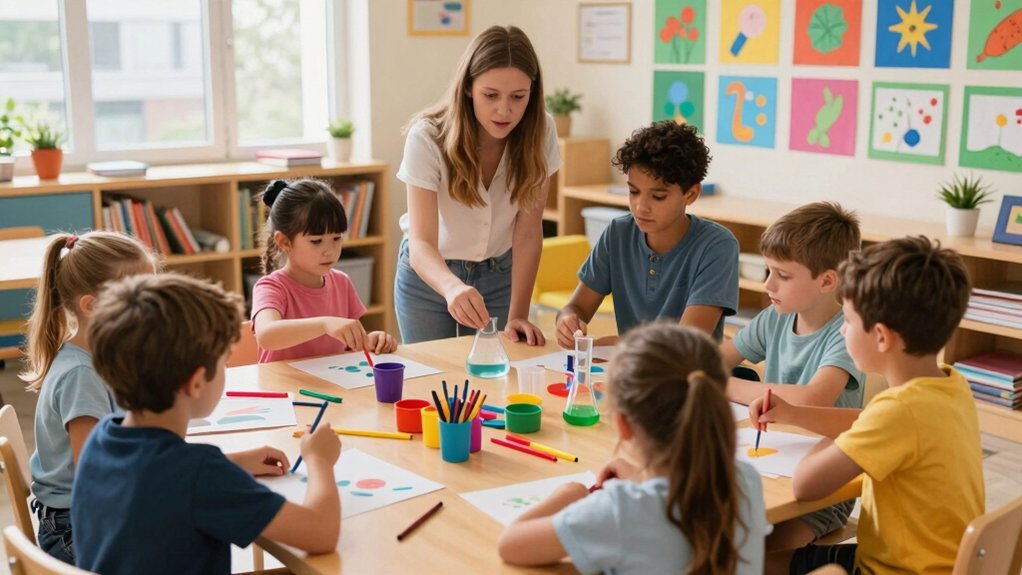
You’ll notice that when younger children take the lead in learning activities, they’re not just absorbing information—they’re discovering their own capability to direct their education. Older students who shoulder responsibility for mentoring don’t simply reinforce what they’ve learned; they develop genuine ownership over their knowledge and decision-making. This reciprocal dynamic creates self-directed growth at every stage, where each child builds autonomy through alternating roles that demand both leadership and initiative. As students progress through mixed-age settings, they experience both observation and following in their earlier years, which establishes the foundation for the leadership opportunities that emerge later.
Younger Children Lead Learning
What happens when younger students aren’t constantly measured against same-age peers? You’ll discover they naturally step into leadership roles. In mixed-age settings, younger children don’t just follow—they guide, teach, and initiate. This reversal builds genuine confidence and deepens their understanding of concepts they’ve mastered.
When you remove grade-level benchmarking, younger learners:
- Mentor classmates on skills they’ve developed, reinforcing their own mastery
- Design collaborative projects without worrying about comparison
- Take intellectual risks because they’re not competing for top performance
- Develop responsibility by contributing meaningfully to the classroom community
You’ll notice younger students flourish when they’re positioned as capable contributors rather than perpetual learners. This autonomy transforms how they approach challenges and shapes their identity as thinkers. Research on social competence in early years demonstrates that positive peer interactions and meaningful roles directly predict later academic and social success, making these leadership experiences foundational to long-term development.
Older Students Own Responsibility
When older students take on meaningful roles in mixed-age classrooms, they don’t just help younger peers—they transform into leaders who deeply understand their own learning. You’ll notice they set their own goals, choose interest groups, and navigate social dynamics with growing maturity. Without constant teacher direction, they’re driving their own educational journey while mentoring others.
This autonomy solidifies knowledge through peer teaching. When you explain concepts to younger classmates, you’re reinforcing your own understanding while building confidence. You’re also developing responsibility that extends beyond academics—modeling behavior, problem-solving collaboratively, and exercising influence over your peers’ growth. The result? You’re not passively receiving education; you’re actively shaping it, both for yourself and those around you. Teachers facilitate this process by acting as guides rather than directors, allowing students to progress at their own pace while monitoring individual advancement through observation and conferences.
Self-Directed Growth Across Ages
Because mixed-age classrooms prioritize student agency over prescribed curricula, learners at every developmental stage cultivate genuine autonomy. You’ll find that self-directed growth flourishes when students identify their own needs, set meaningful goals, and evaluate their progress without constant teacher intervention.
Here’s how this autonomy takes shape:
- Goal-setting becomes personal: You choose learning objectives aligned with your interests, boosting commitment and accountability
- Progression follows your timeline: You advance through material at your pace, mastering concepts before moving forward
- Peer scaffolding accelerates learning: You gain insights from mixed-age collaborators who model different thinking strategies
- Self-efficacy strengthens responsibility: You develop confidence in your ability to direct your educational journey
This framework transforms you from passive receiver to active architect of your learning, building critical thinking and leadership skills that extend far beyond the classroom. When older students act as mentors to younger students, they reinforce their own understanding while developing the responsibility and social skills that mixed-age settings are designed to cultivate.
When Ages Mix, Competition Dissolves Into Collaboration
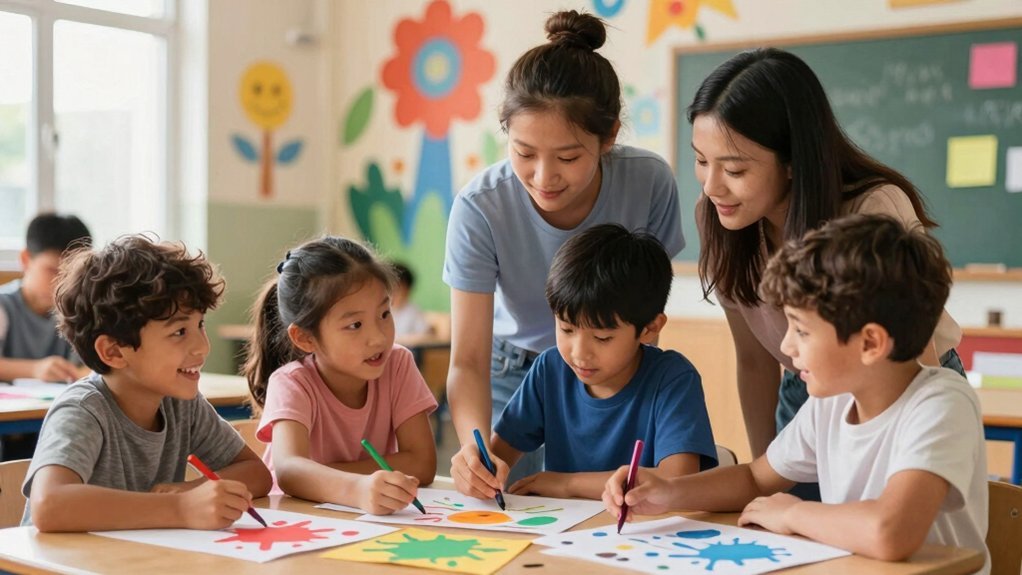
How do children transform their natural inclinations when surrounded by peers of different ages? You’ll notice that competitive instincts naturally fade when ability levels vary widely. Instead of ranking themselves against others, children focus on discovery and curiosity alongside their interests.
In mixed-age settings, you create an environment where collaboration thrives. Older students design complex games that younger peers eagerly join, fostering inclusive play rather than exclusionary competition. Your intentional activity design ensures everyone contributes meaningfully, regardless of skill level. Teachers facilitate sustained relationships that deepen as children grow together across multiple years in the same classroom community.
You’ll observe family-like groups forming—older children mentor younger ones while everyone works toward shared goals. This structure reduces peer rivalry because children aren’t constantly measuring themselves against same-age benchmarks. Parents prioritizing individual development further diminish competitive pressure, allowing genuine connection and mutual support to flourish.
Why Self-Paced Progress Stops Learned Helplessness Before It Starts
What happens when students move through material at their own speed? You break the cycle of learned helplessness before it takes root.
When you’re forced to keep pace with classmates, failure feels inevitable. You fall behind, disengage, and internalize the belief that you can’t succeed. Self-paced learning flips this script entirely.
Consider what changes:
- Autonomy replaces fixed-pace pressure, letting you control your learning trajectory
- Bite-sized 5-15 minute modules make content digestible and manageable
- Reteaching after struggles builds competency instead of shame
- Success becomes attainable, reshaping your self-perception from “I can’t” to “I can”
You’re not racing anyone. You’re advancing when you’ve genuinely mastered concepts. Research shows that SPED students improved from 59% to 94% average performance when given mastery-based, self-paced opportunities to revise and reteach. This approach transforms frustration into confidence, preventing the helplessness that derails so many learners.
How Peer Mentoring Builds Confidence in Older and Younger Children
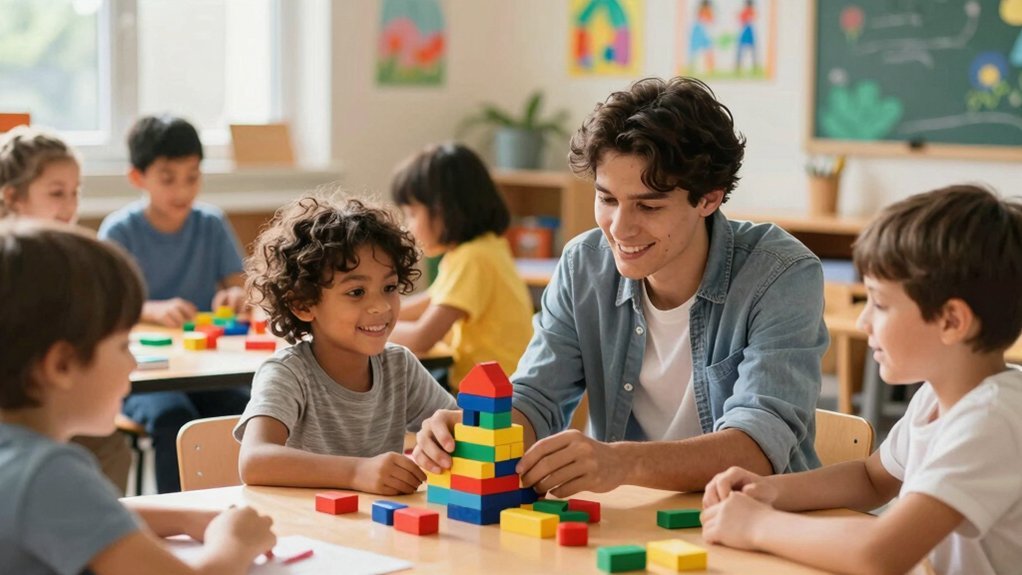
Self-paced learning removes the shame that blocks growth, but you’ll find that confidence truly flourishes when you’re surrounded by peers who model mastery. When older students mentor younger classmates, they reinforce their own knowledge while developing leadership skills that shape their futures. Younger children gain confidence by observing competence in action, easing anxiety during transitions.
This reciprocal dynamic strengthens everyone involved. Older mentors solidify concepts by explaining them, while younger peers naturally acquire skills through observation and interaction. You’ll notice empathy, patience, and adaptability emerge naturally as children navigate developmental differences together. These mixed-age interactions create a natural and engaging way for children to learn from one another across developmental stages.
The mentoring relationship builds self-esteem in both groups—mentors feel recognized for their competencies, while younger students gain reassurance and familiarity. These confidence gains translate into improved academic achievement and resilience that prepares children for lifelong challenges.
Why Unexpected Friendships Keep Engagement High Over Years
Why do friendships formed across age groups sustain engagement differently than same-age bonds? You’ll discover that cross-age connections create deeper investment in school because they transcend typical peer hierarchies and expectations.
When you form unexpected friendships spanning age groups, you:
- Experience enhanced sense of belonging and community that anchors long-term engagement
- Access diverse perspectives and support networks beyond your immediate year group
- Develop sustained motivation through mentorship dynamics that evolve reciprocally
- Build prosocial behaviors that reinforce commitment to your school environment
These unexpected friendships don’t fade like many same-age connections. Instead, you maintain genuine interest in school because you’ve invested in relationships with students across multiple grades. Research shows that proximity increases friendship formation even among students of different ages and backgrounds, creating the foundation for these cross-generational bonds. This cross-generational bond creates accountability and purpose that naturally sustains your engagement over years, transforming your school experience fundamentally.
Learning From Real Mistakes: How Natural Consequences Beat Grades
How often do you truly learn from a poor grade versus learning when your choices directly produce real-world results? Natural consequences teach you what doesn’t work by letting outcomes unfold naturally from your actions. You forget your rain jacket; you get wet. You cut in line; classmates refuse playing with you at recess. These direct connections between choices and results stick with you far more powerfully than any grade ever could.
Research confirms this approach drives genuine behavioral change. When you experience natural consequences in mixed-age classrooms, you develop decision-making skills and ownership of your actions. You’re not simply avoiding punishment—you’re solving problems and understanding cause-and-effect. Teachers play a crucial role by helping predict natural consequences so students can connect their choices to outcomes before they occur. This engagement transforms how you approach challenges, building responsibility that extends far beyond classroom walls into your actual life.
Building a Family-Like Community as the Foundation for Motivation
When you build cross-age bonds in your classroom, you’re creating the trust that transforms how students view learning—not as a competition to win, but as a shared journey.
You’ll notice that this family-like environment naturally reduces the performance pressure that typically stifles motivation, allowing students to take risks and grow without fear of judgment. In mixed-age settings, peer support based on strengths means students learn from one another regardless of age, which deepens both confidence and engagement.
Belonging Through Cross-Age Bonds
What transforms a classroom into a genuine community where children feel they belong? Cross-age bonds create the magic. When you mix ages intentionally, you’re not just grouping children—you’re building a family-like structure where younger students thrive through interaction with mature peers.
Here’s what happens:
- Younger children gain mentors who model prosocial behavior naturally
- Older students develop leadership skills while supporting vulnerable classmates
- Continuous teacher relationships replace constant transitions, fostering security
- Mixed-age interactions offset environmental disadvantages, particularly for low-income students
These cross-age connections reduce isolation and aggression while strengthening self-concept. You’re creating an ecosystem where belonging isn’t manufactured through activities—it emerges organically from authentic relationships. Children recognize their place in a genuine community, igniting the intrinsic motivation that drives natural learning. However, research shows that higher concentrations of younger children can reduce academic gains for older peers in mathematics and literacy, suggesting that intentional classroom composition matters alongside relationship-building efforts.
Trust Reduces Performance Pressure
Why does a child’s motivation flourish when they’re not constantly measured against peers? When you remove standardized testing pressure from the classroom, you fundamentally shift how students perceive learning. In mixed-age settings, you’ll notice academic progress matches or exceeds traditional classrooms—without the competitive grind. Your students experience genuine relief as the focus shifts from performance metrics to community growth.
Trust transforms your classroom culture. When you distribute roles by capability rather than age, students accept ability differences naturally. They rely on peers, strengthen group bonds, and develop mutual support systems. This caring environment boosts self-confidence directly, countering test-related anxiety. You’re not battling performance pressure anymore; you’re building a foundation where intrinsic motivation replaces external measurement, allowing natural learning drive to emerge authentically. Over time, students develop genuine love for learning as they view education as a lifelong journey rather than a series of grade-level milestones.
Shared Identity Over Competition
How fundamentally does your classroom culture shift when you prioritize belonging over ranking?
When you remove grade-level hierarchies, you create space for students to form genuine connections based on shared interests rather than age-based competition. This shift transforms your classroom into a community where:
- Students celebrate differences and appreciate unique personal characteristics without age-based barriers
- Cooperative learning replaces competitive structures, requiring diverse skill sets from all participants
- Individual identity flourishes within collaborative environments rather than being suppressed by standardization
- Learners discover that abilities aren’t fixed but develop through peer interaction and shared discovery
You’re no longer measuring success through individual achievement rankings. Instead, you’re cultivating an environment where every student contributes meaningfully to the collective whole, naturally igniting intrinsic motivation that transcends traditional performance metrics. Research demonstrates that inclusive approaches drawing on human rights and democratic collaboration frameworks create conditions where students develop stronger sense of belonging and shared responsibility.
When Older Students Help, Mastery Stops Feeling Like Work
When older students take on teaching roles, something shifts in how they experience mastery—it stops feeling like an obligation and starts feeling like contribution. You’ll notice that teaching transforms your understanding from passive knowledge into active expertise. The responsibility of explaining concepts to younger classmates deepens your cognitive retention naturally. As you mentor younger peers, you also practice empathy and communication skills that extend far beyond the academic content itself.
| Aspect | Impact |
|---|---|
| Self-confidence | Recognition as expert builds motivation |
| Verification | Teaching reveals gaps in your understanding |
| Retention | Explanation strengthens neural pathways |
| Agency | Leadership roles empower your decision-making |
| Engagement | Purpose replaces obligation in learning |
When you mentor younger peers, you can’t fake understanding—the act itself verifies mastery. Your effort becomes meaningful because someone depends on your knowledge. This purpose-driven learning transforms academic tasks from assignments into genuine contributions to your classroom community.
Turning “Have To” Into “Want To”: The Mixed-Age Classroom Effect
What transforms obligation into genuine enthusiasm in mixed-age classrooms?
When you’re surrounded by peers at different developmental stages, learning shifts from a mandate to a choice. The research shows that students report high enjoyment in these settings, and you’re naturally drawn to cross-age friendships that make engagement feel organic rather than forced.
Here’s what happens:
- You witness tangible skill progression in younger classmates, reinforcing your own mastery
- Peer teaching opportunities emerge naturally, making you feel capable and valued
- Social interaction spans multiple grade levels, creating authentic community
- Self-concept and school attitudes improve measurably
You’re not checking boxes anymore—you’re participating in something meaningful. This shift from external pressure to internal motivation explains why multiage grouping consistently links to lower dropout rates in secondary schools. Obligation dissolves when you’re genuinely invested in your learning community. Research from UNESCO reports multigrading in about one-third of school classes worldwide, confirming that this approach to mixed-age instruction is widespread and increasingly recognized as a legitimate educational model.
Frequently Asked Questions
How Do Teachers Manage Behavior and Discipline Across Such Different Developmental Stages?
You’ll manage behavior by setting clear instructions and objectives on the board, establishing calm-down spaces, and using positive reinforcement. You’ll monitor activities regularly, praise on-task behavior, and encourage children to express feelings through art or music.
Won’t Younger Children Feel Inadequate or Intimidated by Older, More Advanced Peers?
You’ll find younger children thrive when they’re not competing directly. They model advanced peers’ skills, seek help naturally, and develop empathy through caring relationships, boosting confidence rather than undermining it.
What About Children Who Struggle Socially or Have Special Learning Needs?
You’ll find that mixed-age classrooms actually benefit struggling learners. They experience reduced frustration from age-based expectations, improved test scores, stronger social development, and better self-concepts. Younger children gain from observing mature problem-solving strategies.
How Do Parents Know Their Child Isn’t Being Neglected in Mixed-Age Settings?
You’ll monitor your child’s hygiene, nutrition, and emotional state regularly. You’ll observe their confidence, school performance, and enthusiasm. You’ll communicate frequently with trained staff who report suspected neglect and maintain transparent policies about your child’s daily care.
Doesn’t Mixed-Age Grouping Require Significantly More Teacher Training and Preparation Time?
You’ll need stronger professional development and planning time, yes. However, you’ll gain efficiency through rolling programs, formative assessment tools, and collaborative team teaching that reduce individual preparation burdens substantially.
In Summary
You’ve discovered that mixed-age classrooms transform how kids learn. When you blend different ages together, you’re tapping into something powerful: kids naturally want to grow. You’ll notice older students gain confidence through teaching, while younger ones absorb skills faster through observation. You’re building real autonomy, community, and intrinsic motivation—not forcing learning through grades. That’s when education becomes what kids actually want to do.



Leave a Reply