
You’ll build genuine responsibility by assigning meaningful roles that make each student’s contribution visible and valued. Leverage peer teaching across age gaps—older students naturally develop leadership while explaining concepts clarifies their own understanding. Finally, connect group consequences to individual accountability through role assignments and peer evaluations that reduce free-riding. These strategies create a reciprocal system where mentoring fosters authentic leadership capacities and strengthens your classroom community in ways worth exploring further.
Assign Meaningful Roles That Reinforce Responsibility in Mixed-Age Groups
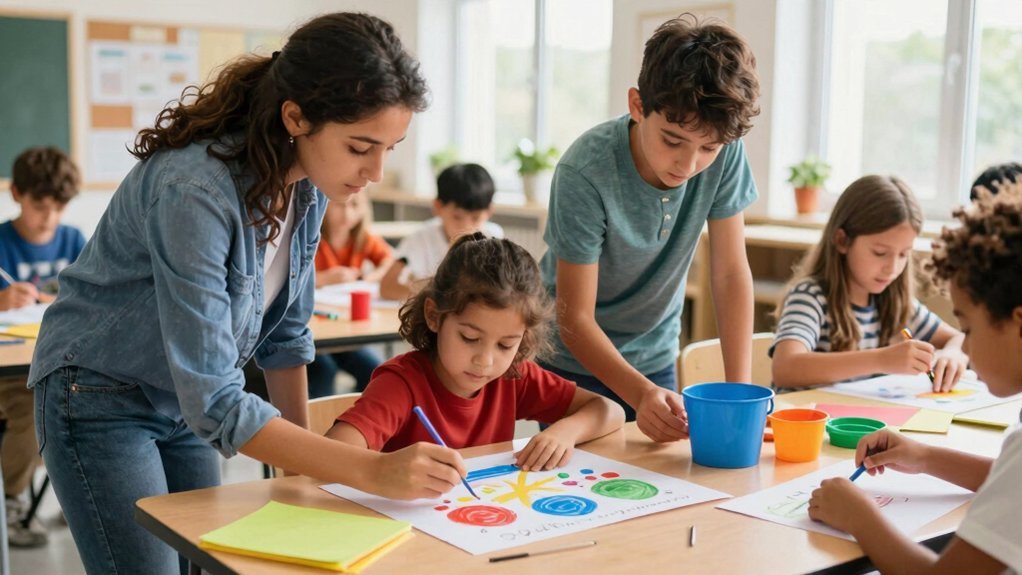
The foundation of a thriving multi-age classroom rests on intentional role assignment that transforms students into active contributors rather than passive participants.
When you assign older children as mentors and caretakers, you’re fostering genuine leadership while building their confidence and empathy.
These roles—whether guiding younger peers through materials like the Pink Tower or modeling classroom etiquette—create natural opportunities for responsibility to flourish.
You’ll find that rotating small group responsibilities by readiness levels promotes collaboration over age-based assumptions.
By giving older students ownership of specific tasks, you cultivate pride in supporting their classroom community.
Two-year classroom placement stabilizes these mentor relationships, allowing deeper connections and sustained growth.
Teaching others requires patience, empathy, and proper support, strengthening both the supporting student’s confidence and the younger learner’s academic progress.
This approach transforms responsibility from an abstract concept into tangible, meaningful work that prepares children for real-world diverse interactions.
Use Peer Teaching Across Age Gaps to Develop Leadership
How does peer teaching transform older students into natural leaders? When you place older students in mentoring roles, they develop authentic leadership capacities through real responsibility. As tutors explain concepts to younger peers, they organize their thinking, identify knowledge gaps, and communicate clearly—skills that deepen their own understanding simultaneously.
You’ll notice leadership emerging naturally from collaboration and conflict resolution across ages. Older students gain maturity by modeling good behavior and acting as guides in relationships. This low-stakes practice in nurturance builds confidence without the pressure of formal leadership positions.
Your younger learners benefit too, receiving relatable instruction from peers who remember struggling with these concepts. Multi-age teaching creates a reciprocal system where responsibility flows both directions, strengthening the entire classroom community while cultivating genuine leaders. Research confirms that deeper understanding through properly structured peer learning enhances both academic and social outcomes when mentoring relationships are intentionally designed.
Connect Group Consequences to Individual Responsibility Outcomes
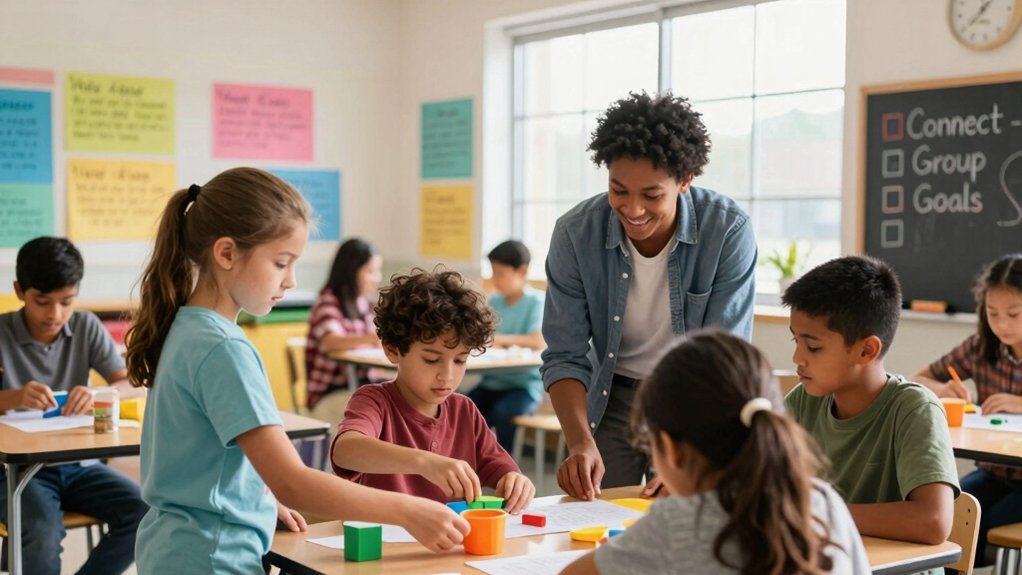
While peer teaching builds leadership through mentoring relationships, you’ll strengthen accountability further by connecting group work directly to individual outcomes. Implement role assignments that clarify each student’s responsibilities, making contributions visible and measurable. Use peer evaluations to identify individual effort levels and reduce free-riding behaviors. Establish group contracts before tasks begin, outlining expectations and consequences so students understand how personal commitment affects collective success.
When misbehavior occurs, apply logical consequences that tie actions to natural outcomes rather than punishing entire groups. Research shows younger children view collective punishment as unfair, particularly when peers didn’t intervene. By targeting consequences to specific behaviors, you maintain equity while fostering genuine learning. Anonymous peer evaluations help reduce social loafing and promote reflection on group dynamics. This approach transforms group work into a space where individual choices directly influence both personal growth and team outcomes.
Frequently Asked Questions
How Do I Manage Students Who Resist Taking on Assigned Roles or Responsibilities?
You’ll reduce role resistance by explicitly framing why you’re assigning specific responsibilities, demonstrating your immediacy through eye contact and personal connection, then reinforcing compliance with positive feedback when students engage.
What Strategies Help Younger Students Keep up With Older Peer Mentors Academically?
You’ll scaffold younger students’ learning by breaking tasks into manageable steps, providing visual aids, and allowing extra processing time. You’ll pair them strategically with patient mentors who explain concepts clearly, reinforcing their confidence and academic growth.
How Should I Handle Conflicts That Arise During Peer Teaching or Group Work?
You’ll use structured conflict resolution by addressing specific behaviors and emotions, facilitating brainstorming solutions together, and modeling strategies consistently. Implement circle discussions where students respectfully share perspectives and collaboratively resolve disagreements during group work.
What Assessment Methods Work Best for Evaluating Individual Responsibility in Group Settings?
You’ll combine student self-assessment, peer evaluation, and your instructor oversight to triangulate individual accountability. You’ll assign specific tasks, monitor contributions through check-ins, and use rubrics evaluating both process and product outcomes fairly.
How Can I Ensure All Students Develop Leadership Skills, Not Just Natural Leaders?
You’ll rotate leadership roles systematically, structure opportunities matching different strengths, embed leadership into academics, and provide regular reflection time. You’ll celebrate effort alongside quality work, normalizing broad participation instead of relying on natural leaders alone.
In Summary
You’ll find that implementing these three strategies transforms how your students engage with responsibility. When you assign meaningful roles, encourage peer teaching, and connect consequences to individual outcomes, you’re creating a culture where accountability becomes natural. Your multi-age classroom won’t just function more smoothly—you’ll watch younger students aspire to leadership while older students develop genuine mentoring skills. These practices build character that extends far beyond your classroom walls.