
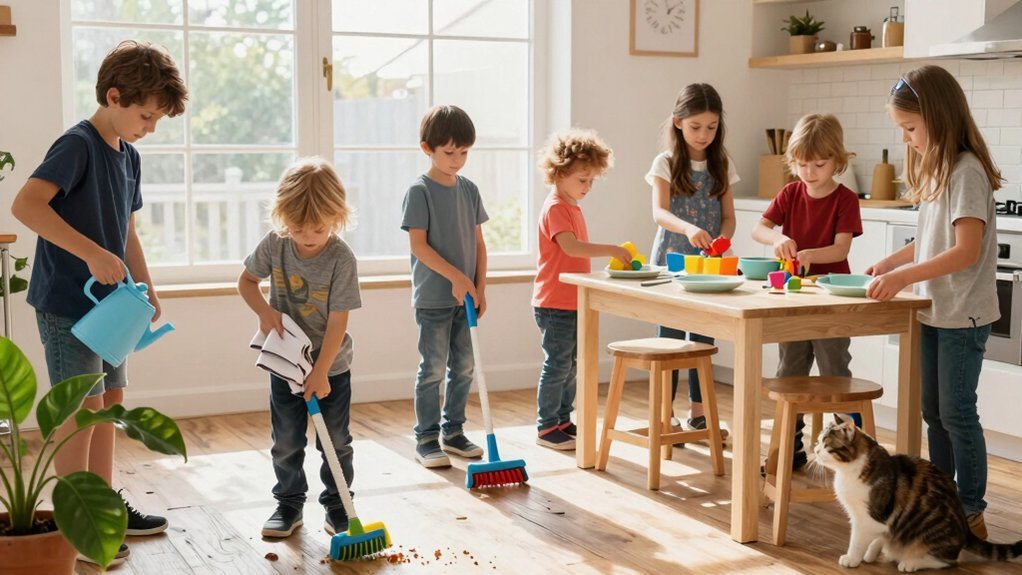
Give your kid a quick daily routine: pick up toys, make the bed, dress independently, wipe spills, set the table, load the dishwasher or help with dishes, and feed the pet. Each task is short, age‑matched, and builds confidence while keeping the morning flow predictable. Model each step beside them, use clear phrasing, and praise effort. Keep a printable chart for visual cues and check‑offs, and you’ll discover more detailed progression ideas.
Set Expectations for Age-Appropriate Morning Chores

For 3‑4‑year‑olds, assign picking up toys; for 5‑6‑year‑olds, have them make the bed and dress with a little help; for 7‑9‑year‑olds, let them load the dishwasher or wipe counters. Use clear, consistent phrasing so expectations feel routine, not optional.
Model each task while you work beside them, showing the right way to clean, sort, or tidy. Keep each chore short, then slowly add a step as they master the current one. This builds confidence, reduces frustration, and turns morning chaos into a predictable, independent flow.
Including imaginative play with realistic costumes can further enhance responsibility and creativity in daily routines.
Simple Age-Appropriate Power-Up Tasks for 3-4-Year-Olds
A few simple power‑up tasks can turn a 3‑ or 4‑year‑old into a confident helper. You’ll notice how quickly toddlers pick up toys and books, returning them to a bin or shelf. Those small chores build routine, order, and a sense of independence. Let them dress with easy shirts or socks, then wipe a spill with a damp cloth. When you set the table with plastic plates and unbreakable cups, they learn responsibility without risk. Finally, guide them to drop dirty clothes into a hamper, reinforcing daily self‑care habits. Incorporating Montessori-inspired play into daily routines can further enhance their cognitive and motor skills development.
Transition to 5-6-Year-Old Age-Appropriate Daily Chores

Ever notice how quickly a 5‑ or 6‑year‑old can take on small responsibilities? You can start with chores for children ages five and six that are age‑appropriate chores yet build independence skills. Let them make the bed, even if it’s a little messy, and dress themselves with a quick reminder for socks or buttons. Prompt brushing teeth and hair, then have them put shoes and coats in their designated spots. Empty a small trash can into a larger bin each evening. Keep instructions simple and step‑by‑step, and reinforce effort with praise. As confidence grows, sprinkle in light organizing or cleaning tasks. Consistency and clear expectations turn these routines into lasting independence skills. Providing children with the right tools, such as a Montessori step stool designed with safety rails, can help them safely access areas where chores take place.
Expand Evening Responsibilities for 7-8-Year-Olds
Now that your 5‑ and 6‑year‑olds are mastering basic bedtime routines, it’s time to level up the evening duties for 7‑ to 8‑year‑olds.
You can weave new tasks into a predictable evening routine that balances homework, chores, and bedtime. By giving independent kids clear, short steps, they’ll feel capable and contribute without feeling overwhelmed.
- Clear dishes and load or unload the dishwasher under brief supervision.
- Reset the dining area: wipe surfaces, return chairs, sort utensils into bins.
- Do a 10‑15‑minute tidy‑up: pick up toys, shelve books, drop laundry in the hamper.
- Feed pets, refill water bowls, and take out the trash to the curb with a reminder.
These bedtime chores reinforce responsibility while keeping the evening flow smooth. Introducing creative activities such as painting on a Tabletop Easel can also foster focus and fine motor skills during downtime.
Develop Pre-Teen Skill Set: 9-12-Year-Old Household Contributions
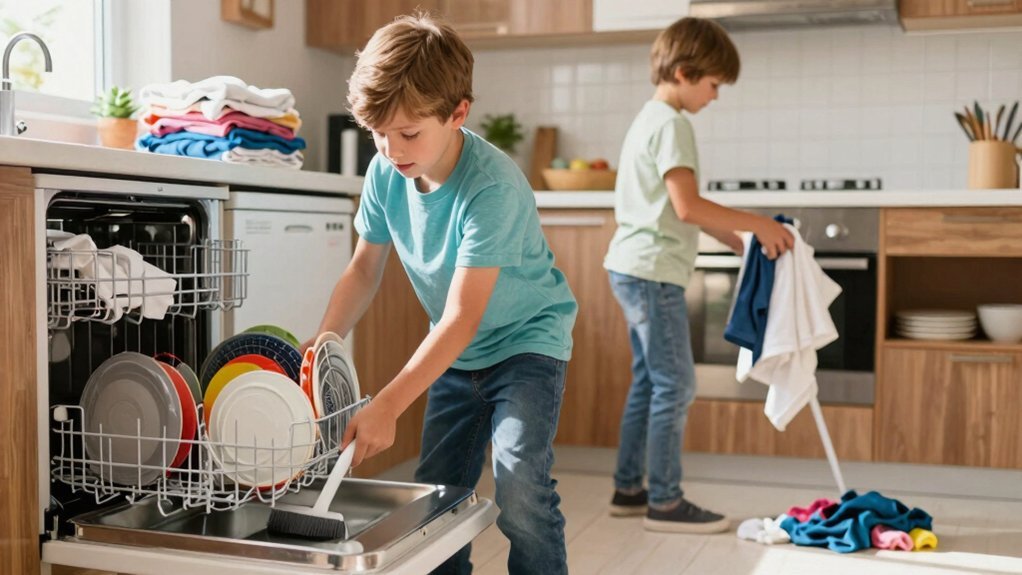
When you start assigning 9‑ to 12‑year‑olds household tasks, you’ll see them take ownership of more complex chores while building confidence. You can boost independence by rotating simple kitchen duties, laundry basics, and light yard work. Consistent routines and positive reinforcement turn these pre‑teen responsibilities into habits that prepare them for teen autonomy.
| Kitchen | Laundry | Outdoor |
|---|---|---|
| Load dishwasher | Sort clothes | Sweep porch |
| Pack lunch | Start washer | Pull weeds |
| Wipe counters | Transfer to dryer | Take trash to curb |
| Stir simple recipe | Fold towels | Water plants |
| Clean sink | Empty lint trap | Sweep driveway |
These chores reinforce independence, nurture skill growth, and keep your household running smoothly.
Foster Teen Autonomy With Independent 13-18-Year-Old Chores
You’ll give teens a structured set of independent tasks—like cleaning the fridge or washing the car—so they know exactly what’s expected and when. Each chore ties to real‑world skills such as budgeting, meal planning, and time management, preparing them for life beyond home. You can also offer flexible compensation, whether it’s allowance, privileges, or extra freedom, to keep them motivated and accountable.
Structured Independence Tasks
Ever wondered how to turn everyday chores into confidence‑building milestones for teens? You can boost independence by giving them structured chores that follow a clear schedule. A simple chore chart turns routine tasks into visible progress, so they see what’s expected and when. You’ll notice they manage time better and take ownership without constant prompting.
- Use a weekly checklist for dishes, laundry, and trash removal.
- Add a monthly slot for meal prep, grocery planning, and basic car or bike maintenance.
- Include safety notes for handling cleaners and budgeting tips for allowances.
- Review the chart together, then fade your supervision as reliability grows.
This approach creates a predictable framework that nurtures autonomy while keeping expectations transparent. Incorporating tools with convertibility and progression can help teens gradually master new skills as they become more independent.
Real‑World Skill Building
How can you turn everyday chores into real‑world skill building for teens? Assign tasks that double as practice for budgeting, time‑management, and problem‑solving. When a teen loads the dishwasher, they learn efficiency and attention to detail; when they shop for groceries, they handle budgeting and nutrition decisions. Let them schedule trash‑day pickups, coordinate laundry cycles, and plan meal‑prep steps. This autonomy reinforces responsibility while sharpening life skills that translate to college or a first job. Just as practical as daily chores are the thoughtfully designed baby doll accessory sets that promote responsibility and fine motor skills in younger children.
| Chore | Skill Gained |
|---|---|
| Dishwasher | Time management |
| Grocery shopping | Budgeting |
| Laundry | Organization |
| Trash & curb | Planning |
| Basic car maintenance | Technical confidence |
Flexible Compensation Options
Why not let teens choose how they’re rewarded for each chore, tailoring compensation to their motivations and your family’s budget? You’ll see responsibility grow when they see a direct link between effort and payoff. A written plan with a tiered pay scale lets you adjust rates as skills improve, and quarterly updates keep the system fresh. Pair cash with non‑monetary perks—like weekend activity choices or scheduling autonomy—to nurture intrinsic motivation. Verify each task, ask for a brief reflection, and check consistency to reinforce accountability. Incorporating interactive learning activities can further support skill development and engagement as teens take on more complex chores.
Track Progress With a Printable Age-Based Chore Chart
Can a printable, age‑based chore chart keep your child’s daily tasks organized and visible? Absolutely. A chore chart lets you match age‑appropriate chores to developmental stages, so you see at a glance what your 5‑year‑old should be doing versus your 12‑year‑old. By checking off each item, you’re tracking progress and reinforcing consistency, which builds accountability and confidence.
| Age Range | Sample Tasks | Check‑off |
|---|---|---|
| 3‑4 | Put toys away, water plants | ☐ |
| 7‑9 | Make bed, load dishwasher | ☐ |
| 14+ | Cook simple meals, manage laundry | ☐ |
Print the chart, hang it where your kid sees it, and celebrate completed rows with praise. The visual cue turns chores into a game, making responsibility feel rewarding.
Frequently Asked Questions
How Do I Handle Chores When a Child Is Ill or Exhausted?
If a child’s sick or exhausted, you should pause their chores, give them rest, and handle essential tasks yourself. Once they feel better, gradually re‑introduce light duties, keeping expectations flexible.
What if My Child Refuses to Do Assigned Chores?
If your child refuses chores, stay calm, explain why the task matters, offer a clear deadline, and give a small, immediate reward for completing it. Consistency and brief consequences reinforce responsibility.
Can Chores Be Adjusted for Children With Special Needs?
Yes, you can tailor chores to match each child’s abilities and comfort level. Break tasks into smaller steps, use visual cues, and allow extra time or assistance, ensuring they stay safe and successful.
How Often Should I Rotate Chores to Keep Them Engaging?
You should rotate chores every two weeks, swapping tasks to freshen interest while keeping a consistent schedule. This frequency balances variety and routine, preventing boredom and reinforcing responsibility without overwhelming them.
What Are the Best Rewards for Consistent Chore Completion?
You’ll motivate them with flexible rewards like extra screen time, a small allowance, or a fun outing, and mix in praise, stickers, or a “chores‑star” chart to keep momentum high.