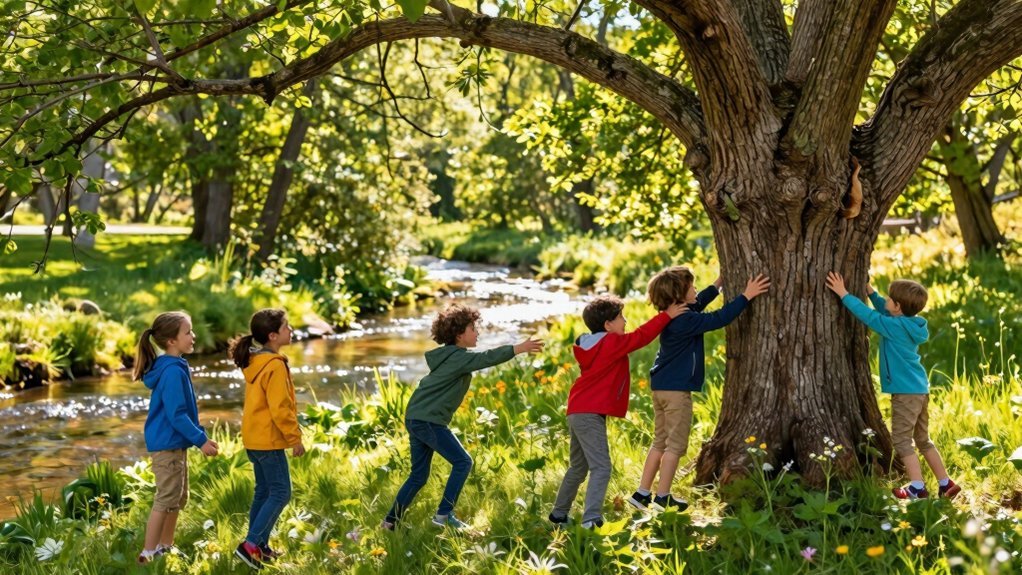
You’ll foster natural outdoor discovery by letting your child’s interests guide adventures while establishing consistent outdoor rituals—think weekly hikes or daily after-school exploration. Start small with low-cost activities like nature walks paired with scavenger hunts, and don’t let equipment expenses hold you back. Build confidence through structured outings so spontaneous moments feel manageable. Create friendships on the trail by sharing distraction-free experiences together. When you balance planning with flexibility, you’ll unlock the lasting benefits that shape outdoor engagement for life.
Why Childhood Outdoor Habits Last Into Adulthood

Why do childhood habits stick with us into adulthood? The answer lies in how deeply nature experiences shape your lifelong preferences and behaviors. When you spend time outdoors as a child—whether picking flowers or playing in natural spaces—you’re developing neural pathways that persist for decades. You’re essentially programming yourself to value and seek green spaces throughout your life.
Research shows that 71% of mothers played outdoors daily as children, yet only 26% of their children do the same today. Despite this decline, those who did experience nature young maintain stronger outdoor engagement as adults. Your early outdoor habits create lasting preferences for natural environments and sustained motivation for physical activity. These childhood experiences become your foundation for lifelong wellness and environmental appreciation. Adults with higher childhood nature exposure demonstrate significantly better mental health outcomes than those with limited outdoor contact during their formative years.
Identify and Overcome the Barriers Keeping Your Family Indoors
You likely face time management challenges that make outdoor adventures feel impossible when work and family obligations pile up.
Cost barriers and equipment expenses can seem formidable, especially when enrollment fees and gear add up quickly. Research from Colorado communities shows that community-level barriers—like traffic safety concerns, limited neighborhood facilities, and poor access to parks—are actually the primary obstacles rather than individual family factors.
But fear and safety misconceptions—about traffic, strangers, and screen time’s effects—often loom larger in your mind than the actual risks warrant.
Time Management Challenges
How much of your day vanishes into screens, schedules, and work obligations before you’ve had a chance to step outside?
You’re not alone. Most people lack a dedicated time management system, and you’re likely losing roughly four and a half hours weekly just reprioritizing unfinished work. Your family’s outdoor time competes against packed calendars where you’re scheduling bonding moments like business appointments. In fact, 48% of parents now schedule family time as formal appointments rather than allowing it to happen naturally.
The real obstacles blocking your family’s natural adventures:
- Digital distractions interrupt meaningful conversations and consume your attention
- Untracked time slips away without accountability or intentional allocation
- Task overwhelm keeps you reactive rather than proactive about priorities
- Screen dependency replaces outdoor exploration with indoor habits
You can reclaim your time. Start by auditing where hours actually go, then deliberately protect outdoor discovery time as non-negotiable family time.
Cost and Equipment Concerns
Perhaps the most honest barrier to outdoor discovery isn’t time or motivation—it’s money. You’re likely prioritizing housing, bills, and food over gear expenses. Quality hiking boots alone require two full workdays’ wages at minimum. Add parking fees (£2-£10), toilet costs (50p per person), and entry fees, and outdoor recreation feels impossible.
However, you don’t need premium equipment to start. Budget retailers offer tents for $25 and sleeping bags for $16. Many activities require minimal gear—you’ll discover what you actually need through experience. Research shows that economic factors including equipment and participation fees remain among the primary barriers preventing families of color from engaging in outdoor recreation.
Consider securing funding through grants or community programs. Transit to Trails provides free buses from urban areas to natural spaces, eliminating transportation costs. Start with accessible local spots before investing in expensive gear, building your family’s outdoor confidence gradually.
Fear and Safety Misconceptions
What’s really keeping your family indoors—actual danger or fear based on misconceptions?
You’re likely overestimating outdoor risks while underestimating sedentary dangers. Lack of physical activity causes more deaths than all outdoor hazards combined. Meanwhile, misconceptions fuel unnecessary anxiety:
- Wildlife myths: You can’t outrun a grizzly bear at 30 mph, but proper training and awareness prevent most encounters
- Weather fears: Valley floors aren’t warmest—cold air pools there; understand actual hypothermia risks across seasons
- Equipment confusion: Cotton fails in wet conditions; synthetic fabrics wick moisture and keep you safer
- Activity statistics: Injury rates vary by activity, but well-maintained facilities show rates below 1 in 10,000 participants
Education transforms fear into confidence. Research actual risks, invest in proper gear, notify others of your plans, and travel in groups. These practical steps eliminate most genuine dangers while you reclaim outdoor adventures. The average injury rate of 72.1 per 100,000 outdoor travelers demonstrates that outdoor recreation remains statistically safer than many everyday activities when proper precautions are taken.
Choose Activities Your Child Actually Wants to Do
One of the most effective ways to spark genuine outdoor enthusiasm is to let your child’s interests guide the adventure. Kids show clear preferences: 45% of children ages 8-12 prefer unstructured play like shooting hoops or exploring neighborhoods over organized activities. Only 30% select structured sports as their preferred option.
Rather than forcing your child into predetermined activities, observe what naturally captivates them. Whether they’re drawn to biking, swimming, hiking, or simply hanging out outdoors—which ranked highest at 27% among kids—you’ll see stronger engagement and sustained participation.
When children pursue activities they actually want to do, they’re more likely to spend less time online. In fact, 73% of kids ages 8-12 agreed they’d reduce screen time if neighborhood friends were available for in-person play. Honoring their preferences builds intrinsic motivation. Programs like Let Grow programming have demonstrated success by allowing children to pursue independent outdoor tasks with parental permission, fostering both autonomy and genuine interest in exploration.
Pick Easy Entry Points: Hiking, Biking, Camping

How do you transform a reluctant child into an outdoor enthusiast? You start with activities they’ll actually enjoy at manageable difficulty levels.
Consider these accessible entry points:
Hiking short trails with natural features like waterfalls and boulders sparks imagination and builds outdoor confidence in reluctant children.
- Hiking short trails (1-3 miles) with natural features like waterfalls, ladders, or boulders that spark imagination and encourage climbing
- Biking level terrain under 2 miles on lakeside paths where you can pause for picnics and wildlife spotting
- Camping adventures combining short nature walks with map reading and scavenger hunts that teach practical outdoor skills
- Group experiences through HikeItBaby or ranger-led programs that provide structure, social engagement, and professional guidance
Each activity builds confidence progressively. You’ll notice how 5 minutes in nature alone improves mood and cognitive function. Match activities to your child’s age and fitness level, involve them in planning, and watch reluctance transform into genuine enthusiasm. Dogs as motivating elements can further enhance family hikes by providing companionship and encouraging children to stay engaged throughout the adventure.
Plan Your First Outing (What to Bring, What to Expect)
The difference between a memorable adventure and a miserable one often comes down to preparation. You’ll want to pack navigation tools—map, compass, and GPS—along with a first aid kit tailored to your needs. Bring plenty of water, at least two liters per person, plus energy-rich snacks and extra food for emergencies.
Dress in layers: jacket, hat, gloves, and rain gear to handle sudden weather changes. Wear broken-in footwear to prevent blisters. Include a headlamp, fire starters, and a multitool for unexpected situations. Consider packing sun-protection clothing such as long sleeves and pants to shield your skin from UV rays during extended outdoor exposure.
Expect limited cell service and potential delays. Research your route, terrain, and local weather beforehand. Test all gear before you go. Purchase necessary permits in advance. These steps transform your first outing from chaotic to confident.
Build Confidence Through Low-Pressure, Frequent Outings

Why do children gain confidence fastest through frequent, low-pressure outdoor experiences? When you schedule multiple short outings rather than occasional long ones, you create consistent opportunities for small victories that compound into genuine self-assurance.
Multiple short outdoor outings create consistent small victories that compound into genuine self-assurance and confidence.
Through repeated outdoor exposure, your child experiences:
- Mastery moments from climbing, navigating terrain, and identifying plants—building capability beliefs
- Risk-taking in safe contexts where they assess challenges and overcome obstacles independently
- Freedom to create and explore without adult direction, fostering autonomy and personal agency
- Progressive skill development through incremental challenges that transform failure into learning
You’ll notice 79% of children report increased confidence after nature activities like plant identification. Regular outdoor play doesn’t just boost mood—it fundamentally reshapes how your child perceives their abilities and resilience when facing new challenges. These outdoor challenges also develop emotional resilience by teaching children to adapt and persist through difficult moments in natural settings.
Show Your Kids You Love Being Outside
Your child’s willingness to embrace outdoor exploration depends largely on one thing: whether you genuinely enjoy being outside yourself.
Children absorb your attitudes through observation. When you demonstrate visible enthusiasm for nature—whether hiking vigorously, sitting peacefully in a garden, or getting your hands dirty—you communicate that outdoor time matters. Your comfort with natural sensations removes the stigma from getting dirty, encouraging your kids to explore without hesitation.
Model balanced outdoor engagement across intensity levels. You don’t need constant vigorous activity; leisurely walks and spontaneous bike rides equally demonstrate commitment. By reducing screen time in favor of outdoor activities, you establish nature connection as essential to wellbeing, not optional. Research shows the average American child spends about 7.5 hours daily on electronic screens, making your visible shift toward nature particularly impactful.
Your genuine enjoyment becomes permission for your children to love being outside too.
Find Local Community Programs That Match Your Child’s Interests
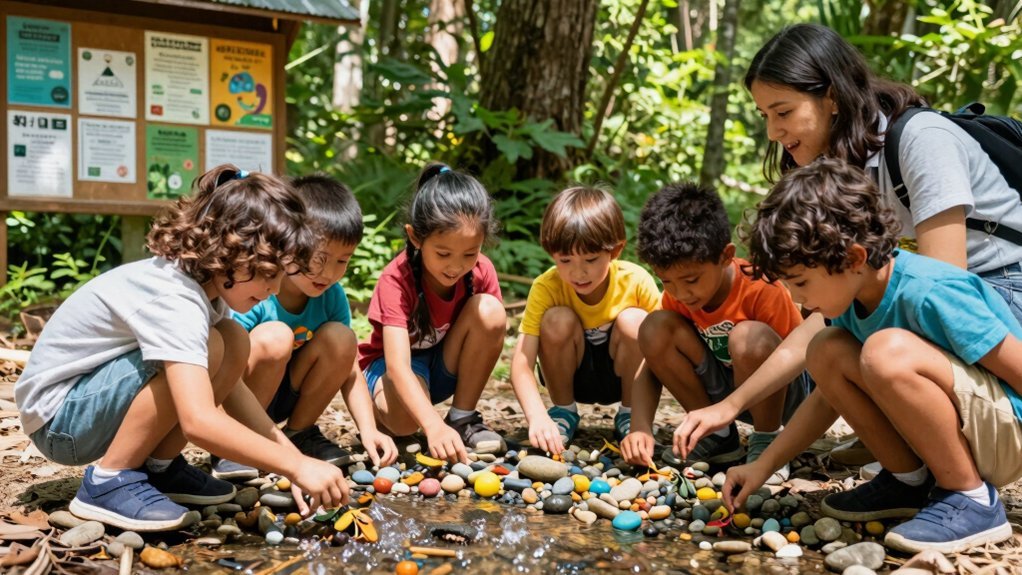
You’ll find that your child’s interests naturally guide you toward the right programs in your neighborhood.
Whether they’re drawn to camping, biking, sports, or nature exploration, your local parks department, recreation centers, and community organizations likely offer structured options that align with what excites them.
Exploring these neighborhood resources lets you match activities to your child’s passions while building a sustainable outdoor routine. Research shows that family-based programming designed with low costs and minimal preparation requirements helps families participate with greater confidence and consistency.
Matching Activities To Interests
How do you bridge the gap between what your child loves and the outdoor adventures available in your community?
Start by identifying your child’s core interests. You’ll find that kids gravitate toward specific activities—whether that’s sports, nature exploration, or social play with friends. Once you’ve pinpointed what excites them, match those passions to local offerings.
Consider these matching strategies:
- Physical activities: Seek biking clubs, jogging groups, or walking programs through your park agency
- Sports preferences: Explore land-based sports leagues and afterschool athletic programming
- Social engagement: Join friend-centered activities like mobile camps or group hikes
- Nature exploration: Investigate BIPOC-oriented nature clubs and multigenerational hiking groups
Park recreation centers offer comprehensive programming addressing youth development, mentoring, and active lifestyles. You’ll discover that 84% of parents prioritize physically active afterschool options. Research your city’s facilities—libraries, recreation centers, and early childhood programs increasingly incorporate nature-based learning. This targeted approach ensures your child engages in outdoor adventures they’ll genuinely enjoy.
Exploring Neighborhood Recreation Options
Where can families actually find quality outdoor programs in their own communities? Your local parks and recreation centers offer diverse options—basketball, soccer, baseball, swimming, and track and field top the list. Check what’s available within 1.5 miles of your home; proximity matters for regular participation.
Community centers provide both structured programs and drop-in opportunities, so you’ll find flexibility regardless of your schedule. Family programs like birding, archery, and canoeing welcome multiple age groups, strengthening bonds while building fitness. Don’t overlook multigenerational events—festivals draw grandparents, parents, and children together. With flexible payment options and streamlined registration processes, centers remove financial and logistical barriers that might otherwise prevent participation.
Review program offerings carefully. Consider your child’s gender preferences too; offerings vary by gender, with softball and cheerleading appearing more in girls’ programs, baseball in boys’. Ask centers about youth involvement in program design—90% of participants want more engagement there anyway.
Create Outdoor Rituals That Last Into Adulthood
What transforms a single nature walk into a lifelong habit? Consistency. When you establish regular outdoor routines during your child’s early years, you’re essentially programming their brain for lifelong nature engagement.
Research shows that children who experience structured outdoor time—at least 30 minutes daily plus 60 minutes of unstructured play—develop sustained participation rates that carry into adolescence and beyond. You’re not just scheduling outdoor time; you’re building neural pathways that prioritize physical activity and nature connection. Unstructured outdoor play particularly supports attention in academic tasks, reinforcing the cognitive benefits that extend far beyond the playground.
Create rituals that anchor outdoor exploration:
- Weekly family hiking expeditions at the same trail
- Daily after-school outdoor exploration time
- Seasonal nature observation traditions
- Monthly adventure challenges with increasing difficulty
These repeated experiences establish patterns your child won’t abandon. The habits you cultivate now become the foundation for their adult outdoor lifestyle.
Try Different Activities to Prevent Boredom

You’ll keep your kids engaged by rotating seasonal activities that match what nature offers each time of year—camping in summer, birding during migration seasons, and tree climbing when conditions are safest.
Mixing different outdoor pursuits builds diverse skills; a child who hikes develops endurance that strengthens their biking abilities, while fishing teaches patience that enhances their focus during nature walks.
This variety prevents the monotony that kills outdoor enthusiasm and creates multiple entry points for your child to discover which activities become lifelong passions. Research shows that diverse adventure experiences across different outdoor pursuits strengthen both physical and social development, helping children build resilience and confidence through varied challenges.
Rotating Seasonal Activity Mix
How can you keep outdoor adventures fresh and engaging year-round? Rotating seasonal activities prevents boredom while maximizing your children’s physical engagement. Research shows outdoor activity peaks during summer months, yet strategic seasonal shifts maintain consistent participation.
Consider incorporating these seasonal options:
- Summer: biking, jogging, and walking (the most frequent outdoor pursuits)
- Spring/Fall: hiking, camping, and wildlife viewing to develop gross motor skills
- Winter: adapted activities that keep kids moving despite weather challenges
- Year-round: unstructured outdoor play that fosters creativity and social skills
Studies using GPS tracking and accelerometer data have found that children engaged in two to three times higher physical activity when spending time outdoors compared to indoors, demonstrating the significant impact location has on activity levels regardless of season.
Cross-Activity Skill Development
Why do children who try diverse outdoor activities develop stronger bodies and minds than those who stick to one pursuit? Mixing obstacle courses, hiking, rock climbing, and archery challenges different muscle groups and cognitive skills simultaneously. When you rotate activities, you’re preventing plateaus while building comprehensive athleticism.
Each activity strengthens unique capabilities. Balance beams enhance coordination; climbing develops problem-solving; archery teaches focus and precision. Your children transfer skills across contexts—the balance practiced on logs applies to rock climbing; strategic thinking from navigation transfers to shelter building. Participating in varied challenges fosters resilience and growth through repeated attempts at different obstacles and activities.
This cross-activity approach keeps engagement high while developing well-rounded abilities. You’re not just preventing boredom; you’re creating adaptable, resilient learners who confidently tackle varied physical and mental challenges.
Let Friendships Grow on the Trail
When’s the last time a shared adventure deepened your connection with someone? Trail friendships aren’t accidental—they’re built through consistent shared experiences and genuine interaction.
Here’s how you’ll naturally strengthen bonds on the trail:
- Share meaningful conversations during distraction-free hikes where you’re fully present with companions
- Create lasting memories through weekend trips and camping adventures that extend beyond single outings
- Build trust through support, relying on each other during challenges and celebrating victories together
- Discover common values as you explore nature alongside like-minded individuals passionate about the outdoors
When you hike regularly with the same people, you’re not just exercising together—you’re fostering deep interpersonal ties rooted in authentic connection. These friendships naturally extend beyond trails into your everyday life, creating a community that supports your outdoor pursuits and personal growth. A survey by the American Hiking Society found that nearly 80% of hikers feel more motivated to participate in outdoor activities regularly when belonging to a group.
Monitor Frequency Without Creating Pressure
Keeping your group connected on the trail doesn’t mean constant check-ins that interrupt the experience you’re all sharing. You’ll want to establish monitoring protocols that balance connection and freedom. Specify what you’re checking—safety, wildlife sightings, trail conditions—and how often. Rather than hovering, you can use simple whistles or calls at natural stopping points like trail junctions or challenging terrain. Implement a “stop-look-listen” practice every 15-20 minutes, scanning surroundings 360 degrees during pauses. This approach lets you gather observations about weather changes, animal behavior, and group wellness without creating intrusive pressure. Baseline data from initial observations establishes a frame of reference for identifying changes in wilderness conditions and resource impacts over time. You’re building awareness naturally, allowing your group to stay present while remaining safely connected.
Know When to Plan and When to Improvise
You’ll find that structured itineraries build your confidence before heading into unfamiliar terrain, while spontaneous detours often create the memories you’ll treasure most. The key’s balancing your pre-trip planning with flexibility to explore unexpected trails, hidden viewpoints, or wildlife encounters that appear along the way. This blend of preparation and improvisation lets you move confidently through nature without missing the discovery moments that make outdoor adventures meaningful. With multigenerational participation on the rise, outdoor adventures now welcome everyone from seniors to youth, making it easier to find companions who share your enthusiasm for both planned excursions and spontaneous exploration.
Structured Itineraries Build Confidence
How does structure paradoxically enable freedom in outdoor adventures? When you follow a structured itinerary, you’re not limiting yourself—you’re building the confidence needed to improvise spontaneously.
Structured programs equip you with essential skills:
- Mastery through challenge: Completing difficult tasks in planned adventures creates lasting self-efficacy
- Resilience development: Regular structured participation trains your mind to handle unpredictable situations
- Skill transferability: Agentic experiences from organized activities translate directly to unstructured moments
- Confidence foundation: Successfully navigating planned routes boosts your ability to adapt when circumstances change
This foundation matters. You’ll spend more time outdoors post-adventure, adopting healthier lifestyles because you trust your capabilities. Structure releases the mental energy you’d otherwise spend worrying, freeing you to embrace spontaneous discovery and respond authentically to nature’s surprises. Research demonstrates that outdoor adventures foster measurable improvements in self-efficacy, mindfulness, and stress relief among participants, validating the psychological benefits of structured wilderness experiences.
Spontaneous Moments Create Lasting Memories
Why do the unplanned detours often become your most cherished outdoor stories? Spontaneity transforms ordinary outings into memorable adventures. Research shows that 50% of campers prioritize natural events for meaningful experiences, while 41% deliberately seek variety alongside improvised plans.
| Participation Type | Engagement Pattern |
|---|---|
| Casual Participants | 1-11 outings yearly; weekend spontaneity |
| Moderate Participants | 12-51 outings yearly; balanced frequency |
| Core Participants | 52+ outings yearly; several weekly |
You’ll discover that hiking, biking, and fishing enable spontaneous route choices unavailable in structured schedules. The 7.7 million first-time outdoor participants in 2023 thrived by embracing unplanned moments rather than rigid itineraries. This younger and more diverse demographic entering outdoor spaces brings fresh perspectives to how spontaneity shapes adventure. Balance preparation with flexibility—pack essentials but leave room for discovery. Your best memories emerge when you’re willing to explore unexpected trails, respond to weather opportunities, and follow genuine curiosity instead of predetermined schedules.
Balance Planning With Flexible Exploration
The tension between preparation and spontaneity isn’t a flaw in outdoor adventure—it’s the essential balance that determines whether you’ll stress or thrive.
You’ll maximize enjoyment by strategically planning logistics while leaving room for discovery. Research reveals that spontaneous travelers report 84.7% stress-free trips versus 62.6% for rigid planners. However, completely winging it risks budget overruns and missed opportunities. Gen Z travelers demonstrate this principle well, with 68% identifying as decisive planners while 34% embrace spontaneous exploration, showing that the most satisfied adventurers blend both approaches.
Consider this hybrid approach:
- Plan transportation and accommodation to eliminate logistical stress
- Research activity options without locking into specific times
- Set flexible daily themes rather than minute-by-minute itineraries
- Build buffer time for unexpected discoveries and rest
This framework lets you embrace spontaneity where it matters most—pursuing novel experiences—while maintaining the security of solid fundamentals. You’ll navigate confidently, reduce anxiety, and stay responsive to authentic moments that emerge naturally.
Troubleshoot Common Resistance and Setbacks
When you’re ready to bring outdoor discovery into your classroom, you’ll likely encounter obstacles—some from within yourself, others from your institution, and still others from your environment. Address teacher confidence gaps through professional development and peer mentoring. Build administrative support by demonstrating learning outcomes and connecting outdoor activities to curriculum standards. Partner with community organizations to secure funding, transportation, and resources. Tackle safety concerns by conducting thorough risk assessments that balance genuine hazards with developmental benefits. Create realistic schedules that integrate outdoor time without overwhelming your curriculum demands. Engage parents early, explaining how outdoor learning reduces screen time and boosts engagement. Start small with nearby green spaces, then expand. Document successes to build momentum and shift cultural attitudes toward outdoor education. Research shows that longitudinal studies suggest sustained positive effects of outdoor education, providing compelling evidence to share with stakeholders who need reassurance about long-term impact.
Frequently Asked Questions
How Much Money Does Outdoor Recreation Contribute to the U.S. Economy Annually?
You’ll find that outdoor recreation contributes $1.2 trillion in economic output annually to the U.S. economy. You’re also looking at $640 billion in value added, representing 2.3% of GDP, with consumer spending totaling $887 billion yearly.
What Percentage of Americans Participate in Outdoor Activities Compared to Past Decades?
You’ll find that 58.6% of Americans ages 6 and older participated in outdoor activities in 2024, representing significant growth compared to past decades when participation rates were considerably lower and less widespread.
Which Outdoor Activities Have Seen the Most Growth in New Participants Recently?
You’ll find that hiking, fishing, camping, bicycling, and running have each attracted roughly 2.1 million new participants recently. Walking for fitness surged to 115 million, while birding and wildlife viewing gained momentum through low-impact appeal.
How Many Jobs Does the Outdoor Recreation Industry Currently Support Nationwide?
You’ll find that the outdoor recreation industry currently supports over 5 million jobs nationwide, representing 3.1% of the total U.S. workforce. This sector’s grown substantially, contributing $1.2 trillion to the economy.
What Is the Dropout Rate for Young People Aged 6-17 in Outdoor Activities?
You’ll find the specific dropout rate for ages 6-17 isn’t explicitly stated, but the data shows concerning trends: 8% drop between 3rd-5th grades, 30% of teen girls quit between 9th-12th grades, and overall participation’s declined markedly.
In Summary
You’ve got everything you need to spark your child’s love of the outdoors. Start small, stay flexible, and let their interests guide you. You’ll find that nature becomes their favorite playground, and those early adventures will shape who they become. The habits you’re building now? They’ll stick with your child for life. So get outside, embrace the mess, and watch them discover.




Leave a Reply