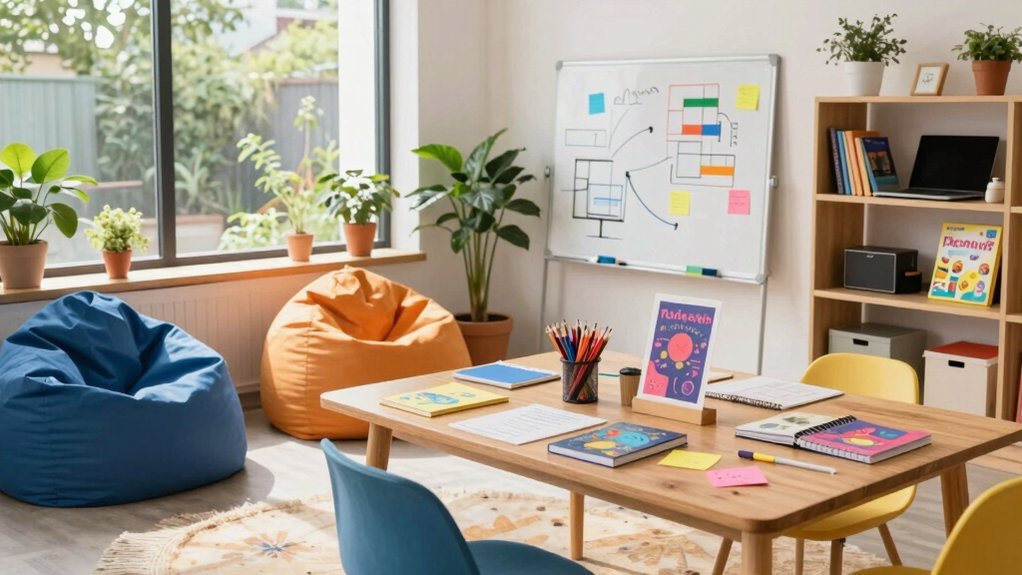
You’ll transform your classroom by zoning it into five functional areas that reduce clutter and boost autonomy. Color-code your organization system for instant recognition. Pre-stock work stations with tailored tasks by grade level. Choose flexible seating that matches different learning activities. Label and store supplies so students find them independently. Rotate student responsibility roles to foster accountability. Reset stations regularly to maintain engagement. Each strategy builds on the others, creating a self-directed learning environment that’ll keep students focused all year long—and there’s much more to discover about implementing these systems effectively.
Zone Your Classroom Into Five Functional Areas
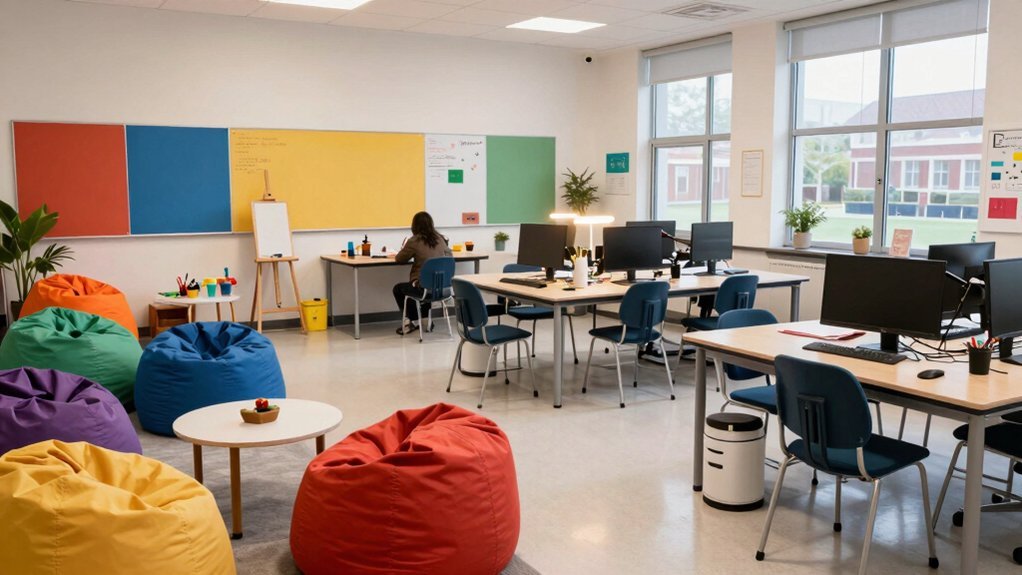
How can you transform a standard classroom into a dynamic learning environment that supports independent work? You’ll create five intentional zones that address different learning needs.
First, establish a Discovery and Creative Learning Zone with arts supplies, manipulatives, and engaging materials that spark imagination. Next, designate a Quiet and Focused Work Zone using study carrels and earphones to minimize distractions for concentration-intensive tasks.
Then, organize a Subject Area Resource Zone that groups discipline-specific materials together, reducing search time during independent practice. You’ll also need a Student Resource Center Zone with filing cabinets storing materials by grade, subject, and skill level. Consider displaying reference materials like formulas and vocabulary charts to support quick access during independent work.
Finally, create a Flexible Learning Stations Zone with mobile furniture supporting collaboration and easy reconfiguration. This strategic zoning maximizes efficiency, reduces classroom wandering, and empowers students to work independently across varied learning contexts.
Color-Code Your Organization System for Quick Recognition
You’ll dramatically cut down search time and decision-making by assigning specific colors to student folders, visual supply organization, and differentiated assignments. This color-coding system lets your learners instantly recognize what they need without reading labels or asking for directions. When you apply consistent colors across physical materials, digital files, and scheduling systems, you’re creating a universal language that supports independent navigation throughout your learning space. Consistent color schemes lower cognitive load required for students to identify materials and complete tasks independently, especially during fast-paced learning activities or transitions between stations.
Color-Coded Student Folders
Color-coded folders transform chaotic classrooms into organized learning spaces by assigning distinct colors to each subject or activity type. You’ll reduce time spent hunting through cluttered materials when you use red for reading, blue for math, and green for science. This visual system works especially well for students with ADHD or autism, who benefit from concrete organizational cues.
Start by labeling folders and bins with matching colored stickers that correspond to your chosen scheme. Create a simple reference guide linking each color to its subject. Share this system with all staff members so everyone maintains consistency. Regular maintenance through weekly reviews ensures binders and folders stay organized throughout the school year.
You can extend this approach to digital folders and student planners too. When your students can instantly recognize their materials through color association, they’ll independently gather what they need without confusion or anxiety.
Visual Supply Organization System
Why do classroom supplies scatter across desks, shelves, and storage bins when they could be instantly locatable? A visual supply organization system transforms chaos into clarity through strategic color-coding.
| Supply Category | Color | Location | Purpose |
|---|---|---|---|
| Writing Tools | Blue | Desk drawer | Quick pencil/pen access |
| Art Materials | Red | Wall shelf | Easy craft identification |
| Reference Books | Green | Cabinet section | Topic-based sorting |
| Technology | Yellow | Storage bin | Device tracking |
You’ll reduce search time significantly while helping students work independently. Color associations create instant recognition, eliminating confusion and supporting faster decision-making. This system minimizes errors during supply retrieval and maintains organization as categories evolve throughout the school year, streamlining your classroom workflow efficiently. Proper classroom lighting is essential for color distinction and label readability, ensuring students can quickly identify and locate supplies regardless of where they are working in the learning space.
Differentiated Assignment Sorting Method
How can students quickly identify which assignments match their readiness level without wasting precious independent work time? Implement a color-coding system that labels assignment tiers clearly. Assign specific colors to each complexity level—for example, green for foundational tasks, yellow for intermediate, and red for advanced work.
You’ll organize physical assignments by color in labeled folders or bins, enabling rapid distribution during independent work sessions. This visual sorting system lets students self-select their starting points without confusion or delay. Color-coded materials also support self-paced learning, allowing students to progress through tiers at their own speed. Flexible grouping within color-coded systems ensures that students can move between tiers as their readiness evolves rather than remaining permanently assigned to one level.
You can monitor progress across color groups at a glance, identifying which students are ready to advance or need additional reinforcement. This straightforward organization method normalizes differentiation while maximizing instructional time.
Pre-Stock Work Stations by Activity and Grade Level
Pre-stocking work stations by activity and grade level ensures that students arrive to organized, purposeful learning spaces. You’ll adjust foundational coursework for younger students while tailoring advanced tasks for 11th-12th graders pursuing postsecondary certificates. Assemble tools and materials specific to each activity in central station locations, leaving ample room for collaborative work.
Place handouts and directions visibly so students quickly understand expectations. You’ll customize tasks to match varying skill levels and developmental differences across grades. Set fewer tasks at stations for students needing extended time, preventing frustration and behavior issues. Incorporate attention to detail into station organization to mirror professional workplace standards that students will encounter in college work education programs.
Label stations clearly using folded card stock paper with activity titles or numbers. This system enables quick student access while maintaining safety standards and organizational clarity throughout your learning space.
Choose Flexible Seating to Match Different Tasks

You’ll maximize student focus by matching seating options to specific learning tasks—collaborative work thrives on modular furniture that reconfigures easily, while independent reading benefits from stationary, comfortable seats that minimize distractions. Rotating seating choices throughout the week keeps students engaged and prevents the restlessness that comes from static environments, allowing you to observe which options work best for different learners. Strategic placement of wobble stools near problem-solving stations and standing desks near interactive displays ensures each space supports the cognitive and physical demands of its activity. Products like the Teen Kore Active Chair and Kids Kore Wobble Chair offer 5-star ratings from teachers who recognize their effectiveness in supporting both focused work and collaborative learning environments.
Matching Seating To Learning Activities
Why settle for one-size-fits-all seating when different tasks demand different support?
You’ll discover that matching seating to specific activities amplifies focus and performance. Consider these strategic pairings:
- Collaborative discussions – Group seating increases participation by 48%, transforming passive listeners into active contributors who feel invested in dialogue.
- Focused independent work – Non-kinesthetic options like traditional chairs enhance on-task behavior, particularly for students with ADHD and autism who need stability over movement. Research shows that 88 percent of students with mental health challenges reported improved concentration when provided appropriate seating options.
- Reading comprehension – Wobble cushions and stability balls sustain attention during longer texts, preventing the mental drift that traditional desks encourage.
- Math problem-solving – Student-owned flexible spaces correlate with 73% progress increases, empowering learners through personalized comfort.
You’re not simply offering choices—you’re strategically removing barriers between students and their best work. This intentional alignment drives the 16% academic improvement research documents.
Rotating Options For Student Engagement
How does seating rotation transform classroom dynamics? By systematically changing where students sit, you’ll unlock engagement levels that static arrangements can’t match.
When you rotate flexible seating options—wobble stools, therapy balls, standing desks, and floor seating—students maintain focus while releasing kinetic energy appropriately. This prevents the disruptions that occur when movement outlets disappear. You’ll notice immediate results: on-task behavior jumps from 10 percent to 80 percent, and in-seat time climbs to 94 percent. The ergonomic benefits of these varied seating types, including improved posture and blood flow, further enhance cognitive engagement and concentration.
Rotating options also cultivates student autonomy. When you let students choose their seating for different tasks, they feel invested in the learning space. Forty percent of students voluntarily select flexible options daily, showing genuine preference.
The data’s clear: removal of rotating choices causes engagement to plummet instantly. Maintain variety in your independent learning spaces to sustain concentration, motivation, and academic performance gains.
Label and Store Supplies So Students Find Them Independently
An organized supply system empowers students to locate materials, complete tasks, and clean up without teacher intervention. You’ll create independence by implementing clear labeling strategies tailored to your students’ reading levels.
- Use picture labels and color-coding for younger learners who can’t read text yet
- Implement text labels for older students alongside visual markers for quick identification
- Design labeled trays for documents like permission slips to eliminate desk clutter
- Organize color-coded folders by student, group, or subject for seamless transitions
Store supplies in stackable containers at accessible heights, positioning bins near activity stations. Gallon-size ziplock bags work well for small items like markers or headphones. Establish designated zones where students know exactly where materials belong. When organizing by function rather than subject, you enable students to quickly gather cross-disciplinary materials needed for immersive learning activities. This system transforms your classroom into a self-sufficient learning environment where students confidently manage their own supplies.
Maintain Organization Through Rotating Student Responsibility Roles

When you rotate student responsibility roles, you transform your classroom from a teacher-managed environment into one where students actively maintain organization. Research shows that 42% of students feel fully responsible for their own learning when given meaningful ownership. By assigning rotating roles—like supply monitor, organizer, or equipment manager—you build accountability while developing essential skills.
This approach addresses the documented decline in student independence. Teachers report 82% of students today show less independence than a decade ago. Rotating responsibilities counter this trend by requiring students to self-monitor, communicate needs, and manage tasks systematically. These rotating roles reflect how cultural contexts shape the way students conceptualize and implement independent learning strategies.
These roles directly support independent learning by fostering goal-setting and time management skills. When students maintain spaces they’re responsible for, they develop persistence and resilience. You’re simultaneously building organization and cultivating the self-regulation necessary for sustained academic growth.
Reset Stations Regularly to Keep the System Fresh
Why do independent learning spaces lose their appeal? When you leave stations unchanged, students disengage and the magic fades. Refreshing your setup keeps learners invested and focused.
You’ll want to rotate materials strategically:
- Swap activities bi-weekly—replace worn puzzles with fresh challenges that reignite curiosity and mental engagement.
- Update sensory elements monthly—rotate fidget tools, music playlists, and aromatherapy scents to prevent habituation and maintain comfort.
- Conduct station audits regularly—discard outdated items and assess condition to ensure everything functions optimally.
- Vary task difficulty quarterly—adjust complexity based on student progress to sustain appropriate challenge levels.
Track usage patterns monthly to identify underused stations needing overhaul. Teach proactive station use through modeling so students normalize self-regulation. When calming corners are refreshed with new breathing aids and sensory tools, students maintain engagement with the space. Observe how fresh setups reduce disruptions and boost academic performance, making your investment in regular resets worthwhile.
Frequently Asked Questions
How Do I Transition Students Between Zones Without Causing Disruption or Confusion?
You’ll shift students smoothly by using visual schedules, music cues, and timers. You can offer activity choices, incorporate movement exercises, and maintain consistent routines. You’re actively supervising and providing positive reinforcement throughout each shift.
What Budget Constraints Should I Consider When Implementing an Independent Learning Space?
You’ll need to balance staffing costs against technology investments, consider portable solutions for flexible layouts, and prioritize maintaining current services while avoiding unexpected capital expenses through careful planning.
How Can I Accommodate Students With Sensory Sensitivities in a Shared Learning Environment?
You’ll create quiet zones with soft surfaces, limit wall decorations to 30-50%, use neutral tones, provide fidgets, and incorporate visual dividers. You’ll also adjust lighting and sound levels strategically to minimize sensory overload.
What Systems Help Students Track Their Own Progress Across Different Learning Stations?
You’ll track progress using student-friendly visual organizers like graphs and charts. You can implement learning journals for self-reflection, peer reviews for collaborative feedback, and goal-setting systems. You’ll display real-time dashboards showing your advancement across stations.
How Do I Balance Structure With Flexibility as Student Needs Evolve Throughout the Year?
You’ll monitor formative assessments regularly to gauge understanding, then adjust scaffolding or increase autonomy accordingly. You’re establishing weekly planning flexibility rather than rigid schedules, allowing you to pivot based on emerging student needs while maintaining core learning objectives.
In Summary
You’ll create a thriving independent learning environment when you implement these organizational strategies. By zoning your space, color-coding systems, and pre-stocking stations, you’re setting students up for success. You’ll maintain momentum through rotating responsibilities and regular resets. This structured approach doesn’t just organize your classroom—it empowers your students to take ownership of their learning and navigate their space confidently and independently.

Leave a Reply