
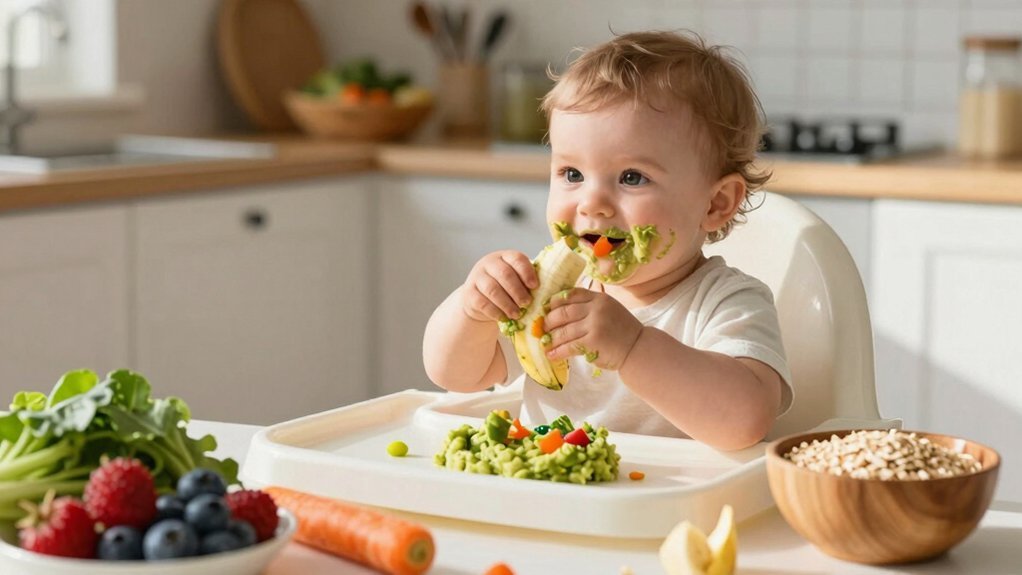
When you let your baby self-feed from six months onward, you’re building the neural pathways and motor skills that’ll shape their eating independence for life. You’re strengthening hand-eye coordination, fine motor control, and their ability to recognize hunger cues—skills that extend far beyond the highchair. By following your baby’s natural signals rather than pushing scheduled feedings, you’re teaching them to trust their body’s wisdom. This foundation sets the stage for lifelong healthy eating patterns and genuine confidence around food.
Start Self-Feeding at 6 Months: Why It Matters
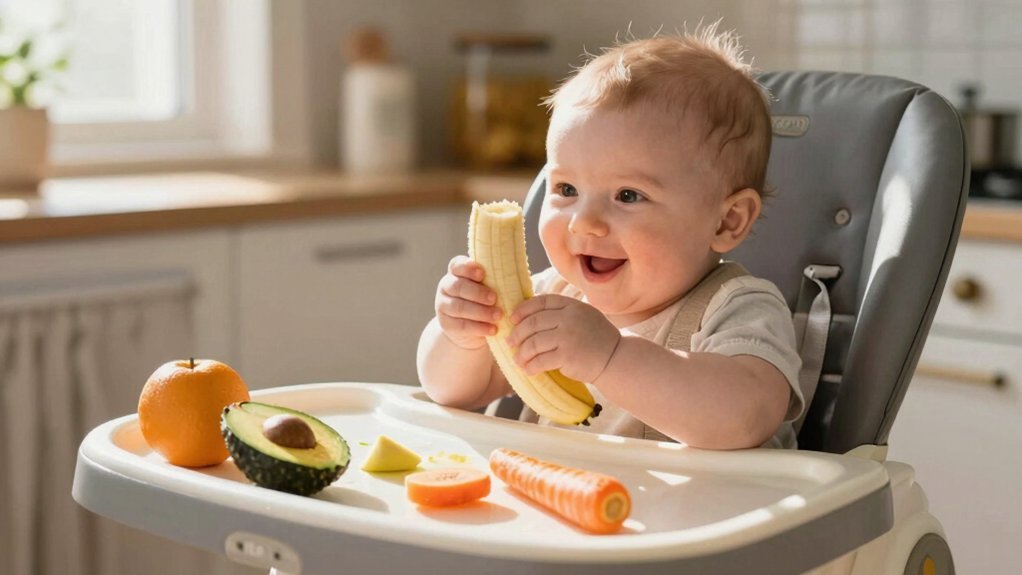
When you introduce self-feeding at six months, you’re supporting your baby’s development across multiple domains—from fine motor skills and hand-eye coordination to safer chewing and swallowing abilities. At this age, your baby’s digestive system reaches maturity, with stomach acid and enzymes ready for solids. Your infant can now sit independently, rake or scoop food, and transport it to their mouth with improving coordination.
This developmental window matters because it’s when your baby naturally demonstrates readiness. Your child’s sitting posture stabilizes, enabling safe exploration of textures. Early self-feeding experiences establish crucial foundations for motor development and independence. When you follow your baby’s hunger cues during this stage, you’re also laying groundwork for healthy appetite regulation throughout their life. Offering soft, finger-sized pieces allows your baby to control food intake based on their own satiety signals.
Teach Your Baby to Listen to Hunger: Not You?
How do you know when your baby’s actually hungry versus simply fussy or bored? Your infant communicates through subtle cues you’ll learn to recognize: hand-to-mouth movements, head turning, lip licking, and increased activity signal early hunger. As intensity escalates, you’ll notice fussing and crying.
When you respond to these signals rather than feeding on a schedule, you’re teaching your baby to trust their own hunger recognition. This responsiveness builds self-regulation skills that extend into childhood and adulthood. Your baby develops superior abilities identifying personal satiety when they control intake amounts. These hunger and satiety cues align with baby-led feeding principles that emphasize the child’s role in deciding how much and what to eat during meals.
Breastfeeding mothers particularly develop heightened sensitivity to these cues through necessity. By honoring your baby’s signals, you’re establishing foundational eating patterns that reduce obesity risk and promote lifelong healthy relationships with food.
Motor Skills Self-Feeding Builds

Why does self-feeding matter so much for your baby’s development? Self-feeding builds essential motor skills that support lifelong independence. When your baby grasps a spoon or finger food, they’re coordinating their arm, hand, and fingers—developing fine motor control. This activity integrates hand-eye coordination, allowing your baby to transport food to their mouth accurately.
As your baby feeds themselves, their oral motor skills mature too. Their swallowing patterns refine, and reflexes diminish, enabling smoother feeding. Simultaneously, gross motor foundations—sitting upright, maintaining head control—strengthen during meals. Research shows that systematic skill-building through self-feeding supports the transfer of motor competencies across different eating contexts and environments.
Beyond physical development, self-feeding fosters emotional growth. Your baby experiences pride and autonomy. They control pace and food selection, reducing safety concerns. This independence builds self-worth while naturally developing the motor competencies they’ll use throughout life.
Baby-Led Weaning: Expanding Palate Without Pressure
As your baby reaches for soft foods and explores textures independently, you’re offering them something beyond nutrition—you’re building their relationship with eating itself.
When you expose your infant to diverse flavors and textures through baby-led weaning, you’re actively reducing picky eating tendencies. Rather than relying on processed purees, whole foods allow your baby to regulate intake toward healthier preferences naturally. Sitting your baby in a highchair with a harness ensures they can safely self-feed while you observe their readiness and comfort.
Your little one learns to stop when satisfied, preventing overeating and supporting lower BMI outcomes. This autonomy extends beyond weight management—you’ll likely notice reduced anxiety around mealtimes. By stepping back from controlling feeding practices, you’re fostering your baby’s innate hunger and satiety cues, creating lifelong healthy eating habits without pressure or restriction.
Eating Together Builds Your Baby’s Food Confidence

While your baby’s independent exploration of food builds their confidence, sharing meals with your family amplifies that growth in ways solo eating can’t replicate. When you eat together, your baby observes your food choices and learns healthy nutrition modeling directly. You’re not just feeding them; you’re creating a secure space where they belong.
Regular family meals strengthen your baby’s self-esteem and emotional resilience. They develop social skills through interaction with you, building trust and prosocial behaviors. Your presence during mealtimes provides positive reinforcement that shapes their developing self-image. Research shows that open communication during shared meals reduces the likelihood of psychosocial problems as children mature.
As your child grows, these shared experiences create lasting patterns. Family meals at age six correlate with reduced emotional issues by age ten and lower obesity risk throughout childhood. You’re building not just eating habits, but foundational confidence that carries them forward.
Frequently Asked Questions
What Are the Choking Risks When Introducing Self-Feeding at Six Months?
You risk choking when your six-month-old lacks sufficient oral motor skills for chewing and swallowing whole foods. You’ll want to offer soft, mashable pieces and avoid round or hard foods until they’re developmentally ready.
How Do I Know if My Baby Is Developmentally Ready for Natural Weaning?
You’ll know your baby’s ready for natural weaning when they’ve mastered sitting upright, lost their tongue-thrust reflex, show food curiosity, and clearly communicate hunger and fullness cues through their behaviors and body language.
Can Natural Weaning Delay Speech Development or Affect Oral-Motor Function Negatively?
No, you won’t experience speech delays from natural weaning. You’ll actually strengthen your baby’s oral-motor development through independent self-feeding, which builds the facial muscles and coordination essential for clear speech production.
What Nutritional Deficiencies Should I Watch for During the Weaning Transition Period?
You should monitor iron, protein, vitamin B12, vitamin D, zinc, and calcium during weaning. You’ll want to ensure you’re offering nutrient-dense foods, especially if you’re following vegetarian or vegan practices with your infant.
How Do I Balance Natural Weaning With Allergenic Food Introduction Safely?
You’ll introduce allergenic foods gradually during family meals, starting with single foods in small pieces while supervising carefully. You’re building tolerance progressively, monitoring reactions closely, and consulting dietitians to prevent nutritional gaps safely.
In Summary
You’ll find that natural weaning gives your baby the freedom to develop eating skills at their own pace. By letting them self-feed, listen to their hunger cues, and explore diverse foods without pressure, you’re building their confidence and independence. You’re not just feeding your child—you’re nurturing a lifelong positive relationship with food and self-regulation that’ll benefit them throughout their lives.


Leave a Reply