

You can boost kids’ grasp of order and sequence with seven engaging tasks. Start with two‑ and three‑picture sequencing, letting them arrange cards and say “First, Next, Last.” Move to oral retells of those pictures, then try the same language without any visuals. Use real‑world chores broken into four or five steps, and practice sequencing story events from a book. Finally, have them order personal memories like birthdays or trips. Keep exploring for more ideas.
Teach First‑Next‑Last Sequencing for Children With Daily Routines
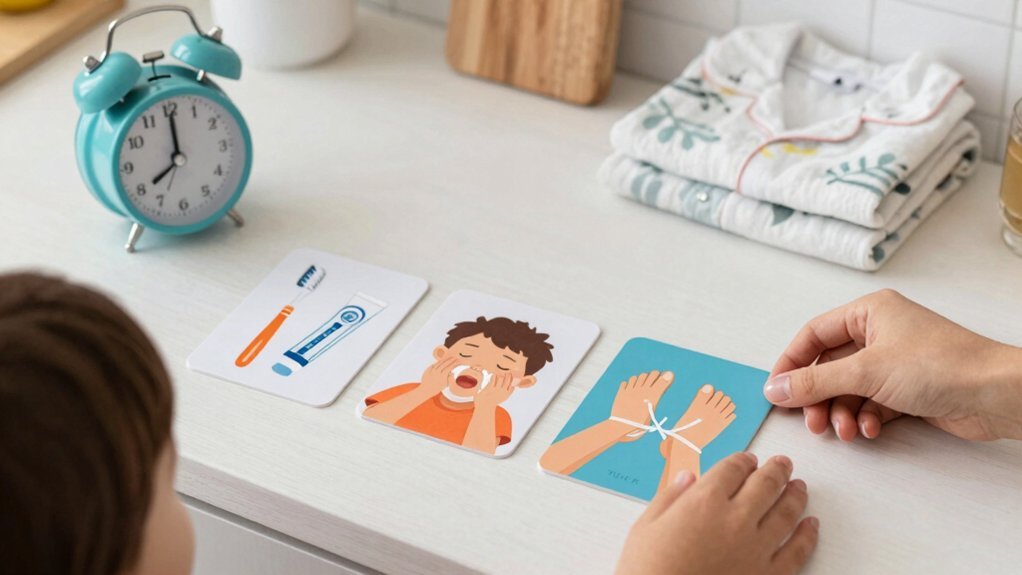
Ever wonder how to turn everyday chores into a learning adventure? You start with two‑picture prompts, label each step, and act out the sequence. Say “First you brush your teeth, Next you rinse, Last you put the brush away.” Use picture cards of brushing teeth or making a snack to anchor the concept.
Move to three‑picture arrangements, prompting the child to place them in chronological order. After they order the cards, ask them to retell stories using the phrase “First ___, Next ___, Last ___.” This reinforces verbal clarity and deepens understanding.
Gradually expand sequencing activities to longer daily routines, increasing complexity while keeping the focus on clear, step‑by‑step sequencing. Using tools like the Kitchen Step Stool for Kids with Safety Rail can help children safely engage in tasks at counter height, fostering independence within their routines.
Three‑Step Picture Sequencing for Children Using Mixed‑Up Cards
How can you turn a jumble of pictures into a clear, step‑by‑step story? Begin with three‑step picture sequencing using mixed‑up cards that depict a familiar action. Show the child a guided demonstration: “First ___, Next ___, Last ___,” then let them arrange the cards. This hands‑on sequencing activity reinforces order and sequence as they identify the first, next, and last steps. After they place the images correctly, ask them to narrate the story aloud, building narrative fluency with the same “first, next, last” phrasing. Gradually remove the pictures once accuracy is consistent, prompting memory retrieval. Continue increasing complexity, keeping the structure simple, to solidify the skill for longer sequences. Incorporating tools with reach and extension capabilities can also help demonstrate sequencing in physical tasks beyond card activities.
Re‑Tell Three‑Step Sequences for Children With “First, Next, Last” Language
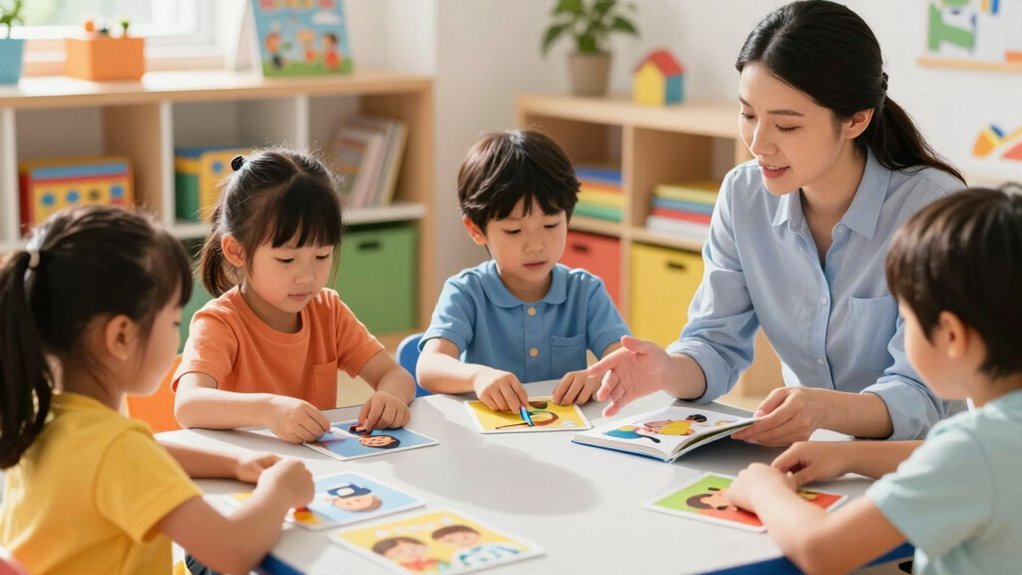
After ordering the mixed‑up cards, ask the child to retell the story using the “First ___, Next ___, Last ___” template. Model the sequence aloud, pointing to each picture while you say, “First the rabbit hops, Next it finds a carrot, Last it eats it.” Then remove the cards and have the child “tell sequence” using only words. Use an anchor chart that lists “first, next, last” and shows where each event belongs, reinforcing the order of events. Encourage the child to repeat the three‑step sequences until the markers become automatic. Gradually increase complexity by swapping pictures or adding simple prompts, but keep the focus on clear sequencing and consistent use of the first‑next‑last language. Incorporating hands-on activities like spinning tops can further develop fine motor skills and sequencing through playful manipulation and cause-and-effect learning.
Oral First‑Next‑Last Sequencing for Children Without Pictures
You’ll notice that oral First‑Next‑Last sequencing works even when you drop the pictures, because the words alone cue the order. By asking “What happened first?” and “What happened last?” you guide children to articulate each step verbally. Modeling the pattern with “First, __. Next, __. Last, __” reinforces the structure and builds a solid foundation for later reading comprehension. This approach also supports progressive texture gradation in tactile learning experiences, helping children naturally build sequential thinking skills.
Oral First‑Next‑Last Sequencing
Ever wondered how to strengthen a child’s memory and language skills without relying on pictures? You can use oral sequencing with a first‑next‑last format. Start by naming a real‑life task—like brushing teeth—and ask, “What happened first? What happened next? What happened last?” Model the response using transitiona l words: “First, you put toothpaste on the brush. Next, you brush your teeth. Last, you rinse.” These sequencing prompts guide the child to place events in order, reinforcing memory and language organization. Gradually shift from short, familiar routines to longer sequences, reducing prompts as accuracy improves. Consistent practice builds narrative structure and confidence, turning everyday activities into powerful learning moments. Using multi-component Montessori sets can further enhance sequential reasoning through tactile and visual engagement.
Practice Without Visual Aids
Once children have mastered sequencing with picture prompts, you can shift to oral practice without visual aids. Begin with simple prompts like “What happened first?” “What happened next?” and “What happened last?” to guide their oral sequencing. Use everyday examples—brushing teeth, making a sandwich—to anchor the sequence in real life. Ask them to recall the steps, encouraging clear storytelling that follows the first‑next‑last order. Gradually remove any visual cues, then increase difficulty by extending the sequence beyond three steps. Challenge them to retell longer events from memory, reinforcing the structure through repeated recall. This progressive approach builds confidence, sharpens memory, and solidifies sequencing skills without relying on visual aids.
Practice Four‑ and Five‑Step Sequencing for Children With Real-World Tasks
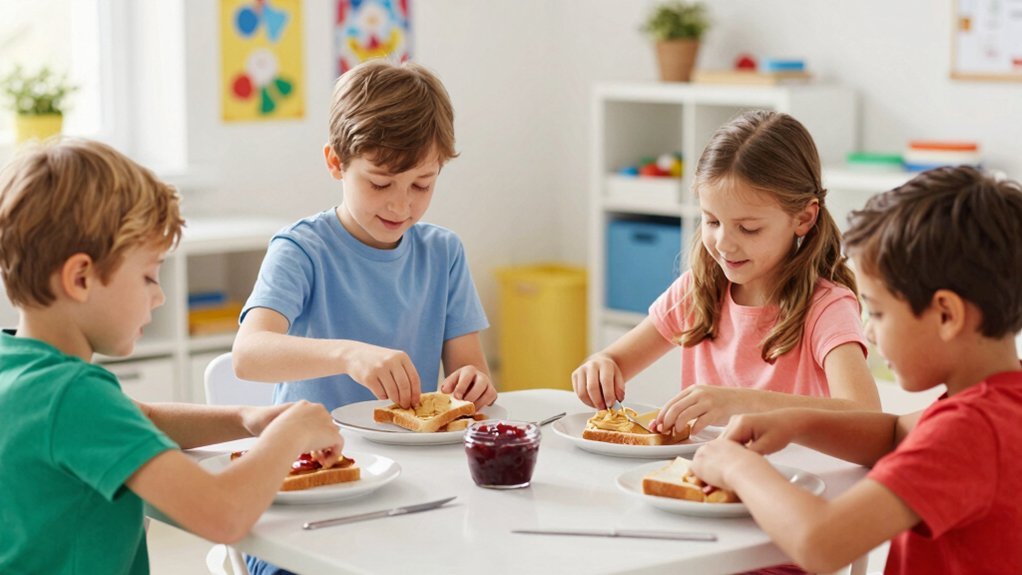
You’ll start by weaving everyday chores into your lessons, letting kids model each action step by step. As they master brushing teeth or packing a snack, you’ll gradually add a fourth and fifth step, using prompts like “first, next, then, finally.” This real‑world integration builds confidence and makes longer sequences feel natural. Using tools with ergonomic handles can support children in managing tasks more comfortably and safely.
World Task Integration
How can you turn everyday chores into powerful sequencing lessons? You embed sequencing in daily activities by choosing real-world tasks that naturally break into four steps, like setting a table, or five steps, such as making a snack.
World Task Integration means you guide the child through each stage, checking that the order produces practical outcomes—clean dishes or a tasty treat.
As they master four‑step sequencing, you extend to five‑step routines, reinforcing cross‑domain sequencing that supports reading comprehension, problem solving, and executive function.
Keep the tasks familiar, increase complexity gradually, and highlight how the ordered steps translate to real‑life success, ensuring the skill transfers beyond the therapy room.
Incorporating open-ended play with Montessori-aligned wooden animal figures can further enhance children’s understanding of sequencing through interactive storytelling and hands-on manipulation.
Step‑by‑Step Modeling
Ever wonder how a simple demonstration can turn a four‑step chore into a powerful learning tool? You start with step‑by‑step modeling, labeling each action with clear transitions—First, Next, Last. This explicit order helps children see how sequencing works in everyday activities like brushing teeth.
Begin with a four‑step routine, then extend to five steps, using familiar chores to ease the load on executive function. Pair each demonstration with guided practice: ask the child to name each step while arranging pictures or objects. Track accuracy by comparing their child with the taught order, then gradually fade prompts. Repeated practice builds confidence, memory, and the ability to plan multi‑step tasks independently.
Story‑Based Sequencing Activities for Children: Retell Main Events From a Book
Start by giving kids a set of mixed‑up picture cards that illustrate the key moments of a story, then have them rearrange the cards into the correct order and retell each step with phrases like “First…,” “Next…,” and “Last….” This hands‑on approach lets them see the beginning, middle, and end clearly, while mentor texts and anchor charts model the sequencing language they’ll use. You’ll notice story sequencing builds confidence as children retell events using sequence words. Gradually fade picture sequencing and rely on verbal prompts, linking each retell to comprehension linkage such as cause‑and‑effect and prediction.
| Activity | Goal |
|---|---|
| Mixed‑up cards | Identify beginning, middle, end |
| Mentor‑text read‑aloud | Model sequence words |
| Anchor‑chart reference | Visual cue for retell events |
| Memory‑only retell | Strengthen comprehension linkage |
Personal‑Memory Sequencing for Children: Order Birthdays, Trips, and Other Past Events
Ever wonder how a child can turn a birthday party or a family trip into a clear, chronological story? You start with personal-memory sequencing, using pictures or prompts of recent birthdays and trips. Ask the child to name the first thing that happened, then the next, and finally the last. Anchor each step with concrete cues—date, age, location, people—to solidify order events. Gradually expand from three to four or five sequencing steps, adding feelings or cause-and-effect links. Practice retellings, visual supports, and transition words until the child confidently narrates past events in sequence.
- Birthday surprise – “First we blew candles, next we opened gifts, last we ate cake.”
- Beach vacation – “First we packed, next we drove, last we built sandcastles.”
- Family reunion – “First we arrived, next we greeted, last we shared stories.”
Frequently Asked Questions
How Can I Adapt Sequencing Tasks for Children With Limited Speech?
You can use picture cards, simple gestures, and short phrases; let them arrange the cards, model the steps, give immediate praise, and repeat the activity with varied objects to reinforce sequencing.
What Tools Help Track Progress in Multi‑Step Sequencing Activities?
You’ll find apps like Seesaw, ClassDojo, and Google Sheets templates let you log each step, assign timestamps, and visualize trends, while speech‑to‑text tools capture verbal responses for kids with limited speech.
Can Sequencing Exercises Be Integrated Into Virtual Learning Environments?
Yes, you can embed sequencing exercises in virtual classrooms by using interactive drag‑and‑drop widgets, timed story‑building tools, and collaborative whiteboards, letting learners arrange steps and receive instant feedback.
How Do I Differentiate Sequencing Difficulty for Mixed‑Ability Groups?
You adjust difficulty by offering tiered prompts, varying step counts, and providing optional hints; assign simpler sequences to novices, intermediate ones to middle learners, and complex, multi‑step tasks to advanced students.
What Signs Indicate a Child Is Ready to Move to More Complex Sequences?
You’ll notice them solving multi‑step puzzles, predicting patterns, and asking “what if?” questions. They’re using mental‑step reasoning, handling longer instructions, and showing confidence with previous sequencing tasks.