
You’ll find that multi-age classrooms dissolve artificial grade-level barriers, allowing you to connect with genuine developmental peers rather than being confined to same-age cohorts. Your friendships form around shared interests and thinking styles instead of birth dates. Older students naturally mentor younger ones, creating role flexibility that deepens empathy and mutual understanding. You’ll experience stable peer networks across multiple years, preventing the constant social reshuffling of traditional settings. There’s much more to discover about how these structures transform classroom relationships.
What Multi-Age Grouping Solves: Why Age-Based Classrooms Create Invisible Barriers
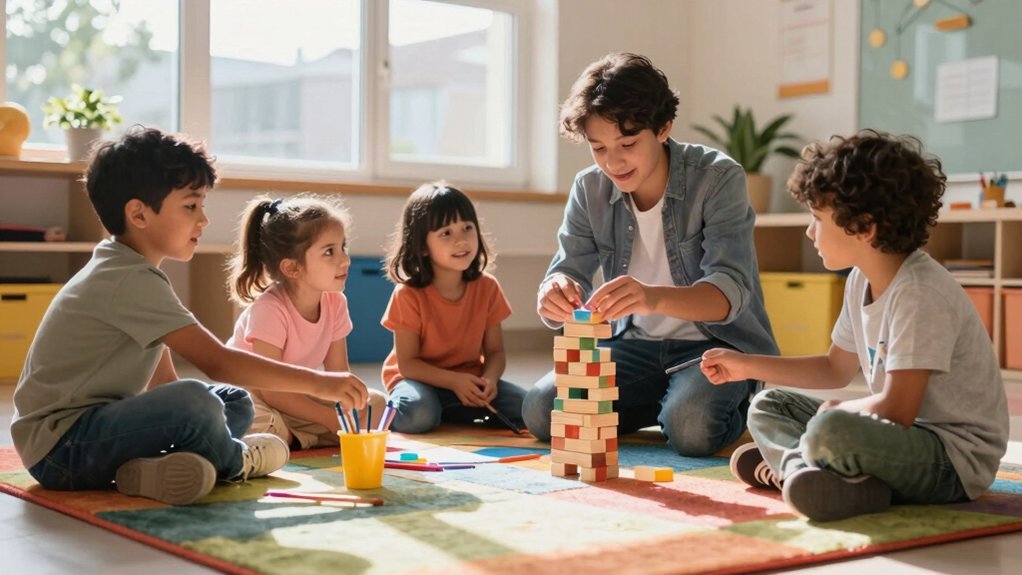
Why do younger students in same-age classrooms consistently underperform their older peers across cognitive and motor assessments? You’ll find that age-based grouping creates invisible barriers that harm younger children’s development. Relatively young pupils experience significantly lower academic scores, reduced motor performance, and diminished self-esteem compared to older classmates. These gaps persist across multiple countries and studies, revealing a systemic problem.
Beyond academics, you’ll notice younger students struggle socially and emotionally. Age segregation restricts their social skill development while increasing peer aggression and anxiety. Older students, meanwhile, feel intimidated by same-age structures, experiencing reduced motivation. Research shows that peer mentorship among students of different ages naturally strengthens emotional development in ways that rigid grade-level structures cannot replicate.
You’re also witnessing how rigid grade-level curricula ignore individual progress rates. This one-size-fits-all approach prioritizes standardized testing over personalized learning, reinforcing competition instead of cooperation. Multi-age classrooms eliminate these invisible barriers by accommodating diverse developmental levels naturally.
Finding True Peer Matches Beyond Chronological Age
How often have you watched a child connect instantly with someone years apart in age, yet feel isolated among same-age peers? Developmental matching reveals why: children naturally gravitate toward equivalent maturity levels, not birth dates.
In multiage classrooms, you’ll notice your child finding genuine companions more readily. A seven-year-old might collaborate meaningfully with a nine-year-old while struggling with same-age classmates. This flexibility eliminates forced friendships based solely on chronological convenience. Research on zone of proximal development demonstrates that children learn most effectively when paired with peers slightly ahead of their current level, making these cross-age matches pedagogically powerful as well as socially satisfying.
When you enable interest-based grouping across ages, children exercise real power over their social choices. They discover peers who share passions and thinking styles. Multiage settings reveal that true compatibility transcends grade levels, allowing your child to build authentic relationships with actual developmental matches rather than arbitrary age cohorts.
Why Multi-Age Settings Build Older Student Confidence Through Mentoring?

When your older child steps into a mentoring role, something transformative happens—they’re no longer just absorbing information, they’re explaining it to someone who genuinely needs their expertise. This shift builds genuine confidence that extends far beyond academics.
Your child’s self-assurance grows through:
Recognition of competence, positive peer interactions, and reduced academic pressure build genuine self-assurance in young mentors.
- Recognition of competence – Successfully guiding younger peers validates their knowledge and abilities in tangible ways
- Positive peer interactions – Younger students’ enthusiasm and appreciation reinforce your child’s sense of capability
- Reduced academic pressure – Mentoring roles alleviate stress while allowing them to demonstrate mastery
When your older student recognizes they’ve genuinely helped someone learn, they internalize their own competence. They’re no longer worried about performing; they’re focused on contributing. This shift transforms self-doubt into earned confidence that’ll serve them throughout life. As older students practice empathy through helping younger peers, they develop social-emotional skills alongside academic reinforcement that strengthens their overall growth and sense of purpose within the classroom community.
How Younger Students Thrive Without Stigma in Mixed-Age Groups
Ever noticed how younger children in mixed-age classrooms seem unburdened by the pressure that often weighs on their single-age peers?
You’ll find that mixed-age environments eliminate the stigma of revisiting concepts. When you’re learning alongside peers at various achievement levels, you’re not labeled as “behind.” Instead, you progress at your own pace without comparison.
| Aspect | Single-Age Classroom | Multi-Age Classroom |
|---|---|---|
| Pacing Pressure | High | Flexible |
| Stigma | Present | Absent |
| Peer Comparison | Constant | Minimal |
| Concept Revisiting | Embarrassing | Normal |
| Progress Celebration | Group-Based | Individual |
You gain exposure to higher-grade curriculum naturally through peer interaction, enriching your learning without forced acceleration. Older mentors guide you scaffolding skills while maintaining matched energy and patience. You’re never isolated or labeled; instead, you’re supported, valued, and encouraged to progress authentically within your capabilities. This additional emotional support from multiple caring adults and peers creates a nurturing environment where you feel secure enough to take intellectual risks and learn from mistakes.
How Multi-Age Classrooms Teach Empathy Across Developmental Stages
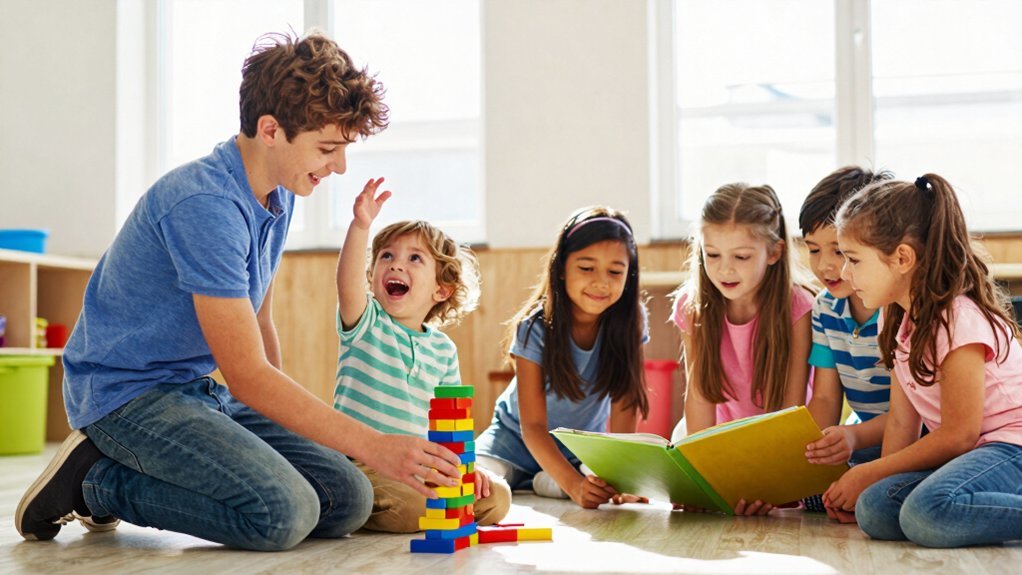
Because you’re constantly navigating relationships with peers at different maturity levels, you’re naturally developing the ability to understand others’ perspectives and emotional needs.
Multi-age classrooms create daily opportunities for empathy growth through:
- Peer teaching roles – When you explain concepts to younger classmates, you reinforce your own understanding while building empathy through mentorship and recognizing their different learning paces.
- Collaborative problem-solving – Working alongside peers with varying competencies teaches you to adjust expectations and appreciate diverse problem-solving approaches, strengthening your social understanding.
- Modeling and reciprocity – Observing older students demonstrate caring behaviors while helping younger peers creates a cycle of empathy that encourages you to support classmates authentically.
These interactions build emotional resilience and prosocial skills that prepare you for navigating diverse relationships throughout your life. Within each three-year cycle, you experience the distinct roles of youngest, middle, and oldest, each offering unique growth opportunities that deepen your capacity for perspective-taking and patience with others at different developmental stages.
Three-Year Friendships Create Stability That Annual Reshuffling Breaks
When you stay with the same peer group for three years, you’re building friendships that weather developmental shifts—something annual reshuffling systematically dismantles.
That continuity reduces the stress and social anxiety that comes with starting over, letting you channel energy into deepening relationships rather than rebuilding them.
As your confidence grows through familiar faces and repeated interactions, you’re free to explore who you’re becoming without the burden of constant social recalibration. Older students gain leadership experience within the classroom environment, which further strengthens the bonds formed during these extended years together.
Continuous Bonds Reduce Transition Stress
How does your child’s anxiety shift when they know they’ll spend the next three years with the same teacher and classmates?
Multi-age classrooms dramatically reduce transition stress by eliminating annual classroom upheaval. Your child benefits from:
- Relational security with consistent adults — Two to three years with the same teacher builds deep trust, enabling your child to learn confidently without rebuilding connections annually.
- Stable peer networks — Familiar classmates prevent the anxiety of starting over socially each fall, allowing your child to focus on academics rather than adjusting to new social dynamics.
- Reduced transition anxiety — Thorough familiarity with the classroom environment, routines, and materials creates psychological safety that persistent reshuffling destroys. Long-term caregiver relationships contribute to secure development and positive developmental outcomes that annual transitions interrupt.
This continuity transforms how your child experiences school—from an annual disruption cycle into a secure, predictable community.
Familiarity Strengthens Social Confidence Growth
Your child’s social confidence flourishes through the sustained relationships that multi-age classrooms provide. When your child remains with the same peer group across three years, familiarity breeds genuine confidence that annual reshuffling disrupts.
You’ll notice your child develops deeper self-esteem through prolonged interactions with peers at varying developmental levels. Older students model positive behaviors, while your child discovers leadership opportunities with younger classmates. This extended exposure builds resilience and perspective-taking skills that single-age settings simply can’t replicate. When students work together across age groups, peer questioning and mentorship naturally emerge, deepening their collaborative problem-solving abilities.
Research shows children in three-year environments demonstrate higher self-concept scores and personal adjustment than their age-segregated counterparts. Your child gains security from consistent routines and stable relationships, allowing them to take social risks and strengthen friendships naturally. This continuity transforms casual acquaintances into meaningful bonds that anchor their developing sense of self.
Multi-Age Collaboration: Replacing Competition With Shared Learning
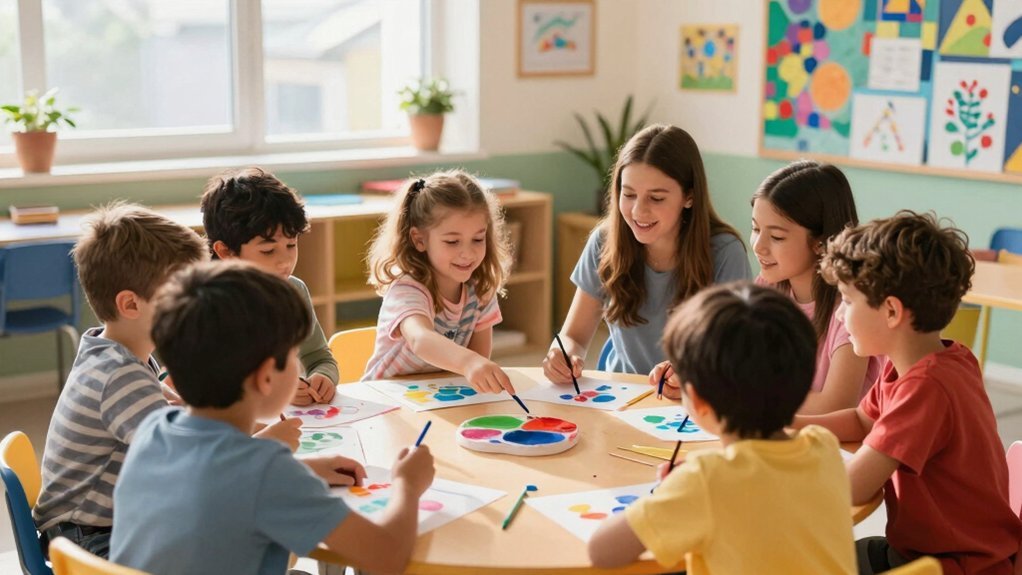
When you place students across different ages together, you’re transforming tutoring from a one-directional service into genuine peer teaching where both mentor and mentee grow. You’ll notice competition naturally dissolves as learners focus on shared discovery rather than individual achievement, fostering cooperation that replaces the ranking mentality of same-age classrooms.
This collaborative shift doesn’t just change how students work—it fundamentally reshapes their friendships by building bonds rooted in mutual support instead of rivalry. As older students practice leadership by giving lessons and helping younger peers, they naturally develop the mentoring skills that strengthen these cross-age relationships.
Tutoring As Peer Teaching
What if the most effective teacher in your classroom isn’t the one standing at the front of the room? In multi-age settings, peer teaching transforms how students learn from one another. You’ll find that students become more accurate and confident after peer discussions, improving long-term retention. Research shows you can achieve these powerful results:
- Students demonstrate 90% retention rates when teaching others, compared to traditional learning methods
- Academic achievement jumps significantly—with 63.9% of students attributing gains directly to group discussions
- Behavioral improvements occur simultaneously, with disruptive behaviors decreasing as students engage meaningfully
When you implement structured peer tutoring, you’re not just improving grades—you’re replacing competition with collaboration that strengthens friendships across age groups. Tutors develop leadership-related skills including communication, problem-solving, empathy, and team management that extend far beyond the classroom.
Competition Transforms Into Cooperation
How does cooperation flourish when you remove the pressure of competition? In multiage classrooms, you’ll notice that traditional grade-level rankings disappear, eliminating the constant comparison that fuels rivalry. Instead of competing to be the “best” in your class, you collaborate with peers of varying ages and abilities.
You discover that everyone possesses unique strengths. Creative younger students lead artistic directions while organized older students handle scheduling. Confident students tackle research regardless of age. This capability-based role distribution replaces competitive hierarchies.
When you’re no longer worried about being ahead or behind, you engage authentically with classmates. You participate more readily in cooperative social play and structured academic activities. You develop genuine friendships across ages rather than defensive alliances within grade levels. Competition transforms into shared learning, where collective success matters more than individual achievement.
Shared Discovery Over Individual Achievement
Once you’re freed from the pressure to outpace your classmates, you can focus on what genuinely captivates you. In multi-age classrooms, you’ll discover that learning becomes collaborative rather than comparative.
- You’ll engage in hands-on investigations that prioritize exploration and problem-solving over grades and rankings
- You’ll participate in flexible small groups where everyone contributes unique perspectives, maximizing experiential learning
- You’ll develop deeper understanding by teaching peers, reinforcing concepts through shared dialogue
This shift transforms your classroom into a community of curious learners. When you’re not competing for top marks, you’re building genuine friendships across age groups. You’ll collaborate with older mentors and younger learners, creating meaningful bonds through shared discovery. As you observe and imitate peers performing complex tasks, you internalize that progress and skills develop over time rather than remaining fixed. Your achievements become collective milestones rather than individual victories, fostering authentic connections that extend far beyond academics.
Why Long-Term Teacher-Student Relationships Matter More Than Annual Resets

Why do teachers who stay with your child year after year matter so much more than those who reset annually? When you keep the same teacher, you’re building something that survives beyond the classroom—lasting bonds that persist into adulthood and shape your child’s health outcomes.
| Aspect | Annual Reset | Long-Term Bond |
|---|---|---|
| Trust Development | Starts from zero | Deepens progressively |
| Personalization | Generic instruction | Tailored to individual needs |
| Long-term Health | Minimal impact | Sustained wellness benefits |
Teachers who loop with students capitalize on prior interactions, avoiding the losses that annual resets create. They learn your child’s learning style, strengths, and challenges over time, enabling adapted teaching strategies that stick. This consistency fosters security and belonging—protective factors that outperform single-year relationships in supporting your child’s development. Extended relationships between teachers and families create ongoing parent partnership that reinforces academic progress and emotional growth both inside and outside the classroom.
The Classroom Community Effect: How Multi-Age Groups Reduce Behavior Problems
Multi-age classrooms create a natural hierarchy that transforms how children behave together. You’ll notice behavior problems diminish significantly when students share responsibility for classroom order rather than relying solely on teacher enforcement.
Here’s what you can expect:
- Reduced aggression: Teachers report notably fewer aggressive incidents, with improvements sustained through third grade, as older students model appropriate conduct and younger ones follow suit.
- Self-regulation through consistency: Stable routines minimize acting-out behaviors, particularly benefiting students typically labeled as “problem” students who thrive under predictable structures.
- Peer influence dynamics: Older peers naturally mentor younger classmates, creating mutual accountability that strengthens the supportive atmosphere and reduces negative interactions.
When you foster this community-centered approach, you’re essentially building an environment where children police themselves through positive example rather than external pressure. This social competence foundation established early in mixed-age settings has been shown to predict both academic and social competence throughout a child’s educational trajectory.
Designing Your Multi-Age Structure: Grade Spans, Cohort Sizes, and Transition Points
How you structure your multi-age classroom determines whether it’ll truly benefit all learners. You’ll want to span 2-3 traditional grades—configurations like K-2 or 3-5 create stable communities where students remain with the same teacher for multiple years. This looping system minimizes disruptive transitions and builds family-like bonds.
Keep cohort sizes flexible, prioritizing skill-based grouping over fixed numbers. You’ll organize instruction by readiness levels rather than age, forming heterogeneous small groups for peer mentoring. Older students naturally aid younger ones while reinforcing their own learning. Research shows that continual peer mentoring stretches students’ teaching abilities and deepens their understanding of academic content.
Plan end-of-span transitions carefully. Rather than annual grade changes, you’ll move students based on readiness continua. This approach reduces competition, emphasizes personal growth, and accommodates the varied developmental ranges within your classroom, ultimately strengthening the diverse friendships your students develop.
Frequently Asked Questions
How Do Multi-Age Classrooms Handle Curriculum Pacing When Students Have Different Academic Levels?
You’ll manage different academic levels through flexible grouping, split timetables, and curriculum alignment. You group students by ability and interest, deliver differentiated instruction simultaneously, and use spiraled topics so you’re covering material at various depths without disrupting pacing.
What Happens to Students Who Don’t Find Compatible Peers in Their Multi-Age Classroom Cohort?
You’ll benefit from moving to another class with different peer influences that’ll boost your confidence. Teachers also encourage whole-class collaboration, helping you befriend compatible learners across year groups.
How Do Teachers Manage Assessment and Grading Across Multiple Grade Levels Simultaneously?
You manage multi-grade assessment by using portfolio-based evaluation, observation techniques, and individualized conferencing. You’ll document each student’s growth against their developmental level rather than grade-level standards, adjusting instruction based on personalized progress monitoring.
Do Multi-Age Settings Disadvantage Gifted Students Who Need Specialized Advanced Instruction?
You’ll find that multiage settings can disadvantage highly gifted students who need instruction four or more grade levels ahead. You’d struggle to receive adequate differentiation without separate advanced curricula tailored specifically to your exceptional abilities.
How Does Multi-Age Grouping Impact Standardized Test Preparation and Performance Metrics?
You’ll find that multiage grouping complicates standardized test performance since you’re teaching diverse grade levels simultaneously. You’re preparing students at different paces, and rigid grade-level assessments don’t capture individualized growth you’re fostering.
In Summary
You’ll discover that multi-age classrooms transform how you learn and grow. By stepping beyond rigid age groupings, you’ll build genuine friendships, develop stronger mentoring skills, and cultivate real empathy. You’re not just gaining academic knowledge—you’re creating a supportive community where everyone thrives. The connections you forge across developmental stages become the foundation for lifelong collaboration, confidence, and compassion.




Leave a Reply