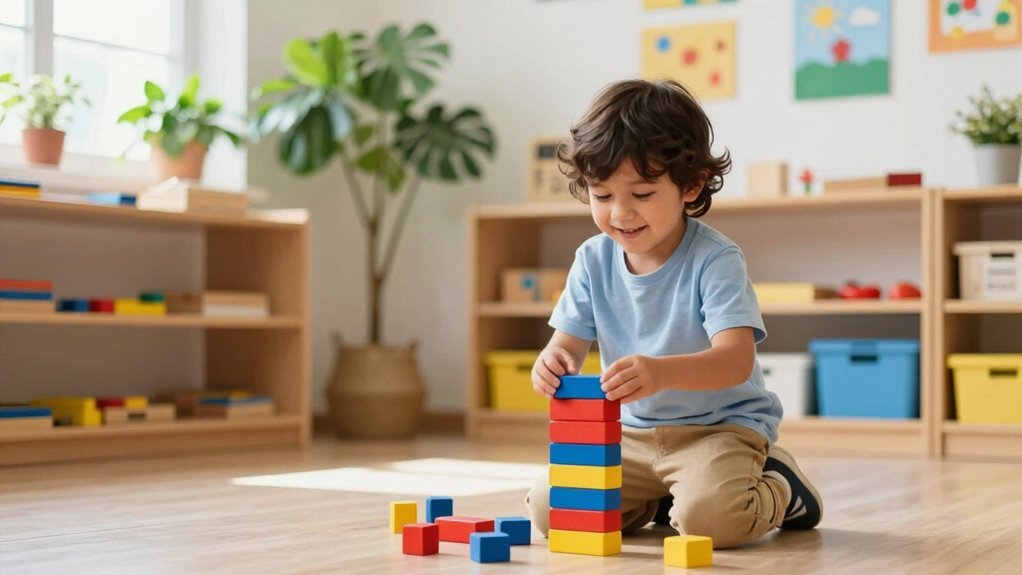
You’re likely relying on grades and rewards to motivate your child, but you’re actually training their brain to stop thinking for itself. Intrinsic motivation—the internal drive fueled by curiosity and genuine interest—sustains effort far longer than external incentives ever will. When you support your child’s autonomy, celebrate their effort, and create space for self-discovery, you’re building lasting confidence and resilience. The research is clear: this approach transforms how your child tackles challenges for life.
What Intrinsic Motivation Actually Is (And Why It Matters More Than Grades)?
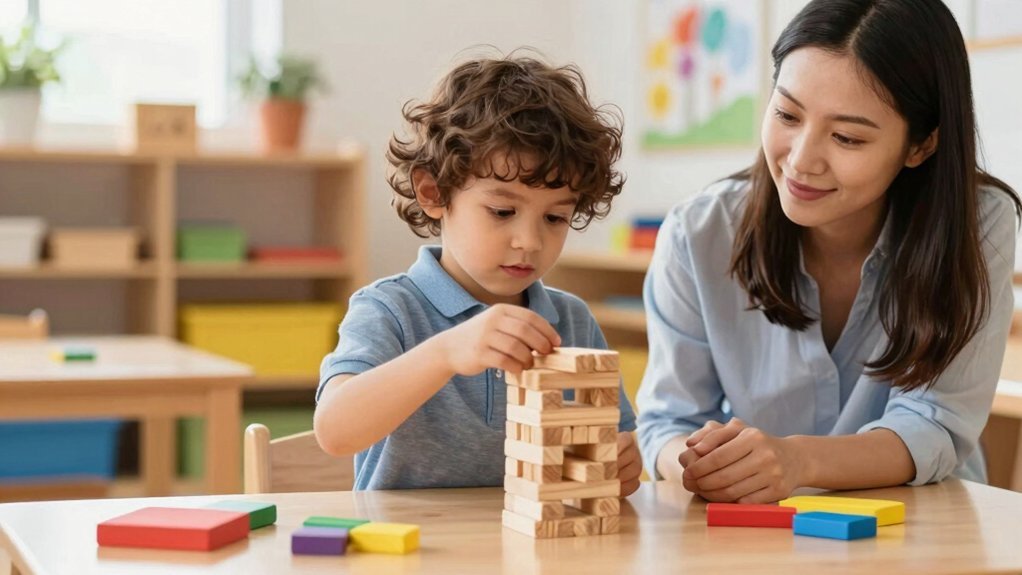
Why do some children plunge into a project with infectious enthusiasm while others need constant prodding? The difference lies in intrinsic motivation—your child’s internal drive to engage in activities for inherent satisfaction, not external rewards. Unlike grades, which represent extrinsic motivation and offer only short-term incentives, intrinsic motivation sustains effort through genuine challenges. When your child pursues learning because they’re curious, capable, and connected to their environment, they develop deeper understanding and real-world skills. Grades diminish the inherent value of learning itself. Intrinsic motivation, rooted in autonomy, competence, and relatedness, fosters lifelong learners who tackle complex tasks with resilience and joy—outcomes no report card can measure. This internal satisfaction drives better long-term academic success, persistence, and the critical thinking skills that matter most as your child grows.
Why Traditional Rewards Backfire: The Case Against Performance-Based Learning
How often have you noticed your child’s enthusiasm evaporate the moment you dangle a reward? Traditional reward systems hijack your child’s intrinsic motivation by reframing learning as a means to an end. When you offer external incentives, you’re inadvertently signaling that the activity itself lacks value. Research demonstrates that this shift in focus creates a contingent mindset where children become dependent on external validation rather than developing genuine interest in learning itself.
| What Happens | Long-term Impact |
|---|---|
| Rewards replace internal drive | Dependency on external validation |
| Focus narrows to incentives | Creativity diminishes |
| Behavior reverses when rewards stop | Loss of self-direction |
| Interest in the task declines | Erosion of genuine curiosity |
Over 100 studies confirm this pattern: the more rewards you use, the more your child loses interest. You’re creating unsustainable behavioral patterns that collapse once incentives disappear, ultimately undermining both motivation and achievement.
How Montessori’s Prepared Environment Fuels Self-Directed Learning?
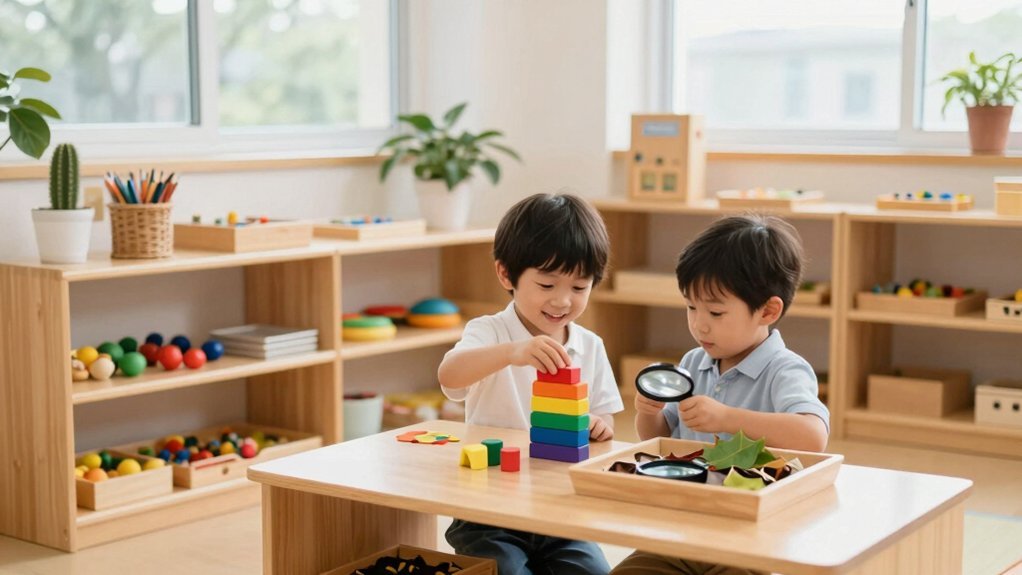
What transforms a classroom into a space where children naturally gravitate toward learning without external rewards? You’ll find the answer in Montessori’s thoughtfully prepared environment. Child-sized furniture and materials on low shelves give you independence—you choose what to work with. Materials arrange themselves from simple to complex, letting you progress at your own pace. The three-hour uninterrupted work periods mean you can sustain focus and dive deep into activities you genuinely care about. Multi-age grouping lets you learn from peers and teach others, reinforcing your understanding. When your environment supports exploration across practical life, sensorial, math, and language areas, you’re intrinsically motivated. Research demonstrates that Montessori classroom quality remains comparable to traditional preschool settings while supporting this natural curiosity-driven approach. You’re not working for stickers or praise—you’re driven by natural curiosity and the satisfaction of mastering skills you’ve chosen.
Autonomy, Effort, and Mastery: The Three Pillars of Intrinsic Drive
You’ll discover that autonomy empowers your child to direct their own learning path, transforming them from passive recipients into active agents of their education. As your child exerts sustained effort through intrinsically motivated activities, they’re simultaneously building the capabilities and confidence that scaffold genuine competence. When mastery emerges from this combination of self-direction and growing capability, your child develops the persistent drive to tackle increasingly complex challenges and unlock their full potential. Research from business and organizational psychology demonstrates that purpose — a sense of meaningful contribution beyond personal achievement — further strengthens intrinsic motivation and helps children understand how their efforts connect to values that matter.
Autonomy Builds Self-Direction
Why does choice matter so much in your child’s development? When you support your child’s autonomy, you’re transforming their values into genuine personal ownership. This shift fosters self-direction that extends far beyond the immediate task.
You’ll notice that opportunities for choice prompt your child to take active ownership of their learning. Acknowledging their feelings validates their perspective and encourages self-directed behavior. As they experience genuine volition, they integrate values more deeply, moving toward identified regulation—where they genuinely value their actions. When these psychological needs are consistently supported, children develop stronger persistence and satisfaction in their learning pursuits.
Research reveals that teacher autonomy support predicts self-direction more powerfully than parental support alone. Yet your role remains crucial. By providing choices and recognizing your child’s emotions, you’re cultivating the internal compass that guides lifelong self-directed learning and growth.
Effort Creates Capability Growth
When your child tackles a challenging task and experiences the satisfaction of pushing through difficulty, something profound happens: effort itself becomes rewarding. You’re witnessing capability growth in real time.
As your child invests effort, performance emerges as a byproduct—not of innate talent alone, but of sustained engagement. When you acknowledge their struggle and resulting achievement, you’re satisfying their competence need, which fuels intrinsic motivation. This opportunity cost assessment helps your child understand that the effort invested in one task reflects the value they place on mastering it compared to available alternatives.
This creates a powerful cycle: effort leads to improved performance, which generates feelings of competence, which strengthens motivation to tackle harder challenges. Your child learns that growth comes through persistence, not avoidance.
Mastery Drives Persistent Achievement
As your child’s capability grows through sustained effort, a deeper pattern emerges: they’re developing mastery—that compelling drive to get better at what matters to them.
Mastery transforms motivation into persistence. When your child experiences genuine progress, they’re not just completing tasks; they’re building confidence that fuels continued achievement. This intrinsic satisfaction becomes self-sustaining. Research shows that deeper learning and longer-lasting understanding emerges when children engage with material they find personally meaningful, rather than pursuing external rewards alone.
- Progress monitoring through evidence-based self-assessment helps your child recognize their own growth, reinforcing the motivation to pursue greater challenges
- Autonomy-supported skill development enables your child to own their learning journey, connecting personal interests directly to advancing capabilities
- Collaborative feedback from you and peers acknowledges progress meaningfully, strengthening their commitment to sustained effort
Your child’s mastery orientation creates a powerful cycle: effort yields capability, capability invites challenge, and challenge demands renewed effort. This perpetual progression becomes their greatest teacher.
Building Autonomy: Why Child-Led Learning Works
How do children develop the independence and decision-making skills that serve them throughout life? When you embrace child-led learning, you’re fostering intrinsic motivation that builds genuine autonomy.
In Montessori environments, larger child-to-teacher ratios intentionally encourage kids to solve problems independently rather than rely on constant adult direction. You’ll notice your child develops stronger executive function—the cognitive skills that drive self-regulation and purposeful decision-making. These cognitive gains persist and strengthen over time, providing lasting advantages beyond the preschool years.
This approach doesn’t just boost academics; it transforms how your child engages with challenges. Research shows Montessori children display reduced physical aggression and enhanced social understanding, outcomes directly tied to their increased autonomy. Studies demonstrate that Montessori students score higher in reading by the end of kindergarten compared to peers in traditional programs.
Self-Correcting Materials and Learning From Mistakes

When you introduce self-correcting materials into your child’s learning environment, you’re embedding error detection directly into the tool itself—so they’ll spot mistakes without your intervention. This design isolates single concepts and lets your child experience natural consequences, whether that’s a tower toppling or a puzzle piece refusing to fit, which prompts them to problem-solve independently. By allowing children to identify and correct their own errors through these materials, you’re cultivating accountability and ownership of the learning process that extends far beyond the immediate activity.
Error Control Through Design
What if your child could identify and correct their own mistakes without waiting for your feedback?
Montessori materials are deliberately designed with built-in error control. When your child works with these tools, they receive immediate feedback that reveals mistakes naturally. This design isolates single concepts, allowing your child to focus on one skill at a time. Self-correcting materials allow independent error identification and correction, which deepens your child’s understanding of the learning process itself.
Here’s how error control through design supports intrinsic motivation:
- Immediate feedback prompts self-correction without adult intervention
- Material-based checks build confidence as your child discovers errors independently
- Repetition opportunities encourage strategy adjustment and deeper understanding
Rather than relying on grades or your approval, your child develops awareness of their own learning process. They become invested in revisiting work because they’ve discovered the error themselves. This approach transforms mistakes into natural learning moments, fostering genuine responsibility and autonomy in your child’s development.
Mastery Through Self-Discovery
Why do children who correct their own mistakes develop deeper mastery than those who rely on adult feedback? You’ll find that when your child discovers errors through material design—a tower collapsing or puzzle pieces refusing to fit—they internalize the learning. They own the mistake.
This self-discovery process builds resilience. Your child repeats activities with renewed focus, experimenting until they locate the precise error point. Without your intervention, they develop confidence in their problem-solving abilities. Studies show that children using pure Montessori materials gain substantially in executive function and self-regulation over time. Self-correcting materials enable children to assess accuracy independently, which naturally encourages repetition and practice without requiring teacher intervention.
You’re not grading performance; the materials provide immediate, non-judgmental feedback. This autonomy transforms trial-and-error from frustration into genuine mastery—a lifelong skill of self-teaching.
The Three-Hour Work Cycle: Why Uninterrupted Focus Sustains Motivation
Have you ever noticed how your child seems restless after just an hour of focused work, only to suddenly settle into deeper concentration moments later?
That restlessness isn’t exhaustion—it’s the false fatigue phenomenon. Your child needs the full three-hour cycle to reach peak intrinsic motivation. Here’s why this matters:
- The concentration arc: The first 90 minutes involve easy tasks, followed by 10-15 minutes of apparent tiredness before your child rebounds with heightened focus
- Deep cognitive work: The final hour unlocks challenging tasks where meaningful learning happens and genuine breakthroughs occur
- Protected growth: Interruptions under two hours prevent these cognitive leaps entirely
This uninterrupted time also fosters positive attitude toward learning, creating a foundation for lifelong curiosity that extends far beyond childhood.
Mixed-Age Classrooms: Boosting Intrinsic Motivation Through Cooperation

When your child finally settles into that third hour of focused work, something remarkable happens—they’re not just concentrating harder, they’re also absorbing lessons from the classroom community around them.
Mixed-age groupings amplify intrinsic motivation by creating natural mentorship dynamics. Older students reinforce their knowledge through teaching, while younger children advance through observational learning. This structure eliminates unhealthy competition, allowing your child to focus on discovery rather than comparison. At MKU, low student-to-teacher ratios ensure that each child receives personalized attention within these mixed-age environments, deepening the mentorship effect.
| Age Group | Role | Motivation Boost | Skill Gained |
|---|---|---|---|
| Younger | Observer/Learner | Confidence through peer modeling | Advanced vocabulary |
| Middle | Bridge Leader | Responsibility and agency | Problem-solving |
| Older | Mentor | Purpose through teaching | Leadership and empathy |
Your child develops genuine curiosity when surrounded by diverse learners tackling varied challenges. They recognize ability variation as normal, not threatening. Cooperation replaces competition, sustaining the intrinsic drive that transforms education into meaningful growth.
Mastery Over Performance: Why Growth Beats Grades
You’ll build your child’s confidence by presenting challenges that stretch their abilities rather than tasks they’ve already mastered.
When you celebrate the effort they’ve invested—the strategies they tried, the persistence they showed, the mistakes they learned from—you’re reinforcing that growth comes through engagement, not just achievement. Research shows that children who develop mastery-oriented goals demonstrate greater resilience when facing setbacks and are more likely to persist through challenges rather than avoiding them altogether.
This approach shifts focus from external validation like grades to the intrinsic satisfaction of becoming more capable.
Building Confidence Through Challenge
What if the path to genuine confidence isn’t getting the highest grade, but mastering the skill itself?
When you embrace mastery-oriented learning, you’re building something far stronger than fleeting confidence tied to test scores. Your child develops resilience through meaningful challenge. Here’s what happens:
- Higher thresholds strengthen future learning – Students achieving 0.98 probability of mastery demonstrate markedly better performance on subsequent lessons, creating accelerated growth
- Reduced performance anxiety – Mastery focus eliminates the task-abandonment crisis, keeping your child engaged when difficulties arise. Research using knowledge tracing models shows that when children progress only after demonstrating genuine competence rather than partial understanding, they enter new lessons with stronger foundational knowledge and greater momentum.
- Deeper emotional resilience – Perseverance and adaptability emerge naturally, supporting both academic success and subjective well-being
This approach transforms challenge from something threatening into opportunity. Your child learns that struggle signals growth, not failure, building unshakeable confidence grounded in genuine competence.
Celebrating Effort Over Outcomes
How does praising effort instead of achievement fundamentally reshape your child’s relationship with learning? When you celebrate persistence over perfect grades, you’re cultivating mastery orientation—a mindset that fuels lifelong learning.
Montessori children who receive effort-based feedback show significantly higher enjoyment of scholastic tasks and greater willingness to tackle challenges. They develop effortful control, the self-regulation capacity linking directly to social adjustment and educational success. Research analyzing 204 effect sizes from Montessori studies demonstrates that this approach yields measurably better outcomes in academic performance compared to traditional educational methods.
| What You Notice | Traditional Praise | Montessori Approach |
|---|---|---|
| Focus | Final grade or score | Problem-solving process |
| Child’s Response | Performance anxiety | Intrinsic motivation |
| Long-term Impact | Fear of failure | Resilience and growth |
| Brain Development | Fixed mindset | Neural pathway strengthening |
How Montessori’s Freedom Model Builds Executive Function

Consider what happens when children spend three uninterrupted hours selecting their own work, managing their time, and completing multi-step projects within a structured environment—they’re essentially building the neural pathways that comprise executive function.
When you allow your child this freedom within boundaries, you’re cultivating measurable cognitive skills:
- Working memory and response inhibition develop as children plan weeks in work journals, track progress, and manage impulse control with limited materials
- Metacognition and flexibility strengthen through choosing topics, determining project scope, and self-assessing growth areas
- Sustained attention and persistence grow during extended focus periods without mandated transitions. This daily practice of planning reinforces neural connections that support long-term academic and personal success.
Your child doesn’t just complete tasks—they recognize interests, problem-solve obstacles, and internalize responsibility. Portfolio assessments reveal this progress over time, reinforcing intrinsic motivation and mastery-driven learning that transforms how they approach challenges independently.
How Self-Direction Strengthens Real Emotional Intelligence
When your child selects their own work and manages their own pace, they’re doing far more than completing tasks—they’re developing genuine emotional intelligence. Self-directed learning naturally prompts reflection on emotional states—how they felt completing a puzzle or handling a spill. Through independent choices, they recognize their strengths, limitations, and emotional responses, building authentic self-awareness.
This autonomy fosters superior impulse control and emotional regulation. Your child learns patience and resilience by managing challenges independently, transforming frustration into problem-solving opportunities. They develop stronger empathy through peer collaborations and respectful interactions, while accomplishing self-chosen tasks builds genuine confidence and self-efficacy. Studies measuring emotional intelligence with validated instruments like the Bar-On Emotional Quotient Inventory have documented these developmental gains across multiple emotional competencies.
Research shows Montessori students score significantly higher in emotional intelligence than traditional peers. You’re not just allowing freedom—you’re cultivating the emotional resilience and self-understanding your child needs for lifelong success.
What Montessori Research Shows About Long-Term Motivation and Success
Does your child’s education today predict their wellbeing decades from now? Research suggests it does. When you choose Montessori, you’re investing in more than academic skills—you’re cultivating lifelong motivation and success.
Large-scale studies reveal compelling evidence:
- Students who attend Montessori for at least two years report significantly higher adult wellbeing across all measures, including engagement, social trust, and self-confidence.
- Intrinsic motivation fostered through three-hour uninterrupted work cycles and student choice sustains a lifelong love of learning independent of external rewards.
- Academic advantages persist long-term, unlike typical preschool programs where gains fade—Montessori students demonstrate sustained higher achievement and self-regulation.
Dr. Angeline Stoll Lillard’s research confirms these benefits extend into adulthood. Your child develops genuine confidence through accomplishment, driving deeper learning throughout life. This self-directed exploration becomes the foundation for sustained curiosity and resilience that carries children forward into their careers and relationships.
Frequently Asked Questions
How Can Parents Foster Intrinsic Motivation at Home Outside Montessori School Settings?
You’ll foster intrinsic motivation by preparing your home environment with accessible materials, offering genuine choices, allowing uninterrupted work time, and praising effort over results. You’ll guide rather than direct, letting your child discover mastery independently.
At What Age Should Children Begin Experiencing Autonomy and Self-Directed Learning Opportunities?
You can begin fostering autonomy from birth through Nido environments emphasizing trust and movement freedom. Peak self-directed desire emerges at eighteen months, continuing through ages three to six in Children’s House classrooms.
How Do You Handle Children Who Resist Self-Correction or Refuse Challenging Activities?
You’ll observe their resistance without judgment, then scaffold activities to build confidence gradually. You’re positioning challenges slightly above their current level while trusting they’ll develop persistence through meaningful engagement.
What Practical Strategies Help Parents Avoid Undermining Intrinsic Motivation With Praise or Rewards?
You’ll strengthen intrinsic motivation by acknowledging effort (“you persisted through that puzzle”), observing rather than judging, offering choices, and trusting your child’s internal satisfaction. You’re building capability, not dependence.
How Does Intrinsic Motivation in Montessori Translate to Success in Traditional Academic Settings?
You’ll find your child’s intrinsic motivation transfers seamlessly because they’ve developed self-directed habits, mastery orientation, and resilience. They’ll tackle traditional performance-based academics with sustained interest and confidence that transcends external pressures.
In Summary
You’ve discovered that intrinsic motivation transforms how your child learns and grows. By embracing Montessori’s approach, you’re shifting from external rewards to genuine self-directed learning. You’re building autonomy, fostering real mastery, and strengthening your child’s emotional intelligence. When you trust your child’s natural drive to learn and create a prepared environment that supports exploration, you’re not just improving grades—you’re raising a motivated, capable human who’ll thrive far beyond the classroom.




Leave a Reply