
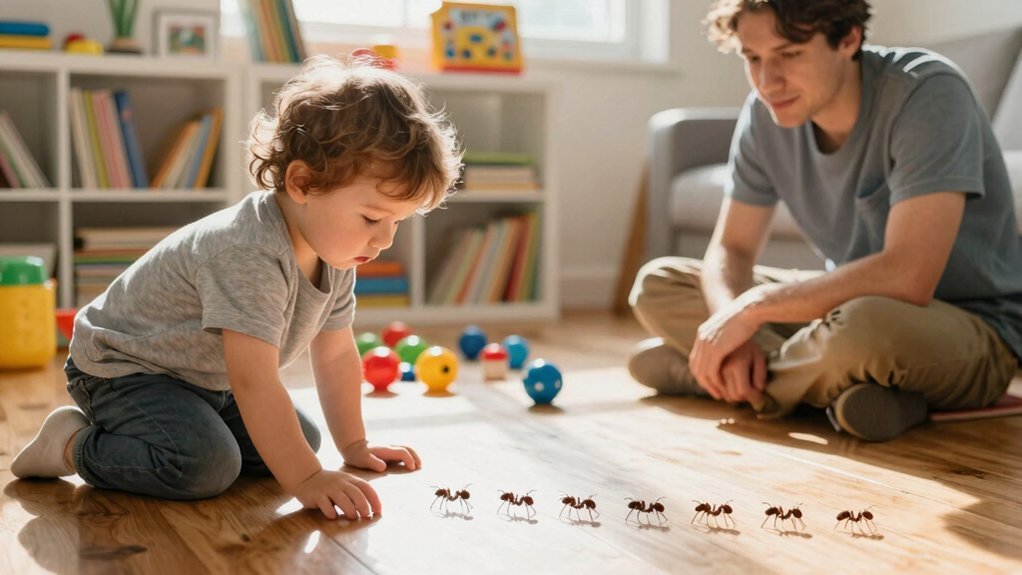
Watch your toddler’s eyes light up and jump in with simple, open‑ended prompts like “What do you notice?” Offer a safe tool—a magnifying glass, a bowl of water, a chunky spoon—so they can explore hands‑on. Model wonder with “I wonder why that happened too,” and give them a couple of choices to keep the play child‑led. Keep the space safe, use toddler‑sized materials, and weave “I wonder” moments into daily routines; keep you’ll discover even more ways to nurture their natural curiosity.
Observe and Respond to Toddler Curiosity in Real Time

Ever notice how a toddler’s eyes light up the moment something catches their attention? You pause, let your observation guide you, and ask a simple, responsive questioning like “What do you notice?” This turns a fleeting glimpse of a bug or a splash of water into a shared discovery. Offer a safe tool—maybe a magnifying glass or a bowl of water—so the child can explore further. Keep your tone enthusiastic, modeling curiosity by saying, “I wonder why that happened too—let’s find out together.” Extend the moment with one or two choices, then give the toddler space to experiment, reflect, and repeat. Your attentive, responsive approach validates their questions and fuels deeper learning. Supporting this process with natural, baby-safe materials can enhance their sensory engagement and developmental growth.
Turn Simple Play Into Toddler‑Curiosity Exploration
How can a simple toy become a launchpad for endless questions? You can turn a block set, a squeaky ball, or a wooden spoon into a catalyst for curiosity-driven play. Offer two or three choices, watch what grabs his attention, then ask open-ended questions like “What do you notice?” or “What do you think is happening?” Model your own wonder—“I wonder why this pops when I squeeze it”—and let his child‑led exploration unfold. Rotate items weekly so the environment stays fresh yet low‑pressure. For families interested in healthy habits, incorporating a child-safe cold press juicer can introduce toddlers to the joy of fresh juice and safe food exploration.
| Toy | Prompt | Follow‑up |
|---|---|---|
| Stacking blocks | “What shape does this make?” | “How could you build it taller?” |
| Squeaky ball | “What sound does it make?” | “What might happen if you roll it?” |
| Wooden spoon | “What does it feel like?” | “What else could you stir with it?” |
Choose Toddler‑Friendly Materials That Invite Independent Investigation

Which materials spark a toddler’s natural drive to explore on their own? Offer toddler‑sized tools—plastic magnifying glasses, bug nets, chunky spray bottles—that invite hands‑on play and independent investigation. Choose open‑ended materials like wooden blocks, dress‑up clothes, and natural objects such as sticks, shells, and leaves. These items let your child experiment, stack, sort, and imagine without a preset outcome, fueling toddler exploration.
Rotate the selection weekly to keep novelty fresh and avoid overwhelm. Prompt simple, tactile questions—“I wonder what happens if we…”—to spark short, age‑appropriate investigations. By providing safe, varied options and encouraging free manipulation, you nurture curiosity while supporting your child’s confidence in discovering the world independently. Consider using low plant stands to create accessible child-level gardening setups that encourage exploration and interaction with nature.
Keep Kids Safe While They Explore
What if you could let your toddler explore freely while keeping danger at bay? You’ll keep curiosity alive by creating a safe exploration zone: pad corners, cover outlets, lock cabinets, and surround them with sturdy, age‑appropriate toys. Supervise constantly, removing small objects that could cause choking and swapping sharp items for non‑toxic, sealed alternatives. Teach simple safety rules—stop when a toy’s out of reach, avoid hot or heavy objects—and gently redirect when needed. Choose activities with built‑in safeguards, like sink‑side water play and braced climbing furniture. As your child’s interests shift from crawling to stacking to outdoor adventures, reassess risks and update your safety measures. This balanced approach nurtures exploration while protecting your little one. Step stools with built-in safety rails create a secure way for toddlers to safely reach new heights in their exploration.
Use “I Wonder” Prompts to Extend Toddler Learning Without Pressure

Creating a safe exploration zone sets the stage for the next step: turning that freedom into learning with “I wonder” prompts. You can sprinkle I wonder prompts throughout play, like “I wonder why the leaves change color,” to invite your toddler to notice details and verbalize thoughts. Pair each prompt with a hands‑on activity—water in a jar, light and shadow, textured blocks—so curiosity extension becomes concrete observation. Keep the questions open‑ended and non‑judgmental; ask “What do you notice about this toy?” and respond quickly with simple, supportive language that validates their ideas. Rotate materials, indoor and outdoor settings, and textures to sustain interest, revealing fresh questions without forcing memorization and making toddler learning feel natural and pressure‑free. Using tools like child-safe scissors with ergonomic handles and safety edges can further encourage hands-on exploration while ensuring safety.
Build a Daily Routine That Keeps Curiosity Alive
Ever wonder how a simple rhythm can turn everyday moments into mini‑adventures for your toddler? A loose daily routine lets you weave “I wonder…” questions into meals, walks, and chores, keeping curiosity alive without pressure. Keep transitions smooth, rotate safe materials weekly, and balance free play with short, responsive interactions. Bedtime becomes a low‑key space for reflection and gentle prompts, reinforcing the day’s discoveries.
- Use short, focused activities followed by predictable transitions.
- Pose open‑ended “I wonder…” questions during ordinary tasks.
- Swap blocks, natural objects, and art supplies each week.
- Mix free play with brief moments where you model curiosity.
- End the day with a calm reading ritual that revisits earlier questions.
Spotting Curiosity in Everyday Moments
A steady routine gives you the chance to notice the tiny sparks that signal curiosity—like the way your toddler’s eyes linger on a bouncing ball or a shifting shadow. You can turn mealtime, bath time, or stroller walks into toddler learning moments by asking, “What do you notice?” and pausing while they explore. Label what they see—“The ball rolled under the chair; it’s behind you”—to link sensation with language. Rotating simple toys, cups, or natural objects keeps the environment fresh, encouraging deeper engagement without rushing the activity. Using low shelves designed for Montessori play supports children’s independence as they explore and select activities on their own.
| Situation | Cue to Spot Curiosity |
|---|---|
| Mealtime | Sudden stare at steam |
| Bath time | Reaching for splashing water |
| Walk | Pointing at moving shadows |
| Play area | Dropping and retrieving blocks |
Frequently Asked Questions
What Is the 3 3 3 Rule for Toddlers?
You give your toddler three safe choices, repeat them three times a day, and let each activity last about three minutes, keeping sessions short, engaging, and low‑pressure.
What Is the 777 Rule for Kids?
You follow the 777 Rule by giving your kid seven minutes of focused, child‑led activity, seven times daily, across varied domains, letting curiosity drive learning while you gently support and scaffold each moment.
What Is the 10-10-10 Rule for Kids?
You apply the 10‑10‑10 rule by asking how a choice will affect your toddler in the next ten minutes, ten months, and ten years, then you balance immediate needs with long‑term growth.
Are Toddlers Naturally Curious?
Yes, you’ll notice toddlers are naturally curious; they constantly explore, ask “why,” and test objects. Their brains crave sensory input, so they’ll touch, stack, and repeat actions without prompting.