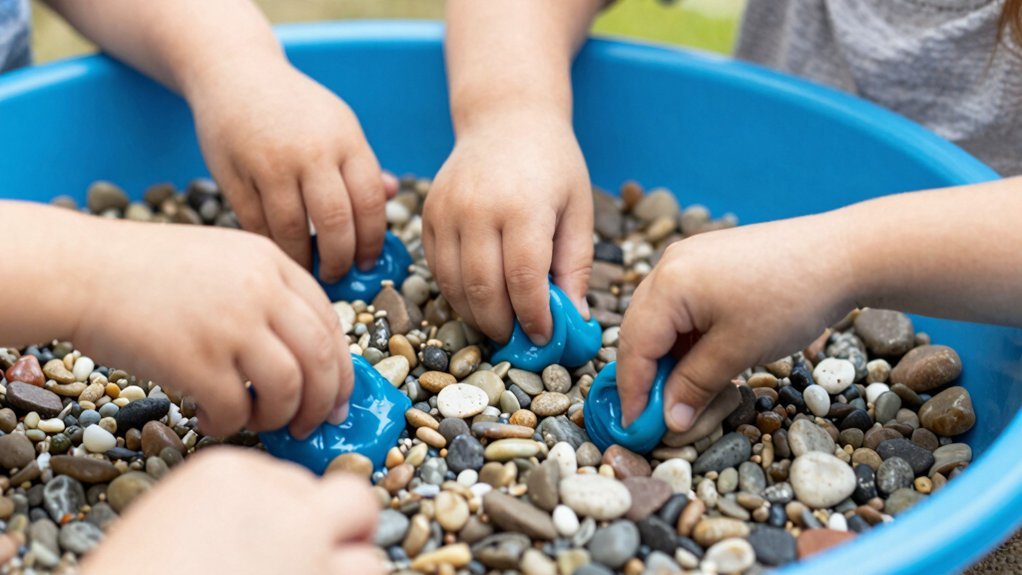
Start by scattering varied textures—cotton, sandpaper, metal, feathers—on everyday items so the child can touch them while you label each feel as “soft,” “rough,” or “cold.” Use hand‑under‑hand guidance, gently moving their palm over the surface and narrating the sensations. Pair this with routine tasks like pouring water or sorting laundry, so the tactile experience links to language and motor actions. As you keep the cues consistent, the child builds strong multimodal memories. Keep exploring, and you’ll discover deeper strategies.
How to Turn Everyday Textures Into Tactile Learning Opportunities

Ever wonder how a simple kitchen towel can become a learning tool? You can turn everyday textures into tactile learning by sprinkling varied surfaces—cotton, feathers, sandpaper, metal—throughout daily objects. When a child grabs a rough towel or a smooth metal spoon, you’re inviting touch that sharpens sensory development. Offer sizable items with different weights so the child feels the contrast while you narrate “rough,” “cold,” or “warm.” Blend texture exploration into routine tasks like pouring water, washing dishes, or sorting laundry; the functional context reinforces language. Add mystery bags or texture swatches to keep hands‑on exploration fresh and challenging, prompting the child to discriminate and describe each feel. This purposeful integration transforms ordinary moments into powerful, hands‑on learning experiences. Using tools like the Kitchen Step Stool for Kids with Safety Rail allows children to safely engage with kitchen activities, enhancing tactile learning through functional independence.
Create a Hand‑Under‑Hand Guideline for Tactile Learning
You’ll start by establishing trusting hand contact, letting the child feel your steady, gentle pressure under their palm.
Then you model guided exploration, moving objects slowly while keeping your hand supportive, so they can focus on texture and shape without being over‑gripped.
Finally, you gradually release the hand‑under‑hand grip as they gain confidence, encouraging independent tactile discovery.
This approach supports developing fine motor skills essential for mastering Montessori binomial and trinomial cubes.
Establish Trusting Hand Contact
A gentle hand‑under‑hand approach lets you introduce new objects without taking over the child’s movements, building trust through light, continuous contact. You keep your palm aligned with the child’s guiding hand, offering tactile cues while narrating each deliberate, slow motion. Start with familiar, non‑threatening items, then gradually increase complexity, always preserving the child’s primary hand contact. Observe grasp attempts, withdrawals, and steady engagement to adjust pressure, pacing, and duration, ensuring safety and confidence. Pair this hand‑under‑hand guidance with real‑life tasks—opening a door, handling a spoon—to link exploration to functional independence.
| Phase | Goal | Cue |
|---|---|---|
| Warm‑up | Build trust | Light palm contact |
| Exploration | Encourage tactile discovery | Slow, narrated motions |
| Skill‑link | Connect to daily tasks | Guided functional objects |
Model Gentle Guided Exploration
How can you gently steer a child’s tactile discovery without taking over their movements? You place your hands under the learner’s hands, creating a hand‑under‑hand bridge that guides but doesn’t dominate. Begin with real objects of varied textures, offering them under the child’s palm instead of dropping them in. Your light, progressive touch provides proprioceptive support while the child initiates motion, fostering tactile exploration and sensory development. As confidence builds, fade the pressure and let the child lift and rotate objects independently. Introduce harder, curved items within the same safe space, observing hand activity and noting responses. Document each session, adjusting guidance to avoid over‑reliance and to deepen guided exploration. Incorporating eco-friendly wood materials can enhance sensory engagement while maintaining safe, durable play experiences.
Pick Real Objects for Tactile Learning in Math, Language & Science

Which objects will truly engage a child’s sense of touch while reinforcing math, language, and science concepts? You’ll see that tactile learning thrives when you choose real objects that spark sensory experiences. A wooden block set lets kids compare length, while a set of coins supports counting and vocabulary. Leaves and rocks invite hands‑on learning about texture, weight, and hardness, grounding early childhood education in concrete exploration. Pair each item with open‑ended questions—“How does this feel?”—to nurture evidence‑based reasoning. Incorporating practical life skills activities such as using zippers and buckles on busy boards can further enhance tactile learning by developing fine motor coordination and independence.
| Math | Language | Science |
|---|---|---|
| Scale & weight | Coin sorting | Leaf texture |
| Shape blocks | Button size | Rock hardness |
| Measuring cups | Fabric swatches | Water temperature |
| Pattern tiles | Story props | Magnet pull |
How Movement & Language Boost Tactile Learning Memory
Choosing real objects sparks curiosity, but adding purposeful movement and descriptive language turns that curiosity into lasting memory. When you guide a hand to grasp, roll, or slide a piece, proprioception tells you where your fingers are, letting you explore without looking. That active exploration feeds the dorsal column‑medial lemniscal system, which records texture, pressure, and shape. As you name the roughness, describe the temperature, or label the shape, language reinforcement creates a multimodal memory link, binding tactile input to linguistic cues. The overlap with the anterior/anterolateral system integrates pain and temperature, enriching the sensory story. By pairing movement with vivid description, you cement concepts, boost retention, and turn fleeting touch into durable knowledge. Incorporating wooden stamp games into tactile learning offers a hands-on, visual way to grasp math operations through manipulation and stamping, further strengthening the sensory and cognitive connections.
Track Tactile Learning Progress With Simple Observation Tools

When you watch a child’s hands at work, simple observable behaviors reveal how tactile learning is progressing. You can note finger isolation, grip strength, and how the child handles textured exploration. Use informal checklists—like “X textures per session” and “Y object categories”—alongside formal scales (Callier‑Azusa, INSITE) for hand use tracking. Record milestones such as reliable haptic discrimination and identification of objects without visual cues. Under‑hand demonstrations let you see whether guidance supports independent exploration. Selecting toys with ergonomic shapes and appropriate sizes ensures better grip and engagement during tactile learning.
| Observation | Example | What It Shows |
|---|---|---|
| Finger isolation | Picking a single bead | Precision in textured exploration |
| Grip strength | Holding tongs | Development of hand use |
| Texture variety | Rough, smooth, wet | Sensory development |
| Independent handling | No adult assistance | Tactile learning progress |
| Documentation method | Checklist + scale | Reliable hand use tracking |
Take Tactile Learning Activities Out of the House and Into the Community
Observing a child’s hand work at home gives you a solid baseline, so you can now expand that practice into community settings. Take learning through touch to farmers’ markets, libraries, and parks, letting them feel fruit, fabric samples, and leaves while you guide hand‑under‑hand. Use sand, soil, tree bark, and water play to broaden sensory development during community exploration. Bring portable tactile tools—texture boards, mystery bags, labeled recall boxes—so each outing offers consistent tactile activities.
When you introduce coins, small tools, or fabric swatches in public spaces, model the objects under their hands and echo descriptive language about texture, shape, and temperature. These guided discoveries reinforce early childhood learning, turning everyday environments into rich haptic classrooms. Incorporating Montessori climbing structures during outdoor tactile activities can further enhance gross motor skills and sensory exploration in a natural setting.
Frequently Asked Questions
What Is the 10-10-10 Rule for Kids?
You use the 10‑10‑10 rule by pausing ten seconds, then reflecting ten minutes later, and finally reviewing consequences ten hours after an event, helping you teach kids self‑regulation and delayed‑impulse thinking.
What Are the 7 Types of Touch?
You experience seven touch types: pressure, vibration, stretch, temperature, pain, texture, and proprioception. Each engages specific receptors, letting you discriminate objects, feel heat or cold, detect sharpness, and sense limb position without sight.
How Can Children Learn Through Touch?
You let kids explore objects with their hands, feeling texture, weight, and temperature; guide them with hand‑under‑hand support, encourage grasping and moving, and let tactile feedback shape concepts and language.
How Shall I Stimulate Learning Through Tactile?
You should give kids varied real objects, let them explore textures, weights, and temperatures, guide their hands gently, mix active and passive touches, and observe progress to adjust activities accordingly.