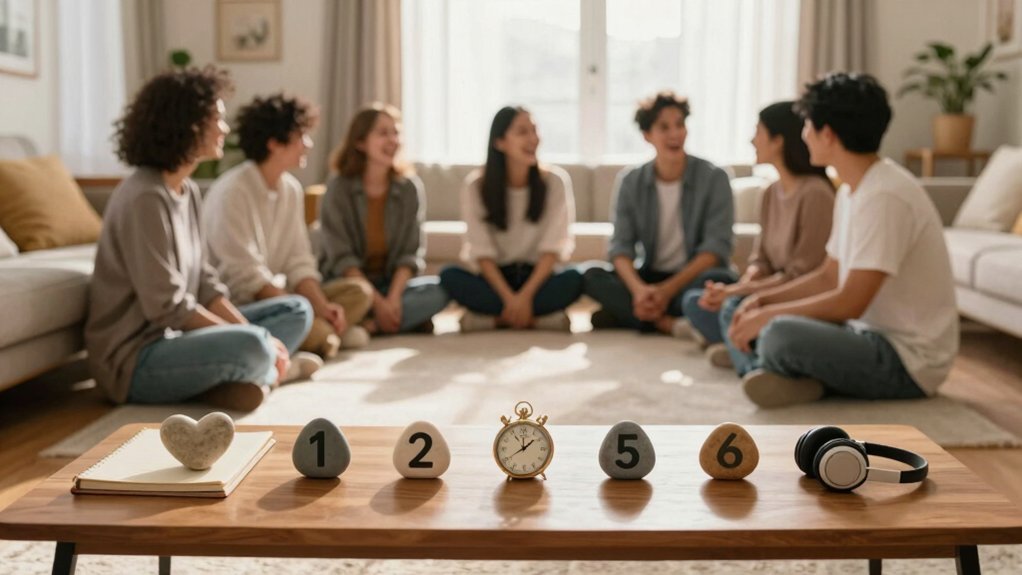

You’ll find that teaching kids peaceful dispute‑resolution skills turns everyday arguments into growth opportunities. They learn to recognize and label emotions, pause before reacting, and listen actively, which builds self‑regulation and emotional intelligence. Using tools like the Stoplight Method and role‑play, they practice calm‑down strategies and collaborative problem‑solving, fostering empathy and win‑win thinking. These habits improve school performance, friendships, and future workplace success, and the next sections will show exactly how to nurture them.
How to Teach Children Peaceful Dispute‑Resolution Skills

How can you turn everyday disagreements into learning moments? Start by helping kids recognizing emotions, then guide them to label feelings with I‑statements. Prompt them to practice active listening: pause, reflect, and confirm what the other child said. Use role‑playing scenarios to rehearse calm‑down strategies like deep breaths or the stoplight method, then shift to collaborative problem‑solving. Encourage them to brainstorm win‑win solutions, ensuring each voice feels heard and respected. Keep activities short and concrete—board games, dramatic play, and simple mediation drills reinforce these steps. Offer gentle feedback and celebrate successes, so children internalize peaceful dispute‑resolution as a natural, repeatable habit. Additionally, choosing kitchen tools with child-safe materials reinforces a safe environment that supports positive learning experiences.
Why Conflict‑Resolution Skills Boost Self‑Regulation and Emotional Intelligence
When kids learn to pause, breathe, and use the stoplight method before tackling a disagreement, they’re actually training their self‑regulation muscles. They discover that calming down first creates mental space for thoughtful choices, turning impulse into reflection. By labeling feelings and spotting the emotions in others, they sharpen emotional intelligence, turning vague sensations into clear signals.
Active listening lets them hear the full story, while “I” statements keep blame out of the conversation. Empathy practices—imagining the other side’s perspective—soften reactions and build trust. Repeated role‑play and guided mediation reinforce these habits, so children handle conflict resolution independently, maintaining composure and understanding long after the dispute ends. Using Montessori-friendly tools such as the Comfy Cubs Kids Step Stool Montessori Tower can also support independence and confidence, important foundations for peaceful interactions.
Using the Stoplight Method to Calm Strong Emotions Before Problem‑Solving

Ever feel a surge of anger or frustration that clouds your thoughts? The Stoplight method lets you pause, label, and shift your mood before diving into problem‑solving. First, you spot the red zone—big emotions that need a cool‑off. Then you move to yellow, using deep breaths, a splash of water, or a quick pet cuddle to calm emotions. Finally, green signals you’re ready for conflict resolution, where active listening and “I” statements guide the conversation.
Pause, label, and shift your mood with the Stoplight method before tackling conflict.
- Red: “I feel furious” – write it on a feelings chart.
- Yellow: Take three slow breaths, splash water on your hands.
- Green: Sit down, listen, and brainstorm solutions together.
Five Conflict‑Resolution Strategies Every Child Should Practice
You’ll notice that avoidance can buy you time, but it shouldn’t become a habit when the issue matters.
When you practice collaborative problem solving, you and your peer share ideas, listen actively, and work toward a win‑win solution.
And by embracing compromise and flexibility, you learn to adjust your expectations and find middle ground that respects both sides.
In addition, teaching children with tools that support collaborative learning helps develop empathy and effective communication skills.
Avoidance Strategies
So does stepping back for a moment help you keep a conflict from exploding? When you feel tension rising, avoidance isn’t ignoring the problem—it’s a purposeful pause. You give yourself space to breathe, apply calming techniques, and let emotions cool down before you re‑engage. This temporary retreat protects you from impulsive reactions and improves problem‑solving timing later. By choosing to step away, you signal that you value a constructive outcome over a heated argument.
- Walk to a quiet spot, count to ten, and notice your breath.
- Write a quick note about what’s bothering you, then set it aside.
- Ask a trusted adult for a brief break before returning to the discussion.
Collaborative Problem Solving
A collaborative problem‑solving approach turns a disagreement into a joint project, inviting each child to listen, share ideas, and weigh options together. You guide them to frame the conflict as a shared problem, then ask them to list possible solutions. Encourage active listening, so each voice feels heard, and model clear communication skills. As they brainstorm, stress fairness and feasibility, steering the discussion toward a win‑win outcome. Once they pick an option, set expectations and agree on how to adjust if needed. This process builds confidence in conflict resolution, reduces defensiveness, and nurtures mutual respect. By practicing these steps, children learn to turn disputes into cooperative learning moments. Incorporating educational tools like the Montessori Constructive Blue Triangles can further develop spatial reasoning and collaborative skills essential for peaceful dispute resolution.
Compromise and Flexibility
When the collaborative brainstorming phase ends, the next step is to teach children how to bend without breaking—by compromising and staying flexible. You’ll guide them to spot where each side’s needs intersect, then use active listening to confirm understanding before proposing a middle ground. This practice turns a clash into a joint problem‑solving adventure, reinforcing collaboration and emotional regulation. Children learn that flexibility isn’t surrender; it’s a strategic choice that keeps relationships strong and disputes short‑lived.
- Offer two acceptable options and let the child pick the one that feels best.
- Role‑play “if‑then” scenarios to illustrate how small adjustments create win‑win outcomes.
- Use a “trade‑off” chart to visualize each party’s give‑and‑take, highlighting shared goals.
Using educational tools like Montessori Life Cycle Kits can further enhance children’s understanding of stages and transitions, helping them apply flexibility and compromise in real-life situations.
Guided Brainstorming for Win‑Win Solutions
Guided brainstorming lets kids pool ideas together, turning a clash into a collaborative search for win‑win solutions. When you facilitate guided brainstorming, you give children a structure to voice feelings, wants, and hopes before they judge options. This open sharing builds trust and models active listening, turning conflict resolution into a partnership rather than a power struggle.
You’ll notice them weighing fairness and feasibility, then agreeing on a plan that satisfies both sides. The process reinforces I‑statements and respectful dialogue, so children learn to articulate needs without blame. Over time, this habit of collaboration reduces dependence on adults, empowering kids to resolve disputes independently and confidently. Integrating activities that promote fine motor skills and spatial relationship exploration can further enhance children’s cognitive development alongside peaceful dispute resolution.
Practical Activities: Games, Role‑Play, and Arts to Build Communication and Empathy

You’ll find that creative conflict‑resolution games turn disagreements into playful challenges, letting kids practice fair decision‑making in seconds.
Role‑play scenarios let them step into each other’s shoes, using “I” statements and active listening to defuse tension on the spot.
Art‑based storytelling then gives them a calm space to express feelings and visualize win‑win outcomes.
Incorporating multi-activity toys can further enhance emotional development by promoting cooperative play and communication.
Creative Conflict‑Resolution Games
Explore a board game, a role‑play scenario, or a quick art project, and you’ll see kids instantly shift from arguing to collaborating. Creative conflict‑resolution games turn abstract rules into tangible practice, letting children experiment with emotional regulation while sharpening communication skills. When they roll dice, negotiate turns, or draw feelings, they learn to listen, pause, and respond thoughtfully. The playful setting lowers stakes, so mistakes become learning moments rather than setbacks. You’ll notice steadier voices, calmer faces, and a stronger sense of teamwork as they internalize conflict‑resolution strategies that stick beyond the classroom.
- A cooperative board game where players must solve puzzles together, reinforcing turn‑taking and shared goals.
- A short role‑playing skit that lets each child act out a disagreement and then rehearse a peaceful solution.
- An art‑based activity where kids illustrate their feelings, then exchange drawings to practice empathy and emotional regulation.
Role‑Play Scenarios for Empathy
Ever wondered how a simple role‑play can turn a heated argument into a lesson in empathy? You can set up a short script where two kids act out a playground dispute, then pause to label feelings and needs. By swapping characters, they practice perspective‑taking, using “I” statements and active listening. The game‑like structure keeps communication fun while guiding them toward conflict resolution strategies. After each scene, ask them to reflect: What did the other side feel? How could they respond without blaming? This debrief reinforces empathy and shows how different communication styles affect outcomes. Repeating these role‑play cycles builds a habit of collaborative problem‑solving, ready to use in everyday friendships and classroom interactions.
Art‑Based Storytelling Activities
How can a simple sketch turn a playground quarrel into a collaborative story? You’ll see that art‑based storytelling transforms tension into shared narrative, letting kids label emotions, practice “I” statements, and negotiate solutions while drawing, acting, or crafting.
By embedding conflict resolution into creative play, you boost communication, empathy, and perspective‑taking. The process feels safe because imagination cushions real stakes, and children rehearse constructive responses before they ever need them in a real fight.
- A “Story‑Swap” game where each child draws a scene, then swaps sketches and adds dialogue that reflects the other’s feelings.
- Role‑play puppetry, where kids animate a conflict, label the emotions each character feels, and model calm negotiation.
- Collaborative mural building, where the group paints a single picture depicting a resolved dispute, discussing each brushstroke’s meaning.
Applying the Stoplight Method in Everyday Situations
When a disagreement erupts, you can guide kids through the Stoplight method: red signals big emotions, yellow prompts a calming pause, and green indicates they’re ready to solve the problem. You’ll notice that emotion regulation becomes a natural step before any conflict resolution. In everyday situations—like a playground squabble or a shared‑toy dispute—use calming strategies such as deep breaths, a quick water splash, or a pet cuddle to shift from red to yellow. Once calm, green signals they can listen, share perspectives, and negotiate a win‑win outcome.
| Color | Cue | Action |
|---|---|---|
| Red | Intense feeling | Name the emotion |
| Yellow | Need to pause | Deep breath, splash water |
| Green | Ready to talk | Active listening, suggest solution |
| Red | Overwhelm | Offer a quiet space |
| Yellow | Frustration | Count to ten, stretch |
Why These Skills Pay Off for Life and School
Why do these skills matter beyond the playground? You’ll notice that conflict resolution becomes a habit, not a crisis. By practicing open communication and empathy, you develop self‑regulation that carries into every classroom discussion and future workplace meeting. The habit of problem‑solving together replaces blame, so you navigate group projects and social circles with confidence.
Conflict resolution becomes a habit, fostering open communication, empathy, and self‑regulation for lifelong collaboration.
- You articulate feelings with I‑statements, turning heated moments into constructive dialogue.
- You listen actively, catching cues that build empathy and prevent misunderstandings.
- You collaborate on solutions, expanding options and speeding up resolutions.
These patterns reinforce independence, strengthen long‑term social development, and prepare you for peer and adult relationships throughout life and school.
Frequently Asked Questions
Why Is Conflict Resolution Important for Children?
You need conflict resolution because it teaches you to manage emotions, communicate clearly, and solve problems without aggression, building confidence, empathy, and healthier relationships that last into adulthood.
What Are the 5 C’s of Conflict Resolution?
You’ll use the five C’s: communication, collaboration, compromise, competition, and compassion. Each guides you to listen, share ideas, find middle ground, assert needs, and respect others while solving disputes.
Why Is It Important to Resolve Disputes Peacefully?
You’ll keep relationships healthy, avoid escalation, and teach yourself calm communication, so conflicts become learning moments instead of fights. This builds trust, reduces stress, and equips you with lifelong problem‑solving skills.
What Are the 3 C’s of Conflict Resolution?
You’ll find the three C’s are calm, communication, and collaboration. Calm steadies emotions, communication uses I‑statements and active listening, and collaboration frames the dispute as a shared problem to solve together.