You’ll create an effective Montessori environment by scaling furniture and fixtures to child height, enabling autonomous access and exploration. Next, organize your materials sequentially by developmental stage, from practical life skills to advanced academics, so children naturally gravitate toward age-appropriate activities. Finally, establish distinct learning zones with movable furniture and personal floor spaces that encourage focused work. Understanding how these elements work together reveals the deeper principles that transform your classroom into a self-directed learning space.
Prepare Child-Scaled Spaces for Independent Exploration

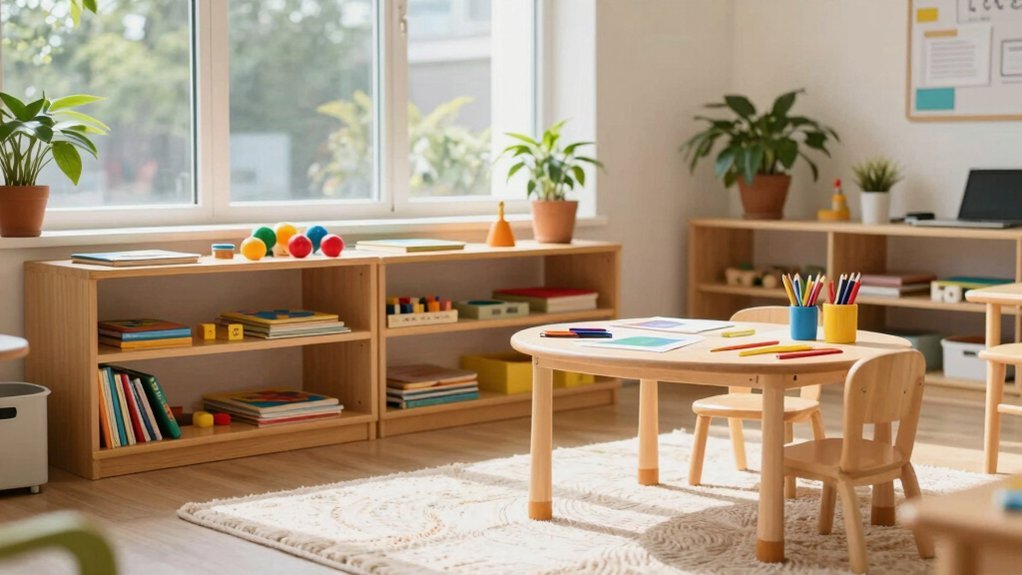
How do you empower children to learn independently? You design spaces scaled to their bodies and abilities. Construct furniture from natural wood proportioned to child size, enabling them to move freely without adult assistance. Position shelves at eye level so children access materials autonomously. Place windows, cabinets, and sinks at appropriate heights for direct interaction. Lower hooks and storage units so kids manage their own coat hanging and toy placement without help. Keep furniture lightweight enough for children to rearrange as needed. This thoughtful scaling removes barriers to independence.
When children navigate their environment without constantly requesting adult support, they develop confidence and self-reliance. Child-scaled spaces transform learning from dependent to autonomous, fostering natural curiosity and capability. Small rugs can define personal boundaries and provide comfortable zones for floor-based activities that encourage children to take ownership of their learning areas.
Organize Materials by Developmental Purpose and Sequential Order
Why do children thrive when materials align with their developmental stage? You’ll notice that purposefully organizing materials creates natural pathways for learning.
Arrange your classroom shelves to reflect the progression from birth to age six. Place practical life activities at accessible heights, followed by sensorial materials that refine perception. Progress toward language, mathematics, and cultural studies as children mature developmentally.
Within each category, sequence activities incrementally. You start with foundational exercises—like pouring or buttoning—before introducing complex tasks. This scaffolding respects the sensitive periods children experience, whether for movement, language, or social interaction. As children advance through the planes of development, their cognitive milestones create an emerging desire to know more and grow in independence.
You’ll observe children naturally gravitating toward materials matching their current needs. Multi-age groupings work because older children model mastery while younger ones absorb possibilities. Your intentional organization removes frustration and invites focused concentration through materials children are developmentally ready to explore.
Define Learning Zones Within Open, Flowing Space
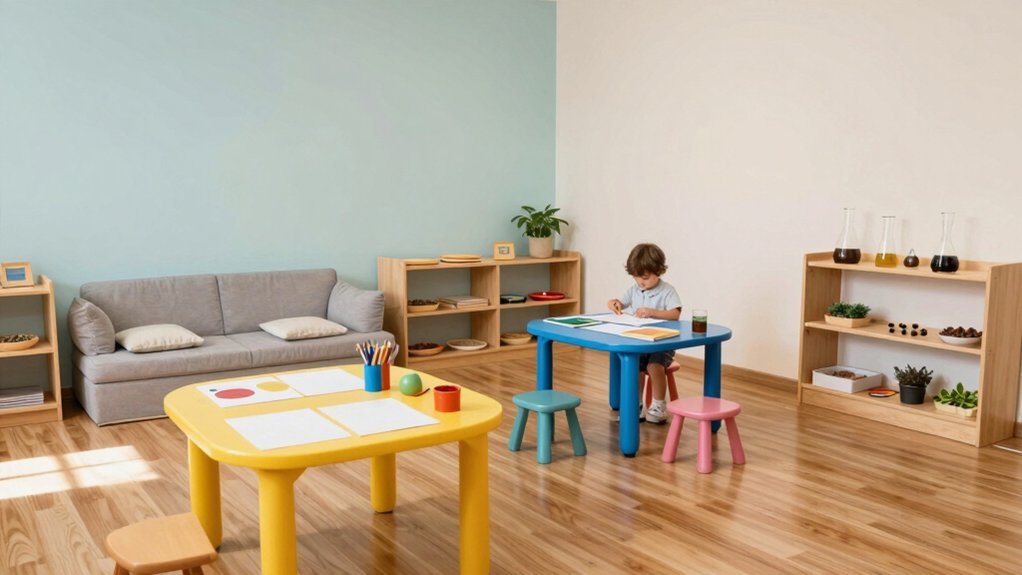
Once you’ve arranged your materials developmentally, you’ll shape the physical space itself to support focused exploration. Create distinct zones for reading, math, science, and practical life activities that promote order without rigid boundaries. Use child-sized, movable furniture to establish flexible areas that you can reconfigure for individual or group work. Incorporate open spaces that accommodate large materials like bead strands while allowing simultaneous activities.
Define personal floor workspaces with small rugs, and position shelves at child height for independent access. Integrate natural elements—plants, daylight, and varied textures—to create a calming environment. Include a peace corner for reflection alongside comfortable reading nooks. This balanced approach combines well-defined curriculum spaces with open areas, empowering children to choose activities while maintaining the harmony that Montessori environments require. Teachers should act as guides rather than primary instructors, providing materials and resources that support children’s self-directed learning within these thoughtfully organized zones.
Frequently Asked Questions
How Do Natural Materials and Aesthetic Design Support Child Development and Focus?
You’ll enhance your child’s development by incorporating natural materials that engage multiple senses, strengthening cognitive skills. You’ll optimize focus through minimalist, orderly spaces that calm the mind and invite independent concentration.
What Role Do Live Plants and Outdoor Spaces Play in Montessori Learning?
You’ll cultivate responsibility and observation skills through live plants while outdoor spaces extend your hands-on learning beyond the classroom. You’re building stewardship, patience, and real-world connections to nature simultaneously.
How Should Classroom Lighting and Color Choices Affect the Learning Environment?
You should maximize natural light by removing obstructions and using strategic mirrors. You’ll optimize learning by maintaining 6500K color temperature for focused tasks and 3500K for active play, creating an atmosphere that enhances concentration and well-being.
Why Is Removing the Teacher Desk Important for Child-Centered Classroom Design?
You remove your teacher desk to transform the classroom into a child-centered space. You’ll increase physical room, reduce intimidation barriers, encourage student independence, and foster shared ownership of the learning environment.
How Do Social and Solitary Work Spaces Balance Collaborative and Independent Learning?
You balance collaborative and independent learning by allowing children to work individually during focused cycles while participating in mixed-age groups for peer mentoring, shared responsibilities, and problem-solving projects that develop both autonomy and social skills.
In Summary
You’re creating an environment that empowers your child’s independence and curiosity. By scaling spaces to their height, organizing materials thoughtfully, and establishing distinct learning zones, you’re supporting natural development. You’ll notice how your child becomes more engaged and confident when they can access materials freely and understand where everything belongs. This thoughtful preparation transforms your space into a powerful tool for self-directed learning and growth.



Leave a Reply