
Pick low, sturdy tables and chairs with rounded edges, and anchor heavy pieces to keep them tip‑proof. Use single‑row open shelves with clear bins and picture‑word labels so kids can see and grab items at eye level. Rotate zones every few weeks, swapping open‑ended materials like cardboard tubes, fabric scraps, and simple life tools to keep interest high. Add a calm corner with soft lighting and cushions for sensory breaks, and display family cultural items at child height. Follow these steps and you’ll discover even more details.
What Makes a Playroom Truly Child-Centered?
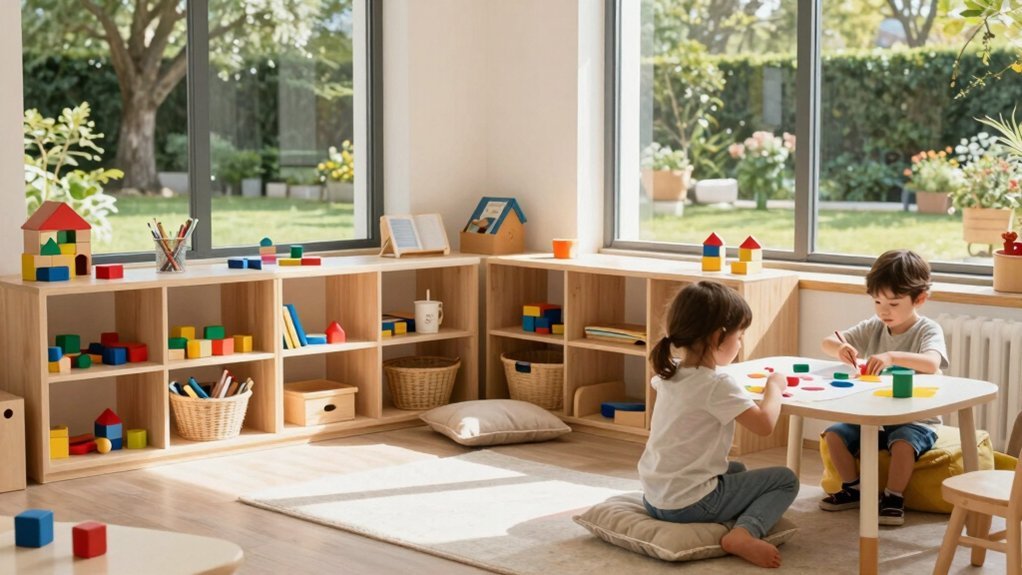
A child‑centered playroom starts with the child‑s perspective in mind, featuring low, open shelving and child‑sized tables and chairs that let kids pick, reach, and return items themselves.
Low, open shelving and child‑sized furniture empower kids to choose, reach, and return items independently.
You’ll notice independence blossoming as every toy sits on single‑row open shelving, within arm’s reach, so your child can decide what to explore next.
Child‑sized furniture invites them to sit, stretch, and create without adult assistance, reinforcing ownership of the space.
Hands‑on exploration thrives when materials are organized in labeled bins that invite easy cleanup, turning play into a self‑directed learning cycle.
Personal touches—eye‑level artwork, favorite photos, and meaningful objects—signal that this room belongs to them, deepening confidence and a sense of belonging.
Including Montessori-friendly step stools encourages children to safely reach higher surfaces, fostering independence and confidence in their environment.
Choose Safe, Low-Height Furniture for a Child-Centered Playroom
You’ll want furniture with rounded edges and a stable, non‑tip‑over design so kids can move freely without fear of accidents.
Choose pieces that sit low enough for their eye level, making it easy for them to see and reach everything.
Easy‑access storage compartments keep materials within arm’s reach, encouraging independence and smooth transitions.
Consider storage solutions like stacking caddies vertically or using wall-mounted organizers to maximize space and keep the playroom tidy.
Rounded Edges
How do you keep a playroom both inviting and injury‑free? By choosing furniture with rounded edges, you turn safety into a design feature. Rounded edges soften impact, so a tumble on a table or shelf won’t turn into a bruise.
In early childhood spaces, these gentle curves blend with natural wood and soft cushions, reinforcing a child‑centered playroom vibe. Look for pieces that combine sturdy construction with smooth corners, ensuring durability while protecting curious bodies.
When you prioritize this aspect of furniture design, you reduce the need for constant supervision and let kids explore confidently. The result is a room that feels warm, secure, and perfectly tuned to young learners’ needs. Choosing bookcases within the 24 to 48 inches height range further enhances safety by promoting independent and accessible use.
Stable, Non‑Tip‑Over Design
Rounded edges keep impacts gentle, but even the softest cushion can’t stop a wobbling table from toppling. You’ll want child‑sized furniture that sits low to the floor, with sturdy legs and durable finishes that resist wobble. Prioritize stability by anchoring heavy pieces to walls or the floor, and keep pathways clear for safe play. Choose non‑tip‑over designs that let kids move confidently without fearing a collapse.
- Low tables with wide bases for balanced weight distribution.
- Sturdy shelves with single‑row, open access at child height.
- Secure storage units that lock to the wall to prevent tipping.
Additionally, incorporating wooden construction elements ensures durability and long-lasting use in a child-centered playroom.
Easy‑Access Storage Compartments
Where can you find the perfect blend of safety and independence in a playroom? You’ll see low shelving that invites curious hands, offering accessible storage for toys, books, and art supplies. Choose sturdy, rounded‑edged units that stay grounded, and arrange them in a single row so children can see everything at eye level. Use clear containers and a simple label system—pictures for the youngest, words for older kids—to boost organization and independent access. Designate a basket or tray for each category, keeping clutter contained and cleanup quick. When kids can reach, see, and return items without adult help, they develop ownership and confidence while you maintain a tidy, safe environment. For added safety, select storage furniture made from durable, child-safe materials that can withstand active use over time.
Set Up Rotating Play Zones
You’ll keep the space lively by rotating zones that match kids’ shifting interests, swapping in fresh, age‑appropriate materials every few weeks. By placing everything at child height in clear containers, you let them pick up and put away items independently during each transition.
Align the rotation schedule with your weekly observations, so each new setup builds on their emerging skills while staying familiar. Incorporating tools designed with child-sized dimensions can help promote safe handling and fine motor development during play.
Flexible Zone Rotation
How can you turn a single playroom into a dynamic learning landscape? By designing Zones that support flexible rotation, you give children open-ended materials that invite independent exploration while you fine‑tune space planning. Rotate the focus every few weeks—science, art, dramatic play—to keep curiosity alive and ownership strong.
- Map the layout – place quiet zones near the cot, messy zones near the change table, and feeding zones near toddlers, ensuring safe crawling paths and low climbing spots.
- Swap the supplies – use open shelving and single‑row storage so kids can pull items out, use them, and return them without help.
- Observe and adjust – weekly, walk the room with staff, note traffic patterns, and tweak zone placement to balance transitions and sustain engagement.
Including spill prevention technology in feeding zones can help reduce messes and support children’s independence.
Age‑Appropriate Material Refresh
Rotating zones keeps the room fresh, so after you’ve set up flexible zones, focus on rejuvenating the materials within them. Begin with a small, staple set of open-ended materials that serve multiple purposes—think cardboard tubes, fabric scraps, and repurposed kitchen tools.
Every few weeks, conduct a materials rotation: swap sand for water beads, replace magnetic letters with dinosaur figurines, and introduce new sensory play items like pom‑poms or straws.
Store each item in single‑row, clearly labeled containers placed on low shelves, creating accessible storage that kids can reach and tidy independently.
Invite families to contribute outdated toys or household objects, expanding the diversity of learning spaces while keeping the zone developmentally appropriate and inviting.
This routine maintains engagement, prevents overstimulation, and nurtures curiosity.
Pick Developmentally Appropriate Open-Ended Materials
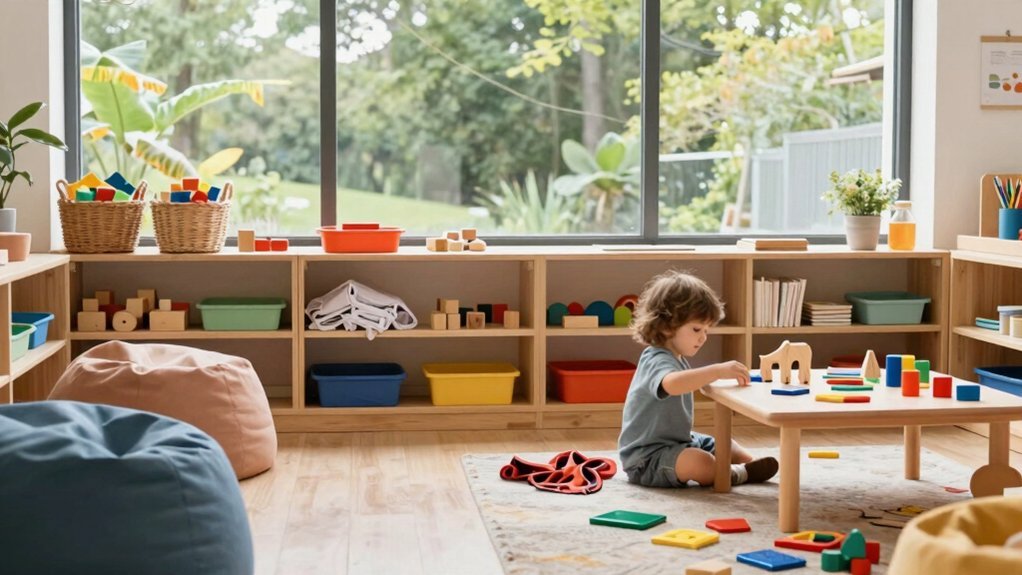
What kinds of toys spark curiosity without limiting imagination? You’ll want open‑ended materials that stay developmentally appropriate, inviting hands‑on exploration while fitting a learning playroom’s vibe. Choose a small, high‑quality selection that can serve many purposes, then rotate it to keep interest fresh.
- Wooden blocks and natural‑material puzzles – sturdy, tactile, and endlessly combinable.
- Sorting, stacking sets, and simple life tools – pitchers, cups, mini brooms that mimic real tasks.
- Art supplies and fabric scraps – safe, versatile, and perfect for creative expression.
Prioritize natural materials over plastic, keep items within easy reach, and let your child lead the play. This approach fuels imagination, builds flexible thinking, and nurtures independent discovery.
Organize Storage for Easy Access in a Child-Centered Playroom
A well‑organized playroom lets kids find and return toys on their own, so set up open, single‑row shelves with clear bins that show the contents at a glance. Choose low, sturdy units that keep storage safety front‑and‑center, and arrange items by category in trays or baskets to boost organization. Use picture and word labeling on each bin so children instantly know where everything belongs, reinforcing accessibility. Keep the shelves uncluttered by rotating toys every few weeks; this prevents overcrowding and maintains interest. Make sure every piece of furniture is tip‑proof and scaled for small hands, allowing confident self‑directed exploration. By combining open shelving, clear containers, and thoughtful labeling, you create a seamless, child‑friendly system that encourages independent cleanup and easy access.
Create Calm Corners for Sensory Overload and Independent Rest
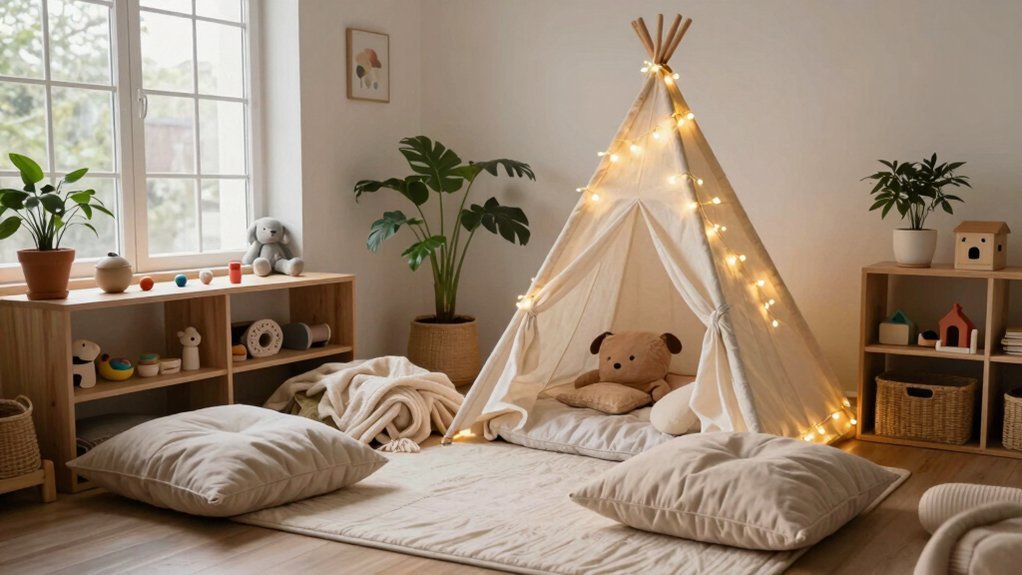
After sorting toys on open shelves, turn your attention to a soothing spot where kids can recharge. A calm corner should feel like a private space that eases sensory overload and invites independent rest. Use neutral paint, soft lighting, and draped textiles to create comfort without overstimulation. Place a low shelf with quiet, age‑appropriate items so children can self‑direct their relaxation. Position the area away from high‑traffic zones, near nap or diaper stations, for smooth routine transitions.
- Floor cushions & blankets – plush, washable, and easy to rearrange.
- Light curtains or wall hangings – buffer sound and dim bright light.
- Accessible storage bin – holds soft toys, books, or sensory‑friendly objects.
These simple steps give your child a safe, soothing retreat that supports emotional regulation and focus.
Integrate Family Culture Into the Child-Centered Playroom
How can you turn a playroom into a living showcase of the families it serves? Start by weaving diversity into every shelf, bin, and wall. Choose dolls, books, and puzzles that act as windows and mirrors, reflecting varied ethnicities, family structures, and traditions. Hang family photos and everyday objects at child height so home routines feel familiar, from feeding‑time props to bedtime‑story corners. Invite parents to contribute cultural items or suggest activities, turning community involvement into a design engine. Rotate displays based on observations, ensuring language cards, role‑play stations, and care‑routine tools echo the values you see in the community. This intentional blend of family culture creates belonging, trust, and a vibrant learning environment.
Maintain and Refresh Your Playroom Over Time
Observing children daily reveals shifting interests and developmental needs, so you can keep the playroom fresh without a full remodel. You’ll notice how they gravitate toward textures, scents, and lighting, and you can observe and adapt the learning environment in real time. A quick space refresh keeps child‑centered spaces vibrant while honoring family culture.
- Rotate tactile bins and soft furnishings every month, swapping in seasonal nature elements and new smells.
- Re‑evaluate lighting; replace harsh bulbs with dimmable or natural‑light options to sustain focus.
- Schedule monthly educator collaboration sessions, sharing wellbeing wishlists and adjusting storage layouts for emerging skills.
Frequently Asked Questions
How to Design a Child’s Playroom?
You design a child’s playroom by placing low, open shelves and child‑sized tables, labeling containers at eye level, creating distinct zones, using natural textures, and rotating quality materials regularly.
What Should a Pediatric Playroom Include?
You should include low, child‑sized furniture, open shelving, safe open‑ended toys, distinct flexible zones, sensory‑friendly lighting and natural elements, tip‑proof storage, clear labels, and easy‑clean surfaces for supervision.
What Is the Montessori Approach to Playrooms?
You design the room from the child’s perspective, using low shelves, child‑sized furniture, natural materials, and purposeful toys that invite independent choice, hands‑on exploration, and self‑directed learning.
How to Set up a Play-Based Classroom?
You’ll arrange low shelves, child‑sized tables, and distinct activity zones, rotate materials weekly, limit toys to a few, and embed literacy and math cues throughout, keeping safety and independence front‑and‑center.