
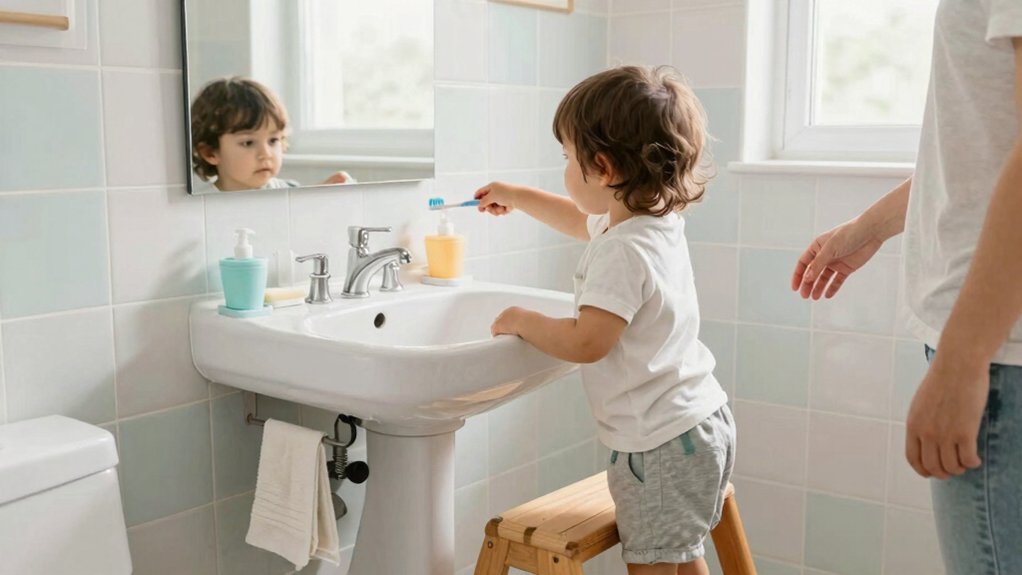
You build independence by keeping bathroom routines predictable, calm, and child‑friendly. Use neutral cues like “time to sit” and schedule trips after meals, drinks, or naps so the child knows when to go. Set up a child‑sized toilet, step stool, and easy‑reach wipes, and hang picture cards that show each step. Tailor language and pacing to the child’s temperament, and stay composed when accidents happen, labeling them simply and using them as data to adjust support. Consistent cues and visual prompts across home and school reinforce ownership, and the more you apply these tricks, the deeper the progress you’ll see.
Predictable Bathroom Routines Build Trust for Toilet Independence

When you establish a predictable bathroom routine, you create a calm, consistent pattern that eases anxiety and lets your child anticipate each step, paving the way for independent toileting. You schedule regular toilet trips after meals, drinks, and naps, aligning the routine with natural body signals.
Using neutral language—“time to sit” or “let’s wash hands”—keeps the experience non‑punitive and respectful, encouraging self‑management. You model the steps, then gradually fade your assistance, allowing the child to take ownership of each cue.
Consistency builds trust: the child learns that the bathroom is a safe, reliable space where independence grows. Over weeks, this predictable routine reduces accidents, reinforces confidence, and solidifies autonomous toileting habits. Incorporating tools like the Fisher-Price 4-in-1 Activity Table/Art Easel, designed for toddlers, can support this development by combining play and learning in a familiar setting.
Set Up a Child‑Sized, Accessible Bathroom for Toilet Independence
How can you turn a regular bathroom into a kid‑friendly hub for independence? Start by adding a child‑sized toilet or potty and a sturdy step stool so your child can reach the sink and toilet without help.
Lower light switches and install a built‑in reducer or small potty to keep the bathroom setup simple and safe.
Keep a basket stocked with wipes, spare underwear, and a short roll of toilet paper within easy reach, encouraging your child to clean up and dress after toilet learning.
Practice getting on and off the toilet during calm moments, and use easy‑to‑remove clothing to reduce obstacles.
This focused bathroom setup supports full elimination routines, builds confidence, and promotes independence.
Selecting a step stool with non-slip pads and safety features can further enhance your child’s confidence and safety during bathroom routines.
Use Calm, Neutral Language to Guide Each Step of Toilet Independence

A calm, neutral tone lets you guide each step of toilet independence without creating pressure or shame. When you notice readiness cues—like a pause in play or a sudden stillness—you respond with calm guidance, saying, “Let’s try the bathroom now.” Keep language simple and factual; if an accident happens, acknowledge it with “wet clothes, next steps to change” and move on.
Consistent routines reinforce the connection between body signals and the toilet, so the child learns what to expect. Avoid punitive remarks or rewards that shift focus away from internal cues. Your steady voice, respectful body language, and private conversations signal safety, encouraging the child to own each part of the process and progress toward full toilet independence. Just as comprehensive care kits provide organized storage and gentle protection, maintaining clear and consistent steps helps support independent progression in children’s bathroom routines.
Integrate Visual Cues & Child‑Sized Tools for Independent Toilet Use
Building on calm, neutral guidance, you can boost independence by adding visual cues and child‑sized tools that make every step of toileting reachable. Start with a child‑sized potty or low toilet and a step stool so your child can sit without adult help. Hang picture cards that show each action—pull down pants, sit, wipe, flush—on the wall at eye level; these visual cues turn abstract steps into concrete prompts. Keep an “I do” basket stocked with a small towel, kid‑friendly soap, and a faucet extender, making hand‑washing effortless. Choose easy‑to‑remove clothing and a simple layout so the child can undress, sit, and wipe independently. Consistently pairing these child‑sized tools with visual cues reinforces independence and smooths daily toileting routines.
Match Routine Steps to a Child’s Temperament for Toilet Independence

Ever wonder which toilet‑training steps will click with your child’s unique temperament? You can match routine steps to their temperament, boosting toilet independence and autonomy. For flexible kids, keep reminders gentle and let them choose when to sit, using ownership language like “your turn.” Fearful children need a gradual rollout: start with a step stool, give reassurance, and let them signal readiness cues before adding new tasks. Feisty children thrive on clear expectations and a calm space; set firm but patient limits and celebrate tiny wins without pressure.
Match toilet‑training steps to temperament, fostering autonomy with gentle reminders, clear expectations, and supportive tools.
- Identify readiness cues and introduce one new routine step at a time.
- Tailor language to the child’s temperament, focusing on internal signals, not rewards.
- Provide a prepared environment with child‑sized tools to support autonomy.
- Incorporating fine motor skill building activities can further promote independence and confidence in daily routines.
Stay Calm During Accidents and Turn Them Into Learning Moments
How do you keep an accident from turning into a crisis? You stay calm, label the event plainly—wet pants, then move straight to the next steps: change clothes, wash hands. By using neutral language you protect the child’s dignity and reinforce that toileting independence is a gradual skill, not a test.
Treat each accident as data, noting patterns and adjusting support without pressure. Reassure the child that accidents are normal, part of growth, and not a failure. Pair the incident with a tiny, achievable next step—try pulling pants down faster or aim for the next bathroom break. This turns every mishap into a learning moment, building confidence and fostering true independence.
Communicate Consistently With Families About Toilet Independence
You’ll keep families in the loop with brief updates on daily routines and any tweaks to the schedule. By sharing clear progress notes and setting realistic goals, you help parents see milestones and adjust expectations. This consistent communication creates a seamless bridge between home and school, reinforcing the child’s confidence in toilet independence. Utilizing tools with quick response times ensures timely feedback and supports effective routine adjustments.
Family Updates and Routines
What if you could turn every bathroom break into a seamless partnership between school and home? You’ll notice that consistent family updates and routines create a reliable framework for toilet independence. By sharing daily observations—like how often the child asks for a break or wipes correctly—you help caregivers mirror school expectations at home. A written or visual plan keeps everyone on the same page, reducing stress and preventing regressions. When breakfast, hydration, and bathroom timing align, cues become clearer and success rates rise. Collaborative tweaks, such as adjusting seat height or timing reminders, reinforce a supportive, non‑punitive environment that sustains independence.
- Send brief, daily notes highlighting key bathroom behaviors.
- Provide a visual checklist for hand‑washing, pulling down pants, and wiping.
- Schedule brief calls to adjust routines after any accidents or changes.
- Incorporating convertible training aids across routines can enhance gradual skill development and confidence.
Progress Tracking and Goals
Ever wonder why consistent updates between home and school speed up toilet independence? You’ll see that progress tracking and clear goals create a shared roadmap for independence. When you share observations of bathroom skills, families can match routines at home, reinforcing the same cues you use in class. Calm, non‑punitive responses to accidents keep the child motivated, while a predictable schedule builds confidence. Aligning clothing, hand‑washing, and child‑sized facilities removes friction, letting the child focus on mastering each step. Highlighting small successes—like staying dry longer or attempting a wipe alone—keeps momentum without shaming.
| Success | Emotion |
|---|---|
| First dry night | Pride |
| Independent wipe | Joy |
| Consistent schedule | Relief |
| Calm accident response | Trust |
| Shared goal reached | Celebration |
Frequently Asked Questions
When Can Kids Go to the Bathroom Independently?
You’ll see kids going independently around two to three years old, give they’re physically ready, have consistent cues, and practice in a supportive, predictable setting with easy access and clear expectations.
What Is a Red Flag for Potty Training?
You should watch for frequent, unrelenting accidents, persistent distress, avoidance of bathroom trips, refusal to sit or wipe, and nighttime wetting that doesn’t improve—these signal a red flag in potty training.
What Are the 3 C’s of Potty Training?
You use calm language, keep consistent routines, and set clear expectations. Calm wording helps your child notice body signals, consistent timing builds familiarity, and clear tasks guide independent bathroom behavior.
What Is Independent Toileting?
You practice independent toileting when you let your child manage the whole process—choosing when to go, pulling down clothes, using the toilet, washing hands, and dressing again—without constant adult assistance.