
You can transform your home into a discovery lab by starting with open-ended problems, curating accessible materials across multiple spaces, and recognizing when your child’s ready for new challenges. Turn everyday chores into problem-solving opportunities, anchor activities to your child’s genuine interests, and guide exploration through thoughtful questions. Regular reflection builds self-awareness and deepens learning. Each strategy works together to foster independent thinking and lasting curiosity—and there’s much more to explore about making each approach work in your unique home.
Understand What Solo Discovery Learning Is and Why It Matters

Ever notice how kids remember things they’ve figured out themselves better than information you’ve told them? That’s solo discovery learning at work. Rather than passively receiving knowledge, your child actively explores problems, manipulates objects, and constructs understanding through personal experience. This approach, rooted in constructivist theory and popularized by Jerome Bruner in the 1960s, positions your child as an active participant instead of a passive recipient.
When your child encounters cognitive conflict—surprising or unfamiliar situations—they reorganize their thinking and deepen comprehension. This self-directed inquiry builds critical thinking, problem-solving skills, and genuine engagement. However, unguided discovery can sometimes overwhelm beginners due to heavy working memory load, so strategic scaffolding helps them connect new experiences to what they already know. Knowledge they’ve uncovered transfers more effectively to new contexts than information you’ve delivered directly. By enabling solo discovery at home, you’re cultivating independent learners who think critically and retain information meaningfully.
Start With Open-Ended Problems That Invite Experimentation
Now that you understand how children learn through discovery, you’re ready to create the conditions where that learning happens. Start by posing open-ended problems that spark experimentation rather than seeking single correct answers. These problems work best when they’re grounded in real situations—mixing liquids, building towers, or observing shadows—so your child can apply knowledge to novel contexts.
Frame your prompts with curiosity in mind: “What do you notice?” or “How could you make that work better?” Guide exploration through sequential questions that encourage testing hypotheses. Let your child try different approaches, fail, and try again. This builds resilience while developing critical thinking about underlying problem structures. The sentence completion framework focuses attention on the core challenge while inviting your child to discover the most impactful path forward.
Define success together: “How will you know this problem’s solved?” This clarity focuses effort while maintaining the freedom to discover solutions independently.
Curate a Physical Space With Accessible, Open-Ended Materials
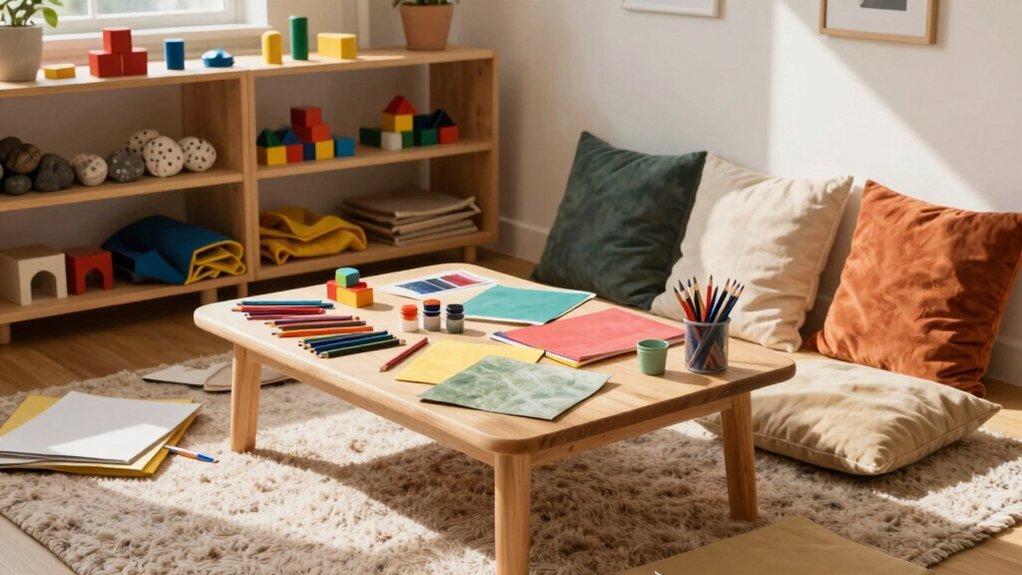
How you arrange your home’s physical environment directly shapes what your child discovers. You’ll want to strategically position open-ended materials throughout your space rather than confining them to a single area.
Your home’s physical environment directly shapes what your child discovers through strategic placement of open-ended materials.
Create an inviting setup by:
- Positioning blocks, playdough, and natural items like sticks and pebbles across multiple rooms
- Combining recycled materials (tubes, bottle tops, cardboard boxes) with household objects sized for your child
- Rotating materials when interest wanes to maintain novelty and engagement
- Keeping items movable and carryable so your child can transport them between play centers
This distributed approach encourages free movement and exploration. You’re not overwhelming your child with countless options; instead, you’re offering developmentally appropriate variety in an accessible format. Plain designs like wooden blocks serve as blank canvases for imagination, allowing deeper focus during extended play sessions. When children engage with materials that invite them to make choices and express creativity, they develop problem-solving skills and flexible thinking that support readiness for kindergarten and academic success.
Recognize Readiness Signals Before Introducing New Activities
Introducing a new activity before your child’s ready can lead to frustration for both of you. Instead, watch for readiness signals across five key areas.
Observe their social and emotional development—do they separate from you with minimal distress and manage feelings with support? Notice their communication skills: can they speak clearly and follow two-step directions? Check cognitive readiness through their curiosity about learning and ability to sustain attention on tasks.
Assess physical capabilities like pencil control and balance. Finally, evaluate their independence—can they complete basic self-care tasks and use routines to finish chores?
When you recognize these signals developing, you’ll know your child can handle new challenges confidently. Timing your introductions this way transforms potentially frustrating moments into successful solo discoveries. Research shows that school readiness across these domains predicts not only academic success but also long-term health and well-being outcomes.
Turn Everyday Chores Into Learning Moments
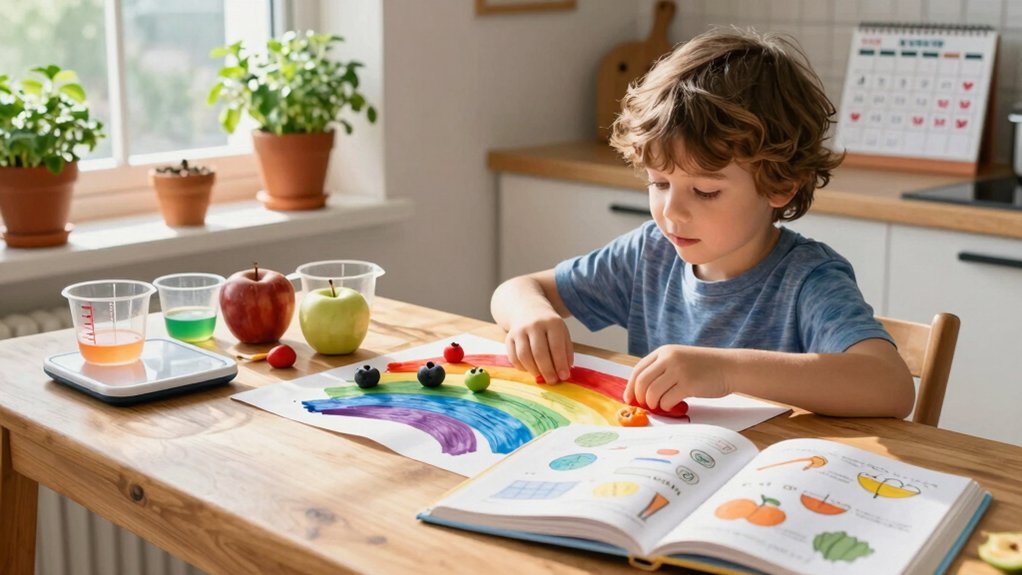
You can transform routine household tasks into powerful learning experiences where your child develops critical thinking skills through real-world problem-solving. When you let them figure out how to load the dishwasher efficiently or determine the right amount of detergent needed, they’re building executive function and decision-making abilities simultaneously. These everyday moments become invaluable opportunities for your child to learn that challenges have solutions they can discover themselves. Research shows that self-care and family-care chores are particularly effective at strengthening working memory and impulse control in children aged 5 to 13 years.
Chores As Problem-Solving Opportunities
When’s the last time you watched your child tackle a household task and noticed them thinking their way through it?
Chores aren’t just about clean dishes or folded laundry. They’re genuine problem-solving laboratories where your child develops critical thinking skills. When you assign meaningful tasks, you’re creating opportunities for them to:
- Experiment with different approaches to complete tasks efficiently
- Identify obstacles and devise creative solutions independently
- Apply logic to sequencing steps, like sorting laundry by color before washing
- Build confidence by troubleshooting challenges without immediate adult intervention
This active engagement strengthens executive function skills like cognitive flexibility and attention. Your child learns that problems have multiple solutions and that persistence pays off. By stepping back and letting them work through difficulties, you’re cultivating independent thinkers who’ll tackle future challenges with resourcefulness and resilience. When children contribute to household work from an early age, they develop a sense of being a contributing group member that reinforces their motivation to problem-solve and take ownership of tasks.
Building Skills Through Daily Tasks
How much learning potential sits hidden in your kitchen sink? Plenty. When you assign your child daily tasks, you’re not just delegating—you’re building executive function, self-directed learning, and academic skills simultaneously.
Meal preparation teaches fractions through measuring ingredients. Loading the washing machine develops procedural thinking and independent problem-solving. Folding laundry reinforces sequencing and attention to detail.
These aren’t busywork. Children who regularly complete household tasks score 12.45 points higher academically than non-participants. They develop stronger working memory, better impulse control, and improved decision-making abilities that transfer directly to schoolwork. Research from an 85-year Harvard study demonstrates that chores foster greater self-worth and confidence that extends into professional success.
Match tasks to your child’s age. Young kids excel at sorting and setting tables. Older children handle multi-step processes like recipe-following. Each stage builds competency that compounds into genuine confidence and sustained academic achievement across all learning domains.
Connect Activities to What Your Child Already Loves Exploring
You’ll strengthen your child’s solo engagement by identifying what naturally captures their attention, then building learning opportunities around those established interests. When you anchor new activities to what they already love exploring, you’re creating a bridge between their current passions and deeper discovery. This approach lets you extend their natural curiosity into fresh territories while maintaining the momentum that keeps them independently focused. Research shows that positive thought content during solo time—such as reflections on hobbies, relationships, and personal interests—supports emotional and cognitive development, making it essential to ground independent activities in what genuinely captivates your child.
Identify Your Child’s Natural Interests
Why does your child gravitate toward certain toys, activities, or topics? Understanding their natural interests forms the foundation for solo discovery. Pay attention to what captures their attention without prompting.
Observe these revealing patterns:
- Play choices: Notice what they build, draw, or role-play. These activities expose passions in architecture, design, performing arts, or sports.
- Focus duration: Activities holding their concentration signal core strengths and genuine engagement worth exploring further.
- Spontaneous questions: Frequent “why” and “how” inquiries reveal curiosity about science, nature, or history.
- Free-time selections: What they choose first indicates their preferred explorations and authentic interests.
These observations guide you toward activities that’ll spark meaningful solo exploration, building confidence through self-directed learning aligned with their genuine passions. When you recognize these patterns early, you create opportunities to support further learning that transforms casual interests into deeper exploration and growth.
Build Learning Around Existing Passions
Once you’ve identified what genuinely captivates your child, the next step is building learning activities directly around those passions. When you weave curriculum into their existing interests—whether that’s dinosaurs, cooking, or building—you’re creating natural bridges between home learning and academic skills.
This approach fosters deeper understanding beyond rote memorization. Your child develops expertise in domains like science or literacy because they’re genuinely invested. Research shows 74% of grade 5 students engaged in interest-related activities at home demonstrate sustained motivation. When children guide their own learning experiences around topics they care about, student agency becomes the driving force behind their educational growth.
Connect math to their hobbies: measure ingredients if they love cooking, calculate sports statistics if they’re athletic. Link reading to their fascinations: find books about their favorite topics. This strategy transforms learning from obligatory to organic, seeding ongoing excitement for discovery as a natural part of their daily life.
Extend Exploration Into New Discoveries
As your child masters solo play around their existing interests, they’re building the cognitive foundation needed to venture into adjacent territories. When children concentrate on one activity without peer distractions, their attention span naturally expands, enabling deeper exploration.
You can strategically bridge their passions into new discoveries by:
- Introducing tools or materials that complement current hobbies
- Rotating activities that require similar problem-solving skills
- Providing books or resources related to established interests
- Creating gentle challenges that build on existing confidence
This progression fosters curiosity and perseverance. Your child learns cause and effect through object manipulation, then applies those logical thinking skills to unfamiliar challenges. Less-structured free play predicts cognitive self-regulation, allowing your child to independently navigate new territories while maintaining their innate confidence and autonomy. During these independent exploration periods, solitary play encourages self-discovery by helping your child identify personal preferences and develop a stronger sense of self through autonomous decision-making.
Reflect on Learning Together to Build Self-Awareness
Most of us overestimate how well we know ourselves. Research shows that while 95 percent of people believe they’re self-aware, only 10-15 percent actually are. You can bridge this gap by reflecting on learning with your child.
Create a personal inventory together, documenting strengths and challenges across academics, activities, and relationships. Ask open-ended questions about what they’ve discovered about themselves. This reflection builds self-awareness by helping them name emotions, understand triggers, and recognize patterns in their behavior. By explicitly connecting this personal inventory process to their learning goals, you provide a framework for them to select strategies that leverage their strengths while addressing their challenges.
Regular feedback sessions strengthen this connection further. When you revisit goals and challenges together, you reinforce growth mindset and self-correction. This shared reflection transforms solo discoveries into deeper self-knowledge, reducing anxiety and building confidence in who they’re becoming.
Frequently Asked Questions
How Can I Assess My Child’s Current Understanding Level Before Starting Solo Discovery?
You can assess your child’s understanding by observing their questions, reviewing work samples, conducting informal quizzes, and having them narrate what they’ve learned. You’ll identify gaps through games and discussions that reveal their thinking.
What Should I Do if My Child Becomes Frustrated During Independent Exploration?
When your child’s frustrated, pause the activity and validate their feelings. Offer manageable support—don’t solve it completely. Encourage them to try different approaches, building resilience through guided exploration rather than immediate answers.
How Much Time Should Children Spend on Solo Discovery Activities Daily?
You should aim for two 20-30 minute daily chunks during one-on-one sibling time, plus additional afternoon sessions for hide-and-seek or scavenger hunts. Adjust based on your child’s engagement level.
Can Solo Discovery Learning Work for Children With Different Learning Styles?
You’ll find solo discovery works across learning styles because it lets you explore through personal actions, adjust strategies based on what you observe, and develop self-regulation while pursuing your natural curiosity and interests.
How Do I Balance Solo Discovery With Necessary Structured Academic Skills Instruction?
You’ll balance discovery with structured skills by alternating between guided exploration and direct instruction. Start with foundational skills through explicit teaching, then apply them in open-ended discovery tasks where you scaffold progressively.
In Summary
You’ve now got the tools to foster your child’s natural curiosity and independence. By setting up an environment filled with open-ended materials, watching for readiness cues, and weaving learning into daily routines, you’re creating endless opportunities for discovery. Remember, you don’t need fancy resources—just your attention, flexibility, and willingness to let your child explore at their own pace. That’s what transforms ordinary moments into meaningful learning experiences.


Leave a Reply