
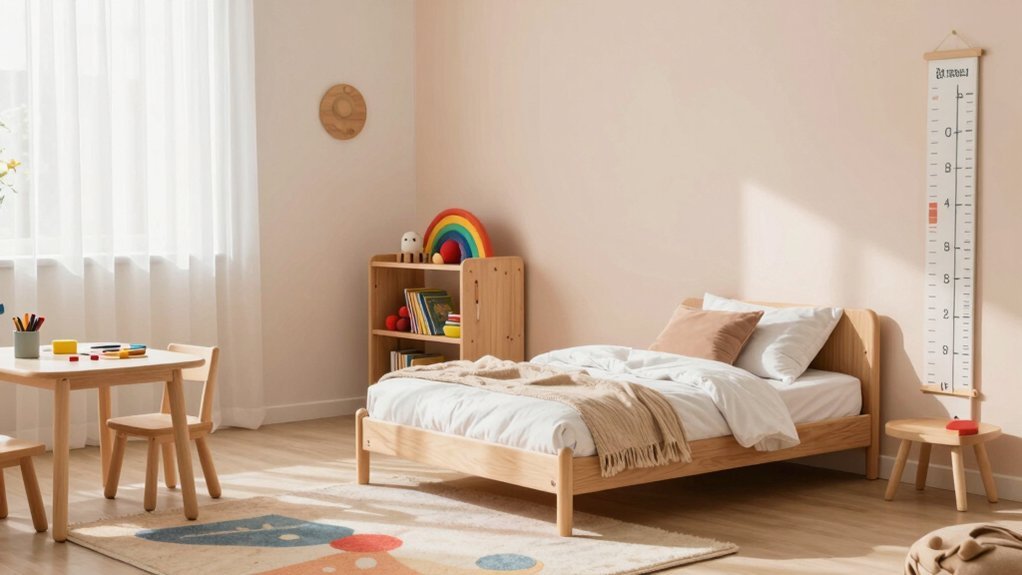
You can transform your toddler’s bedroom into an independence hub by starting with a floor bed that eliminates power struggles, adding low shelves at eye level for self-directed exploration, and building a personal care station with child-sized tools. Design a dressing corner with accessible clothing and mirrors, then establish activity zones that build focus and movement skills. These five Montessori principles work together to foster confidence and autonomy—discover how you can implement each one strategically.
Start With a Floor Bed for Toddler Sleep Independence

Why do so many parents struggle with bedtime resistance and sleep conflicts? Traditional cribs create confinement that sparks power struggles and negative sleep associations. A floor bed transforms this dynamic by giving your toddler autonomy over sleep timing and entry.
With mattresses positioned close to the ground, you eliminate fall risks while enabling self-directed movement. Your child can climb in and out independently, building confidence and self-esteem without parental intervention. This freedom reduces the imprisonment feeling that triggers bedtime resistance. Floor beds also encourage gross motor development as your toddler practices movement within the bedroom space.
You’ll notice your toddler establishes regular sleep habits 4-6 months earlier than crib users, according to Montessori research. When your child feels empowered to make sleep decisions, cooperation replaces conflict. The bedroom becomes a space your toddler controls, transforming naptime from an imposition into a pleasurable experience.
Create Low Shelves That Support Child-Led Exploration
How can you foster your toddler’s independence beyond the bedroom floor? Low shelves are your answer. By placing toys and books at your child’s eye level, you’re inviting them to make choices, explore freely, and develop confidence.
Low shelves at eye level invite toddlers to make choices, explore freely, and build confidence beyond the bedroom floor.
Consider these key elements:
- Keep shelves between 25-30 inches high so your toddler can reach items without assistance
- Rotate toys regularly to maintain engagement and prevent overwhelm
- Use open designs with rounded corners for safety and easy visibility
- Anchor shelves securely to walls to prevent tipping during pulling-up activities
This setup supports the Montessori philosophy perfectly. Your child develops decision-making skills, practices motor abilities, and builds self-sufficiency through organized exploration. They’re learning that their choices matter while staying safe and independent within their own space. Displaying only items used daily and removing excess toys helps reduce visual clutter and allows your toddler to concentrate more fully on meaningful play.
Build a Personal Care Station for Self-Reliance Routines

When you equip your toddler’s bathroom with child-sized tools and accessible materials, you’re removing the barriers between your child and independence. Position low-height mirrors, small towel bars, and suction cup organizers at toddler level so your child can complete grooming tasks without assistance.
| Setup Element | Purpose |
|---|---|
| Child-sized toothbrushes | Encourages frequent brushing |
| Low mirrors | Enables self-directed grooming |
| Wide-base step stools | Provides stable sink access |
Store toothpaste and consumables safely out of reach while keeping hairbrushes and toothbrushes accessible. Consider IKEA side tables as affordable hand-washing stations. A small potty addition can further support potty learning progress by bringing this essential self-care work directly into the bathroom space. When materials remain consistently placed and properly sized, your toddler naturally engages in self-care work, building confidence through successful, independent completion of daily routines.
Design a Dressing Corner for Independent Outfit Selection
A low-hanging clothing rack with a nearby mirror and step stool transforms your toddler’s dressing routine into an independent activity. You’ll create a functional space that builds confidence and practical skills.
Set up your dressing corner with these essential elements:
Set up your dressing corner with low hangers, a mirror, step stool, accessible storage, and a laundry basket for independent dressing.
- Position hangers at toddler height so your child can easily grab and select clothing without assistance
- Place a full-length mirror adjacent to the step stool, enabling your toddler to view outfit choices and develop body awareness
- Store socks and shoes on the bottom shelf for independent access during dressing practice
- Add a wire basket nearby for dirty laundry, teaching organization and cleanliness
This open design encourages your toddler to make outfit decisions autonomously while developing fine motor skills through repetitive dressing practice. Consider using fabric storage bins to organize limited clothing options, which reduces overwhelming choices and makes cleanup more manageable for young learners.
Establish Activity Zones That Build Focus and Movement
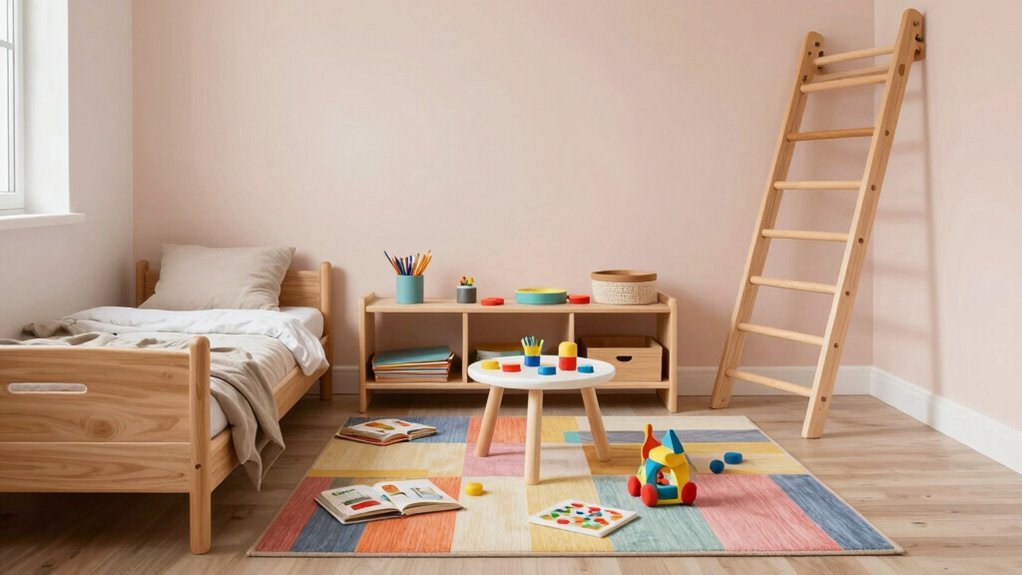
While your toddler’s dressing corner fosters independence with clothing choices, you’ll want to expand that autonomy throughout the bedroom by creating distinct activity zones that naturally guide focus and encourage purposeful movement. Designate a Play Area Zone with 8-10 rotated items on low, forward-facing shelves and open floor space for imaginative exploration. Establish a Reading Nook with cushions, a low bookshelf, and forward-facing book covers for easy selection. Set up an Activity Shelf Zone featuring four varied activities that rotate seasonally for skill development. Create a Gross Motor Zone with a large open center space, climbable elements like a Pikler triangle, and soft flooring. Finally, include a Music and Expression Zone with accessible instruments and an art area. Consider adding a low stool next to the light switch in your reading nook to enable your child to control lighting independently during quiet time. These zones work together, supporting concentration while promoting confident, independent play.
Frequently Asked Questions
What Age Is Appropriate to Transition From Crib to Floor Bed?
You can shift your toddler to a floor bed between 8 and 12 months when they’re crawling, though 18 months to 3 years is optimal for independence. Most shifts happen between 2 and 2.5 years old.
How Do You Prevent a Floor Bed From Feeling Cold or Uncomfortable?
You’ll layer a topponcino or breathable organic bedding to add warmth. Dress your child in a fleece sleeper plus sleep sack, and maintain room temperature between 65-70°F for comfort.
Which Specific Toys and Materials Work Best for Toddler Bedroom Shelves?
You’ll want to display open-ended wooden toys, fine motor skill materials like puzzles and peg boards, and sensory items such as textured balls and musical eggs. Arrange them on low shelves you can easily access independently.
How Often Should Activity Items Rotate to Maintain Engagement and Focus?
You’ll rotate your toddler’s activities every two to three weeks initially, then adjust to weekly or biweekly based on their engagement levels. Watch for boredom signals and rotate when you notice disinterest or overstimulation.
What Safety Gates or Boundaries Work Best With Floor Bed Setups?
You’ll pair your floor bed with low-sided rails or optional lockable gates positioned less than 1.5 inches or over 12 inches from the wall. Anchor nearby furniture to prevent tipping during climbs, ensuring safe independent exploration.
In Summary
You’ve learned how to transform your toddler’s bedroom into a space that encourages independence and self-discovery. By implementing floor beds, low shelves, personal care stations, dressing corners, and activity zones, you’re creating an environment where your child can thrive. These Montessori-inspired design choices support your toddler’s natural desire for autonomy while building confidence and life skills that’ll serve them well beyond the bedroom.


Leave a Reply