

Create a calm zone with soft pillows, gentle light, and sensory toys, and model quiet speech and a flat facial expression. Spot early signs like clenched fists or pacing, then intervene by guiding the child to the zone for deep‑breathing (inhale four, exhale four) or a simple “pause‑before‑react” cue. Teach them to name feelings—“You’re feeling angry”—and pair it with a calming action. Use brief movement breaks, journaling prompts, and visual progress trackers to reinforce self‑control, and keep routines and transitions predictable. Keep exploring for deeper strategies.
Create a Calm Zone for Peaceful Emotional Self‑Control

How can you turn a corner of your home into a safe haven where a child learns to calm down before emotions explode? Designate a calm zone that’s off‑limits for hitting, throwing, or shouting, and make the rule crystal clear: no harm to self, others, or property. Fill the space with soft pillows, gentle lighting, and sensory toys that lower arousal, turning it into a rehearsal ground for emotional regulation. Speak in short, neutral sentences, keep your facial expression flat, and model a calm tone after distress. Invite the child to practice breathing, stretching, or quiet reading there during good moods so the routine becomes automatic when tension rises. Treat the calm zone as a predictable learning hub that eases transitions, reduces anxiety, and reinforces self‑control. Providing sturdy, child-friendly tools like the Kitchen Step Stool for Kids with Safety Rail can further empower children to safely engage in independent calming routines.
Spot the Typical Signs When a Child’s Emotions Get Out of Control
You’ll notice a sudden outburst when a child’s emotions explode in a flash, but you’ll also see a slower build‑up—tight fists, pacing, or a clenched jaw—that signals rising tension.
Spotting these early cues lets you intervene before the situation escalates further.
Recognizing both patterns helps you guide the child toward calm, self‑controlled responses.
Using fine motor skills development techniques can further support emotional regulation in young children.
Sudden Emotional Outbursts
When a child’s emotions surge suddenly, you’ll notice a rapid, intense reaction—often a loud outburst or a sudden tantrum—without any obvious warning signs. These emotional outbursts signal a break in self‑regulation, where the youngster can’t contain a flood of feelings. You may see clenched fists, a flushed face, or a sudden sprint toward a wall. The episode can last seconds or minutes, then the child often feels exhausted or embarrassed. Recognizing the pattern lets you intervene calmly, offering a breath cue or a gentle hand‑hold. By modeling steady language and validating the feeling, you help rebuild the child’s self‑regulation muscles for future challenges.
| Cue | Behavior | Possible Trigger |
|---|---|---|
| Crying | High‑pitched wail | Overstimulation |
| Stomping | Feet pounding | Frustration |
| Yelling | Volume spikes | Disappointment |
| Flushing | Red face | Embarrassment |
| Clenching | Fists tight | Fear |
|
Gradual Escalation Signs
Sudden outbursts often follow a quieter phase where tension builds unnoticed. You’ll notice rising tension, fidgeting, or quick, shallow breaths as early escalation cues. A child may go from speaking needs to silence, showing their processing load is tightening and self‑regulation is waning.
Look for near‑constant movement—tapping, pacing, repetitive phrases—as they try to modulate arousal. Irritability, clenched fists, or eye‑rolling are also tell‑tale signs that loss of control is imminent.
Transitions, breaks, or delays can amplify these cues, so intervene early. Guide the child to a calm zone, use counting or breathing exercises, and reinforce self‑regulation before the situation escalates into a full tantrum.
Using educational toys that promote fine motor skills development can also help children better manage their emotions over time.
Teach Kids the “Name‑It‑to‑Tame‑It” Trick for Strong Feelings
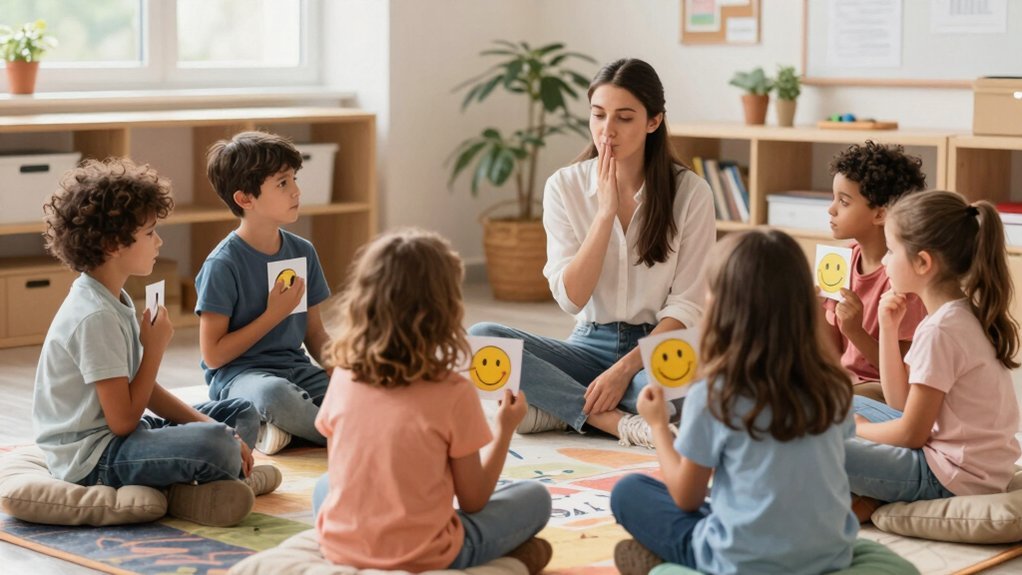
You start by helping your child spot the feeling, then you label it together—“You’re feeling angry.” Finally, you guide them to pick a calming action, like taking a deep breath, so the intensity drops and they can choose a better response. Incorporating tools that support logical thinking can further enhance a child’s ability to manage strong emotions effectively.
Identify the Feeling
It helps a lot to pause and name what you’re feeling—happy, sad, scared, or angry—because just putting a word on the emotion can shrink its power and set the stage for calmer choices. When you guide a child to practice emotion labeling, you give them a concrete tool for self‑control. Point to a picture of a frowning face and say, “You look angry.” Then model your own feeling: “I’m frustrated because I can’t find my keys.” Pair each label with a short example or a simple drawing so even pre‑readers and EL learners can join in. This quick identification step lowers intensity, clears mental clutter, and opens the door to breathing, taking a break, or another coping strategy. Using role play costume sets can further support children in exploring and expressing their emotions safely through imaginative play.
Label the Emotion
Ever wondered how a simple label can calm a storm of feelings? When you hear a child say “I’m angry because I can my toy,” you’re using the Name‑It‑to‑Tame‑It trick. Naming the feeling turns a vague surge into a concrete emotion, lowering its intensity and opening a path to regulation. Model the phrase “I feel ___ when ___” and mirror the child’s facial expression so they see the link between body language and words. Keep the tone neutral; all emotions are okay, just labeled for clarity. Consistently weaving this practice into bedtime, meals, and transitions builds a habit that makes strong emotions easier to manage. Activities that support fine motor skill development also help children practice focus and calmness during emotional moments.
- Use “I feel ___ when ___” in real‑time moments.
- Mirror facial cues while naming the emotion.
- Normalize every emotion as acceptable, not good or bad.
Choose a Calming Action
After labeling the feeling, guide the child to pick a simple, concrete calming action—like a slow breath, a quick stretch, or stepping to a quiet corner.
Explain that the Name-It-to-Tame-It trick works best when the chosen calming action follows the verbal label, creating a direct link between feeling and response.
Model the process yourself: name the feeling, then demonstrate a deep breath or a brief walk.
Use visual prompts such as a picture card that reads “feeling angry → take a break.”
Practice the calming action during calm moments so it becomes familiar, then rehearse it when triggers appear.
Consistent pairing builds a habit, reducing tantrum intensity and frequency over time.
Consider incorporating breathing exercise cards to support anxiety relief and self-regulation during this process.
Use Breath‑Counting to Support Peaceful Emotional Self‑Control

Breath‑counting gives children a simple, concrete cue to pause and calm their nervous system. When you guide them to inhale for four counts and exhale for four, they experience an instant drop in arousal, turning a surge of emotion into a steadier, more alert state. Keep the practice non‑judgmental; start with short counts and extend only as the child feels comfortable. Pair the rhythm with a finger‑trace or visual countdown to reinforce the habit across home, school, and playground. Over time, breath‑counting becomes a reliable self‑control tool that children can summon whenever frustration spikes.
- Use a calm voice and gentle hand‑over to model the rhythm.
- Introduce a simple visual cue, like a colored strip, to track each breath.
- Celebrate each successful session with a brief, positive acknowledgment.
Practice “Pause‑Before‑React” at Home With Simple Role‑Play
You can start by role‑playing everyday moments—like sharing a toy or waiting your turn—so the child learns to name the feeling, pause, and respond calmly. Use a simple cue word such as “stop” or a timer to mark a three‑second breath before acting, then gradually extend the pause. After each scene, give specific, non‑judgmental feedback on what worked and what to tweak next time.
Model Role‑Play Scenarios
A simple pause cue—like raising a hand or setting a timer—lets you model the “pause‑before‑react” habit in a role‑play that feels natural at home. You’ll guide your child through a short script: “I feel frustrated; I’ll take a breath and choose a safer activity.” Use a clear signal, then move to a calm‑down corner for a few breaths. Switch roles so the child practices labeling feelings while you demonstrate supportive feedback. Keep each run brief, note what worked, and add a tiny twist each time to deepen self‑control and role‑play confidence.
- Hand‑raise cue → pause → label → breathe → respond
- Timer signal → pause → move to calm space → execute plan
- Caregiver‑child role swap → feedback → repeat with added detail
Use Simple Cue Words
Switching from the hand‑raise cue to a single word makes the pause habit easier to embed in everyday moments. You choose a simple, consistent cue like “Pause” and tell your child it means stop, breathe, and think before reacting. Pair the cue with a quick role‑play: pause, inhale, list two possible actions, then choose one. Start during low‑stakes activities—clean‑up time or snack prep—so the child practices self‑control without pressure. After each try, give non‑judgmental feedback, highlighting how the pause helped. Track progress with a visual check‑in, such as a sticker or initials, to keep motivation high. Gradually extend the cue to transitions and potential tantrum triggers, reinforcing the habit until it becomes automatic.
Add Movement Breaks (Swinging, Yoga) to Release Tension
When tension builds, a quick movement break—like swinging on a low‑set swing or doing a brief yoga flow—can instantly release physical tightness and calm rising anger. You’ll notice that rhythmic movement sparks brain pathways that support self‑regulation, while the breath steadies the nervous system. Schedule these breaks regularly so children learn to shift from high arousal to a calm, alert state without waiting for a crisis. Pair the activity with mindful breathing to help them spot early signs of dysregulation and regain control.
- Swing for 30 seconds, focus on the back‑and‑forth motion.
- Try a simple yoga sequence: cat‑cow, child’s pose, and seated twist.
- Add a quick jump‑in‑place or spin to boost energy before returning to the task.
Use Journaling or Drawing Prompts for Self‑Reflection
Ever wonder how a simple sketch or short note can turn a stormy feeling into a clear, manageable one? You can give kids a 5‑minute prompt like “Describe a time you felt angry today and what helped you calm down.” This encourages a quick reflection, labeling the emotion and spotting the trigger before it spirals. For visual learners, ask them to draw the scene and color‑code their feelings; the picture becomes a map of bodily cues. Pair the activity with a brief, non‑judgmental chat to normalize the experience and reinforce coping strategies. Regular, short guided reflections build a richer emotion vocabulary, strengthen self‑control, and make thoughtful responses feel natural.
Set Clear Limits and Gentle Guidance to Build Internal Control
A clear, consistent set of limits gives children the safety they need to practice self‑control, turning disappointment into a learning moment rather than a frustration. When you set consistent limits, you reduce confusion and create a reliable framework for decision‑making. Use a calm, low‑voice tone and a simple stop gesture to signal boundaries, then label the child’s feelings to validate their needs. Offer an acceptable alternative or let them choose a routine within the limits, encouraging autonomous problem‑solving. Warn about upcoming transitions and model composure so they stay regulated and ready to learn.
- Speak softly, use a stop gesture, and label emotions.
- Provide a limited choice of activities within the rule.
- Give advance warnings for changes and model calm responses.
Track Progress and Celebrate Wins With Montessori‑Style Feedback
After setting clear limits, you can reinforce those boundaries by tracking how often your child actually follows them and celebrating each success. Note reductions in tantrum intensity and frequency—Rosy’s daily outburbursts might shrink to once or twice a month. Use Montessori‑style feedback: observe the behavior, name the self‑control skill demonstrated, and give brief, neutral guidance for the next step. Celebrate wins with tangible markers like stickers, extra storytime, or a small privilege tied to concrete calm‑down actions. Record incremental gains such as waiting turns, choosing a soothing activity independently, or using the calm‑down space first. Keep feedback consistent, linking each example to the underlying skill—calmness, physical regulation, or awe reframing—and outline the next concrete practice target.
Maintain Routines and Gentle Transitions to Reduce Uncertainty
How can you keep a child calm when the day’s flow shifts? You can boost emotional regulation by anchoring them in familiar routines and smoothing every transition. Predictability steadies their mood, while gentle cues signal change without surprise. Before a shift, give a heads‑up and let them choose a comfort object, like a favorite book or toy. Rehearse the move—flip through a photo album to recognize relatives, for example—so the new setting feels known. For larger changes, allow extra time to warm up and avoid rushing greetings; this pause lets their nervous system settle.
Anchor children in familiar routines, give advance warnings, and allow gentle, paced transitions to soothe their emotions.
- Warn in advance and offer a choice of a special item.
- Practice the upcoming transition together beforehand.
- Give extra time for big changes, avoiding rushed interactions.
Frequently Asked Questions
How Can I Adapt the Calm Zone for a Child With Sensory Processing Challenges?
You’ll lower lighting, add soft textures, use noise‑cancelling headphones, and include a weighted blanket or fidget toy. Keep the zone clutter‑free, limit strong scents, and let the child choose calming visual cues.
What Age Is Appropriate for Introducing “Name‑It‑To‑Tame‑It” to Toddlers?
You can start “name‑it‑to‑tame‑it” around two to three years old; toddlers this age begin labeling feelings, and the simple phrasing helps them recognize emotions and calm themselves quickly.
Can Breath‑Counting Be Combined With Music Without Losing Effectiveness?
You can blend breath‑counting with music, but keep the rhythm simple and steady; otherwise the melody may distract you from counting, reducing the technique’s calming effectiveness.
How Often Should Movement Breaks Be Scheduled During a Typical School Day?
You should schedule movement breaks roughly every 45‑60 minutes, giving students 5‑10 minutes of activity. This cadence keeps energy up, improves focus, and fits naturally between lessons without disrupting the day.
What Signs Indicate a Child Is Ready for More Independent Self‑Regulation?
You’ll notice they pause before reacting, choose calm words, manage frustration, stay focused longer, ask for help when needed, and can follow simple routines without constant reminders.