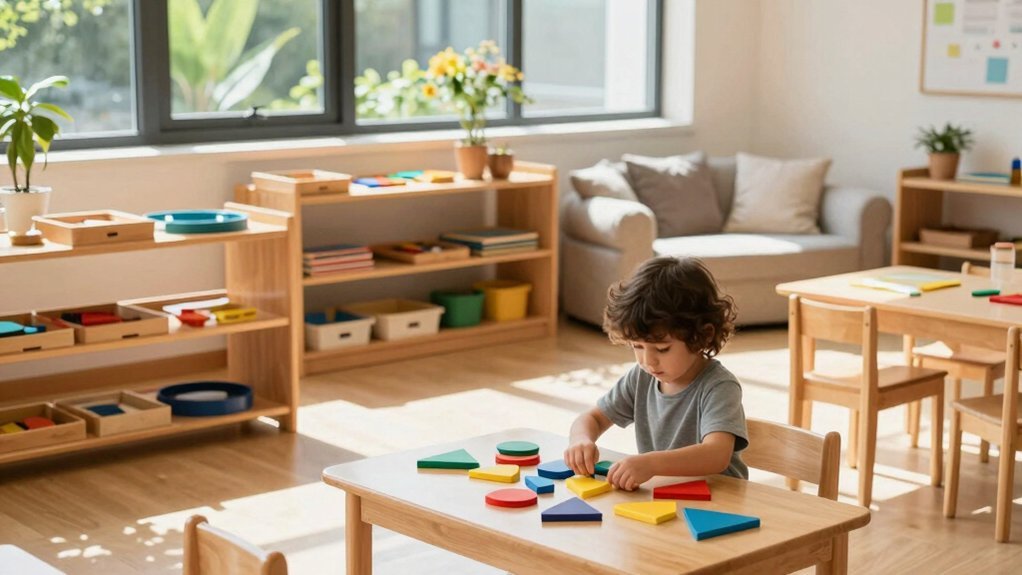
You’ll unlock your child’s independence by combining freedom with clear boundaries. Set limited material choices to prevent overwhelm while letting them explore freely. Create bounded movement spaces like activity stations that channel energy productively. Start with solo work to build confidence, then progress to peer collaboration. Protect uninterrupted work periods and allow repetition—it signals mastery, not boredom. Discover how these five practices transform your classroom into an environment where children thrive.
Montessori Freedom: Why Boundaries Enable Independence

How can limits possibly create more freedom? When you establish clear boundaries in a Montessori environment, you’re actually expanding your child’s independence. Think of it this way: defined limits provide the psychological safety children need to explore confidently without fear of chaos or danger.
You’ll notice that children thrive when they understand expectations. Rather than restricting autonomy, boundaries paradoxically grant it. Your child can focus entirely on learning and discovery when they’re not anxious about navigating unclear rules or uncertain consequences.
Structure reduces decision fatigue. With established limits, children conserve mental energy for meaningful activities instead of testing invisible walls. They develop genuine self-discipline—not from punishment, but from experiencing natural consequences within a secure framework. This foundation builds authentic confidence and responsibility.
Guiding Material Choices So Children Choose Wisely
Why do children make better decisions when their options are curated rather than unlimited? You guide wise choices by presenting only materials your child’s mastered. This restriction prevents overwhelm and encourages thoughtful selection.
You observe which activities engage your child, then strategically introduce new lessons matching their developmental readiness. Start with limited options—perhaps art or a reviewed math activity—expanding selections as time management improves. When you introduce materials at the right developmental moment, children demonstrate greater eagerness and sustained concentration with each new activity.
You intervene when materials aren’t used purposefully. If your child treats supplies as toys or wastes resources, you calmly store them away. This teaches accountability while respecting their autonomy.
You frame boundaries as supportive structures, not punitive restrictions. When your child respects materials and demonstrates mastery, you unlock new choices. This approach cultivates both independence and self-discipline simultaneously.
Movement That Deepens Concentration, Not Chaos
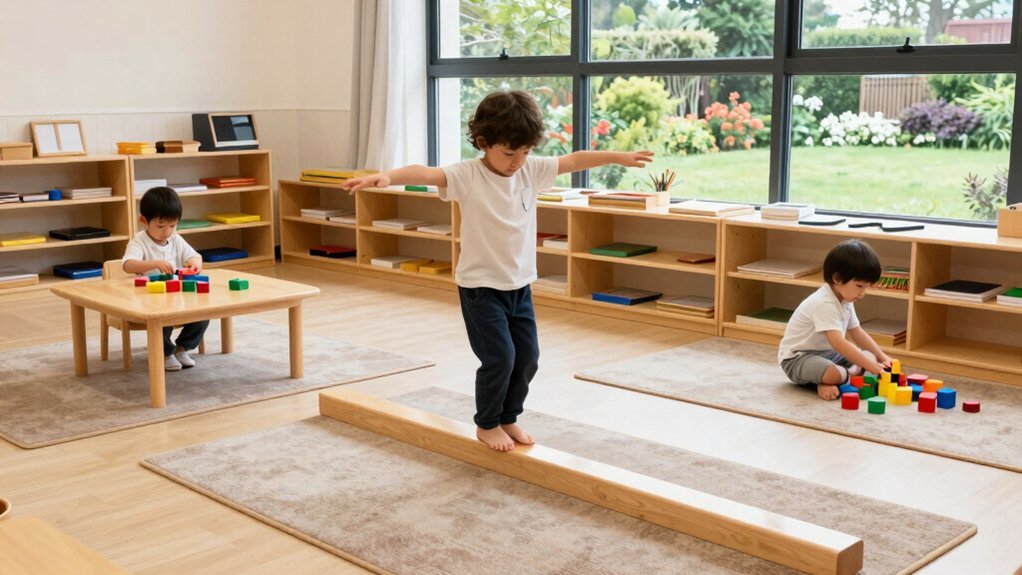
Most parents and educators assume movement and focus are opposites, but in Montessori environments, they’re deeply connected. You’ll notice structured movement activities—like yoga cards, hopping exercises, and voting with feet—channel physical energy productively rather than create chaos.
Brain breaks between concentrated work periods actually extend your students’ focus capacity. When you incorporate movement dice with sight words or continent puzzle activities requiring students to retrieve items around the room, you’re building sustained attention through purposeful engagement. Research indicates that tactile learning can improve retention rates by up to 50%, making these kinesthetic activities particularly effective for deepening memory and concentration.
The key difference lies in intentional design. You’re not allowing random movement; you’re creating bounded spaces like taped hopping squares and specific activity stations. This structure lets children direct their own physical energy while maintaining concentration, transforming movement from a distraction into a tool that deepens their learning and focus.
Solo Work and Partner Collaboration: When and How
When do you know it’s time to shift from independent work to collaborative learning? You’ll notice children naturally gravitate toward partnership when materials invite shared use or when projects grow too complex for solo completion.
Start with solo work to build your child’s confidence and concentration. Preschoolers explore independently before joining group activities, while 6-9 year-olds launch self-led projects as individual endeavors first. This foundation strengthens their ability to contribute meaningfully later. Partner feedback helps examine curriculum flow and ensures children develop foundational skills before advancing to group work.
Partner collaboration emerges organically through mixed-age groupings, where older children mentor younger peers one-on-one. You’ll observe peer learning happening through observation and gentle assistance. As your students mature, they’ll confidently lead small teams, allocating roles and solving problems collectively. This balance—solo work anchoring confidence, partnerships building interpersonal skills—creates engaged, capable learners.
Repetition Without Pressure: Mastery Through Freedom
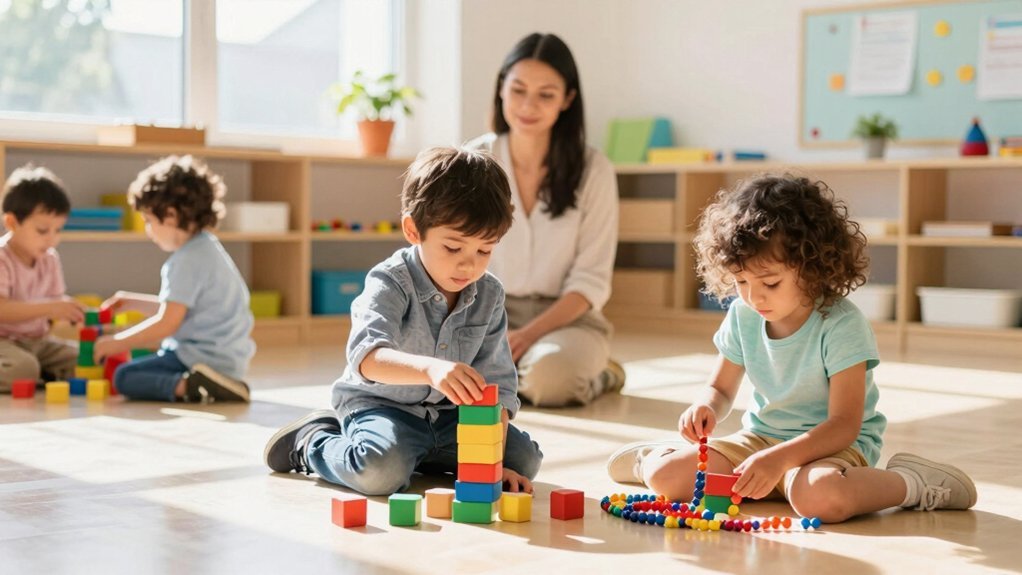
As your child gains confidence through solo work and collaborative partnerships, you’ll notice they’re drawn to repeating the same activities—sometimes dozens of times in a single session. This isn’t boredom; it’s mastery in motion.
Self-correcting materials empower your child to detect and refine mistakes independently. When a knobbed cylinder doesn’t fit, they naturally repeat until it does. This built-in feedback loop eliminates pressure while deepening concentration and motor skill refinement. Through this repetition, children build the emotional resilience that comes from perseverance and the pride of accomplishment.
You’ll support this process by protecting uninterrupted work periods—ideally two to three hours. Long cycles allow your child to settle into repetition’s rhythm without external rushing. Rotate varied choices to prevent overwhelm while honoring their freedom to repeat what resonates with their developmental needs.
Frequently Asked Questions
How Do Teachers Respond When Children Repeatedly Break the Same Classroom Limit?
You reassess your environment for chaos, reinforce boundaries gently and calmly, and consider if the child doesn’t understand the rule or faces developmental challenges before responding with natural consequences.
What Should Parents Do if Their Child Resists Montessori Freedom and Limits at Home?
You’ll maintain calm consistency while observing what’s triggering the resistance. Simplify your limits, offer age-appropriate choices within boundaries, and allow natural consequences. You’re building her internal discipline gradually through predictability and respect.
How Do Natural Consequences Differ From Traditional Punishment in Montessori Classrooms?
You’ll find that natural consequences let children experience logical outcomes of their choices—like cleaning spilled water—while traditional punishment relies on fear and shame. You’re teaching responsibility through connection, not compliance through control.
At What Age Can Children Begin Making Independent Choices in Montessori Environments?
You can start introducing limited choices from birth through sensory exploration. By 12-18 months, you’ll offer basic selections. At age 3, you’re ready for expanded independent decision-making in prepared Montessori environments.
How Do Teachers Balance Individual Freedom With Maintaining Group Classroom Harmony?
You balance freedom with harmony by setting clear limits, modeling respectful behavior, and observing carefully. You redirect gently toward purposeful tasks when needed, ensuring children’s independence doesn’t disrupt others’ work or concentration.
In Summary
You’ll find that Montessori’s “freedom within limits” isn’t contradictory—it’s transformative. When you establish clear boundaries, your child develops genuine independence and self-discipline. You’re not restricting their potential; you’re creating a framework where they can thrive. By guiding their choices, honoring their movement, balancing solo and collaborative work, and allowing repetition without pressure, you’re nurturing confident, capable learners who understand both freedom and responsibility.


Leave a Reply