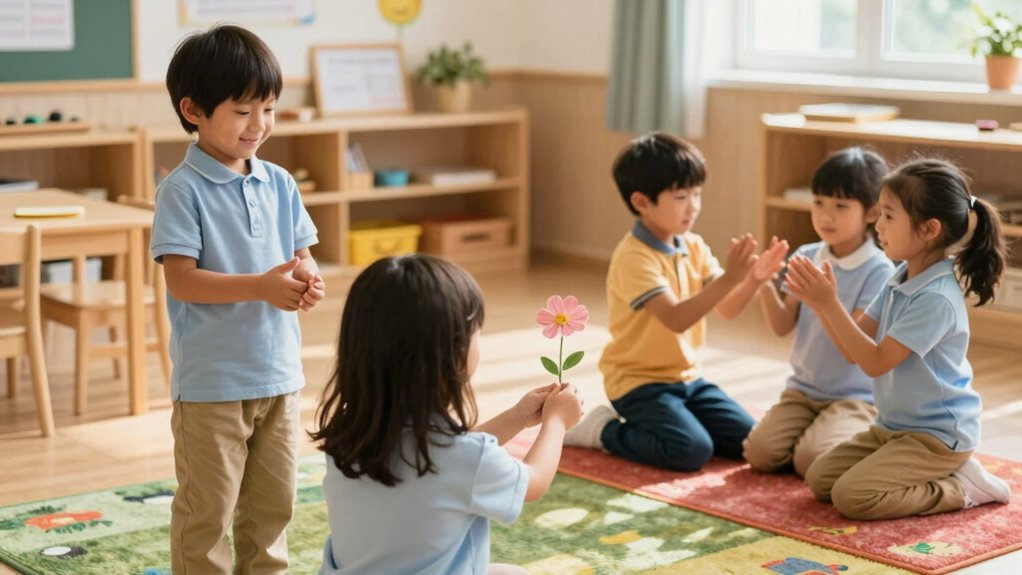
You can build your child’s social confidence through three core Montessori activities. First, model polite greetings with eye contact and handshakes during morning routines, allowing shy children time to adjust. Second, practice please, thank you, and apologies through role-playing with props and peer models. Third, use the Peace Table to guide conflict resolution by acknowledging feelings, identifying issues, and brainstorming solutions together. These foundational practices transform everyday interactions into powerful learning opportunities that’ll shape how your child navigates social situations.
How to Teach Polite Greetings and Build Social Confidence
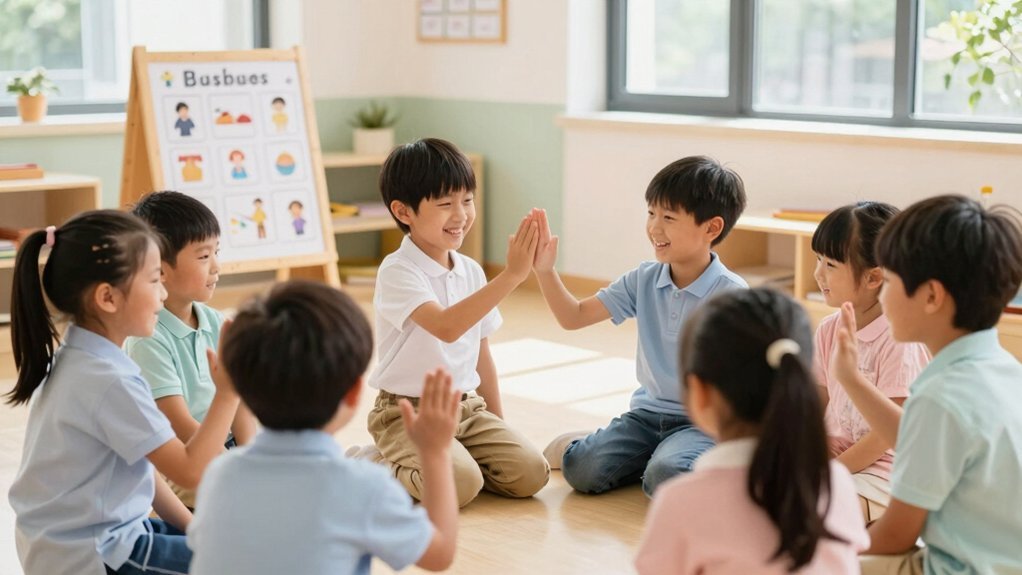
Foundation and daily practice—these’re the cornerstones of teaching children polite greetings. You’ll start by modeling eye contact, smiles, and saying “Good morning, [name],” then invite children to respond. Integrate greetings into morning routines where you shake hands with teachers and practice with peers.
Foundation and daily practice form the cornerstone of teaching polite greetings through modeling eye contact, smiles, and consistent morning routine integration.
For shy children, you’ll begin with non-verbal actions like waving before progressing to verbal interaction. Avoid forcing participation; instead, allow months for adjustment through consistent, low-pressure exposure. This approach supports social and emotional development alongside the acquisition of greeting skills.
You can facilitate role-playing scenarios in circles, using command cards depicting park encounters with strangers. Pair children together for natural repetition, and employ older peers as models. Incorporate props for realistic practice.
These activities build confidence gradually while establishing respectful social interactions from age three onward.
Please, Thank You, and Apologies: Teaching Communication Basics
Once children’ve mastered the confidence to greet peers and teachers, you’ll guide them toward the specific language that sustains respectful relationships. You’ll model phrases like “May I please have that?” alongside demonstrating gratitude and regret through role-playing scenarios.
Your lessons introduce children to please, thank you, and excuse me as foundational expressions. You’ll have them practice offering items and responding with appreciation, building habits of gratitude through repetition. Equally important, you’ll teach apologizing and accepting apologies as conflict resolution skills that foster empathy. These Grace and Courtesy lessons allow children to act out challenging interactions at neutral moments, creating a safe space to practice difficult social scenarios before they arise in real classroom situations.
These communication basics develop social awareness, helping children express their needs effectively while recognizing others’ feelings. Through consistent practice, you’ll build their confidence in social settings and reinforce how politeness creates peaceful, respectful interactions in the classroom community.
Turning Disagreements Into Problem-Solving Moments
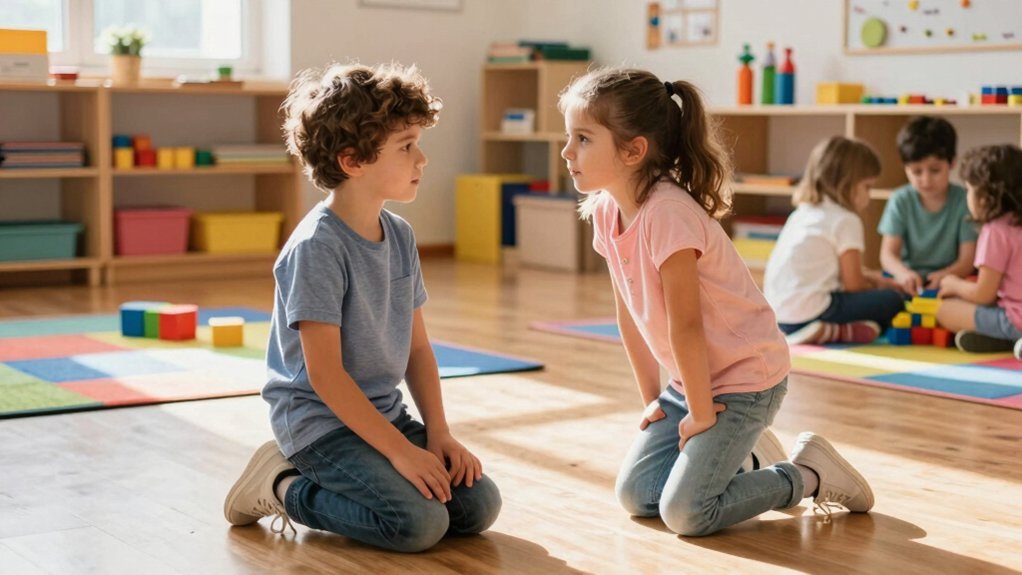
How can you transform a classroom conflict into an opportunity for growth? By guiding children through a structured conflict resolution process that empowers them as problem-solvers.
Start by acknowledging feelings—ask “How are you feeling right now?” to validate emotions. Next, identify the core issue together, whether it’s sharing materials or taking turns. Then you’ll brainstorm solutions collaboratively, encouraging children to generate their own ideas rather than imposing fixes.
Once you’ve reached agreement, implement the chosen solution and reflect afterward to reinforce positive behavior. This approach fosters ownership and teaches communication skills simultaneously. Through repetition as learning, consistent application of these conflict resolution steps strengthens children’s long-term ability to navigate disagreements independently.
Model respectful listening with eye contact and rephrasing. Use the Montessori Peace Table as your designated space for these conversations, creating a calm environment where children learn that disagreements become opportunities for understanding and cooperation.
Frequently Asked Questions
How Do Montessori Grace and Courtesy Activities Differ From Traditional Classroom Behavior Management?
You’ll find Montessori activities teach social skills through modeling and practice rather than punishment. You develop internal discipline and empathy naturally, whereas traditional classrooms often enforce external rules through consequences and corrections.
What Age Groups Benefit Most From Structured Sharing and Turn-Taking Activities?
You’ll find that 2-to-3-year-olds and 3-to-4-year-olds benefit most from structured sharing and turn-taking activities. They’re developing impulse control and learning to respect others’ needs simultaneously, making this period ideal for establishing these foundational social skills.
How Can Parents Reinforce Grace and Courtesy Lessons at Home Consistently?
You’ll reinforce grace and courtesy by modeling polite phrases daily, assigning age-appropriate responsibilities, practicing role-plays together, maintaining consistent routines, and celebrating your child’s courteous behaviors through genuine praise and gratitude.
What Role Does the Prepared Environment Play in Facilitating Social Skill Development?
You’ll find that your prepared environment models respectful interactions, arranges materials accessibly, and creates calm spaces where you can naturally practice negotiation, conflict resolution, and peer collaboration without adult intervention.
How Do Teachers Assess Whether Children Have Internalized Grace and Courtesy Principles?
You’ll assess internalization by observing unprompted politeness during snacks, watching children model behaviors to peers kindly, and noting spontaneous empathy and conflict resolution without teacher intervention throughout classroom routines.
In Summary
You’ll find that these grace and courtesy activities transform how your child interacts with others. By practicing polite greetings, mastering basic communication, and learning to resolve conflicts constructively, you’re building their social confidence from the ground up. Your consistent reinforcement of these skills creates a foundation that’ll serve them throughout their lives. You’re not just teaching manners—you’re empowering your child to navigate social situations with ease and respect.




Leave a Reply