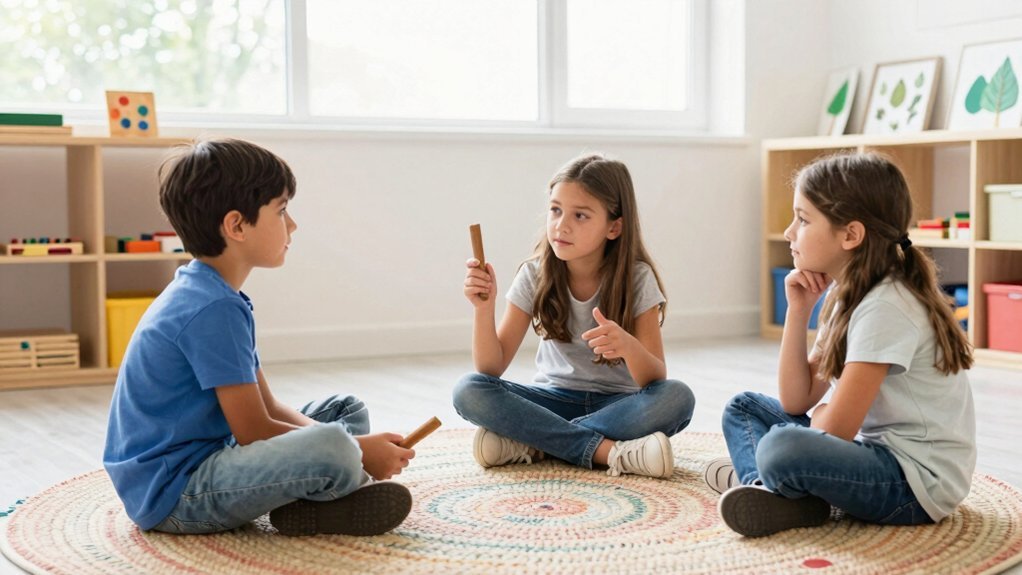
You’ll build peaceful conflict resolution by first teaching grace and courtesy lessons that establish respectful communication skills. Then you’ll implement the Peace Rose Method, where two children take turns expressing feelings using structured statements while passing a felt flower. Finally, you’ll use the Peace Table for group conflicts, where children collaboratively solve problems with minimal adult interference. These three approaches transform disagreements into confident problem-solving moments that extend far beyond the classroom.
How Grace and Courtesy Lessons Build the Foundation for Conflict Resolution
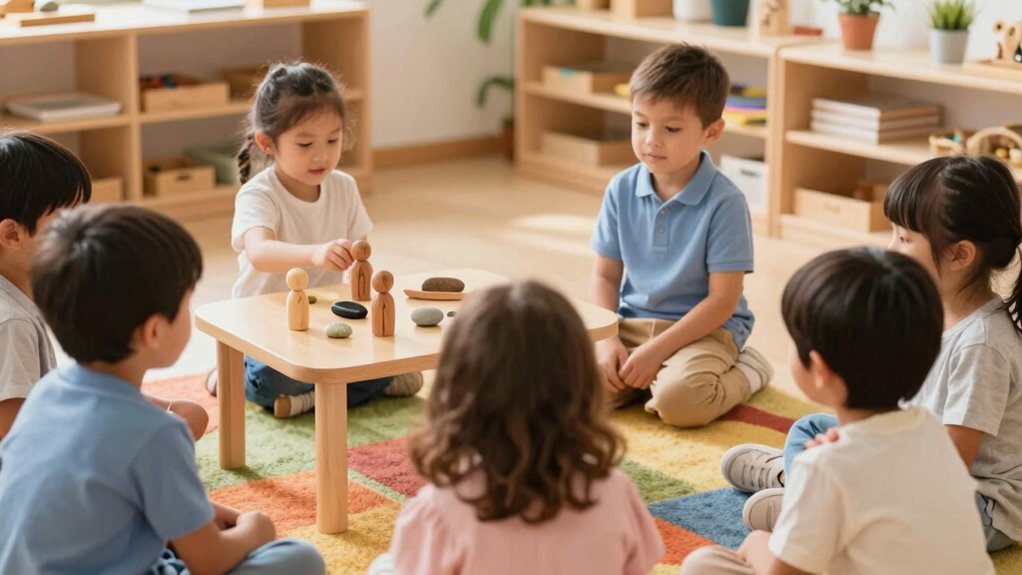
Why do some children navigate disagreements with calm words while others resort to tears or frustration? The answer lies in grace and courtesy lessons, which equip you with essential communication tools before conflicts arise. These structured lessons teach you to express feelings respectfully using “I” statements, listen actively without interrupting, and understand others’ perspectives. You’ll practice greeting, apologizing, asking for help, and declining invitations—skills that translate directly into conflict resolution. By learning to respect personal boundaries and emotions through role-playing activities, you develop empathy and problem-solving abilities. When disagreements occur, you’ve already internalized peaceful language and strategies. This foundation transforms you into a confident problem-solver capable of addressing disputes independently, fostering healthy relationships and community harmony. Through consistent modeling by guides, these communication strategies become natural responses that children instinctively apply during moments of tension.
The Peace Rose Method: Structured Communication for Two-Child Conflicts
When two children clash, they’ll need more than grace and courtesy lessons to navigate the conflict—they’ll need a concrete tool that transforms disagreement into dialogue. The Peace Rose does exactly that. You’ll retrieve this felt flower from your Peace Corner and guide each child to hold it while expressing their feelings using “When you ____, I feel ____” statements. They’ll pass it back and forth, taking turns without interruption until they reach resolution through apology or agreement. You’ll facilitate by asking clarifying questions like “What happened?” and “What do you need?” rather than directing outcomes. This structured turn-taking with the Peace Rose reinforces listening skills and conditional turn-taking, which are essential for genuine dialogue and mutual understanding. Over time, children internalize this calm process, developing lifelong skills in active listening, empathy, and respectful communication that extend far beyond classroom conflicts.
The Peace Table: Facilitating Group Problem-Solving Without Adult Direction
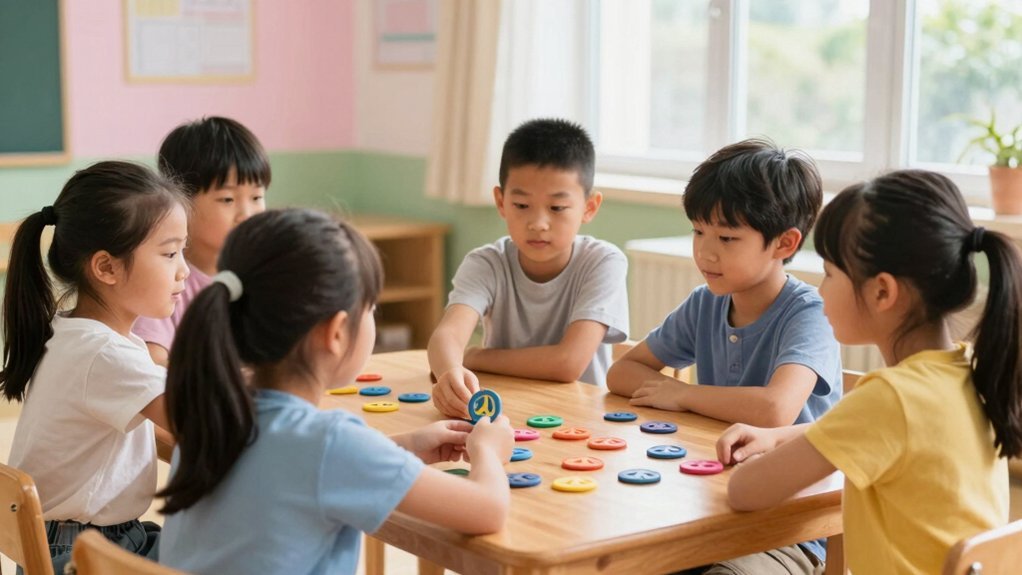
How do you create a space where children resolve conflicts without your intervention? The Peace Table answers this question by providing a designated calm corner equipped with minimal, purposeful materials. You’ll set up a small table with a talking stick, peace object, and soothing visuals that signal the space’s purpose.
When conflicts arise, you simply direct children to the table—then step back. They acknowledge feelings using “I feel… when…” statements, identify the problem, and brainstorm solutions collaboratively. By passing the peace object, they ensure everyone speaks and listens respectfully. This structured process teaches communication, emotion management, and collaboration that strengthens long-term conflict-resolution skills through consistent application.
Your role shifts to observing and modeling calm behavior. This minimal intervention builds their independence and confidence. Children develop genuine problem-solving skills while you reclaim instructional time, transforming conflicts into opportunities for deeper empathy and understanding.
Frequently Asked Questions
How Do Educators Know When to Intervene Versus Allowing Children to Resolve Conflicts Independently?
You intervene when you observe safety risks, escalating aggression, or children’s inability to name emotions independently. You allow resolution when they’re using conflict tools, expressing basic feelings, and initiating dialogue without adult prompts.
What Specific Calming Techniques Should Children Learn Before Participating in Peace Processes?
You should teach children deep breathing, progressive muscle relaxation, and mindfulness practices. You’ll also guide them to recognize physical stress signals and use quiet spaces for self-soothing before they’re ready for constructive dialogue.
How Can Montessori Conflict Resolution Methods Be Adapted for Children With Developmental Delays?
You’ll adapt Montessori conflict resolution by using visual supports, simplified language, extended processing time, and shorter sessions. You’ll pre-teach solutions, offer guided choices, and provide one-on-one adult facilitation before peer problem-solving.
What Role Do Parents Play in Reinforcing Peaceful Conflict Resolution at Home?
You model calm behavior, facilitate open dialogue, and allow your children space for independent resolution attempts. You reinforce emotional intelligence daily, maintaining consistency between home practices and classroom principles to build lasting peaceful interaction skills.
How Frequently Should Educators Assess Children’s Progress in Emotional Regulation and Empathy Skills?
You should assess children’s emotional regulation and empathy skills daily through observation during conflicts, weekly via Grace and Courtesy lessons, and periodically through Conflict Resolution Circles to track incremental independence effectively.
In Summary
You’ve learned how Montessori methods equip children with powerful conflict resolution tools. By establishing grace and courtesy foundations, you’re teaching respect and mindfulness. When you introduce the Peace Rose, you’re giving kids structured communication skills they’ll use throughout their lives. Finally, the Peace Table empowers them to solve problems independently. You’re not just resolving conflicts—you’re cultivating peaceful, capable human beings who’ll confidently navigate disagreements.


Leave a Reply