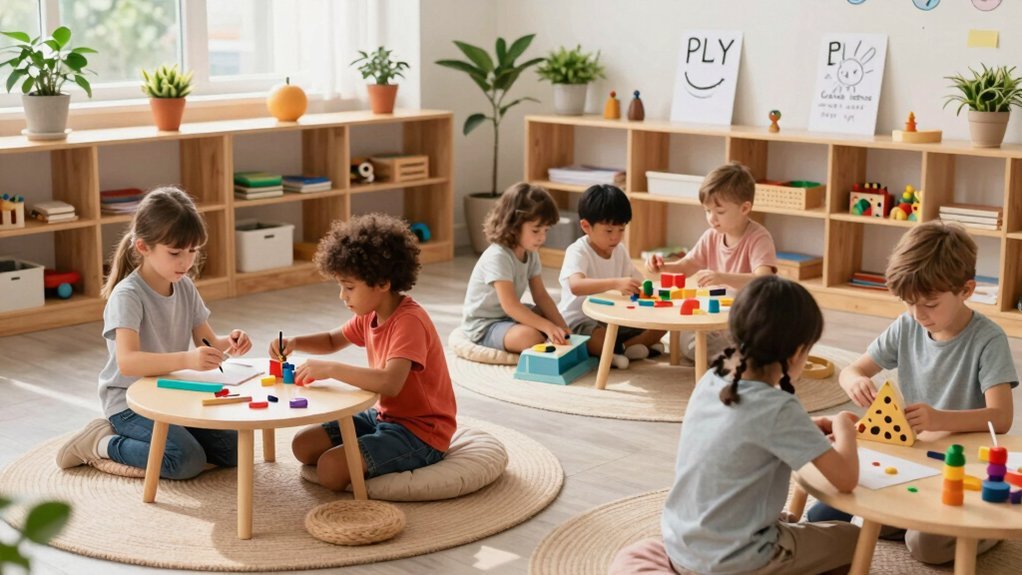
Pick a quiet, low‑traffic spot near a window or hallway, but out of the main flow. Use an ergonomic chair, a low table, and a soft lamp or dimmable LED for gentle lighting. Add calming textures like plush cushions, a fleece blanket, or a bean‑bag seat, plus a small plant and a fidget tool for sensory grounding. Keep a timer, cue cards, and a “calm breath” poster visible. Start with a brief body scan, set an intention, and practice 4‑4‑4 breathing before re‑engaging. Follow this routine and you’ll discover even more ways to keep conflicts constructive.
Why a Calm‑Conflict Corner Works

Why does a Calm‑Conflict Corner work? You step into a predictable, low‑stimulation zone where visual cues signal it’s time to pause. The quiet setting lets you breathe, practice mindful listening, and reset your body‑to‑mind state before re‑engaging. Because the corner follows the Garden Montessori philosophy, its routine reduces uncertainty, so you feel safer and less likely to let tension flare. You can reflect privately, using self‑regulation techniques that keep emotions in check. This proactive space cuts disruptions, nurtures empathy, and prepares you for constructive dialogue. By consistently offering this dedicated spot, the Calm-Conflict Corner transforms potential outbursts into cooperative, respectful interactions. Incorporating Montessori tools like a step stool helper can further promote independence and self-regulation in children within this space.
Pick the Perfect Spot for Your Calm‑Conflict Corner
Choosing the right spot for your Calm‑Conflict Corner means finding a quiet, low‑traffic area where you can step away without interrupting the flow of the room. Look for a corner near a window or hallway that’s out of the main traffic path but still visible enough to signal a Safe Space. Keep soft lighting and a subtle cue—like a small plant or calming color—to mark the zone. Add a visible sign and a tiny clock so anyone knows it’s a pause and processing area. The space should hold a comfortable chair, a small table for breathing guides, and a few calming tools.
| Feature | Why it matters | Quick tip |
|---|---|---|
| Low‑traffic location | Reduces interruptions | Choose a side alcove |
| Visible sign | Signals Safe Space | Use a clear label |
| Soft lighting | Calmes nerves | Add a lamp |
| Subtle cue | Reinforces safety | Place a plant |
Choose Furniture and Props for Your Calm‑Conflict Corner

After setting the perfect spot, fill it with furniture and props that support calm and focus. Choose a supportive, ergonomic chair that encourages upright posture without stiffness, and add a low‑profile table for a timer and grounding bowl. Position a small plant on the shelf for a touch of nature, and keep a fidget tool within reach for subtle self‑regulation. Hang a “calm breath” poster or display a cool‑blue/green color swatch to reinforce the visual peace cue. Install a discreet shelf holding reference cards on I‑statements, active‑listening prompts, and restorative question starters. Ensure the calm‑conflict corner maintains minimal distractions, clear sightlines, and soft lighting, so dialogue stays respectful and attentive.
Add Sensory Cues to Your Calm‑Conflict Corner
You’ll notice the room soften when you switch on a gentle lamp, letting the warm glow cue a calmer mindset. Adding a plush pillow or a smooth fabric swatch gives your fingertips a soothing texture that eases tension. Together, these subtle lighting and tactile touches turn the corner into an instant sanctuary for measured conversation. Including fine motor skill activities like wooden lacing toys can also provide a quiet, engaging focus to help maintain calm.
Gentle Lighting
Ever wondered how a soft glow can steer a tense conversation toward clarity? You can create a Safe atmosphere by swapping harsh overhead lights for a dimmable LED lamp that emits a warm 2700‑3000 K hue.
Position the lamp behind the seating area or run a subtle LED strip along the wall, so the light spreads gently without glare.
Choose a flicker‑free source that pulses at 0.5–1.0 Hz, cueing the brain to calm and supporting slower, clearer thinking.
Adjust brightness on the fly: brighten for planning phases, dim for reflective listening or restorative pauses.
Pair the glow with a quiet visual—like a nature photo or plant—to reinforce the nonverbal signal that this corner is a tranquil, safe space for conflict resolution.
Soft Textures
How can a handful of plush cushions and a velvety throw instantly lower tension in a heated discussion? You’ll discover that soft textures act like a quiet alarm for your nervous system, dialing down arousal the you settle into a calming tactile field. Place a fleece blanket, a chenille throw, or a bean‑bag seat in your conflict corner; the gentle pressure signals safety and encourages slower breathing. Add a stress ball or a textured mat for micro‑pauses that let you pause, inhale, and listen more fully. Rotate hypoallergenic fabrics regularly to keep the space fresh and avoid overstimulation. By layering a soft rug, padded seating, and plush cushions, you give yourself concrete, soothing feedback that steadies emotions and supports constructive dialogue. Incorporating Montessori sensory materials can further enhance tactile engagement and emotional regulation in the space.
Create a Routine for Entering the Calm‑Conflict Corner

You’ll anchor the Corner by marking its spot with a simple sign and a calming scent, then signal the transition with a cue card that tells you it’s time to pause.
As you step in, you’ll reset body and mind by breathing for four counts, naming your feeling, and making a neutral request.
This routine makes the shift clear, grounded, and ready for productive dialogue.
Incorporating sensory processing elements can further enhance emotional regulation and focus within the calm-conflict space.
Anchor the Corner
Where does the Calm‑Conflict Corner begin? You start by designating a quiet nook with soft seating, a timer, and simple visual cues—nothing that distracts. You then anchor it with a consistent entry routine: approach, notice your feelings, name your needs using I‑statements, and decide whether to stay for a brief pause or take a longer break. This routine ties directly into restorative practices, turning the corner into a pre‑relational space that promotes self‑regulation rather than punishment.
- Place a breathing card and grounding exercise at eye level.
- Set a visible timer for 2–5 minutes to structure the pause.
- Use a calm color palette and minimal décor to reduce arousal.
Signal Transition Cue
Ever wondered how a simple signal can transform a heated exchange into a purposeful pause? You place a small bell or color card at the entrance of your Calm‑Conflict Corner. When tension spikes, you ring the bell, inhale for 60‑90 seconds, and repeat the reminder phrase, “I’m taking a moment to process; I’ll be ready to listen in 1 minute.” The cue triggers a fixed routine that shifts you from reactivity to regulation, while visual prompts guide you through pause, breathe, listen, and respond. The corner stays quiet, lit softly, and furnished comfortably, so you can focus on embodied calm before dialogue resumes. Using modular cubes for toy rotation nearby can help maintain a peaceful environment by reducing clutter and visual distractions during conflict moments.
| Step | Action |
|---|---|
| 1 | Ring the cue |
| 2 | Slow‑breath cycle |
| 3 | Restate discussion goal |
| 4 | Re‑enter conversation |
Reset Body and Mind
After ringing the cue and taking a few calming breaths, step into the Calm‑Conflict Corner and follow a short, repeatable routine that resets both body and mind. Greet the space, sit on the soft chair, and let the low lighting cue you to pause. Take four to six slow diaphragmatic breaths, then declare an intention like “I’ll listen calmly.” Scan your body: unclench your jaw, drop your shoulders, relax your hands. Use the timer to limit the pause to two minutes, and keep cue cards handy for phrases such as “I need a moment to process.” This embodied reset sharpens focus, reduces tension, and paves the way for effective conflict resolution.
- Greet the corner and breathe deliberately
- State a calm intention and perform a quick body‑check
- Use a timer and cue cards to normalize the pause
Use Breathwork to Activate the Calm‑Conflict Corner
When tension spikes, stepping into a dedicated Calm‑Conflict Corner and practicing a simple breathwork routine can instantly reset your nervous system. You choose a distraction‑free spot, sit upright, and begin slow diaphragmatic inhales through the nose, filling your belly. Exhale gently through the mouth, letting tension melt away. Try a 4‑4‑4 rhythm—inhale four seconds, hold four, exhale four—or a 4‑6‑4 pattern for deeper relaxation. This brief pause acknowledges dysregulation as normal and signals your brain to shift from fight‑or‑flight to calm. Repeating the cycle a few times steadies heart rate, lowers cortisol, and sharpens listening. Regular, short breathing breaks keep your neurological state stable, paving the way for constructive dialogue and lasting resolution. Using tools aligned with Montessori principles, such as vocabulary building activities, can further support emotional regulation and peaceful communication.
Review and Refine Your Calm‑Conflict Corner
How often do you pause to assess whether your Calm‑Conflict Corner still serves its purpose? Regular check‑ins let you spot worn cushions, dimming lights, or missing prompts that could derail conflicts. Take a moment after each meeting to note what feels off, then tweak the space before the next round. A quick visual audit keeps the corner inviting and functional, reinforcing the habit of stepping away from heated exchanges.
- Test the timer’s length; shorten or lengthen pauses based on how quickly tension eases.
- Rotate grounding cues (breath count, body scan) to keep the routine fresh and engaging.
- Refresh turn‑taking signs and I‑statement prompts, ensuring they’re legible and relevant.
Frequently Asked Questions
What Are the 5 C’s of Conflict?
You’ll find the 5 C’s are Calm, Clarify, Collaborate, Create Solutions, and Commit. They guide you to pause, listen actively, work together, design restorative fixes, and follow through on agreements.
What Is the 5 5 5 Method of Conflict?
You pause for five seconds, then five minutes, then five hours—using each interval to breathe, reflect, and reset your mindset before re‑engaging calmly, choosing I‑statements and collaborative solutions.
What Are the 5 Methods of Resolving Conflict Peacefully?
You’ll resolve conflict peacefully by using active listening, I‑statements, restorative circles, guided dialogues, and early intervention with clear rules and routines that promote empathy and mutual respect.
What Are the 7 Strategies for Managing Conflict?
You’ll use active listening, pause to breathe, set clear expectations, practice self‑compassion, employ restorative circles, model respectful dialogue, and reinforce calm routines to manage conflict effectively.