You can prevent summer learning loss by creating an environment matched to your child’s developmental stage. Design spaces that invite independent exploration through accessible materials, outdoor zones, and hands-on resources. Establish daily routines with 15-20 minutes of math practice and 20-30 minutes of reading to maintain skills. Stock your home with age-appropriate books and learning materials now. As your child progresses through elementary school, you’ll want to continuously evolve these spaces to match their growing cognitive demands.
Why Math Skills Drop Faster Than Reading Over Summer
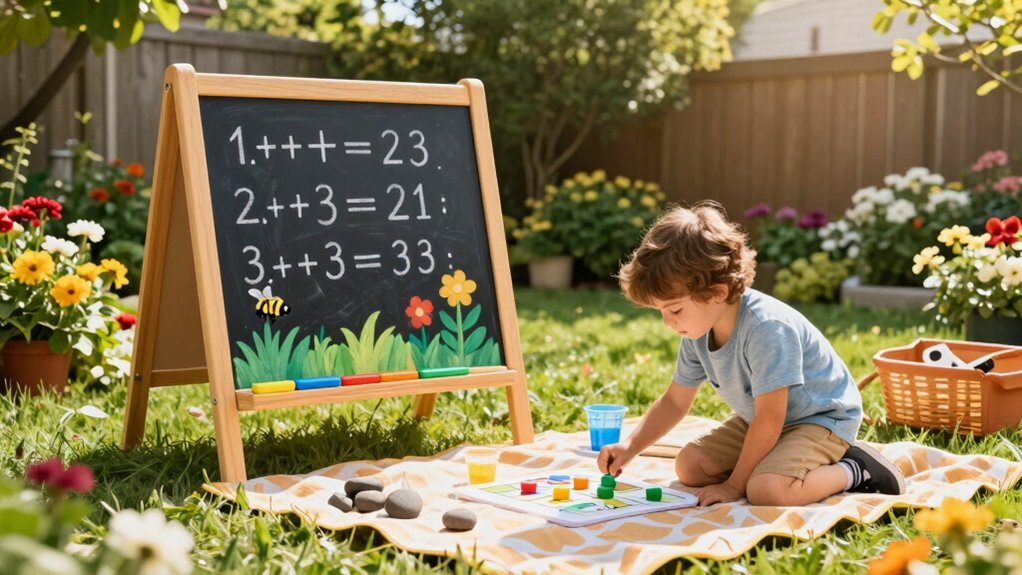
When summer break arrives, your child’s math skills deteriorate more rapidly than reading abilities—a phenomenon backed by compelling research. Your child typically loses 25-34% of school-year math gains compared to 17-28% in reading. This disparity stems from exposure differences: math opportunities arise less frequently during summer than reading ones. Your child encounters books, signs, and written communication naturally, while math practice requires intentional engagement. Additionally, the volume of prior knowledge affects the slide’s severity. Students with stronger school-year math foundations experience greater losses, suggesting that math skills rely more heavily on consistent reinforcement. Without deliberate summer math activities, your child can lose up to three months of progress while reading skills decline over one to two months. Research shows that economically disadvantaged students experience disproportionately greater summer learning losses, making intentional summer engagement especially critical for families with limited access to enrichment activities.
Assess Your Child’s Age and Learning Needs First
How can you create a summer learning environment that actually works for your child? You’ll need to match your approach to their developmental stage and abilities.
Consider these age-specific factors:
- Early school-age (6-8): Your child needs movement breaks and hands-on learning since sitting still remains challenging. Focus on preventing reading regression, as 90% of struggling first-grade readers stay behind without intervention.
- Later school-age (9-12): Your child benefits from abstract thinking activities and peer engagement. Academic success at this stage correlates strongly with early conversation exposure, so maintain verbal interaction. Research shows that 32 million more words are heard by children from wealthier families by age 4, underscoring the critical importance of consistent verbal engagement during these formative years.
- Preschoolers (3-5): Your child thrives through imaginative play and problem-solving tasks that build foundational skills.
Understanding where your child falls developmentally ensures you’re targeting the right skills during seasonal breaks.
Design Outdoor Spaces That Encourage Independent Exploration
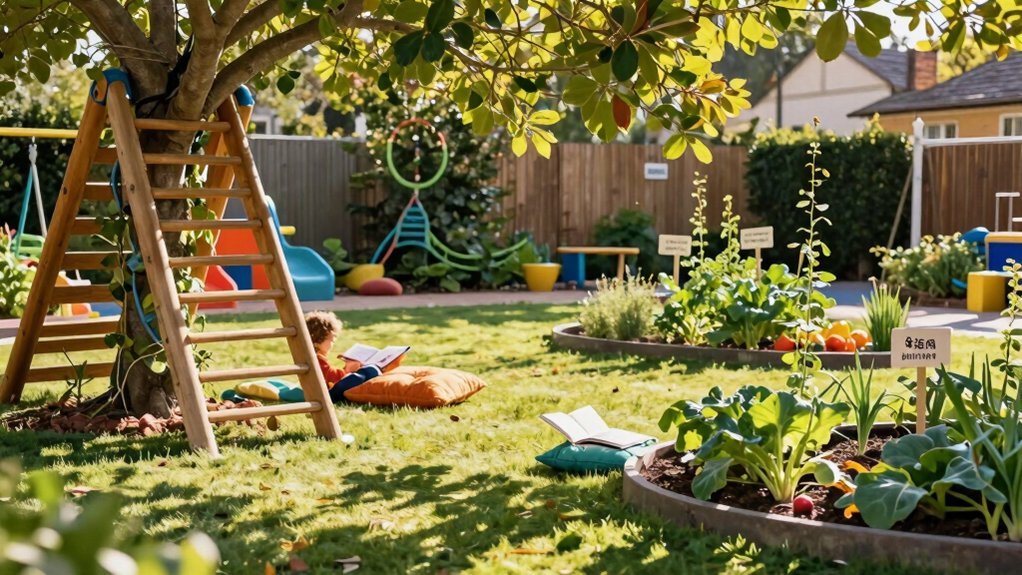
Your child’s outdoor summer learning environment should balance structure with freedom—giving them room to explore safely while you maintain a watchful eye. Design clear sightlines so you can supervise without hovering. Install durable, safe surfaces that minimize injury risks during independent play.
Create multi-use zones with open turf areas for reading or group projects, chalk-friendly walls for creative expression, and designated science or art workshop spaces. Add hands-on STEM tools like weather stations, compost bins, or raised gardens that spark curiosity.
Incorporate natural elements—trees, native plants, and habitat features like birdhouses—that support learning through sensory engagement and observable ecosystems. Strategic shading and vegetation reduce stress while extending usable outdoor hours. Accessible paths and seating throughout enable your child to explore independently at their own pace. These nature-based spaces foster environmental literacy and encourage your child to develop a deeper appreciation for the natural world around them.
Stock Your Home With Age-Appropriate Learning Resources Now
Why do some children enter kindergarten ready to thrive while others struggle from day one? The answer often lies in your home’s learning resources.
Children with access to quality materials develop stronger literacy and numeracy skills. You’ll want to stock your environment strategically:
- Books – Aim for three or more children’s books; households with books yield an average three additional years of schooling per child
- Playthings – Include manufactured toys, household objects, and outdoor items that encourage problem-solving
- Learning materials – Provide age-appropriate resources supporting the four+ learning activities recommended for 36-59 month children
Your investment matters tremendously. Kids entering kindergarten prepared have an 82% chance of mastering basic skills by age 11, compared to just 45% of unprepared peers. These foundational resources establish trajectories that persist throughout their academic careers. Research from nationally representative surveys shows that children with two or more playthings alongside books demonstrate measurably better school readiness outcomes.
Build a Daily Summer Routine That Protects Math and Reading Skills
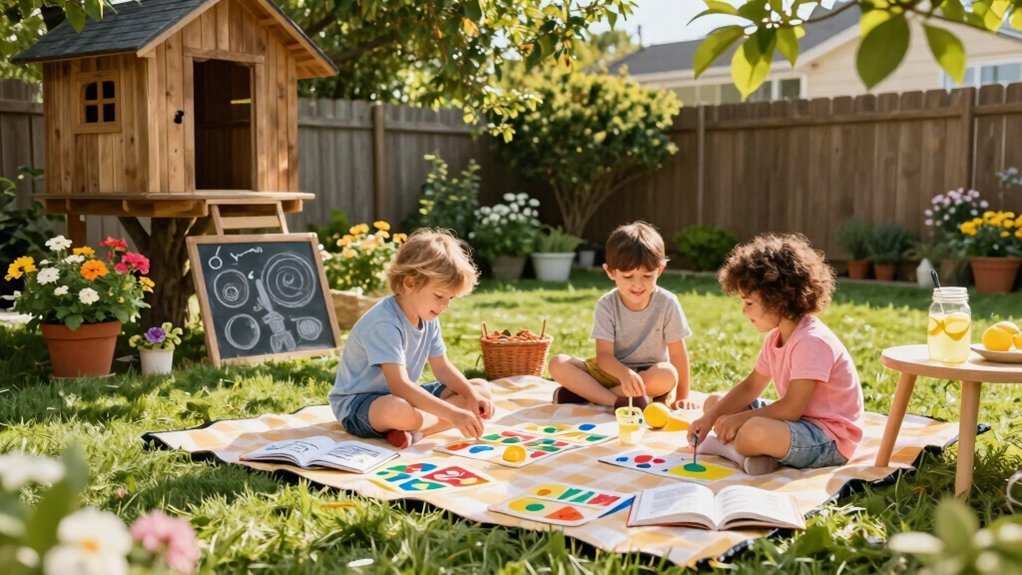
You’ll protect your child’s math and reading skills by establishing morning math practice sessions that reinforce computational fluency before summer distractions take over.
Carving out a dedicated reading time block—even just 20-30 minutes daily—maintains the comprehension gains your child achieved during the school year. Research shows that income-based gaps tend to widen over summer months without consistent engagement.
Consistency in these routines prevents the two-month skill regression that typically derails progress for most elementary students over summer break.
Morning Math Practice Sessions
How can a simple morning routine shield your child from losing months of hard-earned math skills? By integrating math into everyday activities, you’ll prevent the 25-34% knowledge loss that typically occurs during summer break.
Start your mornings with practical math practice:
- Use grocery shopping to calculate discounts and totals
- Double recipes while cooking or baking together
- Estimate time and distance for planned trips
These activities work because they’re naturally embedded in your family’s routine rather than feeling like schoolwork. Short, game-like sessions prevent skill fade without resistance. Your child practices real-world math applications while you accomplish necessary tasks. This approach builds proficiency during moments you’d spend together anyway, making summer learning effortless and sustainable. Like athletic skill development, continuous math practice throughout the break maintains the progress your child has made during the school year.
Reading Time Block Strategy
While morning math sessions anchor your child’s numerical skills, reading deserves equal protection during summer months. You’ll want to establish a reading block exceeding 90 minutes daily—the gold standard that elementary teachers follow throughout the school year.
Structure this time strategically. Allocate 25-30 minutes for interactive read-alouds where you ask comprehension questions and encourage your child to reciprocate. Dedicate 15 minutes to small group intervention targeting specific skill gaps like decoding or fluency. Fill remaining time with guided oral reading and summarization activities. Research indicates that time allocation effects depend on your child’s initial skill level, so you may need to adjust these segments based on whether your child is already strong in foundational skills or needs more focused phonics practice.
Research shows children lose approximately two months of reading progress over summer without intervention. Parent-guided reading with structured support significantly outperforms unguided sessions. Your consistent, intentional approach prevents skill regression and maintains the progress your child achieved during the school year.
Consistency Prevents Skill Regression
When summer break arrives, your child’s academic skills don’t pause—they actively decline without intervention. You’ll see math progress slip by 2.5 months and reading fluency drop ensure without consistent practice.
Establishing a steady daily routine counteracts this regression. Consistency reinforces neural pathways, especially for neurodiverse learners who thrive on predictability. Your commitment to maintaining structure prevents long-term educational setbacks. Research dating back to 1996 has highlighted the potential long-lasting effects on a child’s educational journey without proper intervention during these critical summer months.
Implement these key elements:
- Schedule 15-20 minutes of daily math practice using worksheets or apps
- Dedicate time to oral reading with parent support and engagement
- Embed learning into everyday activities like cooking measurements or shopping calculations
This steady rhythm sustains skills your child worked hard to develop. Regular reinforcement during summer months preserves academic gains and ensures they start the next school year without the typical two-month deficit most students experience.
Adapt Your Setup as Your Child Grows Through Elementary School
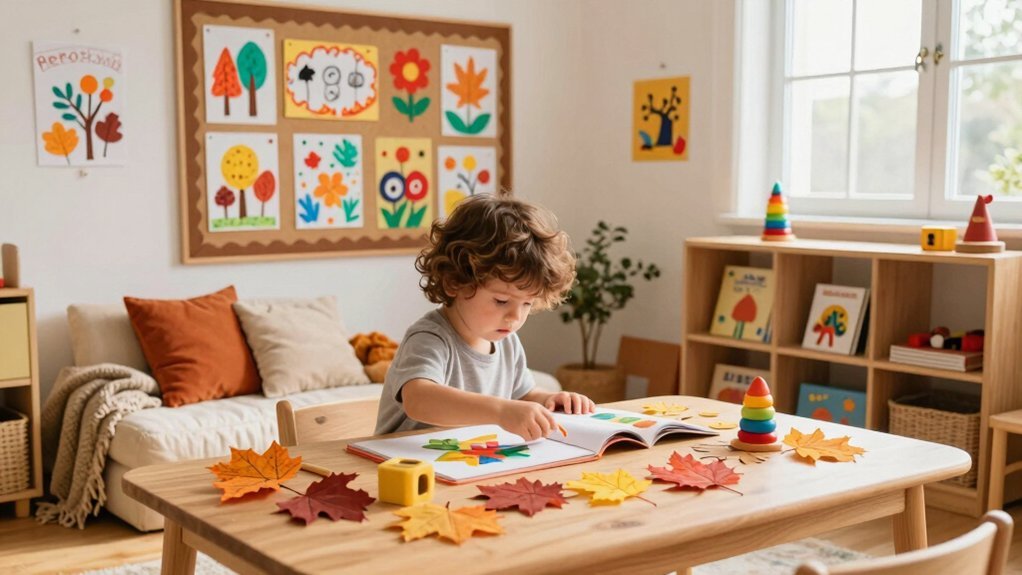
As your child progresses through elementary school, their learning environment must evolve alongside their developing capabilities. Younger elementary students benefit from spaces supporting play-based learning with defined activity centers and open-ended materials. As they advance, gradually shift toward environments emphasizing responsibility, self-direction, and logical thinking.
You’ll want to incorporate more complex materials and project-based activities that encourage independent exploration. Adjust your setup to include dedicated zones for research, collaborative work, and focused study. Display materials at heights your child can access independently, fostering autonomy and decision-making. Consider incorporating sensory-friendly elements like adjustable lighting and noise management to support your child’s regulation and engagement throughout their learning day.
Continuously observe your child’s progress and interests, adapting material placement and center configurations accordingly. This intentional evolution ensures your environment remains developmentally appropriate, preventing skill regression while supporting deeper learning and growing cognitive demands throughout elementary years.
Frequently Asked Questions
How Can Low-Income Families Access Summer Learning Programs Without Financial Burden?
You can access free summer programs through DiscoverSummer.org and Camp-School Partnership sites. Look for district-run programs offering free enrollment, and check if your child qualifies for federally funded grants eliminating financial barriers.
What Specific Nature-Based Activities Improve Both Math and Reading Simultaneously?
You’ll strengthen math and reading by counting petals while creating nature journals, sorting leaves by shape while labeling them, graphing collected insects, and reading patterns in tree bark and fractals during outdoor explorations together.
How Do Summer Program Participation Rates Differ by Socioeconomic Status?
Your child’s summer participation depends heavily on family income. Upper-income families achieve 67% participation rates versus 38% for lower-income families. You’ll find affluent children five times more likely attending camp than economically disadvantaged peers.
What Environmental Factors Most Significantly Influence Seasonal Learning Pattern Changes?
You’ll find that temperature fluctuations, daylight hour changes, and ecosystem shifts most profoundly influence your child’s seasonal learning patterns. These factors directly affect cognitive engagement, sleep cycles, and the types of hands-on activities you can implement.
How Can Outdoor Play Settings Be Adapted for Structured Math Practice?
You can transform your outdoor play settings into math learning spaces by drawing numbered boxes, creating chalk number lines, setting up hula hoop games, and organizing scavenger hunts that integrate counting, measurement, and pattern recognition into play.
In Summary
You’ve now got the foundation to keep your child’s skills sharp while they enjoy the freedom summer offers. By evaluating their needs, creating engaging outdoor spaces, and maintaining a consistent routine, you’ll protect their reading and math abilities from the dreaded summer slide. You’re equipped to adapt your environment as they grow, ensuring each season brings both learning and joy. Start implementing these strategies today.



Leave a Reply