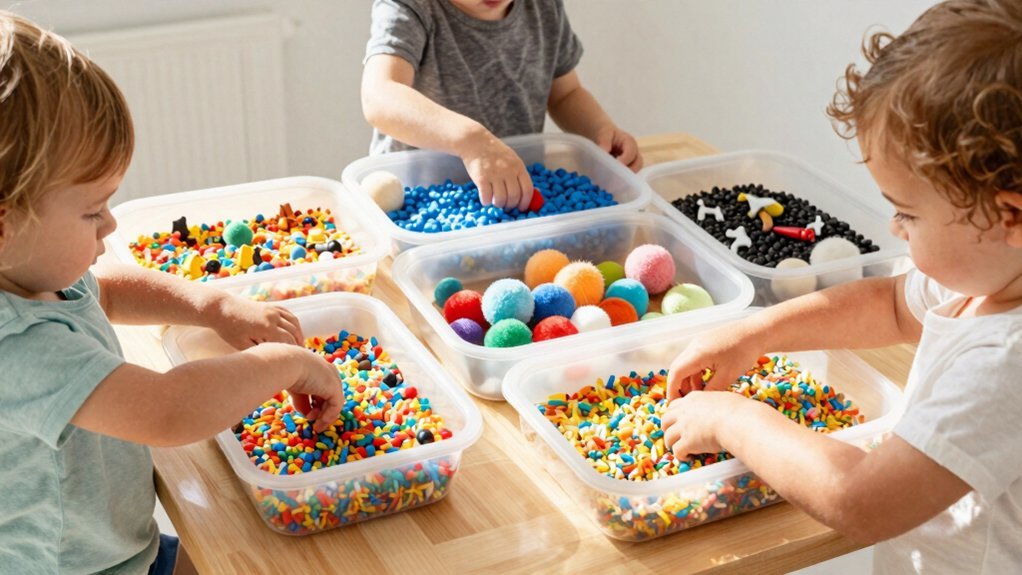
You can boost your toddler’s language, fine‑motor, and early‑math skills with Montessori‑style sensory bins that use safe, real‑world fillers like dry rice, beans, sand, or cloud‑dough. Choose a shallow pan or low table, keep the bin about 12–15 inches wide, and add tools such as tongs, tweezers, or measuring cups to develop pincer grip and coordination. Label textures, colors, and actions while you play, count scoops, and prompt sorting to weave vocabulary and counting into the fun. Keep sessions short, supervise closely, and use non‑toxic, oversized items for safety. Continue exploring, and you’ll discover even more ideas for enriching play.
What Makes Montessori Sensory Bins Essential for Toddlers?

Why do Montessori sensory bins matter for toddlers? You’ll see that they turn simple play into purposeful learning. By offering age‑appropriate fillers and real utensils, Montessori sensory bins let toddlers practice pouring, scooping, and sorting—actions that sharpen fine motor skills and hand‑eye coordination. You guide them to name textures, describe colors, and track progress, weaving language into the tactile experience. The bins also model practical life skills, encouraging deliberate manipulation that builds independence. Safety stays front‑and‑center: objects are sized for tiny hands, supervision is built in, and you can choose edible or non‑edible materials to match each child’s readiness. This focused, hands‑on exploration fuels developmental growth while keeping play engaging and safe. Many Montessori materials, like the Premium Montessori Blue Triangles, include built-in autonomous error correction systems that encourage independent problem-solving.
Choose the Right Bin Size & Materials for Montessori Play
Which container fits your child’s play style? Pick a shallow pan for floor‑level exploration or a sturdy sensory table if your toddler prefers standing. The bin size should be large enough for scooping but small enough to keep the activity contained—about 12‑15 inches across works well for most toddlers. Fill it with safe fillers like dry rice, beans, sand, or cloud dough; avoid water beads because they pose choking risks. Add Montessori play tools—tongs, tweezers, silicone muffin cups, measuring cups—to develop pincer grip and fine‑motor precision. Choose non‑toxic, oversized manipulatives that stay within reach and encourage independent inquiry. By matching the container, bin size, and sensory bin materials to your child’s developmental stage, you create a safe, engaging environment that fuels curiosity and learning. For extended engagement, consider incorporating large beads that are designed to be safe for toddlers to enhance fine motor skills and color recognition.
Step‑by‑Step Guide to a Montessori‑Style Cloud‑Dough Bin

You’ll start by mixing 8 parts flour with 1 part oil until the cloud‑dough feels soft and pliable.
Then, set out scoops, cups, and molds on a low, distraction‑free table so your toddler can scoop, pour, and shape the dough.
As they play, guide them to name textures and compare sensations, turning simple tactile fun into a focused sensory exploration.
Choosing toys made with non-toxic finishes ensures safe and engaging play experiences for your child.
ing‑Dough Ingredients
Ever wondered how a simple mix of flour and oil can turn a sensory bin into a Montessori‑style cloud‑dough experience? You’ll need two parts flour and one part oil—baby oil or vegetable oil works best. Measure out the flour, pour it into a large washable container, then add the oil. Stir with a plastic knife until the mixture becomes a cohesive, squeezable dough that mimics sand. For a splash of color, drizzle a few drops of food coloring or liquid watercolor and blend until even. Keep a set of measuring cups, silicone muffin cups, and a sturdy spoon nearby; they let toddlers practice scooping, shaping, and fine‑motor control. This dry sensory play filler stays reusable, easy to reset, and pairs nicely with other bin fillers for varied tactile exploration. Using tools with safe cutting features encourages independent and supervised learning during sensory play.
Sensory Exploration Activities
How can you transform a simple cloud‑dough bin into a dynamic learning hub for toddlers? Start by spreading a layer of flour‑oil dough in a shallow tray. Add scoops, cups, and lightweight tools to invite sensory exploration. Prompt the child to squeeze, roll, and press, strengthening fine motor skills. Label each action—soft, grainy, squeeze, release—to spark language development. Count scoops together, compare volumes, and ask which pile is bigger, weaving math concepts into play. Show how adding a drizzle of oil changes texture, encouraging scientific observation. Keep the area clean, supervise closely, and wash hands before moving to water‑based activities. This step‑by‑step setup turns a cloud‑dough bin into an engaging, multi‑skill learning station. Elevating pots with a circular mesh riser can inspire curiosity about plant growth and sensory experiences.
Four Dry Fillers for Montessori Sensory Bins
You’ll find that Montessori‑inspired dry fillers give your sensory bin a rich, tactile experience while staying reusable. Choose from cloud dough, kinetic sand, homemade snow, or simple grains like rice to keep the play mess‑free and engaging. Each option invites scooping, pouring, and shaping, turning ordinary materials into learning tools. Incorporating natural materials with non-toxic finishes ensures safe, developmentally appropriate play while supporting sensory exploration.
Montessori‑Inspired Dry Fillers
What makes a sensory bin truly engaging is the texture you choose, and Montessori‑inspired dry fillers deliver just that. You’ll find cloud dough, kinetic sand, homemade “snow,” and water each give a unique feel that sparks toddler learning. Cloud dough’s soft, moldable blend of flour and oil invites shaping and squeezing, honing fine motor skills. Kinetic sand feels crumbly yet holds shape, letting fingers explore tactile resistance without a mess. Homemade “snow” combines cornstarch, baking soda, and water for a cool, grainy texture perfect for pouring, scooping, and color‑sorting. Water, used as a dry filler, supports practical‑life tasks like precise pouring and transferring, offering a recyclable, predictable medium. These dry fillers turn sensory bins into hands‑on classrooms, reinforcing Montessori‑inspired exploration. Including versatile tools that encourage hands-on manipulation enhances sensory learning experiences.
Sensory‑Rich, Reusable Materials
From cloud dough to kinetic sand, the next step is exploring reusable, sensory‑rich fillers that keep the bin fresh for countless sessions. You’ll notice how each material transforms sensory bins into tactile learning playgrounds, letting toddler play spark curiosity and fine‑motor growth. By swapping one filler for another, you extend the life of the bin and keep the experience novel without buying new supplies.
- Cloud dough – flour and oil blend into a soft, moldable mass that slides through fingers and holds shapes for sculpting.
- Kinetic sand – sand mixed with a binding agent stays firm yet crumbles, perfect for scooping, pouring, and building.
- Homemade “snow” – cornstarch, water, and optional baking soda create a cool, powdery texture that dissolves and reforms, encouraging endless experimentation.
These reusable fillers boost tactile learning and make every toddler play session fresh and engaging.
Guide Language Development in Your Sensory Bin

Ever wondered how a simple bin can boost your toddler’s words? When you set up sensory bins, you create a playground for language development. Talk about textures—“soft,” “slippery,” “grainy”—and watch your child repeat descriptive language. Use thematic bins to anchor vocabulary; a weather bin invites words like “rainy,” “stormy,” or “sunny.” Prompt imitation by saying, “Let’s splash the water,” then let them echo the phrase. Introduce quantities—“one pebble, two pebbles”—and compare colors, “bright red, dark blue.” Add scented or edible fillers to spark taste and smell talk. Keep the conversation flowing, ask open‑ended questions, and celebrate each new word; the bin becomes a lively language lab.
Montessori‑Aligned Theme Ideas for Sensory Bins
You’ll notice that natural textures—like pine cones, shells, or fabric scraps—invite tactile curiosity while staying true to Montessori’s love of real materials.
Adding color‑coded bins or containers lets you guide sorting practice without overt instruction, fostering independent concentration.
When you include child‑sized scoops, tongs, and funnels, you turn simple play into purposeful fine‑motor work that builds confidence and skill.
Natural Materials for Textures
Natural textures—rice, beans, sand, seeds, dried corn—turn a simple bin into a tactile playground that invites toddlers to explore weight, density, and granularity. You’ll notice how sensory bins become miniature labs where kids pour, sift, and transfer, developing fine‑motor control and scientific curiosity. By choosing natural textures, you align with Montessori‑inspired materials that encourage self‑directed discovery and environmental connection. Keep safety front‑and‑center: use age‑appropriate pieces, supervise play, and clean the fillers regularly. Seasonal touches like dried leaves, pinecones, or wood shavings add fresh scent and visual interest, reinforcing the link between play and the natural world.
- Rice, beans, sand, and seeds for varied granularity
- Dried corn kernels and pinecones for weight contrast
- Wood shavings and dried leaves for soft, earthy textures
Color‑Coded Sorting Activities
How can a simple bin become a vibrant lesson in visual discrimination? Fill it with bright red, blue, and yellow objects and invite your toddler to practice color sorting. Use tongs or scoops so they refine hand‑eye coordination while moving each piece into its matching section. Prompt them with phrases like “put the red block with the red lid” to spark vocabulary development and reinforce the concept of color. Once they master the basics, add a count‑and‑sort challenge—“find five blue stars, then count them.” This layered approach deepens visual discrimination, builds early math skills, and keeps the activity engaging without overwhelming the child.
Functional Tools for Fine‑Motor Skills
Ever wondered how a handful of everyday tools can turn a simple sensory bin into a Montessori‑style fine‑motor workshop? You’ll see how tiny tongs, tweezers, spoons, and measuring cups invite your toddler to practice a pincer grasp while scooping, pouring, and transferring. By pairing these functional tools with safe fillers like kinetic sand or colored rice, you create open‑ended tasks that boost hand‑eye coordination and independence. The activities stay purposeful: children sort objects by size or color, pour from a cup into a bowl, or use tweezers to pick up small beads. Each repeatable step reinforces concentration and the Montessori principle of self‑directed learning.
- Small tongs for grasping beans or pom‑poms
- Tweezers to pick up beads, coins, or tiny veggies
- Spoons and measuring cups for scooping, pouring, and measuring
How to Calm an Overwhelmed Toddler During Bin Play
Feeling overwhelmed during bin play? You can ease sensory overload by using calming strategies that keep the experience gentle. Start with a predictable routine: greet the bin, show the limited, distraction‑free fillers, then invite exploration with clear, simple prompts. Offer a familiar soothing element—perhaps a favorite toy or a soft song—to anchor attention when tension spikes. Keep sessions short and flexible, allowing an easy exit if the toddler shows signs of overstimulation. After play, transition to a quiet follow‑up activity, like a gentle story, to restore calm. By limiting tools, maintaining a calm pace, and providing clear cues, you help the child stay secure and engaged without becoming overwhelmed.
Safety Checklist & Supervision Tips for DIY Bins
Wondering how to keep DIY sensory bins both fun and safe? You’ll need a quick safety checklist and vigilant supervision to avoid choking hazards and guarantee age‑appropriate fillers. First, pick large, non‑toxic pieces and skip water beads. Second, set the bin on a steady surface—shallow trays for floor play, tables for standing. Third, limit access to supervised sessions and establish a clear cleanup routine.
- Use only large, sturdy objects and discard anything that could be swallowed.
- Keep the bin on a stable, non‑slippery surface and never leave it unattended.
- Check textures, colors, and shapes for age‑appropriate suitability before each play.
Follow these steps, and you’ll protect your toddler while fostering curiosity.
Buy Ready‑Made Montessori Sensory Bins & Subscriptions
Looking for a hassle‑free way to bring Montessori‑style exploration into your home? You can click a premade sensory bin to your cart, enjoy a $49.95 sale price, and have it shipped instantly—each listed as “In stock for individual purchase.” If you crave variety, a subscription delivers 24 themed boxes a month, including the popular All Messy Play set, with month‑to‑month or prepaid 6‑/12‑month plans that save you more.
| Theme | Purchase Option |
|---|---|
| Butterflies & Bugs | Premade Bin |
| Dinosaur Excavation | Premade Bin |
| Gardening | Premade Bin |
| All Messy Play | Subscription |
These options let you tailor play without the DIY hassle, keeping learning fresh and engaging.
Free 32‑Item Household Guide: Download & Start Exploring
A simple click gets you a free 32‑item household guide that instantly expands your sensory‑bin ideas. Once you enter your email, a quick confirmation step unlocks the download guide, and a follow‑up message delivers a link to grab the PDF. You’ll discover everyday objects you already own, turning ordinary household items into tactile treasures that boost toddler learning. The guide respects your privacy, shows clear terms, and lets you unsubscribe anytime—so you can explore without worry.
- A bowl of dried beans, rice, and pasta for texture play
- A set of colorful measuring cups, spoons, and silicone molds for scooping and pouring
- A bundle of fabric scraps, ribbons, and felt pieces for grip and visual stimulation These ideas let you refresh sensory bins daily, keeping exploration fresh and educational.
Frequently Asked Questions
What Do Toddlers Learn From Sensory Bins?
You learn colors, shapes, and numbers while scooping, pouring, and sorting; you practice language as caregivers label items; you develop fine‑motor coordination, problem‑solving, turn‑taking, and self‑regulation through playful exploration.
What to Put in a Sensory Bin for a 2 Year Old?
You’ll fill it with large, textured items like soft fabric scraps, big buttons, and oversized scoops, plus dry cloud dough or kinetic sand, water‑safe toys, and washable containers for safe, supervised exploration.
What Skills Does a Touch Box Help Develop?
You develop fine‑motor control, shape and size concepts, color and texture recognition, language labeling, turn‑taking, shared attention, self‑regulation, and sustained focus through scooping, pouring, sorting, and cooperative play.
How Do Sensory Bins Encourage Creativity?
You spark creativity by letting you explore textures, combine objects, and invent stories; the open‑ended materials invite experimentation, while themed items guide imaginative scenarios that evolve as you play.