
You can spark curiosity and boost language by setting up sand and rice bins for tactile play, then add a play‑dough station to sharpen fine‑motor skills. Include sound‑making bins with rattles and rainsticks for auditory awareness, and create touch‑and‑sound stations using pom‑poms and hidden rattles. Offer safe, bite‑size taste‑safe stations paired with scents, and use magnifiers or kaleidoscopes for visual discovery. Keep activities organized, supervise closely, and you’ll see confidence and social‑emotional growth—keep going for deeper insights.
Why Preschool Sensory Play Boosts Development
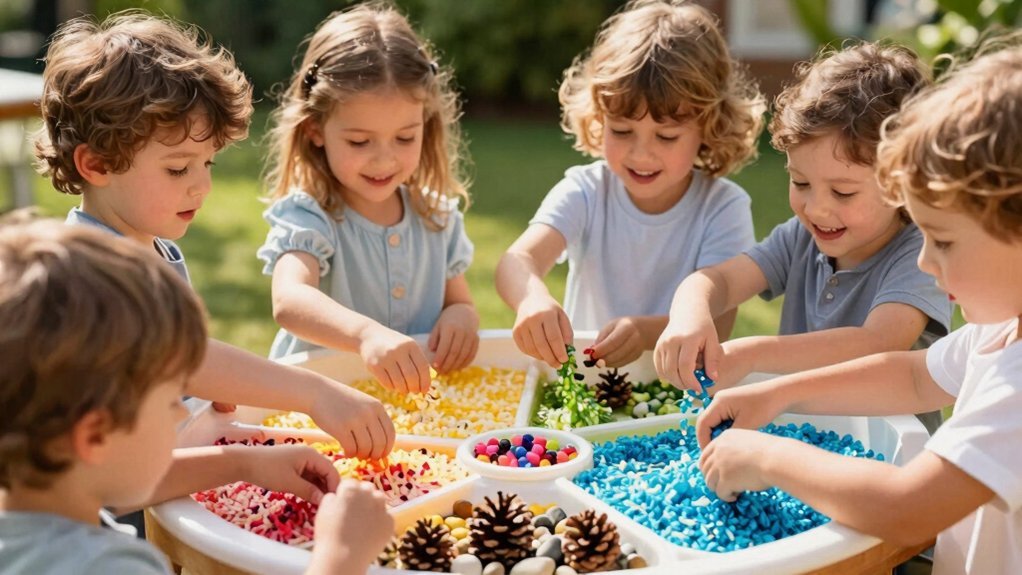
Curiosity sparks growth when preschoolers immerse themselves in sensory play. You’ll see how tactile experiences ignite brain development, forging neural pathways that later support complex reasoning. By handling varied textures—smooth beads, gritty sand, cool water—children sharpen fine motor skills, coordinating hand and eye movements that translate into writing readiness. As they describe what they feel, language growth accelerates, expanding vocabulary and expressive communication. Group activities nurture social‑emotional learning; sharing materials, taking turns, and collaborating build cooperation, resilience, and self‑regulation. The sensory environment offers calming input, helping attention stay focused while emotions settle. In short, sensory play weaves together sensory, linguistic, and social strands, propelling preschool development forward. Incorporating natural wooden sensory tools like mirrors can encourage self-awareness through distortion-free acrylic surfaces.
Preschool Sensory Sand & Rice Bins for Tactile Exploration
After exploring how sensory play fuels language and social growth, you can turn that momentum toward tactile discovery with sand and rice bins. Set up a preschool sand bin with scoops, shovels, and small toys; let kids sift, pour, and shape to boost fine motor skills. Pair it with a rice bin, swapping dry for wet textures to highlight stickiness, flow, and moldability, sharpening sensory discrimination. Rotate themes—ocean, garden, construction—to spark vocabulary and imagination. Keep safety supervision strict: ban marbles or rocks, discourage mouthing, and stay nearby to prevent ingestion of tiny pieces. Choose reusable, easy‑to‑clean fillers and plan a quick clean‑up routine, ensuring the activity stays fun, tidy, and developmentally rich. Additionally, organizing sensory materials in nested storage boxes can help keep play areas clutter-free and customizable for different themes.
Preschool Sensory Play‑Dough Stations to Strengthen Fine‑Motor Skills
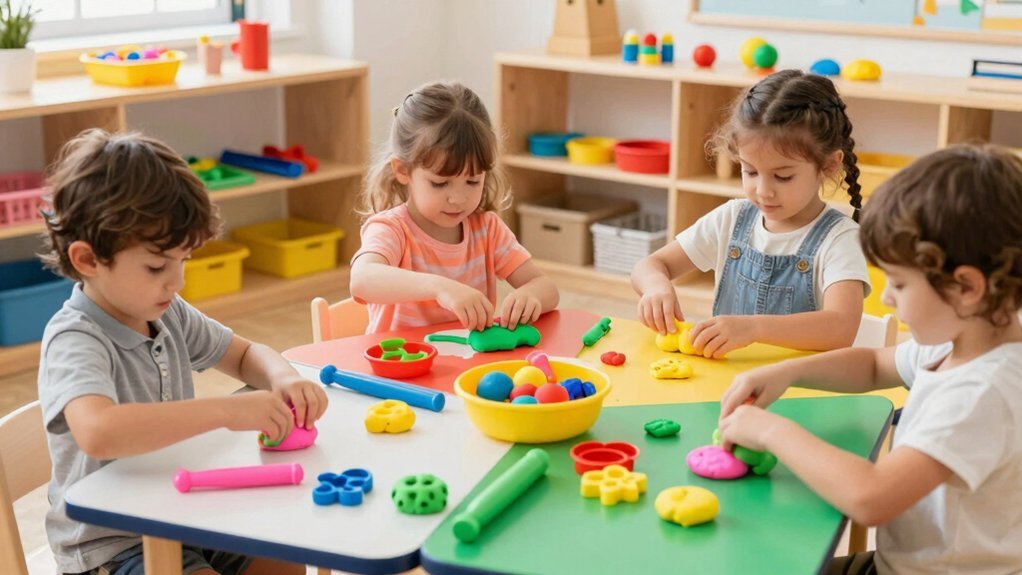
Ever wonder how a simple ball of dough can turn a preschooler’s fingertips into tiny architects? You can set up a sensory play station where kids knead, roll, and cut play dough, sharpening fine motor skills while exploring textures. Offer a palette of colors and scented additives to boost visual discrimination, then let them experiment with tools that demand pincer grip and precise manipulation. The tactile experience builds dexterity, hand‑eye coordination, and the concentration needed for later writing tasks.
Play dough transforms fingertips into tiny architects, sharpening fine motor skills, texture exploration, and hand‑eye coordination.
- Provide cookie cutters, rolling pins, and textured rollers for varied shaping.
- Add sand, glitter, or dried beans to the dough for extra tactile richness.
- Rotate tools weekly to keep the station fresh and challenge emerging dexterity.
Integrating threading and beading activities with fine motor skills development supports even greater hand-eye coordination and cognitive growth in preschoolers.
Preschool Sensory Sound‑Making Bins for Auditory Awareness
How can a simple bin of tinkling treasures turn everyday play into an auditory adventure? You can fill a sensory play bin with rattles, shakers, rainsticks, bells, and crinkly paper, letting preschoolers explore auditory awareness while they tumble, tap, and shake. By comparing loud bangs to soft taps, they sharpen auditory discrimination, noticing pitch, volume, and rhythm. As they label sounds—“bright,” “deep,” “high”—they boost language growth and confidence in preschool development. Choose non‑toxic, child-safe instruments and set clear boundaries so kids don’t mouth or throw them. Constant safety supervision keeps the activity fun and secure, turning each sound‑making bin into a lively, educational experience. Incorporating elements designed for portable hand washing stations can further enhance hygiene during sensory play activities, ensuring cleanliness without interrupting the fun.
Preschool Sensory Touch‑And‑Sound Stations With Pompoms & Hidden Rattles
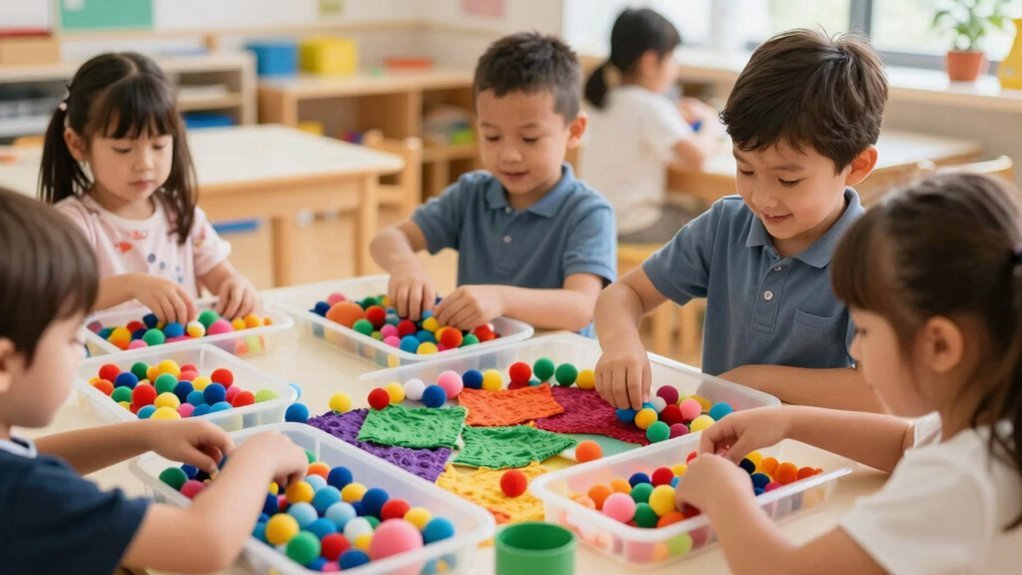
Moving from shakers to soft, tactile treasures, a touch‑and‑sound station packed with pom‑poms and hidden rattles invites kids to feel and hear simultaneously. You’ll see preschoolers explore texture exploration as they squeeze, move, and listen, linking cause‑and‑effect to language development. Keep a bin of mixed‑size pompoms, tuck tiny rattles inside, and provide towels for the inevitable fluff mess. Prompt children to describe the sounds and sensations, building sensory play vocabulary.
- Vary pom‑pom sizes and densities for different bounce and feel.
- Hide rattles or beads inside each pom‑pom so compression triggers audible cues.
- Encourage descriptive language: “The pom‑pom feels soft, and the rattle goes click‑click.”
Choosing pom-poms made from 100% New Zealand wool felt ensures a soft texture and safe, non-toxic play experience.
Preschool Sensory Taste‑Safe Stations for Flavor Exploration
You’ll love setting up flavor‑identification games that let kids match scents and tastes to colorful cards, turning discovery into a playful challenge.
Choose safe, non‑toxic tasting materials like caffeine‑free herbal teas, tiny jelly beans, or edible paint, and keep portions tiny to stay within budget.
Always supervise, check for allergies, and ensure every ingredient meets dietary restrictions.
Incorporating sensory experiences that adhere to material safety standards enhances the developmental benefits while maintaining child safety.
Flavor Identification Games
Ever wonder how a simple sip can turn playtime into a science lesson? You can turn flavor identification into a lively, guided sensory learning experience that boosts preschool development. Set up taste‑safe activities with small cups of caffeine‑free herbal teas, fruit juices, or a handful of jelly beans. Keep portions tiny, use blind taste test stations, and label each flavor as sweet, salty, sour, bitter, or a mix. Kids compare foods—cracker vs. cookie, strawberry vs. dark chocolate—while you observe their edible exploration.
- Use 5‑bean samples for quick, low‑cost blind taste tests.
- Offer chilled herbal teas (apple, lemon, mint) to avoid tongue burns.
- Pair fruit juice sips with picture cards for guided flavor identification.
Integrating tools with child-safe design can further enhance the sensory experience by ensuring a safe and engaging environment for preschoolers to explore flavors.
Safe Tasting Materials
After the flavor‑identification games, set up taste‑safe stations that let kids explore without risk. Choose only non‑toxic, edible materials—soft fruit slices, pureed apples, mild yogurt, and diluted fruit juices—to keep tasting fun and safe. Offer blind taste‑testing with distinct flavors like lemon, mint, cinnamon, and licorice, but skip caffeine‑rich options such as green tea. Arrange small bowls for each taste, label them, and encourage children to guess the flavor, reinforcing preschool sensory play. Keep a close eye on them; supervision is essential for choking hazard prevention. Pair the taste experience with scent and texture cues, and always use bite‑size portions that melt easily, ensuring smooth flavor identification and a secure learning environment.
Preschool Sensory Visual Exploration With Magnifiers & Kaleidoscopes
You’ll love watching a child’s eyes widen as they explore magnified details on a leaf or fabric, noticing textures and patterns they’ve never seen before.
When you hand them a kaleidoscope, the swirling color patterns spark imagination and invite them to recreate the symmetry in drawings or paintings.
Guided prompts like “What texture do you see up close?” or “Which colors repeat in the reflection?” turn these visual discoveries into language‑rich moments.
Magnified Details Exploration
How can a simple magnifying glass turn everyday objects into a wonderland of detail for a preschooler? You’ll see that magnified details spark curiosity, letting tiny textures and patterns become big learning moments. By encouraging careful observation, you boost visual discrimination and language for, key pieces of preschool development. Pair the glass with sand, leaves, or fabric and watch the child’s eyes widen as they explore each vein, grain, or weave. This hands‑on exploration turns ordinary play into focused science practice, building confidence and memory through repeatable activities.
- Examine leaf veins to discuss nature’s circuitry.
- Compare sand grains of different colors and sizes.
- Spot texture differences between smooth stones and rough bark.
Kaleidoscope Color Patterns
A kaleidoscope turns simple colors into dazzling, symmetrical patterns that captivate preschoolers’ eyes and minds. You hand each child a kaleidoscope and a magnifier, inviting them to rotate the tube and watch color contrasts explode into repeating motifs. As they peer closely, visual perception sharpens; they notice symmetry, trace the flow of hues, and spot subtle color contrasts. Prompt them with descriptive language—“the red swirls swirl into a blue triangle”—to boost pattern recognition and vocabulary.
After the viewing session, guide a quick art integration: children draw or paint their favorite kaleidoscopic designs, translating fleeting patterns into lasting artwork. This blend of observation, discussion, and creation reinforces visual skills while nurturing expressive communication.
Frequently Asked Questions
How Often Should Sensory Play Activities Be Rotated for Preschoolers?
You should rotate sensory play activities every two to three weeks, swapping themes and materials regularly. This keeps kids engaged, sparks new curiosity, and supports ongoing developmental growth.
What Safety Precautions Are Needed for Non‑Edible Sensory Materials?
You should keep non‑edible materials out of reach, inspect for sharp edges, avoid toxic chemicals, supervise closely, use washable surfaces, store securely after play, and ensure children can’t ingest anything.
Can Sensory Play Support Children With Sensory Processing Challenges?
Yes, you can use sensory play to help children with sensory processing challenges by providing controlled, gradual exposure to textures, sounds, and smells, which builds tolerance, improves regulation, and boosts confidence.
How Can Parents Extend Sensory Experiences at Home Without Expensive Supplies?
You can repurpose kitchen items, use water, sand, rice, or pasta, create scent stations with spices, play with textures from fabric scraps, and rotate everyday objects to keep experiences fresh and engaging.
What Signs Indicate a Child Is Overwhelmed During Sensory Play?
You’ll see them withdraw, fuss, or cover their ears; they might clutch you, stare blankly, or become unusually quiet. Their breathing quickens, they squirm, and they may start crying or refusing to continue.