

Tap into your child’s intrinsic curiosity by spotting “I wonder” moments—like a beetle’s stripe or a cloud shape—and ask open‑ended prompts such as “What do you notice?” or “I wonder what would happen if…?” Offer loose‑parts stations with everyday items, a sketchbook, and a simple photo journal to let them explore, document, and reflect. Keep the space bright, low‑shelf, and child‑accessible, and balance gentle nudges with independent play. Keep going and you’ll discover even deeper strategies.
Why Intrinsic Motivation Fuels Your Child’s Curiosity
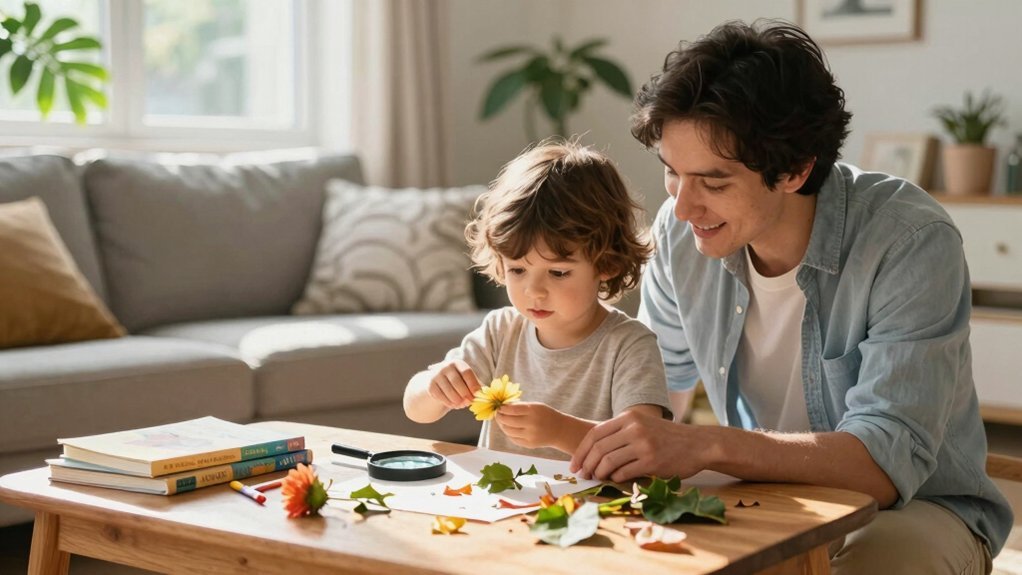
A child’s natural drive to learn comes from intrinsic motivation, which pushes them to explore simply because they’re curious, not because they’re promised a reward.
When you notice that intrinsic motivation fuels your child’s curiosity, you’ll see them asking endless “why” questions and diving into activities without prompting.
This inner drive acts as a cognitive primer, sharpening attention and memory so they encode new information more deeply.
By offering open‑ended materials and allowing self‑chosen projects, you let curiosity flourish, especially in preschool years when questioning is relentless.
Structured classrooms can dampen this spark, so creating inquiry‑friendly spaces preserves the momentum, leading to higher engagement and stronger learning gains for every child.
Supporting your child’s independence with tools like a Montessori step stool encourages hands-on learning and nurtures their natural curiosity.
Recognize the “I Wonder” Moment in Everyday Life
You’ll spot tiny wonders all day—like a beetle’s stripe or a cloud’s shape—and turn them into “I wonder” prompts. By asking, “What do you notice?” you invite your child to explore instead of just receive answers. Capture the moment with a quick sketch or note, and the curiosity will keep feeding itself.
Notice Small Wonders
Often, the smallest details—like a budding flower, a delicate snowflake, or a line of marching ants—spark the “I Wonder” moment that fuels a child’s natural curiosity. You slow down, point out the pattern on a leaf, and verbalize your own awe, letting your excitement become a model for wonder. Share a brief observation, then ask your child what they notice, using your curiosity as a scaffold for co‑exploration. Capture the scene with a sketch, a quick photo, or a short journal entry, then revisit it later to reinforce the connection between daily life and curiosity. By consistently highlighting these tiny marvels, you nurture an enduring sense of awe that turns ordinary moments into learning opportunities.
Prompt “I Wonder”
Spotting the “I Wonder” spark is as simple as noticing when a child pauses, eyes widening, and asks, “Why does that happen?” Instead of filling the gap with an answer, you can echo the curiosity with open‑ended prompts—“I wonder what would happen if we tried…?”—and weave those questions into daily routines like cooking, walking, or tidying up.
- Name the moment – pause, label the wonder, and repeat it back.
- Ask open‑ended “I wonder” prompts – keep them broad, not answer‑driven.
- Integrate into chores – turn washing dishes or grocery trips into mini‑investigations.
- Document and revisit – journal, sketch, or set a quick experiment for later.
Using tools and toys with educational and developmental benefits—such as Montessori-inspired play kitchens—can further enrich these moments by fostering real-world imitation and cognitive growth.
Five Simple Ways to Turn Daily Curiosity Into Deep Learning

When a child’s natural curiosity meets simple, purposeful strategies, everyday moments become powerful learning opportunities. You can spark deeper learning by replying “Hmmm, I wonder…” instead of giving answers, nudging them to explore. Offer loose parts like seashells or pinecones for open‑ended play, then pause and observe before stepping in. Capture discoveries in sketches, journals, or photos so the child revisits and expands on them. Balance guided prompts such as “What do you notice?” with independent exploration, letting the child lead.
Using tools like emotion flash cards can further support emotional regulation during learning experiences.
| Strategy | Example | Outcome |
|---|---|---|
| Wonder response | “Hmmm, I wonder…” | Extends curiosity |
| Loose parts | Seashells, pinecones | Hands‑on learning |
| Documentation | Sketches, photos | Reinforces insights |
These five habits turn ordinary questions into lasting learning experiences.
Use Open‑Ended Questions to Expand Your Child’s Thought Process
How can you turn a simple “what’s that?” into a launchpad for deeper thinking? When you swap a closed prompt for an open‑ended question, you spark curiosity and give your child room to reason. Responding first with a thoughtful question models how to explore ideas before jumping to answers. Use phrases like “I wonder what…?” or “How can we find out?” to keep the dialogue collaborative and reflective. Mix prompts that link what they know to new observations, fostering metacognition and flexible problem‑solving.
- Replace “Is it big?” with “What do you notice about its size?”
- Follow “Why?” with “How did that happen?”
- Use “I wonder what…?” to invite speculation.
- Connect current facts to new questions for deeper insight.
Sample Open‑Ended Questions for Home and Outdoor Situations
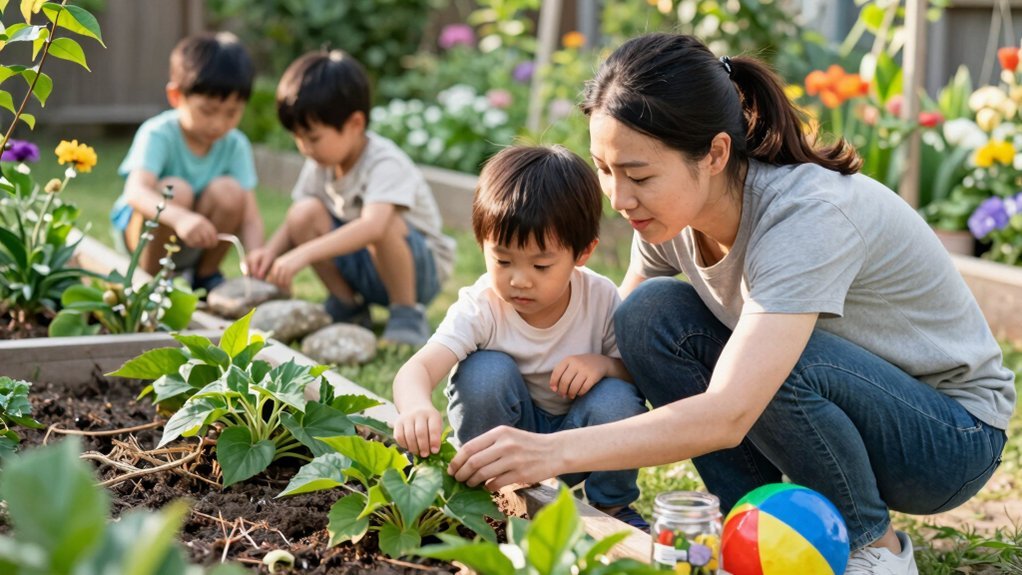
During a walk, ask, “What do you notice about the stones on the trail?” then “How might we find out what they’re made of?” In the garden, model “I wonder why the roses smell sweet,” encouraging your child to explore scent and pollination. Keep questioning open‑ended, avoid yes/no prompts, and let sketches or notes capture their evolving ideas. Encouraging children to use safe kitchen tools can also develop their creativity and independence through hands-on learning in everyday situations.
Turn Nature Walks Into Mini‑Science Investigations That Spark Curiosity
Ever noticed how a simple pause on a trail can turn a stroll into a mini‑science lab? You can turn nature walks into bite‑size investigations that fuel curiosity. Slow down, point out leaf patterns or ant trails, and ask open‑ended prompts like “What do you notice about these leaves?” Let your child lead, then grab a magnifying glass, notebook, and pencils to sketch or note observations. Pair the moment with a field guide or a quick photo to make the experience tangible.
- Spot a texture, then ask “Why does it feel rough?”
- Follow an ant line, hypothesize its path.
- Compare two rocks, list differences.
- Record findings in a nature journal for later reflection.
Incorporating tactile learning tools like wooden bead stairs can help deepen your child’s understanding of patterns and sequences found in nature.
Document Discoveries With Art, Journals, and Photo Books
You can sketch the day’s nature moments on a quick doodle pad, turning fleeting observations into lasting visuals. Turn those sketches into interactive journals by adding notes, questions, and tiny experiments beside each drawing. Then gather your favorite photos and print them into a storybook that lets you and your child relive and expand on each adventure.
Sketch Nature Moments
A sketchbook becomes a portable laboratory where you turn walks, beach days, and shifting skies into visual notes. You’ll see Nature spark Curiosity as you capture fleeting clouds, sand patterns, and leaf veins. By pairing sketching with simple paints, clay, and collage, you transform observations into tactile art that lives beyond the moment.
- Set up a small nature table where collected shells or pinecones become the centerpiece of a sketch session.
- Invite your child to add a photo print of a favorite trail to the book, then draw over it with colored pencils.
- Use a journal entry to ask “What changed since yesterday?” and sketch the answer beside the note.
- Rotate materials weekly—watercolor one day, clay the next—to keep the creative process fresh and exploratory.
For added imaginative play, consider incorporating role play costume sets that allow children to embody professions they observe in nature or community settings, enhancing their engagement and creativity.
Create Interactive Journals
Keeping a nature journal transforms everyday outdoor moments into lasting records of curiosity and creativity. You can start a simple sketchbook, jotting observations, feelings, and questions as you wander. Add a seasonal journal to track weather, plant growth, and animal sightings, then prompt your child with open‑ended prompts like “I wonder why…” or “What will happen next?” Encourage them to photograph found treasures—leaves, shells, rocks—and paste the images beside brief captions or questions, turning each page into a mini photo book. Mix in paint, crayons, or collage to capture textures and colors, making the journal a tactile art piece. Display finished journals and photo books at home, inviting ongoing discussion and sparking fresh curiosity each time you revisit a past discovery. Including child-sized tools like a mini broom and dustpan set can also help your child take pride in tidying up their creative space.
Compile Photo Storybooks
A photo storybook turns a day’s outdoor adventure into a lasting, visual narrative that fuels curiosity and pride. You snap photos of flowers, insects, and shifting clouds, then arrange them with captions that echo your child’s observations. The book becomes a portable museum of wonder, ready for bedtime review or classroom sharing.
- Gather: Use a nature table to collect shells, leaves, and rocks that inspire the next photo session.
- Shoot: Capture close‑ups and wide shots, encouraging your child to ask “What’s happening here?”
- Label: Add simple captions or “I wonder why…” questions to document curiosity.
- Print: Assemble the images into a sturdy photo book, letting your child flip through and relive each discovery.
Provide Loose‑Parts Materials That Ignite Curious Exploration
Ever wonder how a simple pile of bottle caps, pinecones, and fabric scraps can spark endless discovery? You can turn everyday packaging, seashells, and small natural objects into a loose‑parts station that fuels curiosity and exploration. Arrange the items on low shelves so your child can reach them independently, then add related photos, books, or field guides to broaden context. Offer open‑ended prompts like “What can these items become?” or “How many uses can you find for this object?” and let the child experiment with minimal adult direction. Focus on the process, not a right answer, and watch them generate hypotheses, test ideas, and build confidence through self‑directed play.
Balance Guided Discovery and Independent Play for Optimal Learning
How can you blend guided discovery with independent play so your child stays curious yet confident? Pause, watch their curiosity spark, then nudge with prompts like “I wonder…” instead of taking over. Offer low shelves and reachable tools so independent play feels natural. Ask open‑ended questions, hold back immediate explanations, and let them voice their thinking. Alternate adult‑guided activities that introduce new ideas with child‑led explorations that follow their interests. Capture moments in art, journals, or photos to cement learning.
- Observe, then prompt with “I wonder…”
- Set up low, accessible materials.
- Use open‑ended questions, avoid instant answers.
- Rotate guided sessions and child‑directed play.
Design a Home Space That Keeps Curiosity Alive Daily
Create a Curiosity Corner stocked with open‑ended materials—loose parts, shells, pinecones, and recyclables—so your child can grab what sparks interest.
Keep the space bright, low‑shelf, and easy to reorganize, letting them arrange and rearrange items as they explore.
When you pause to notice their questions and model “I wonder,” you turn everyday moments into a continuous learning loop.
Curiosity Corner
What if you could turn a corner of your living room into a daily launchpad for wonder? You’ll spark curiosity and exploration by carving out a dedicated zone that invites independent play. Low shelves bathe in natural light, holding real tools—scissors, nuts, shells, fabric scraps—so your child can reach, experiment, and discover on their own. A nature table displays treasures from walks, paired with field guides that bridge outdoor and indoor learning. Keep a sketchbook handy for reflections and photos that capture each observation.
- Install low, open shelves for easy access.
- Add a nature tray with collected items and guides.
- Arrange loose parts like cardboard tubes attractively.
- Provide a journal and “I wonder…” prompts, then pause before stepping in.
Open‑Ended Materials
Ever wondered how a simple shelf can become a hub of endless discovery? You can turn a low shelf into a tactile lab by stocking clear bins with loose parts—shells, pinecones, fabric scraps, and recycled packaging. Place open‑ended prompts and photos nearby so kids link what they touch to real‑world ideas. Rotate a nature tray each season, and pair each material with a relevant field guide or picture book. Design the area with a wide tabletop, safe borders, and easy‑clean surfaces so pouring, mixing, and stacking happen without constant adult direction.
| Bin | Materials | Prompt |
|---|---|---|
| 1 | Pinecones, twigs | “What can you build that looks like a forest?” |
| 2 | Fabric scraps, ribbons | “Create a costume for an imaginary creature.” |
| 3 | Cardboard tubes, caps | “How many bridges can you make?” |
| 4 | Shells, stones | “Design a pattern that tells a story.” |
| 5 | Recycled boxes, paper | “What machine can you invent?” |
Frequently Asked Questions
What Is the 3-3-3 Rule for Children?
You follow the 3‑3‑3 rule by giving your child three hours of focused play, three nutritious meals, and three consistent bedtime rituals each day, fostering balanced growth and steady learning momentum.
What Is the 7 7 7 Rule in Parenting?
You follow the 7‑7‑7 rule by giving your child seven hours of sleep, seven hours of screen‑free active play, and seven hours of focused learning each day, balancing rest, exploration, and education.
What Is the 10-10-10 Rule for Kids?
The 10‑10‑10 rule asks you to consider a child’s decision’s impact in 10 minutes, 10 months, and 10 years, helping them pause, weigh immediate feelings, medium‑term outcomes, and long‑term consequences.
What Are the 5 C’s of Child Development?
You’ll find the 5 C’s are Curiosity, Charge, Cooperation, Confidence, and Communication—each a core domain you nurture through play, guided independence, social interaction, skill mastery, and expressive language practice.