
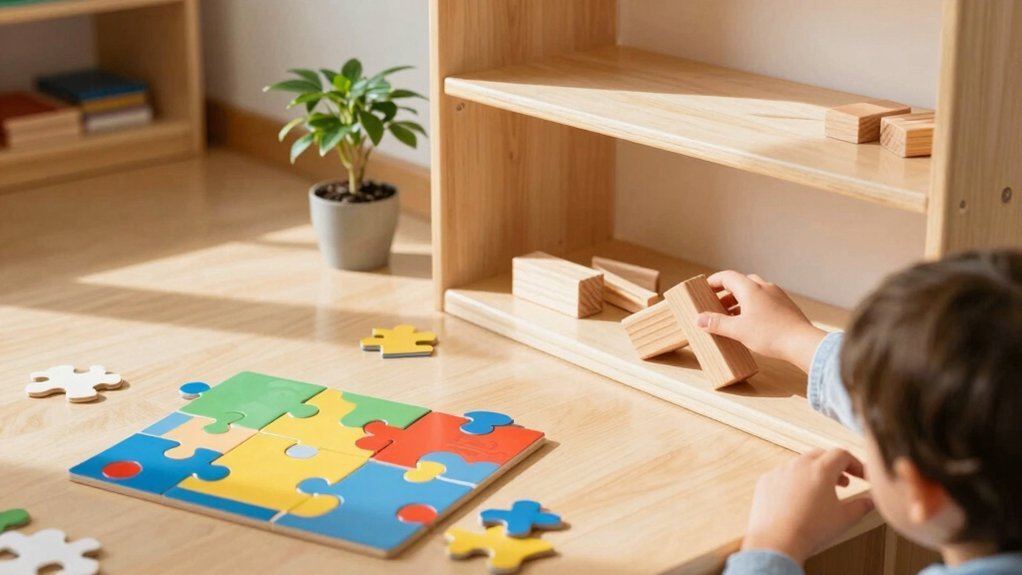
Natural consequences in Montessori discipline are real outcomes your child experiences directly from their choices—not punishments you impose. When your child spills water, they clean it up. When they break a toy, they experience the loss. These direct cause-and-effect relationships build genuine self-discipline and internal motivation far more effectively than lectures or disapproval. Your role shifts from controller to observer, allowing your child’s own experiences to teach responsibility and accountability. Understanding how to design your environment and recognize teachable moments transforms discipline into authentic learning.
How Natural Consequences Differ From Punishment

Why do some children internalize lessons from their mistakes while others merely learn to avoid getting caught? The answer lies in how you respond to misbehavior.
When you use punishment, you rely on fear to control your child’s behavior. This approach teaches them to behave only when you’re watching, damaging your relationship through shame and resentment. They don’t understand why their action was wrong—only that they faced consequences they wanted to escape.
Natural consequences work differently. You allow your child to experience the direct result of their behavior. Breaking a glass while being careless means cleaning up spilled water. This teaches cause-and-effect without fear. Your child develops internal discipline and genuine understanding, making responsible choices independently—even when you’re not present. By contrast, punishment relies on external control and fails to address the underlying causes of behavior, leaving children without real solutions or understanding of desired actions.
Why Kids Learn Better From Real Outcomes Than Rules
How does a child truly internalize responsibility? When you enforce rules through punishment, your child learns to avoid consequences out of fear rather than understanding. Real outcomes, however, create direct cause-and-effect relationships they grasp immediately.
When your child spills water while pouring, they clean it up. The connection between action and result becomes undeniable—no lecture required. Breaking glass means permanent loss, teaching accountability more effectively than any reprimand. These experiences build genuine self-discipline from within. Research from a national randomized trial of public Montessori preschool students demonstrates that children in Montessori settings develop stronger executive function and self-regulation skills compared to traditional programs.
Rules demand external compliance. Natural consequences cultivate internal motivation. Your child develops self-regulation skills that persist because they’ve experienced outcomes tied directly to their choices. They’re not following orders; they’re learning through lived experience. This internalized understanding shapes responsible decision-making throughout their lives.
Design a Home Environment Where Consequences Happen Naturally
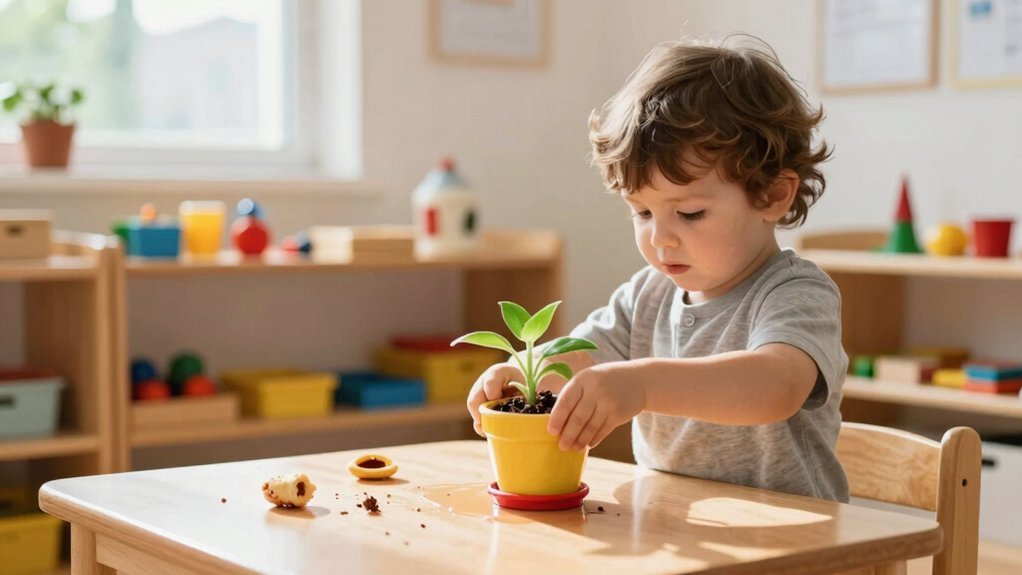
You’ll create an environment where natural consequences unfold by providing child-sized tools and real materials that communicate their own feedback through use and occasionally, breakage.
When you arrange accessible storage systems and organize materials by function rather than decoration, your child navigates independently and experiences the direct results of their choices—spilled water they can clean up, broken dishes that affect the household budget, or missing rain gear that prevents outdoor play.
This design transforms your home into a teacher itself, where the environment’s natural logic guides your child toward responsibility without lectures or artificial punishments. By maintaining consistent routines and structure alongside these physical arrangements, you reinforce the connection between actions and outcomes, allowing your child to develop self-discipline through repeated experience rather than external enforcement.
Child-Sized Tools and Spaces
The physical environment itself becomes your greatest teaching tool when it’s designed around your child’s scale and capabilities.
When you provide child-sized furniture, tools, and spaces, you eliminate barriers to independence and create natural accountability.
Your child can reach low shelves independently, select materials based on interests, and use properly scaled tools that offer genuine feedback.
Real brooms teach effective sweeping; child-sized tables facilitate peaceful conflict resolution.
This accessibility empowers self-directed learning and responsibility.
Bare floors increase movement awareness, while designated places for belongings support orderly habits.
Open spaces allow exploration without constraint.
Materials organized in distinct areas help children locate items easily and understand where each activity belongs, reinforcing the connection between order and independence.
As your child demonstrates capability, you gradually expand their freedoms.
This thoughtfully arranged environment naturally teaches consequences—spilled water requires cleaning, misplaced items need returning, and successful task completion builds confidence and independence.
Real Materials and Breakability
Breakage teaches cause-and-effect relationships without your intervention. The sound of shattering glass, the sight of shards, and quiet observation by peers deliver powerful lessons that lectures never could. You calmly sweep broken materials without reprimand, allowing the experience itself to educate. When children handle real, breakable materials, they develop the care and attention necessary to prevent future accidents. This embedded environmental design transforms responsibility into something children treasure—a mark of trust worth honoring through careful, deliberate action.
Accessible Organization Systems
How do you design a home where children naturally experience consequences through their own choices? You create accessible organization systems that demand responsibility.
Install child-sized furniture and open shelving at your child’s eye level. When toys sit on low, doorless shelves, your child can independently select activities—and must return them to their designated spots. This direct cause-and-effect teaches accountability without lectures.
Rotate toys strategically, keeping only a few well-chosen items available. This limits overwhelm and makes cleanup manageable, so your child experiences success rather than frustration. Use specific shelf locations instead of catch-all bins. Limiting the number of materials encourages active engagement while helping children focus on what matters most.
Extend this principle to kitchens and bathrooms. Stock low shelves with child-sized utensils and dishes. When your child can serve themselves, they naturally discover that broken dishes mean no more snacks—a genuine consequence flowing from their own actions, not imposed punishment.
What Children Actually Learn From Spilled Milk and Broken Toys

Why do children remember spilled milk far longer than any lecture about responsibility? Because they’ve experienced the direct consequence themselves.
Children remember spilled milk longer than lectures because they’ve experienced the direct consequence themselves.
When you spill water during pouring practice, you immediately see the puddle. You feel the wet floor beneath your feet. You grab a cloth and clean it up—not because an adult commanded it, but because the mess demands action. This direct cause-and-effect teaches accountability faster than any punishment.
Broken toys reinforce this lesson permanently. That shattered glass vessel won’t magically reassemble. Your child learns that actions have irreversible consequences, embedding respect for belongings deeper than words ever could. Unlike punishments that focus on disapproval, natural consequences allow children to observe the real-world outcomes of their choices and develop genuine understanding of responsibility.
These aren’t punishments you impose. They’re natural outcomes your child experiences firsthand. This distinction transforms discipline from something done *to* them into something they learn *from*—building genuine self-correction and internal motivation that lasts.
Guide Self-Discipline by Stepping Back, Not Taking Control
The most transformative shift you can make in guiding your child’s discipline is stepping back from the role of controller.
When you redirect gently instead of reacting, you preserve your child’s agency and build their accountability.
Rather than fixing problems, involve your child in problem-solving conversations that demonstrate respect for their thinking.
Start by acknowledging their feelings, then offer bounded choices that guide without controlling.
Model amends or resolutions initially, but fade your assistance over time as competence grows.
This approach allows self-discipline to emerge naturally from within, not from external pressure.
Your patience and measured responses teach more powerfully than intervention ever could.
Children develop genuine self-regulation when they experience real consequences and solve their own challenges. When you allow natural outcomes to unfold—such as a child experiencing a cold day without their jacket after choosing not to wear it—they internalize lessons far more effectively than through adult-imposed punishment.
When to Let Consequences Happen (And When to Protect Your Child)
You’ll need to distinguish between situations where natural consequences teach valuable lessons and those where you must step in to prevent harm.
Your child’s developmental stage determines whether they’re ready to learn from a scraped knee or need protection from frigid temperatures that could cause frostbite.
Balancing these safety concerns against meaningful learning opportunities requires you to assess both the immediate risk and your child’s capacity to understand cause and effect. In Montessori environments, self-correcting materials are designed to provide immediate feedback, allowing children to recognize errors and adjust their actions without adult intervention, which supports the development of internal discipline and awareness.
Safety Versus Learning Opportunities
How do you know when to let your child experience a natural consequence and when to step in? You’ll need to distinguish between situations where learning can safely happen and those requiring immediate protection.
| Scenario | Allow Consequence | Intervene |
|---|---|---|
| Forgotten lunch | Yes | No |
| Playing in traffic | No | Yes |
| Ruined chalk left outside | Yes | No |
| Cold exposure without coat | No | Yes |
| Spilled water during activity | Yes | No |
Safety boundaries remain non-negotiable. Physical harm, serious injury, and life-threatening situations demand adult intervention regardless of learning potential. However, you can modify your environment to preserve educational opportunities while protecting your child. When consequences won’t teach effectively or danger exists, environmental design becomes your solution. In the Montessori approach, prepared environments allow children to experience natural consequences while keeping them within safe boundaries. This approach respects your child’s autonomy while keeping them safe.
Readiness And Child Development
While establishing physical safety creates the foundation for natural consequences, your child’s developmental stage determines whether they can actually learn from those consequences. Younger children’s brains aren’t ready to connect delayed outcomes with their actions, so you’ll need to intervene more frequently. As your child matures, they become capable of processing cause-and-effect relationships and learning from logical consequences.
You’ll notice that immediate physical feedback—like a scraped knee from running—teaches far more effectively than consequences occurring hours later. Your child’s age also affects their ability to understand abstract connections between behavior and results. Internal motivation and trust grow stronger when children experience consequences that align with their developmental capacity to process them. By recognizing your child’s developmental readiness, you create optimal learning conditions.
You’re not preventing growth; you’re timing interventions to match their brain’s capacity for growth.
Frequently Asked Questions
How Do Natural Consequences Work With Very Young Toddlers Who Can’t Understand Cause and Effect?
You pair immediate, observable outcomes with short explanations so your toddler grasps the connection instantly. You demonstrate correct actions first, repeat consistently in a prepared environment, and prioritize safety over natural consequences when injury risks exist.
What if My Child’s Natural Consequence Could Cause Serious Injury or Permanent Harm?
You’d implement logical consequences instead. You remove access to dangerous areas, establish firm limits with explanations, and practice safe alternatives together. You stay calm and neutral while guiding toward appropriate behavior choices.
How Long Does It Typically Take to See Behavior Changes From Natural Consequences?
You’ll notice gradual shifts over weeks or months as your child experiences consistent consequences. Multiple accidents typically precede careful behavior adjustments. Transformation accelerates when you maintain steady boundaries and encourage reflection on mistakes.
Should I Explain the Connection Between Action and Consequence, or Let Them Figure It Out?
You should briefly explain the connection before allowing natural consequences to unfold. Model ideal behavior first, then let your child discover through experience why the consequence matters, rather than lecturing extensively.
How Do Natural Consequences Work in Group Settings Like School or Daycare Environments?
You’ll find natural consequences work in group settings when you allow children to experience how their actions directly impact peers’ activities, schedules, and comfort. You’re facilitating self-discipline through real, shared experiences rather than imposed penalties.
In Summary
You’ll discover that natural consequences teach your child genuine responsibility far better than punishment ever could. By stepping back and allowing real outcomes to unfold, you’re helping them develop authentic self-discipline. You’re creating an environment where spilled milk becomes a learning moment, not a power struggle. This approach respects your child’s growing independence while guiding them toward thoughtful decision-making naturally.



Leave a Reply