

If your toddler spills juice, the sticky floor instantly shows the mess they created, prompting them to clean up and avoid it next time. Leaving a toy out in the rain makes it soggy, demonstrating how the environment affects belongings and encouraging them to store items safely. A backpack that’s too heavy to carry teaches them to pack only what they need, fostering awareness of limits. Keep exploring for more practical, Montessori‑inspired tips.
Natural Consequences for Toddlers: Definition and Benefits

Why do natural consequences matter for toddlers? You see, natural consequences give toddlers a clear link between actions and outcomes, reinforcing cause and effect. When a child spills juice and the floor gets sticky, the mess teaches learning without adult interference. This real‑world feedback builds self‑regulation and independence, because the toddler feels responsible for fixing the situation.
Safety remains paramount; you must ensure the consequence is immediate, understandable, and never hazardous. If a scenario threatens safety or practicality, parent guidance steps in with age‑appropriate alternatives that mimic the lesson. Using tools like the Kitchen Step Stool for Kids with Safety Rail can help toddlers safely engage with their environment while learning these important lessons.
Everyday Natural Consequences for Toddlers That Build Responsibility
One simple way to teach responsibility is letting toddlers experience everyday natural consequences—like a wet toy that’s been left out in the rain or a backpack that becomes too heavy to carry. When a child spills juice and the carpet stays sticky, the immediate results show cause and effect, prompting them to clean up next time.
You can turn bedtime routines into safe teaching moments: a forgotten pajama pair leads to a chilly night, reinforcing self‑care habits. If a toddler leaves shoes on the floor, they’ll step on them and learn to put things away, building empathy for others who might trip. By pairing calm guidance with these natural consequences, you nurture learning through experience and shape positive toddler behavior.
Montessori‑Inspired Strategies for Applying Natural Consequences to Toddlers
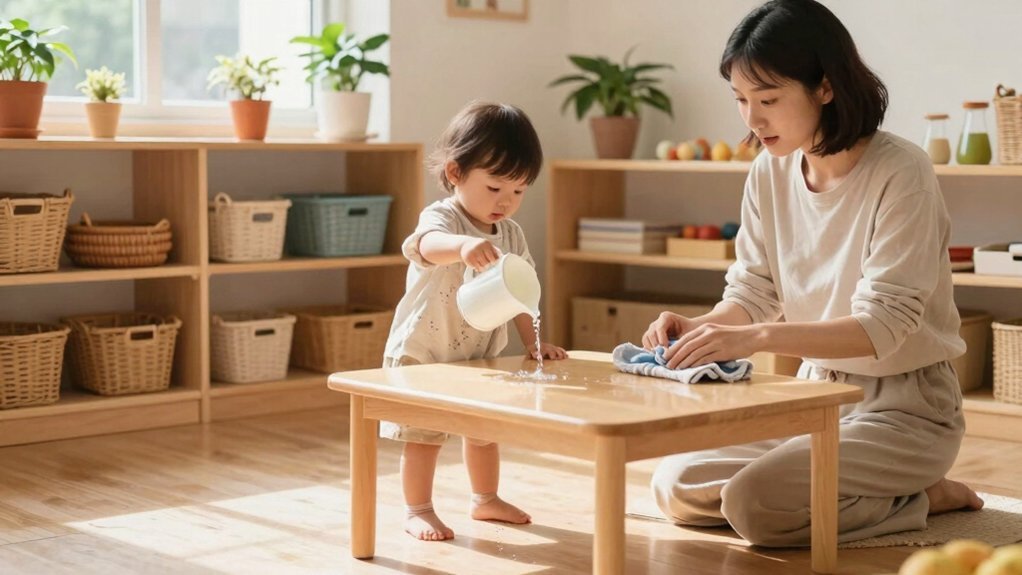
Everyday natural consequences already show toddlers how choices shape outcomes, and a Montessori‑inspired approach turns those moments into purposeful learning experiences. You let natural consequences be safe, immediate, and understandable—like a wet shirt that stays out of sight—so toddlers see cause and effect without risk.
Use calm, empathetic communication to describe what happened, avoiding blame. Offer them opportunities for independence: let a toddler tidy a room, then experience the reward of finding toys easily later, building self‑regulation and delayed gratification.
When a real consequence could be unsafe, substitute a gentle, related man‑made outcome that still teaches the principle. Frame each episode as learning through play, reinforcing confidence and thoughtful decision‑making.
Incorporating calm-down tools into these moments can further support emotional regulation and self-awareness as toddlers navigate cause and effect.
Frequently Asked Questions
How Do Cultural Differences Affect Natural Consequence Approaches?
Cultural differences shape natural consequence approaches by altering expectations, values, and parenting styles; you’ll notice varied emphasis on independence, communal responsibility, and discipline, which changes which consequences you deem appropriate and how you implement them.
Can Natural Consequences Be Applied to Children With Special Needs?
Yes, you can use natural consequences with special‑needs children, but adapt the timing, clarity, and sensory load to match their abilities, and always pair them with supportive guidance and consistent routines.
What Age Is Natural Consequences Become Effective for Toddlers?
You’ll see natural consequences start working around ages two to three, when toddlers grasp cause‑and‑effect, can understand simple explanations, and begin to follow basic rules without constant adult prompting.
How to Balance Safety Concerns With Natural Consequence Learning?
You balance safety and natural consequences by setting clear, safe limits, supervising loosely, and letting minor mishaps happen when they’re harmless, so your toddler learns cause‑and‑effect while staying protected.
Do Natural Consequences Impact Sibling Dynamics in the Family?
Yes, natural consequences shape sibling dynamics; you’ll notice kids learn boundaries, negotiate fairness, and develop empathy as they experience cause‑and‑effect, which can strengthen cooperation or spark rivalry.