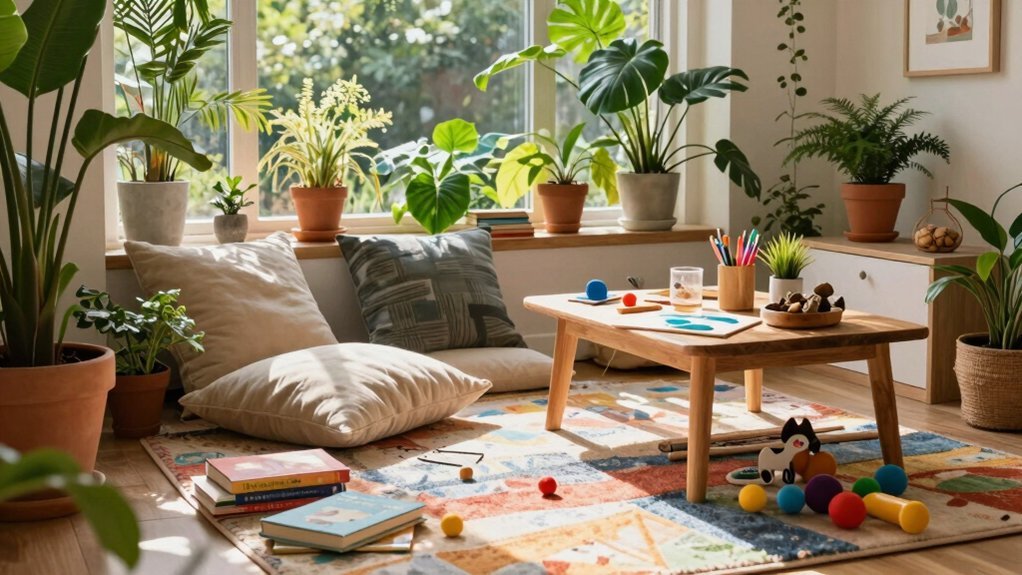
You’ll transform your space by designing around your child’s favorite activities, whether that’s water play or construction. Create connected pathways linking different centers using natural materials. Choose open-ended items like pinecones, stones, and loose parts that invite creative exploration. Arrange furniture to be moveable so you can reconfigure quickly and ensure free movement. Rotate toys strategically—weekly for younger children—mixing educational, sensory, and imaginative options. There’s much more to discover about sustaining engagement and maximizing learning potential in these environments.
Design a Natural Learning Environment Around Your Child’s Favorite Activities
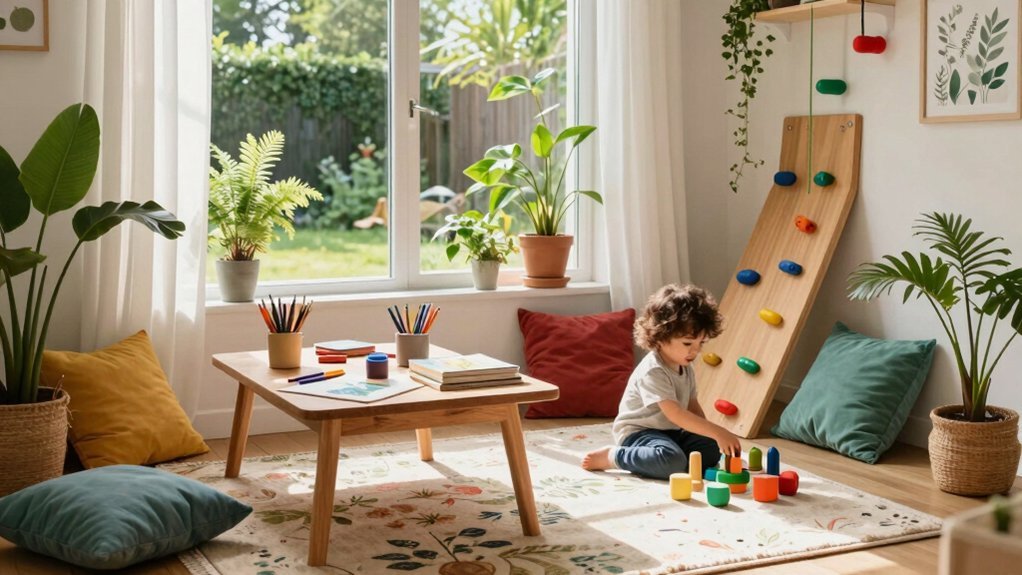
Creating an engaging natural learning environment starts with understanding how your child moves and explores. You’ll want to observe what activities capture their attention—whether that’s water play, digging in soil, or climbing trees—then design your space accordingly.
Build your layout around these interests by positioning activity centers strategically throughout your outdoor area. If your child loves water play, install an elevated table or stream where they can pour, splash, and experiment. For those drawn to construction and manipulation, designate spaces with sand, mud, and natural materials. Ensure sand areas are positioned against boundary fences or in corners to prevent migration and create safe, contained play zones.
Create pathways that connect these centers using appropriate materials—hard surfaces for main routes, wood chips for secondary paths. This hierarchy guides your child’s movement while encouraging exploration and discovery across the landscape.
Choose Open-Ended Materials That Invite Exploration and Play
What transforms a natural learning space from ordinary to extraordinary? Open-ended materials that spark imagination and endless possibilities.
Open-ended materials spark imagination and endless possibilities, transforming ordinary learning spaces into extraordinary places for exploration.
You’ll want to gather versatile items that invite exploration without dictating how they’re used. Consider these essentials:
- Natural resources like pinecones, stones, shells, twigs, and leaves that provide sensory richness
- Loose parts including blocks, playdough, fabric scraps, and cardboard boxes for construction
- Repurposed items from recycling bins that model sustainability while enabling creative building
- Paint, sand, water, and herbs for varied tactile experiences
Rotate materials periodically to maintain engagement and introduce novelty. Select a few unique items rather than overwhelming your child with too many options. This strategic variety keeps exploration fresh while allowing deep, focused play that develops problem-solving skills and creative thinking. These materials support independence and imaginative use as children direct their own learning through open-ended exploration.
Arrange Rooms So Your Child Can Move and Choose Freely
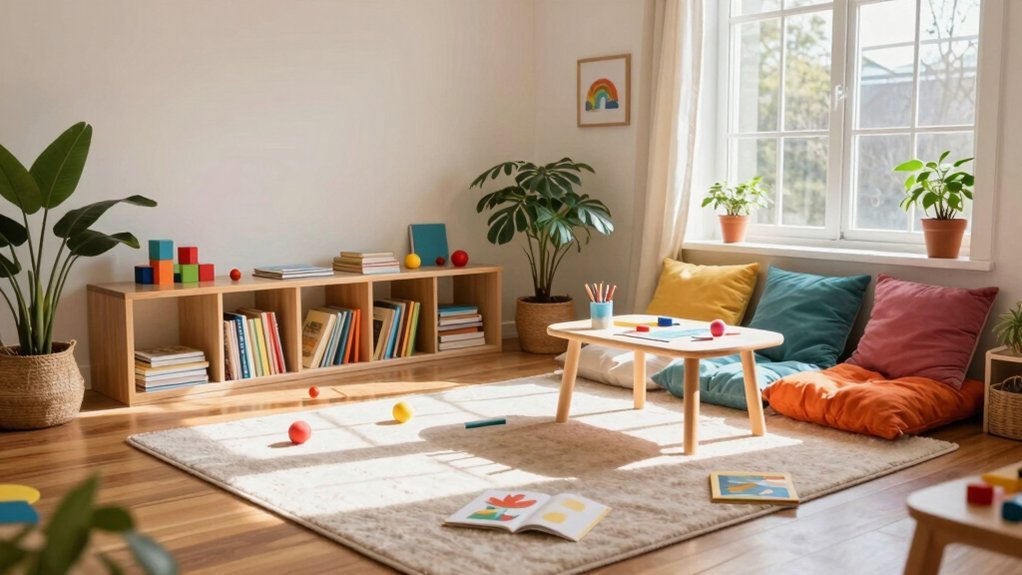
How you arrange your learning space fundamentally shapes your child’s ability to explore independently. You’ll want to prioritize moveable furniture and modular systems that allow quick reconfiguration as learning activities change. Rather than fixed rows of desks, create open areas where your child can collaborate with peers, work individually, or participate in whole-group instruction without rearranging everything.
Ensure adequate square footage so your child isn’t confined or cramped. Open spaces encourage movement, different working positions, and varied teaching approaches. When your child can freely access materials and shift seating arrangements, they develop agency over their learning. Natural elements like plants and natural light integrated into your flexible space create a calming environment that further supports focus and creativity. This flexibility supports problem-solving, communication, and collaboration—essential skills that thrive in adaptable environments designed around your child’s needs rather than rigid spatial constraints.
Rotate Toys Strategically to Sustain Interest Without Overwhelming
Too many toys scattered across your learning space can actually hinder your child’s focus and creativity. Strategic toy rotation sustains engagement while preventing overwhelm.
Here’s how to implement this effectively:
- Start small and expand gradually – Begin with a few toys, then increase the number as your child’s interests develop
- Categorize by skill type – Organize toys into fine-motor, language, and problem-solving categories for balanced rotation
- Choose rotation frequency wisely – Use weekly rotations for young children, bi-weekly for balanced exploration, or monthly for older kids
- Mix toy types each cycle – Include educational, sensory, and imaginative options to promote diverse learning
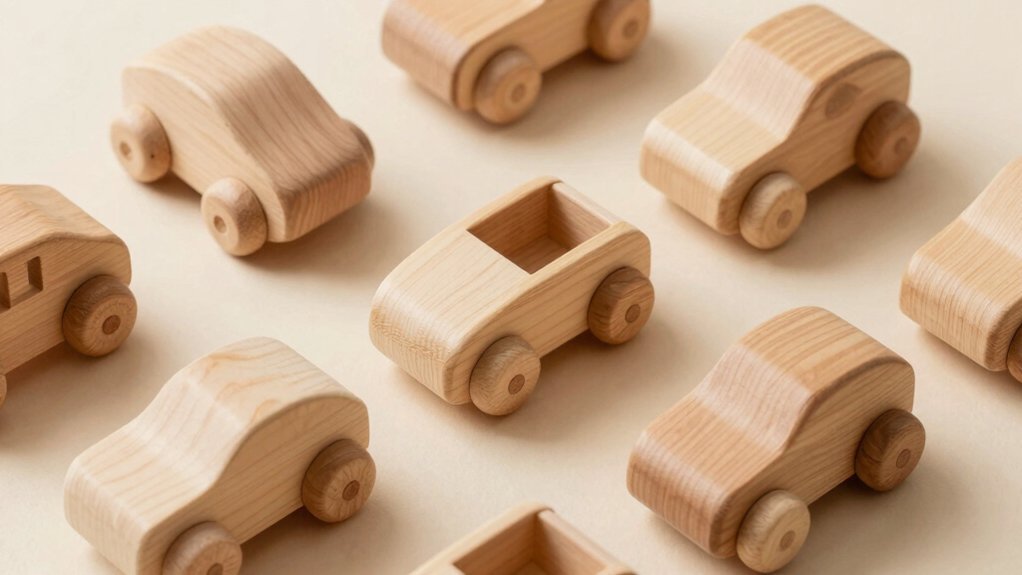
Maintain accessible, organized play areas near daily spaces. Rotate within interest categories while occasionally introducing fresh toys for excitement. This approach creates a calm environment where your child engages deeply with fewer options. Involving your child in storing and organizing toys builds responsibility while ensuring stored materials remain clean, dry, and easily accessible for future rotation cycles.
Weave Daily Routines Into Spaces Where Learning Happens Naturally

When you weave learning into your daily routines, you’re tapping into one of the most powerful educational tools available—your child’s genuine engagement with real-world activities.
Your home and community naturally offer countless learning opportunities: mealtime conversations build language skills, grocery shopping teaches math and decision-making, and folding laundry develops fine motor coordination. These everyday moments matter far more than structured lessons because your child participates willingly and repeatedly.
When learning happens during activities your family already does—reading stories, playing at the park, or cooking together—your child stays engaged and motivated. This authentic participation drives skill development more effectively than isolated practice. The key to maximizing these opportunities is ensuring high levels of practice occur naturally as your child engages with the same activities across different days and contexts.
Frequently Asked Questions
How Do I Balance Child-Led Learning With Addressing Specific Developmental Goals or Delays?
You balance child-led learning with developmental goals by embedding targeted skills into play activities you observe them choosing. You scaffold support through guided questions and modeling, then step back so they’ll lead exploration while you monitor progress toward objectives.
What Role Should Caregivers and Siblings Play in Natural Learning Environment Activities?
You should actively embed learning strategies within your daily routines and activities. Join your child’s play, offer guidance, and encourage siblings to participate too. You’ll create consistent, natural opportunities for skill development across your home and community.
How Can I Measure Progress and Development When Learning Happens Organically Without Structured Tracking?
You’ll track organic learning by observing skill development across daily routines, documenting changes through photos or notes, and using informal assessments like problem-solving conversations. You’ll notice growth patterns emerging naturally over time.
How Often Should I Introduce New Materials, and How Do I Know What to Add?
You’ll introduce new materials when your child shows sustained interest in current ones and you notice skill development. Let your child’s play guide timing—add items that naturally fit daily routines and activities they already enjoy.
How Do I Handle Situations When My Child Resists Participation or Loses Interest Quickly?
You’ll follow your child’s lead by pausing activities they’re resisting. Observe what genuinely interests them, then embed learning into those preferred routines. You’re adjusting expectations, not forcing participation, celebrating small wins.
In Summary
You’ve learned how to transform your child’s environment into a natural learning space. By centering activities they love, providing open-ended materials, and arranging rooms for free movement, you’re supporting their curiosity and independence. Strategic toy rotation keeps things fresh without creating chaos. When you weave learning into daily routines and spaces, your child develops skills naturally—making education feel like play, not work.

Leave a Reply