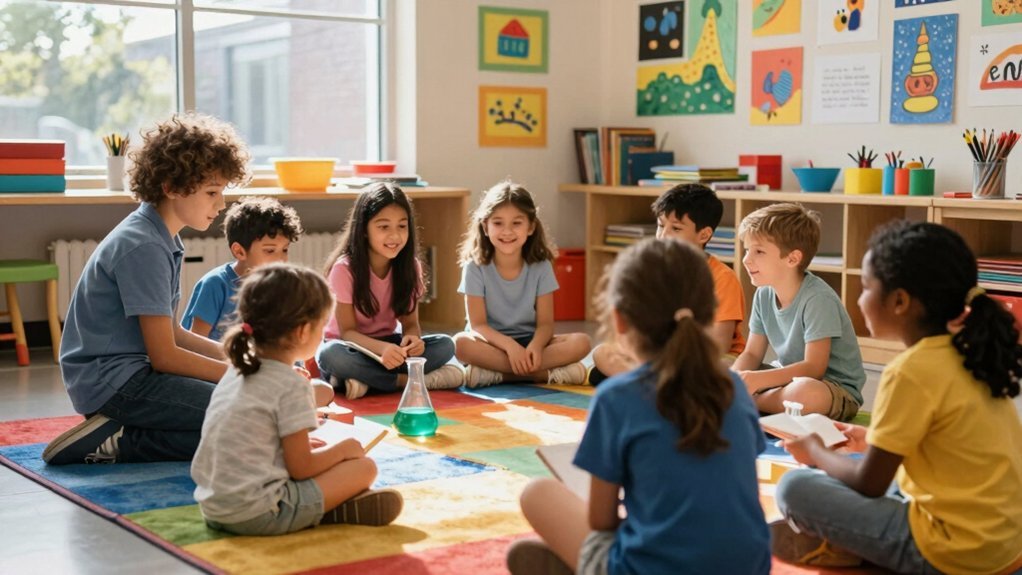
You’ll discover that mixed-age classrooms naturally foster mentorship through organic peer connections, collaborative learning, and shared interests. Older students reinforce their own understanding by explaining concepts to younger classmates, while younger peers absorb advanced skills through observation. These authentic relationships develop without formal assignment, mimicking sibling dynamics that encourage genuine bonds. Peer-teaching roles build leadership competencies and confidence in both groups. The mentoring that emerges creates stronger social bonds and normalizes ability differences—and there’s considerably more to uncover about how these dynamics transform classroom culture.
Why Mixed-Age Classrooms Work: The Core Academic and Social Benefits
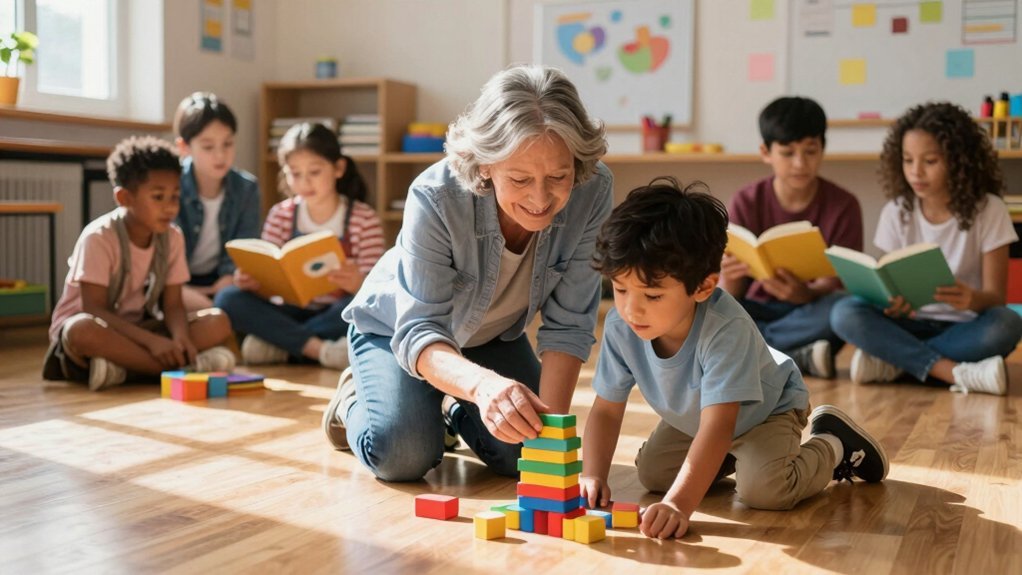
How do you create an environment where children thrive both academically and socially? Multi-age classrooms provide the answer by reducing competition and emphasizing collaboration. You’ll notice younger children feel nurtured while older students develop genuine empathy and caregiving skills. This structure fosters higher self-esteem and lower academic stress for everyone involved.
Academically, you’ll see older children perform equally well while gaining significant benefits. Younger peers absorb vocabulary and concepts through observational learning, boosting their confidence. When older students explain concepts to younger classmates, they reinforce their own knowledge. Meanwhile, you can support each child’s unique pace without stigma, allowing advanced learners to progress and struggling students to revisit material. The result? Children develop sophisticated language skills, stronger communication abilities, and deeper engagement in complex learning activities. These peer explanations create a dynamic learning cycle that mirrors how children naturally learn within families and communities.
How Natural Mentoring Emerges When Ages Mix
When you place children of different ages together, something remarkable happens—mentoring relationships emerge naturally, without any formal assignment or orchestration. You’ll notice older students gravitating toward younger peers, initiating bonds based on shared interests and complementary needs. These spontaneous connections thrive in classroom environments where mixed-age groupings mimic family structures, prompting observation and emulation. Peer models and mentorship reduce competition while fostering collaboration, observation, teaching, and dialogue that drive deeper learning. These self-initiated bonds are based on authentic relationships rather than teacher-directed pairings.
| Mentoring Element | What You Observe | Outcome |
|---|---|---|
| Shared characteristics | Gender, ethnicity, background alignment | Authentic relationship initiation |
| Classroom contexts | Natural interactions during group work | Organic skill-sharing moments |
| Family-like structure | Age diversity mimicking siblings | Spontaneous peer guidance |
| Self-initiated bonds | Students choosing mentors | Longer-lasting relationships |
| Frequency patterns | Regular, frequent contact | Deeper mentoring impact |
You won’t need formal programs because genuine mentorship flourishes when children naturally gravitate toward each other across age lines.
What Younger Students Learn by Observing Older Classmates
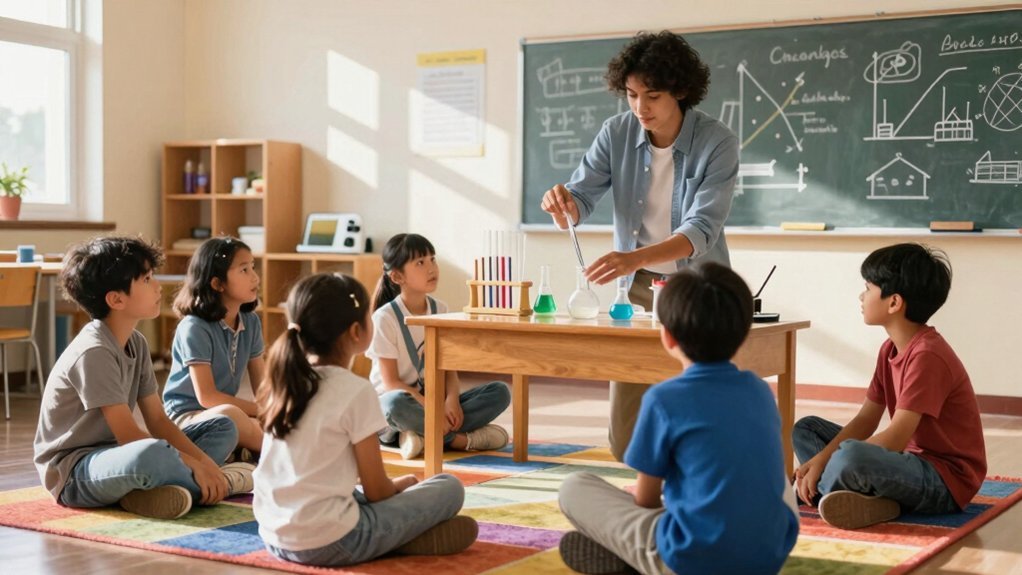
Why do younger students in mixed-age classrooms consistently outperform their same-age peers? You’ll discover the answer by observing what happens when older classmates become your role models.
Why do younger students in mixed-age classrooms excel? Older classmates become powerful role models for learning and growth.
You gain advanced cognitive skills by watching older students tackle complex problems, naturally improving your own problem-solving abilities.
You absorb behavioral traits and social competencies through peer modeling, learning how to navigate social hierarchies and build meaningful friendships.
You develop enhanced language and motor skills by imitating physical activities and communication patterns you observe daily.
You’ll also notice reduced hyperactivity and inattention issues simply through exposure to more mature peers.
This observational learning creates a powerful educational environment where you’re constantly exposed to higher-level thinking and conduct worth emulating. However, research using kindergarten classroom data shows that relative age effects from peer composition persist through eighth grade, suggesting that peer influence mechanisms operate differently than simple observational benefits alone.
Why Peer Teaching Builds Leadership in Older Students
While younger students benefit from observing mature peers, older students in mixed-age classrooms gain equally valuable advantages through peer teaching. When you take on mentoring roles, you’re directly practicing essential leadership competencies. You’ll adapt your teaching strategies to accommodate different personalities and learning styles, developing the flexibility needed for effective leadership. Planning and executing peer-teaching activities sharpens your communication and active listening skills. You’ll manage group dynamics, resolve conflicts, and foster inclusive environments—all critical leadership capabilities. These hands-on experiences build your confidence in your abilities and strengthen your sense of purpose. Research demonstrates that mixed method case studies examining peer-teaching interventions reveal measurable improvements in student self-confidence and leadership readiness within high school settings. Beyond immediate skill development, your involvement cultivates civic engagement and altruistic values. The mentorship role transforms you into a leader, positioning you to take expanding responsibilities and guide future cohorts of younger students.
How Mixed-Age Settings Foster Genuine Confidence

How does genuine confidence develop in mixed-age classrooms? You’ll find it emerges naturally when you’re not constantly compared to same-age peers. Without grade-level constraints, you progress at your own pace, avoiding that crushing “behind” feeling. Work that feels manageable encourages you to volunteer answers and participate actively.
You’ll also benefit from witnessing ability differences normalized around you. Older students mentor you, demonstrating that skills aren’t fixed—they’re learned. This shift in perspective fuels resilience and love for learning. Meanwhile, if you’re older, teaching younger peers reinforces your own understanding while building leadership skills and self-assurance. Research from schools in Germany and Norway shows that increased security and confidence develops when students spend sustained time in these mixed groups, as the diverse interactions create stronger social bonds.
Strong relationships across ages create a family-like environment where you feel genuinely secure. You’re not isolated; you’re valued for exactly where you’re developmentally. That’s where real confidence takes root.
Frequently Asked Questions
How Do Mixed-Age Classrooms Address Different Learning Pace Challenges Without Holding Anyone Back?
You progress at your own pace without grade-level constraints, receiving individualized support through weekly teacher conferences and peer instruction. You’re never held back or behind—you move forward when you’re ready.
What Specific Teacher Training or Preparation Is Needed to Effectively Manage Multiage Classroom Dynamics?
You’ll need training in developmental psychology, differentiation strategies, and flexible classroom management. You must master small-group instruction, peer mentoring facilitation, and organizational systems that accommodate varied skill levels simultaneously.
How Do Parents Typically React to or Support Multiage Classroom Educational Approaches?
You’ll find most parents strongly support multiage classrooms, with over 80% feeling well-informed. You’ll notice they attribute academic improvements to individualized instruction, though you should address concerns about older students’ progress and social regression.
At What Age Range Should Children Begin Participating in Mixed-Age Mentorship Settings?
You’ll find that children benefit most from mixed-age mentorship starting around 18 months, continuing through age 6. This span lets your child observe peers, gradually shift into leadership roles, and develop naturally within collaborative environments.
How Do Assessment and Grading Systems Work Fairly Across Different Developmental Levels?
You’ll implement portfolio-based evaluations and observation tools that track each student’s individual progress without age comparisons. You’ll customize assessments to developmental readiness, use learning logs for formative feedback, and conduct regular conferences tailoring instruction accordingly.
In Summary
You’ll find that multi-age classrooms create something traditional settings can’t: organic mentorship that transforms both mentors and learners. When you’re in this environment, you’re naturally building confidence, leadership, and academic skills simultaneously. You’re not just learning content—you’re developing social awareness and emotional intelligence through daily interaction with peers at different developmental stages. You’re creating a community where everyone grows together.



Leave a Reply