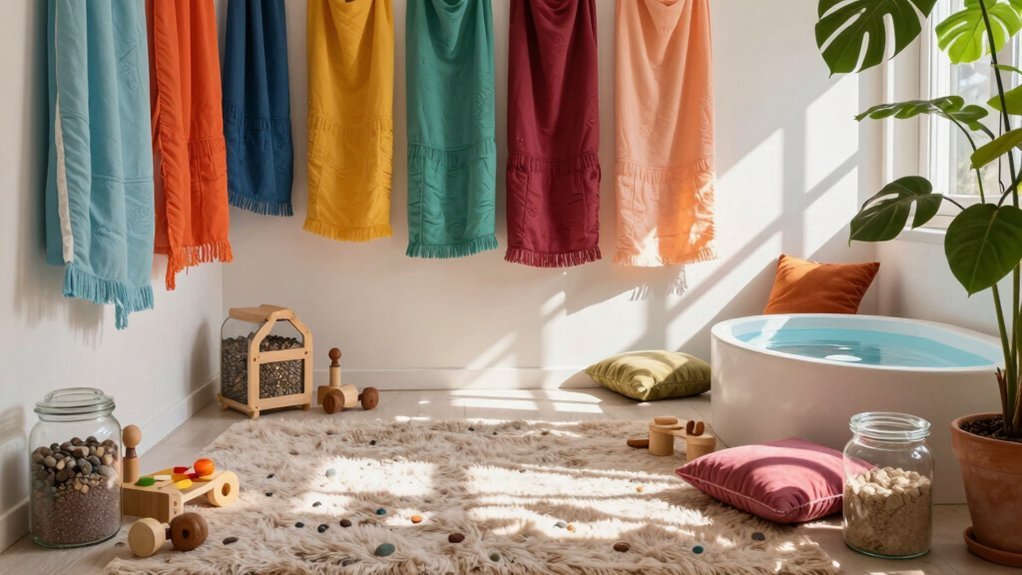
You’ll transform exploration spaces into sanctuaries by strategically layering sensory elements that reduce overwhelm while deepening engagement. Start with natural lighting and dimmable LEDs to ease visual processing, then create quiet acoustic retreats for focus recovery. Layer varied textures—soft velvet against rough bark—to invite hands-on interaction. Integrate complementary scents like rosemary and lavender for mood support. Add biophilic elements like plants and water features. Finally, design flexible zones where visitors independently choose their sensory intensity. Each element works together to create personalized, balanced experiences—and there’s much more to explore about making these spaces truly inclusive.
Why Sensory-Friendly Design Matters: Supporting Neurodivergent and Sensitive Visitors

Have you ever wondered why some spaces feel overwhelming while others feel calm? Sensory-friendly design directly impacts neurodivergent visitors, particularly those with autism and sensory processing disorders. When you’re navigating retail environments or classrooms without proper accommodations, sensory overload—triggered by loud noises, bright lights, and excessive stimulation—becomes your primary barrier to engagement.
Strategic design choices change this experience. You benefit from quiet zones, noise-canceling options, and thoughtfully placed workstations that minimize distractions. Visual aids and color-coded signage help you process information efficiently. These adaptations aren’t luxuries; they’re essential supports that reduce anxiety and challenging behaviors while enhancing your emotional regulation. Research shows that 82% of pupils with SEN are in mainstream schools, making sensory-friendly accommodations increasingly vital for inclusive educational environments.
Sensory-friendly spaces allow you to explore, learn, and participate confidently. When environments accommodate your sensory needs, you’re freed to focus on engagement and skill development rather than managing overwhelming stimulation.
Optimize Lighting to Reduce Sensory Overload: Natural Light and Dimmable Systems
Lighting profoundly shapes how you experience a space, making it one of the most powerful tools for reducing sensory overwhelm.
Natural light mimics circadian rhythms with cooler daytime tones and warmer evening light, lowering hyperactivity in 75% of light-sensitive autistic adults. Automatic blinds adjust daylight changes for consistent sensory safety.
Complement natural light with dimmable LED systems featuring under 2% flicker, which increase engagement by 56% in sensory rooms. Dimmer switches let you regulate intensity based on individual needs. Select warmer color temperatures between 2200K–3000K to soothe visitors and prevent processing delays from cool blue light. LEDs maintain constant light output, minimizing perceptible flicker that can cause headaches and visual disturbances.
Prioritize indirect, low-glare fixtures with high uniformity in task areas. These strategic choices create environments where you and your visitors feel genuinely comfortable and supported.
Control Noise and Create Acoustic Retreats: Quiet Zones in Active Spaces

Why do you lose focus the moment someone starts talking nearby? Background speech disrupts concentration more than other sounds, requiring 25 minutes to restore focus after each distraction. You can combat this by creating acoustic retreats within your active workspace.
Design quiet zones away from foot traffic using sound-insulated phone booths and dedicated focus rooms tailored to your workforce’s needs. Position library-style spaces with non-adjacent seating for deep concentration, targeting 40% utilization. Use walls, ceilings, and acoustic finishes to reduce reverberation. Implementing scheduling systems like automated booking platforms ensures equitable access and prevents monopolization of these valuable spaces.
You’ll notice immediate benefits: an 18% increase in focus time, lower stress levels, and improved engagement. Track occupancy rates and session duration to optimize your spaces. Strategic quiet zones transform open-plan offices into environments where you actually accomplish meaningful work.
Layer Textures for Hands-On Engagement: Varied Surfaces That Invite Touch
You’ll discover that natural materials like wood, stone, and wool create authentic tactile connections that draw people into spaces. By strategically layering varied surfaces—soft velvet against cool marble, rough bark beside smooth polished wood—you encourage hands-on exploration that engages multiple sensory pathways. These interactive surfaces transform passive observation into active discovery, inviting touch and rewarding curiosity with rich sensory feedback. Material variety from mixing different textures enriches the overall sensorial experience and creates depth that sustains engagement.
Natural Materials Enhance Tactile Connection
How does a child’s nervous system develop without direct contact with varied textures? Direct tactile engagement with natural materials creates neural pathways that indoor surfaces simply can’t replicate.
When you incorporate bark, leaves, stones, and soil into exploration spaces, you’re providing layered sensory input that strengthens nerve connections. Running your fingers across rough bark contrasts with touching smooth river stones, building tactile discrimination. Handling pebbles develops fine motor skills while combining auditory feedback as they clink together.
Mud and sand offer moldable, squishy textures that improve hand strength and dexterity. Barefoot grass interaction builds spatial awareness and balance simultaneously. Digging in soil or stacking rocks supports hand strength and dexterity while engaging multiple sensory systems at once.
These natural materials don’t just stimulate touch—they foster emotional regulation, creativity, and problem-solving through hands-on exploration that promotes genuine sensory processing development.
Interactive Surfaces Encourage Physical Exploration
What transforms a flat wall or floor into a dynamic learning environment? Interactive surfaces equipped with motion sensors and projectors do. You’ll engage with customizable drills that sharpen your reflexes through fast-paced visuals demanding physical responses. These systems detect your movements, delivering immediate feedback that enhances hand-eye coordination and body control.
Multi-touch displays amplify this engagement through gamification—badges and points motivate repeated interactions while multiplayer modes foster collaboration. You’ll participate more actively in these shared spaces than with single-user systems. These interactive environments prove particularly effective in rehabilitation centers, where gamified therapy increases patient engagement and enjoyment during recovery.
Active floors integrate sensors and projectors to create touch-responsive environments combating sedentary behavior. Real-time feedback stimulates both cognitive and motor skills. Tangible handles on interactive tabletops enable precise manipulation, offering deeper sensory experiences that transcend flat digital interfaces.
Harness Fragrance Strategically: Using Scent for Comfort Without Overwhelm

You’ll want to layer complementary scents thoughtfully—pairing subtle natural aromatics with strategic ventilation ensures comfort without triggering sensory fatigue. By understanding which fragrances evoke memory and emotion while respecting individual tolerance levels, you create an environment where scent enhances rather than overwhelms your visitors. Research shows that pleasant scents improve consumer mood by up to 40%, making mood enhancement a direct pathway to increased visitor receptivity and engagement.
The key’s balancing potency with spacing: deploy concentrated scents in intimate areas and diffuse lighter notes across expansive zones to maintain that sweet spot between engagement and relief.
Layering Scents For Balance
Why does a single fragrance sometimes feel flat in a room, while carefully combined scents create an inviting atmosphere? The answer lies in strategic layering—balancing different scent intensities and formats to build dimension without overwhelming your senses.
Start by anchoring your space with a base scent, like a wax warmer releasing consistent fragrance oils. Layer in a complementary diffuser with lighter top notes to add complexity. Refresh the atmosphere with subtle fabric mists on soft furnishings, creating evolving sensory depth. This fragrance pyramid structure—combining base, middle, and top notes—helps predict how your layered scents will evolve over time and create an emotional landscape.
Match intensity to your room’s size: delicate scents for small spaces, stronger fragrances for larger areas. The key’s ensuring your selections harmonize—if your living room features vanilla, bridge to adjacent spaces with vanilla-woody combinations. This thoughtful approach transforms fragrance from background noise into a cohesive, multisensory experience.
Natural Aromatics And Memory
How quickly does a scent transport you back to a specific moment? Fragrance activates your memory faster than visual or auditory triggers, producing emotionally intense recall. You can harness this power strategically by introducing rosemary aroma to enhance prospective memory and cognitive performance. The 1,8-cineole compound in rosemary inhibits acetylcholinesterase, improving memory speed and accuracy during tasks.
Balance rosemary’s stimulating effects with lavender’s calming properties. While lavender reduces anxiety and mental fatigue, it indirectly supports memory retrieval by lowering cognitive noise. You’ll access stored memories more easily when relaxed. Research demonstrates that Salvia officinalis aroma produces significantly higher prospective memory performance compared to no-aroma control conditions in healthy young adults.
Create a seven-scent rotation including rose, orange, eucalyptus, lemon, peppermint, rosemary, and lavender. Diffuse full-strength essential oils for two hours nightly to optimize cognitive pathways without overwhelming your senses.
Preventing Olfactory Overstimulation Safely
While rosemary and lavender offer cognitive and calming benefits, their potency reveals an overlooked challenge: overstimulation can undermine the very comfort you’re seeking.
You’ll prevent olfactory overwhelm by introducing scents gradually and in moderation. Start with mild, naturally derived fragrances rather than synthetic chemicals that intensify sensory load. Ensure adequate ventilation so aromas disperse rather than accumulate. You should obtain approval before adding essential oils or strong scents to shared spaces, respecting individual tolerance levels. Track your sensitivity patterns through journaling to identify personal thresholds. When unpleasant odors emerge, substitute them with preferred scents you tolerate well. Hydrate consistently and manage stress through mindfulness, as dehydration and anxiety heighten smell perception. Research shows that stress-related physiological changes, including hormonal shifts and altered blood flow, amplify olfactory sensitivity beyond baseline perception. This balanced approach harnesses fragrance’s benefits while protecting against sensory distress.
Integrate Nature Indoors: Plants, Water, and Biophilic Elements

Bringing nature inside transforms your space into a health-promoting environment that tackles modern indoor challenges head-on. You’ll reduce CO2 levels by 10–20% and filter harmful pollutants through strategically placed plants. Adding water features promotes relaxation within 5–20 minutes while boosting mood and self-esteem. Maximize natural light exposure—47% of workers currently lack it—since direct views improve well-being for 88% of occupants. Exposure to natural elements in your indoor spaces can reduce stress and negative emotions while satisfying your innate nature connection.
Consider living walls and vertical gardens to restore your nature connection in urban settings. These biophilic elements decrease energy consumption by 30% on average while improving productivity by 6% and creativity by 15%.
Your investment pays off: 84% of occupants report improved well-being, and 75% willingly pay extra for these features.
Design Flexible Spaces Where Visitors Control Their Sensory Experience
What makes a space truly welcoming? Giving visitors control over their sensory environment. You’ll want to design flexible areas where guests choose their level of engagement and stimulation.
Create distinct sensory zones—visually rich areas alongside quieter, more subdued spaces. Position these strategically so visitors can easily transition between high-energy and calming environments without feeling trapped or restricted. Employ sensory mapping to identify which areas generate high sensory input and where respite zones should be located for optimal visitor flow.
Staff training matters too. You’re empowering your team to guide visitors toward options that suit their needs, whether that’s a bustling interactive zone or a peaceful retreat.
Include clear navigation routes that encourage independent exploration. Use proximity-triggered audio and interactive elements that respond to visitor movement, delivering personalized experiences.
Ultimately, you’re building environments where every visitor shapes their own journey through thoughtful, intentional design choices.
Frequently Asked Questions
How Can Bubble Tubes and Movement Installations Support Visitors With Visual Tracking Difficulties?
You’ll benefit from bubble tubes’ predictable rising motion, which trains your eyes to follow vertical movement smoothly. The dynamic visual stimulation strengthens your tracking abilities while the mesmerizing display maintains your sustained attention and focus.
What Specific Essential Oils Are Safest for Visitors With Fragrance Sensitivities or Allergies?
You’ll find cedarwood, fir, grapefruit, lavender, and lemon oils safest for diffusion around fragrance-sensitive visitors. They won’t irritate mucous membranes. You should also check with guests beforehand about allergies and limit spaces to one scent maximum.
How Do Sensory Mapping Cards Guide Independent Exploration Without Creating Cognitive Overwhelm?
You’ll use sensory mapping cards to mark stimuli locations with icons showing high or low stimulus areas. You’re then empowered to self-select routes matching your comfort level, preventing overwhelm while exploring independently at your own pace.
What Fidget Tools Work Best for Different Age Groups and Sensory Regulation Needs?
You’ll find that fine motor tools like tangles suit younger elementary students, while older children benefit from fidget spinners. Stress balls work across ages for anxiety reduction and improved focus during demanding tasks.
How Can Tunnels and Domes Be Designed for Safe Sensory Retreats in Shared Spaces?
You can design safe sensory retreats by installing waterproof corridors connecting domes, creating dark tunnel entrances for calm environments, adding adjustable skylights for light control, and using soft materials that encourage relaxation and reduce overstimulation.
In Summary
You’ve learned how thoughtful sensory design transforms exploration spaces into welcoming environments for everyone. By optimizing lighting, managing sound, incorporating varied textures, and integrating natural elements, you’re creating inclusive experiences. Remember, you’re giving visitors control over their sensory journey. These seven strategies aren’t just about comfort—they’re about honoring diverse needs and making your space genuinely accessible to all explorers.




Leave a Reply