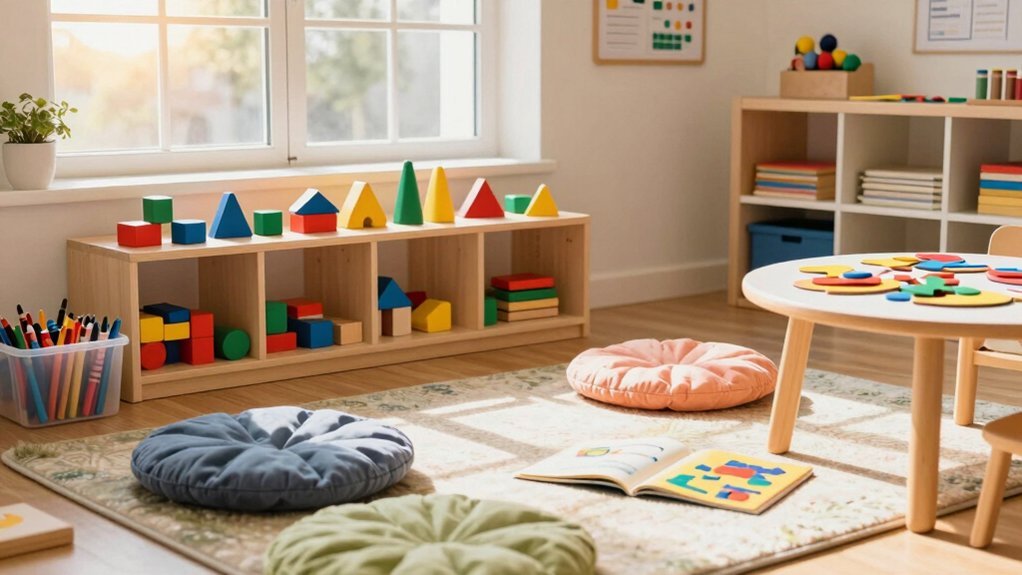
You’ll foster genuine independence by equipping your preschooler’s space with child-sized furniture, clearly labeled transparent containers, and purposeful art supplies like watercolors, safety scissors, and modeling clay. Add accessible books, writing tools, and sensory materials throughout activity centers. Organize everything at their height so they grab what they need without asking. Include loose parts and dramatic play props to encourage creative problem-solving. When you prioritize safety, quality over quantity, and strategic rotation, you’re building the foundation for stronger executive function and self-directed learning that’ll surprise you with what comes next.
Why Independent Learning Spaces Matter for Preschoolers

Why do preschoolers thrive when they’re given control over their own learning? Because autonomy fuels motivation and development. When you create spaces where children select their own materials and pursue self-directed play, you’re building their decision-making skills and internal drive to learn. You’re fostering creativity, persistence, and the confidence to take risks without fear of judgment.
These independent learning environments matter tremendously. You’re enabling children to explore at their own pace, experiment with diverse materials, and express themselves authentically. Research shows that when you support this autonomy, children develop stronger task orientation, better emotion regulation, and enhanced executive function—skills that predict academic and social success. Clear labels and accessible materials in these spaces reduce distraction and help children maintain cognitive concentration on their chosen activities.
You’re essentially laying the foundation for lifelong learners who trust their own thinking and capabilities.
Child-Height Furniture: The Key to Independent Access
Building autonomy means removing physical barriers that force children to depend on adults for basic access. When you provide child-sized furniture, you’re enabling preschoolers to sit, stand, and interact independently without assistance.
Properly proportioned chairs at 12 inches and tables at 22 inches align with your students’ popliteal height and hip width, allowing their feet to touch the floor naturally. This ergonomic match reduces leg and back discomfort while supporting fine motor work. Rounded edges and safe fasteners prevent injuries during active exploration, ensuring children can move confidently through the classroom.
You’ll notice lightweight designs facilitate easy movement and rearrangement, fostering creativity and ownership over the learning environment. Children develop confidence when they can navigate their space autonomously.
However, over 83% of preschools currently use mismatched furniture exceeding recommended dimensions. You can measure your classroom’s chair and desk heights at the school year’s start to ensure they match your group’s anthropometric needs, creating truly accessible independent learning spaces.
Creating Accessible Storage Systems Children Can Navigate Alone

How you organize storage directly determines whether children can access materials independently or remain dependent on teacher assistance. Strategic organization empowers preschoolers to locate, retrieve, and return items without your intervention.
You’ll maximize independence by implementing these proven strategies:
- Clear, labeled containers – Use transparent bins with picture labels so children identify contents instantly and locate what they need without asking
- Designated zones – Assign color-coded areas for specific activities like blue for reading or yellow for sensory play, creating intuitive navigation
- Child-height accessibility – Position frequently used materials on lower shelves and in rolling carts so children reach everything comfortably
You’ll reduce clutter while fostering responsibility. Mobile units transport supplies directly to activity stations, and the “Rolling Cart Rule” reinforces cleanup habits. Labeled compartments teach organizational skills naturally, transforming storage into an independent learning tool. Laminated or covered labels maintain durability through daily classroom use and frequent handling by young learners.
Art Materials That Build Fine Motor Skills (Without You There)
When you stock your classroom with the right art materials, children naturally develop the hand strength and coordination they’ll need for writing—all while you’re attending to other tasks. Watercolors with independent brush handling build coordination and creativity.
Safety scissors strengthen finger control through cutting and clipping activities.
Modeling clay and playdough develop the muscles children use for pencil grip through squishing, rolling, and coiling motions.
Threading beads on pipe cleaners practices the pincer grip essential for writing.
Finger painting and torn paper collage refine precision and finger strength. Hand-eye coordination advances through these repetitive, varied grip activities that encourage independent exploration.
Sticker placement adds another layer of fine motor practice.
Books, Letters, and Tools: Independent Literacy for Early Readers
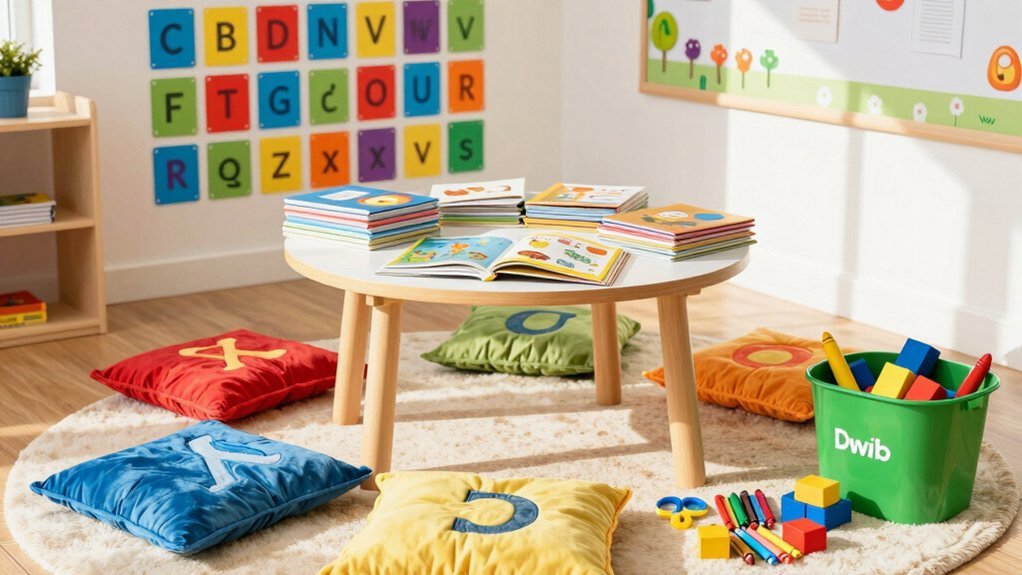
Literacy doesn’t require your constant attention when you’ve thoughtfully arranged your classroom environment. You’ll foster independent learning by strategically placing diverse books, writing materials, and literacy props throughout your classroom. Create inviting library centers stocked with fiction, nonfiction, and culturally relevant texts that reflect your students’ interests and backgrounds.
Support emergent literacy skills through:
- Accessible books in multiple activity centers varying in difficulty, genres, and topics to encourage exploration
- Writing tools and displays positioned around rooms, including markers, paper, and labeled areas that normalize print usage
- Literacy props integrated into dramatic play spaces, prompting functional reading and writing during natural play activities
Model daily independent reading through DEAR time, demonstrate book-handling techniques visually, and provide frequent positive feedback. You’ll notice children developing print awareness and early comprehension skills naturally. Aligning these environmental arrangements with science of reading pillars ensures that your classroom design supports phonemic awareness, phonics, fluency, vocabulary development, and comprehension growth.
Hands-On Math and Science for Self-Directed Preschoolers
Just as you’ve strategically arranged literacy materials throughout your classroom, you’ll apply the same thoughtful approach to math and science spaces. Stock your independent learning areas with tactile manipulatives like teddy bear counters, Unifix cubes, and linking cubes that children can explore at their own pace. Include blank dice sets and muffin match-up activities for self-directed counting practice.
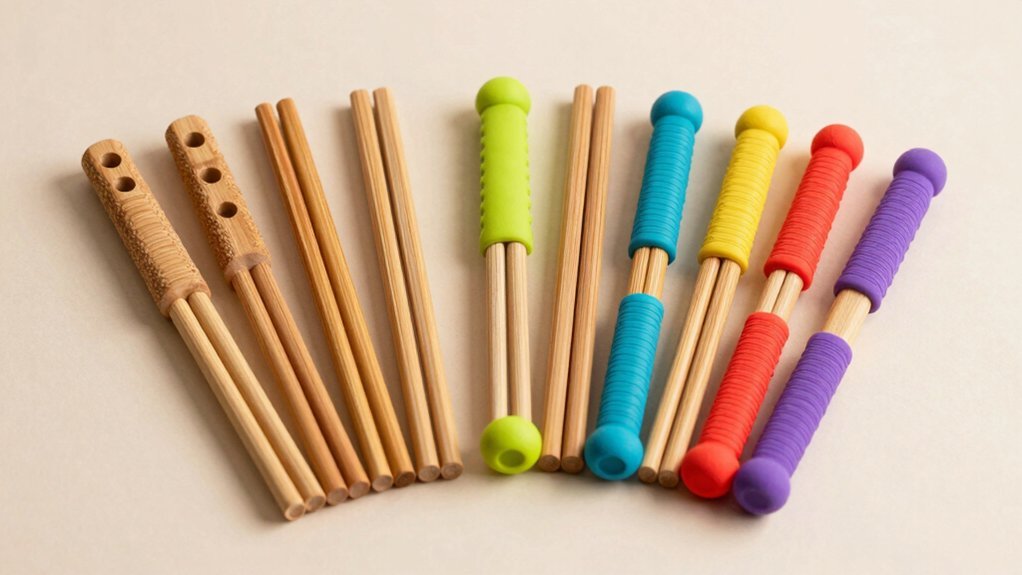
For science discovery, provide magnetic wands, horseshoe magnets, and specimen puzzles that invite hands-on investigation. Weather counter sets and organic texture discovery materials engage multiple senses while building vocabulary. Research shows that 20 minutes daily of focused math and science exploration yields significant developmental impact during the preschool years.
Complement these materials with self-paced, inquiry-based curricula like Kide Science that offers printable lesson plans and video support. This combination enables preschoolers to develop mathematical reasoning and scientific thinking independently while you observe and assess their progress.
Dramatic Play Setup That Encourages Solo and Peer Creativity

Dramatic play thrives when you balance realistic and unstructured materials that invite both solo exploration and collaborative storytelling. You’ll want to create defined spaces using rugs or low shelving that signal where play happens while remaining flexible enough for transformation.
Stock your dramatic play area strategically:
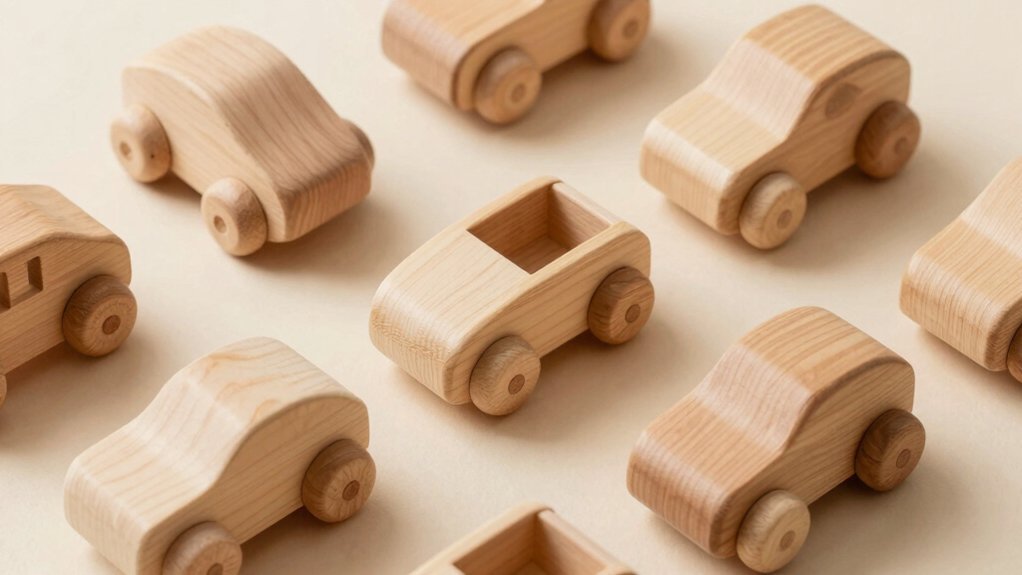
- Unstructured loose parts like wooden blocks, fabric scraps, and baskets encourage symbolic thinking and complex narratives beyond what realistic props alone offer
- Role accessories and household items such as aprons, play food, and child-sized furniture ground scenarios in authenticity while maintaining flexibility
- Rotating themed materials including construction tools, transportation tickets, and culturally relevant props expose children to diverse roles and sustain engagement
Arrange pre-set scenes at tables or stations to spark immediate participation. Clear, labeled storage bins empower independent setup and cleanup, extending solo play sessions while supporting peer collaboration throughout your learning environment. This literacy integration through organizing and labeling materials helps children develop foundational reading and writing skills within authentic, purposeful contexts during dramatic play.
Sensory Materials for Self-Regulation and Tactile Learning
When you introduce sensory materials into your preschool environment, you’re giving children powerful tools for emotional regulation and learning. Sensory bottles, fidget toys, and textured manipulatives help children calm down during transitions and moments of overwhelm, particularly those with sensory processing challenges who struggle more with emotional control than typically developing peers.
You’ll strengthen fine motor skills as children shake, roll, and manipulate these materials, building hand and finger coordination essential for writing. Varied textures in sensory bins—sand, water, natural materials—engage children at their individual comfort levels while encouraging exploration. These materials work best when integrated into daily routines to support consistent sensory sensitivities and help children develop self-regulation strategies throughout the day.
Outdoor Discovery Stations: Independent Gross Motor Play
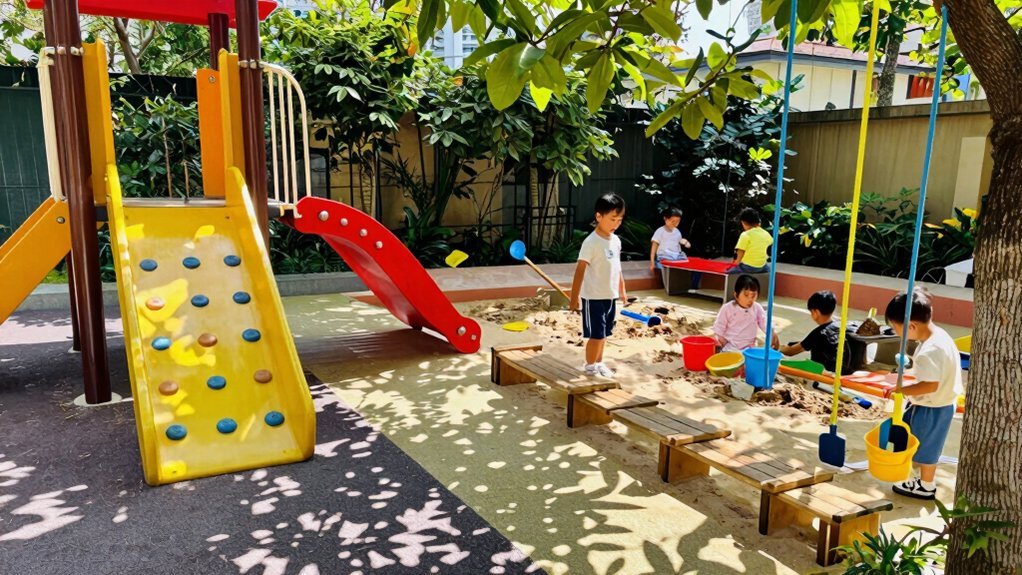
You’ll create outdoor discovery stations that invite children to explore movement through play, allowing them to navigate obstacle courses, practice animal walks, and engage with balls and bubbles at their own pace.
As you set up climbing structures, balance beams, and painting activities, you’re building their confidence with equipment while they develop gross motor skills independently.
These stations encourage risk-taking in safe environments where preschoolers can test their physical abilities and discover what their bodies can accomplish. Simple items like giant blocks and balloons, bean bags, and different-sized balls can be rotated through stations to maintain engagement and support versatile play across varying skill levels.
Movement Exploration Through Play
Most preschoolers benefit markedly from outdoor gross motor play that builds fundamental movement skills while establishing lifelong active habits. You’ll find that movement exploration through play develops spatial awareness, coordination, and object control skills essential for healthy development.
Create discovery stations featuring equipment that encourages independent exploration:
- Balance and riding toys support gross motor development during self-directed play while building confidence
- Varied-sized balls hidden throughout your playground incorporate movement with cognitive sorting games
- Parachutes and bubble wands provide sensory integration practice and multiple engagement opportunities
Research shows that every additional 10 minutes of daily outdoor time increases object control skills in preschoolers. You don’t need elaborate setups—natural materials and age-appropriate equipment create productive learning experiences. Peer-to-peer interaction during outdoor play encourages children to understand social dynamics while expressing their individual personalities through movement. When weather prevents outdoor access, structured gross motor interventions serve as equitable alternatives.
Building Confidence With Equipment
Independent outdoor equipment transforms preschoolers’ movement exploration into structured confidence-building experiences. When you provide access to straight slides, vine climbers, and inclined structures, you’re enabling children to navigate challenges at their own pace without relying on adult assistance.
These features build self-assurance as kids successfully conquer physical obstacles independently. Stairs and elevated platforms teach them to trust their bodies and abilities. Multi-sensory components like bongo drums and telescopes enhance fine and gross motor development while fostering creativity through exploration.
You’ll notice that pretend play stations encourage imaginative role-playing, which strengthens social-emotional skills. As children tackle ten different play features through trial and error, they develop problem-solving abilities and resilience. This autonomy-centered design transforms your outdoor space into a confidence-building environment where preschoolers thrive through independent discovery. When these discovery centers meet ADA guidelines for inclusive play, all children gain equitable access to developmental benefits regardless of ability level.
Safety First: Non-Negotiables for Independent Play Areas
How can you create a preschool play environment where children explore freely yet remain protected from harm? You’ll establish safety through deliberate design and consistent maintenance.
Start by addressing ground-level hazards:
Remove tree stumps, roots, exposed concrete, and rocks to eliminate tripping hazards from ground level.
- Remove tree stumps, roots, exposed concrete, and rocks that create tripping dangers
- Install at least 12 inches of protective surfacing (wood chips, mulch, or safety-tested rubber mats) extending 6 feet from equipment
- Maintain level terrain and perform daily surface checks for hazards
Next, inspect equipment rigorously. You’ll eliminate dangerous hardware like open hooks and protruding bolts. Ensure spacing between structures exceeds 9 feet, and limit platform heights to 36-48 inches for preschoolers. Install guardrails on elevated surfaces and verify that any openings measure either less than 3.5 inches or more than 9 inches to prevent entrapment. Complement these protective surfaces with shade structures to reduce injury risks from sun exposure during extended outdoor play sessions.
Quality Over Quantity: Building a Prepared Classroom
What separates high-performing preschool classrooms from average ones isn’t flashy materials or trendy programs—it’s intentional design paired with manageable class sizes. You’ll want to maintain optimal ratios of 1:10 or fewer students per teacher, allowing genuine interactions that drive lasting child benefits.
Curate your materials strategically. Varied resources like books, blocks, and sand create larger learning gains than overcrowded shelves. Arrange everything for easy access, keeping your classroom organized and clean throughout the year. Research-based program evaluation demonstrates that data-driven decisions about material selection and classroom design lead to measurable improvements in child outcomes.
Your structural quality directly influences academic progress—accounting for 16% of variation. Flexible learning zones support smooth transitions and differentiated instruction. Rather than accumulating more items, you’re building purposeful environments where every material serves a developmental function. This focused approach produces sustained quality improvements that benefit all learners.
Refresh Without Restocking: Strategic Material Rotation
You’ll refresh your classroom without purchasing new materials by strategically rotating what you’ve already organized in labeled, clear bins—a system that keeps setup quick and switching seamless. Seasonal rotations and storage accessibility work together to keep children engaged; when you rotate sensory bins every 1-2 weeks and dramatic play centers monthly, you’re responding to both calendar changes and observation of waning interest. Your storage system becomes the foundation for this strategy, making it possible to swap materials consistently at designated times without the chaos of digging through unlabeled containers. Rotating centers introduces new vocabulary, concepts, and real-world scenarios that deepen learning across multiple domains and support context-rich exploration.
Seasonal Rotation Strategies
Strategic material rotation keeps independent learning environments fresh and engaging without requiring constant purchases or complete overhauls. You’ll align your learning centers with seasonal themes and current teaching units to maximize relevance and interest.
Consider these practical approaches:
- Incorporate seasonal items—rotate pumpkins and gourds in fall, flowers in spring, and snow-themed materials in winter to maintain connection with children’s outdoor experiences
- Link rotations to teaching themes—swap science enrichments weekly and refresh your library monthly with books and prompts that complement your curriculum focus
- Use familiar household items—rotate everyday objects like kitchen tools, natural materials, and recyclables for relatability without purchasing specialty items
You’ll store seasonal materials in labeled clear bins for quick access and easy swaps. Introduce rotated centers through group tours so children understand what’s new and why it matters to your current learning focus. Rotating 1–2 items per week reduces stress on children while maintaining their engagement with meaningful materials.
Storage Systems For Accessibility
Thoughtful container selection and vertical organization work together to transform your independent learning environment into a space where children can locate, retrieve, and return materials without teacher guidance. You’ll want low-sided, transparent containers that let children see contents at a glance while remaining lightweight for easy transport. Position open shelving at child-friendly heights, and use color-coding and picture labels to mark storage locations clearly. Magnetic strips hold small manipulatives efficiently, freeing valuable shelf space. Reserve lower shelves for frequently used items within each learning zone, while storing less-used materials higher up. This strategic arrangement supports independence while maintaining safety, allowing children to confidently manage their own learning materials throughout the day, which encourages exploration and engagement as children develop pride in maintaining their organized spaces.
Adapting Materials as Your Preschooler’s Skills Develop
How do you know when it’s time to shift your preschooler’s materials to match their growing abilities? Watch for signs of mastery—when they complete tasks independently or lose interest in current challenges.
Progress materials thoughtfully through developmental stages:
- Ages 3-4: Introduce drawing, block building, and clay for fine motor skills; add running and jumping for gross motor development
- Age 4: Incorporate cutting lines, letter writing, and complex structures that demand precision control
- Age 5: Advance to name writing, shoelace tying, and tweezers for refined hand strength
Use self-correcting tools that enable independent error identification. Montessori principles guide progression from concrete to abstract concepts. Observe your child’s capabilities closely—this ensures materials remain engaging without overwhelming or boring them. Rotating and refreshing materials as your child’s interests shift helps maintain relevance and extend learning through new developmental challenges. Sequential advancement builds confidence and critical thinking skills naturally.
Frequently Asked Questions
How Often Should I Replace Worn or Damaged Materials in the Classroom?
You should replace worn or damaged materials immediately as you notice them. During your year-start inventory checks, you’ll identify additional items needing replacement to ensure your classroom stays safe and developmentally appropriate.
What’s the Ideal Temperature and Lighting for Independent Learning Spaces?
You’ll want to maintain 72°F or lower for optimal concentration while ensuring adequate lighting that reduces eye strain. You should consider your students’ comfort perceptions since children require cooler temperatures than adults for peak learning performance.
How Can I Accommodate Children With Different Developmental Delays or Disabilities?
You’ll accommodate children with different developmental delays or disabilities by adjusting teaching strategies, offering lessons in multiple formats, providing visual supports, ensuring accessible pathways, and modifying sensory activities based on individual needs.
Should I Supervise Children During Independent Learning Time, and From Where?
You should supervise children during independent learning time by positioning yourself where you can observe behavioral indicators like strategy use and questioning without disrupting their child-led activities and cognitive development.
How Do I Know When My Preschooler Is Ready for More Complex Materials?
You’ll know your preschooler’s ready when they’ve mastered current materials, show sustained focus, demonstrate problem-solving skills, and exhibit curiosity about new challenges. They’re signaling readiness through their independent engagement and persistence.
In Summary
You’ve now got the foundation for creating a space where your preschooler thrives independently. By choosing child-sized furniture, organizing materials accessibly, and prioritizing safety, you’re building their confidence and skills. You’ll watch them problem-solve, explore, and learn without constant guidance. Remember, you don’t need everything—you need what works for your child. Rotate materials thoughtfully, adjust as they grow, and you’ve created the perfect prepared environment.

Leave a Reply